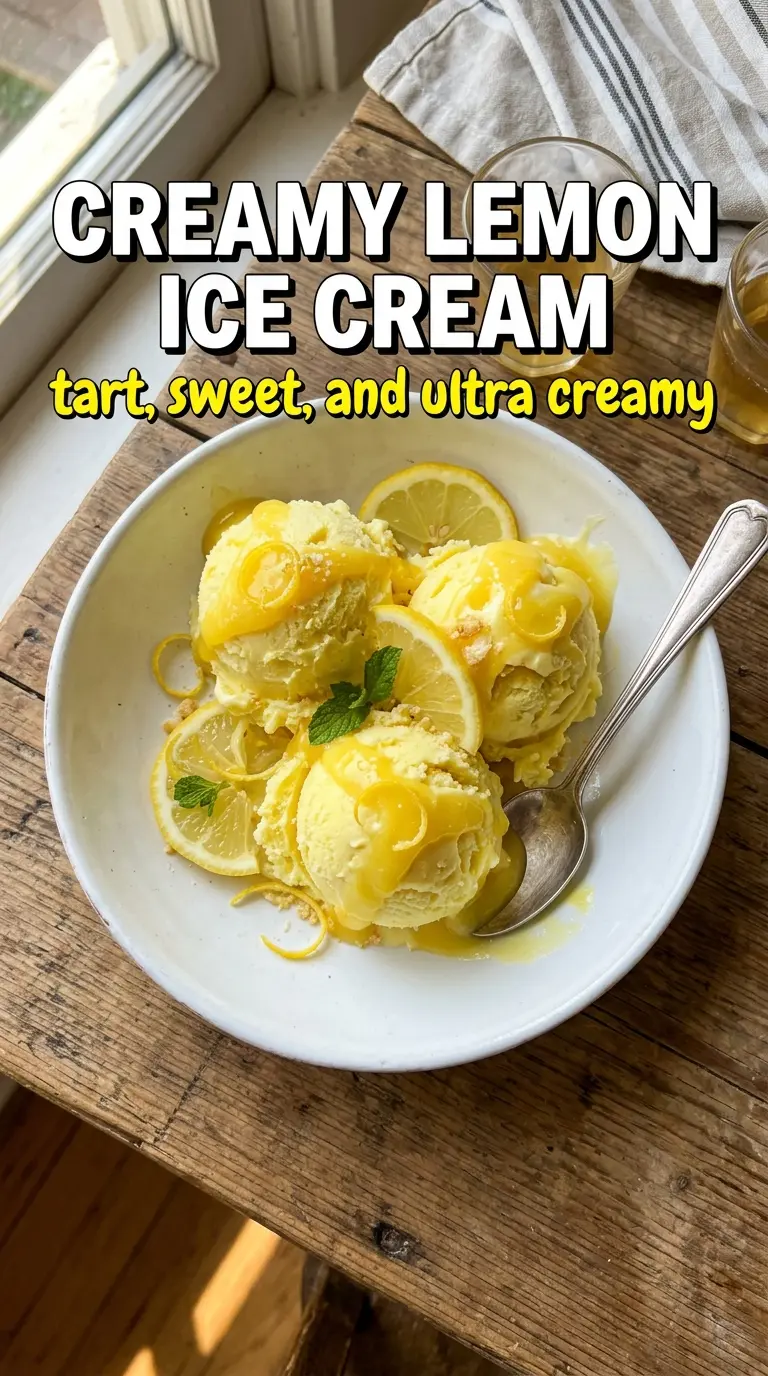
Bright lemon ice cream needs more than a splash of juice to taste like real citrus. The best bowls have a clean, sharp lemon flavor that stays present after the cream settles in, and that balance comes from building a custard base first, then adding the lemon at the end so the dairy stays smooth and the flavor stays vivid. What you get is scoopable, rich, and refreshing at the same time.
This version leans on egg yolks for body, which gives the ice cream that dense, silky texture you notice as soon as the scoop hits the bowl. The lemon zest matters just as much as the juice because it adds the aromatic part of the fruit that juice alone can’t carry. I also keep the vanilla subtle, just enough to round off the edges without muting the citrus.
Below you’ll find the small choices that make the difference between icy and luscious, plus a few variations if you want to push the lemon flavor even further or work with what’s already in your kitchen.
The custard turned out silky and the lemon flavor stayed bright after freezing. I loved that it churned up thick instead of icy, and the zest made it taste fresh instead of flat.
Save this creamy lemon ice cream for the nights when you want a sharp citrus custard that churns smooth and freezes into clean, creamy scoops.
The Custard Trick That Keeps Lemon Ice Cream Smooth
Ice cream turns grainy or icy when the base is rushed, overheated, or acid is added too early. Lemon juice is acidic enough to tighten dairy if it meets the milk and cream before the custard is finished, which is why this recipe waits until after straining to add it. That small shift keeps the texture creamy instead of slightly curdled or thin.
The other important piece is temperature. Cook the yolk mixture just until it coats a spoon and reaches 175°F, no higher. If it climbs too far, the yolks seize and the custard tastes eggy; if you stop too soon, the base stays loose and the churned ice cream won’t set with that dense, scoopable body.
What Each Ingredient Is Actually Doing in This Ice Cream
- Heavy cream — This gives the ice cream its plush texture and slows down iciness. Don’t swap in half-and-half unless you want a lighter, less stable result.
- Whole milk — Milk keeps the base from becoming too heavy. If you use all cream, the finished ice cream can taste dull and coat the tongue too much.
- Egg yolks — These thicken the custard and make the scoop structure smooth instead of slushy. There isn’t a true substitute here if you want the same body.
- Fresh lemon juice — Bottled juice tastes flat here and can bring a harsh edge. Fresh juice gives the cleanest citrus finish and keeps the flavor bright after freezing.
- Lemon zest — Zest carries the perfume of the fruit and makes the lemon flavor taste whole, not just sour. Use a fine grater and stop before you hit the bitter white pith.
- Vanilla extract — Vanilla softens the sharpest edges without turning this into a vanilla ice cream with lemon in it. Keep it modest, or it starts to compete with the citrus.
From Steaming Dairy to Churned Ice Cream
Tempering the Yolks Without Scrambling Them
Warm the cream and milk until they’re steaming, not boiling, then whisk a little of that hot dairy into the yolks and sugar before adding the rest. That slow temper keeps the eggs from turning into bits of scrambled yolk the moment they hit the pot. If the mixture looks smooth and glossy, you’re on track; if you see tiny curds, the heat went in too fast.
Cooking the Custard to the Right Point
Return the base to the saucepan and stir constantly over medium-low heat until it thickens enough to lightly coat the back of a spoon and reaches 175°F. Keep the spatula moving across the bottom and corners so nothing catches. If you see steam and a few thick ribbons when you lift the spoon, pull it right away; going past that point makes the custard dense and a little grainy.
Adding the Lemon After Straining
Strain the custard first, then stir in the lemon juice, zest, vanilla, and salt. That order matters because straining removes any tiny cooked egg bits before the acid goes in, and the acid stays bright when it isn’t cooked for long. The base should smell like warm lemon curd at this point, smooth and vivid, not sharp or eggy.
Chilling, Churning, and Freezing Firm
Cool the custard over an ice bath, then chill it for at least 4 hours before churning. A cold base freezes faster in the machine, which gives you finer texture and better volume. After churning, freeze it until firm; if it seems soft, that’s normal right out of the machine, but it needs time in the freezer to set into proper scoops.
How to Adjust the Lemon Without Losing the Creamy Texture
Extra-Tangy Lemon Ice Cream
Add another teaspoon or two of zest before chilling if you want more citrus aroma without thinning the base. Increasing juice too much can make the custard taste sharper but also softer and less stable, so zest is the safer way to push flavor.
Dairy-Free Version
Use full-fat canned coconut milk in place of the cream and milk for a dairy-free version, but expect a faint coconut note and a slightly softer freeze. The custard method still works, though the texture won’t be quite as rich as the original.
No Ice Cream Maker
Pour the chilled base into a shallow pan and freeze, stirring vigorously every 30 to 45 minutes as it starts to set. The texture will be a little less airy than churned ice cream, but the custard base still helps it freeze smoother than a basic no-churn mix.
Storage and Reheating
- Refrigerator: Not applicable once churned; keep the custard base chilled up to 2 days before churning if needed.
- Freezer: Freeze in an airtight container for up to 2 weeks for the best texture. After that, it can still be safe to eat, but the edges start to pick up ice crystals.
- Reheating: No reheating needed. Let the container sit at room temperature for 5 to 10 minutes before scooping; if it’s rock hard, it’s been frozen too long or stored in a container with too much air.
Answers to the Questions Worth Asking

Creamy Lemon Ice Cream
Ingredients
Equipment
Method
- Heat heavy cream and whole milk in a saucepan until steaming, then slowly whisk the hot mixture into egg yolks beaten with granulated sugar while the yolks look smooth and glossy.
- Return the custard to the saucepan and cook over medium-low heat, stirring constantly, until it thickens and reaches 175F, with a nappe-like coating on the back of a spoon.
- Strain the custard through a fine mesh sieve to remove any tiny bits, then whisk until it looks silky and smooth.
- Stir in fresh lemon juice, lemon zest, vanilla extract, and salt, until the mixture is evenly pale golden and the zest is suspended.
- Cool completely over an ice bath until no longer hot, then refrigerate at least 4 hours until cold throughout.
- Churn the chilled custard in an ice cream maker until it reaches a soft-serve thickness, with a lighter color and a creamy, airy texture.
- Freeze the churned ice cream until firm so scoops hold their shape, typically until set and scoopable.