Silky, rich, and surprisingly satisfying, creamy cauliflower soup earns its place in the rotation because it tastes like much more than the short ingredient list suggests. The cauliflower turns mellow and sweet as it simmers, then blends into a smooth base that feels plush without being heavy. A handful of roasted florets on top gives the bowl some texture, so every spoonful has contrast instead of just creaminess.
The trick here is treating the cauliflower in two ways. Most of it gets simmered until it breaks down completely, while a small portion roasts until the edges caramelize and turn nutty. That keeps the soup from tasting flat. The other small but important detail is adding the cream after blending, not before. That keeps the texture clean and lets you control how rich the finished soup feels.
Below you’ll find the step that keeps the soup velvety instead of grainy, plus a few smart swaps and storage notes if you want to make it ahead.
The roasted cauliflower on top changed everything for me. The soup was already silky, but that little bit of caramelized crunch and the truffle oil made it taste restaurant-level.
Save this creamy cauliflower soup for the nights when you want something silky, cozy, and finished with roasted florets and chives.
The Reason This Soup Stays Velvety Instead of Going Thin
Cauliflower soup can go watery fast if the vegetable is boiled hard or if the broth ratio is too loose. Gentle simmering matters here. You want the florets tender enough to collapse under the blender, but not so overcooked that they lose all body and turn the soup slack. The roasted garnish helps too, because it adds a concentrated cauliflower note that makes the bowl taste fuller.
The other place people run into trouble is blending. If the soup is still very hot and you try to blend too aggressively, it can splash and look frothy instead of silky. An immersion blender keeps more control in the pot, and you can stop as soon as the texture looks smooth. A final stir of cream after blending gives the soup a rounder finish without muting the cauliflower.
What Each Ingredient Is Actually Doing in the Bowl

- Cauliflower — This is the base and the body of the soup. Fresh florets matter more than fancy extras here, because you want a clean, sweet flavor that blends smooth. Reserve some for roasting so the finished bowl has texture and a deeper, nuttier cauliflower taste.
- Onion and garlic — They build the savory backbone. Onion needs the full sauté time so it softens and turns sweet before the broth goes in; if you rush it, the soup tastes sharper than it should. Garlic only needs a minute, just until fragrant.
- Broth — Vegetable broth keeps it vegetarian, while chicken broth gives a slightly richer finish. Use a broth you’d actually drink, because there aren’t many ingredients here to hide behind a flat or overly salty base.
- Heavy cream — This is what turns the soup from blended cauliflower into something plush and satisfying. Half-and-half will work in a pinch, but the soup will be lighter and a little less luxurious. Add it after blending so it stays smooth and doesn’t cook down too much.
- Butter and olive oil — The butter gives the base a rounder flavor, while the olive oil helps the roasted garnish caramelize. For the soup pot, both fats matter because they carry the aromatics and keep the mouthfeel from tasting lean.
- Nutmeg and white pepper — Nutmeg adds warmth without making the soup taste sweet, and white pepper keeps the color clean. Black pepper works if that’s what you have, but white pepper disappears into the soup more gracefully.
- Truffle oil and chives — These finish the bowl. Truffle oil is strongest when used sparingly, just a drizzle, and chives cut through the richness with a fresh onion note.
How to Build the Soup Without Losing the Silky Finish
Roasting the Garnish First
Toss the reserved cauliflower florets with olive oil and spread them out in a single layer. They need space or they’ll steam and stay pale instead of turning golden at the edges. Pull them when they’ve picked up deep color and a few crisp spots, because that roasted texture is what keeps the finished soup from feeling one-note.
Softening the Onion Base
Melt the butter in a large pot, then cook the onion until it looks translucent and soft, not browned. That five-minute window builds sweetness without bringing in any harsh edges. Add the garlic only at the end of the sauté so it smells fragrant instead of bitter.
Simmering Until the Cauliflower Collapses
Add the remaining cauliflower and broth, bring it up to a boil, then drop it to a steady simmer. The cauliflower should be tender enough that a spoon slides through it with no resistance. If the pot boils hard, the liquid can reduce too far before the florets soften, which throws off the texture later.
Blending and Finishing the Soup
Blend until completely smooth, pausing to scrape down the sides if needed. If you still see grainy bits, keep blending; that slight extra minute is what gives the soup its velvet texture. Stir in the cream, nutmeg, and white pepper after blending, then taste for salt at the end. Salt changes once the cream goes in, so it’s easier to season accurately after the soup is fully finished.
How to Adapt This Soup for Different Tables
Dairy-Free Version
Swap the butter for olive oil and use full-fat coconut milk or an unsweetened oat cream in place of the heavy cream. Coconut milk gives the soup a slightly sweeter finish, while oat cream stays more neutral. Keep the nutmeg light so the dairy-free version still tastes clean and savory.
Vegetarian Version
Use vegetable broth and you’ll keep the soup fully vegetarian without changing the method at all. Choose a broth with decent body, because a weak vegetable stock can make the soup taste thin once the cream is added. The roasted cauliflower garnish matters even more in this version because it deepens the flavor.
Lighter Bowl, Less Cream
Reduce the cream to 1 cup and add a splash more broth if you want a looser, lighter soup. The texture will still be smooth, but it won’t coat a spoon as heavily. This works best if you serve it with a hearty garnish so the bowl still feels complete.
Storage and Reheating
- Refrigerator: Store in an airtight container for up to 4 days. It may thicken as it chills, which is normal.
- Freezer: It freezes fairly well, but the cream can separate slightly. If you plan to freeze it, stop before adding the cream, then stir it in after reheating.
- Reheating: Warm it gently over low heat and stir often. Don’t boil it, or the dairy can turn grainy and the soup can lose its smooth finish.
Questions I Get Asked About This Recipe
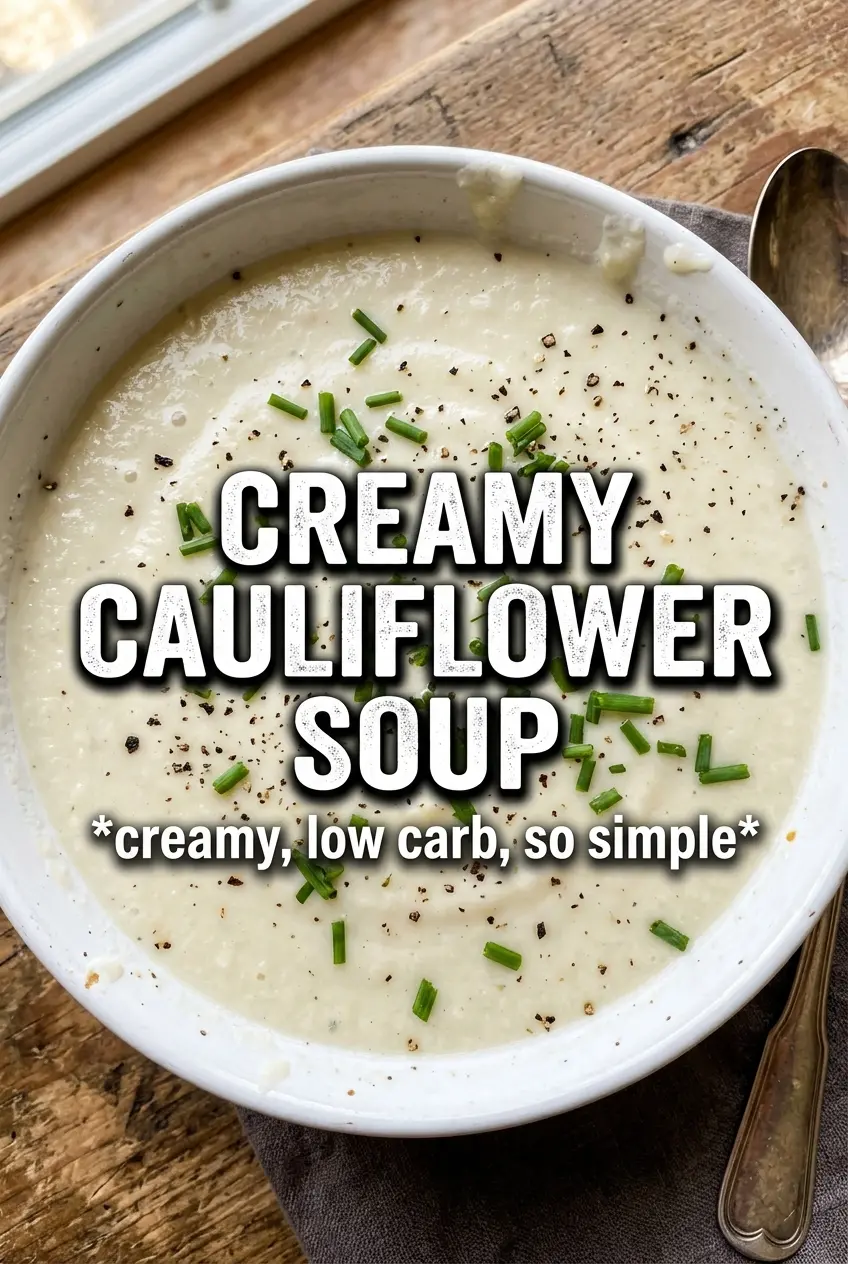
Creamy Cauliflower Soup
Ingredients
Equipment
Method
- Toss the reserved cauliflower florets with olive oil, then roast at 425°F for 20-25 minutes until golden and caramelized. Set aside for garnish.
- Melt the unsalted butter in a large pot, then sauté the diced onion for 5 minutes until softened. Add the minced garlic and cook for 1 minute, until fragrant.
- Add the remaining cauliflower and broth, bring to a boil, then simmer for 20 minutes until very tender. Keep it at a steady simmer so the cauliflower softens fully.
- Blend completely smooth with an immersion blender until the soup is silky with no visible cauliflower bits. Stir to confirm an even texture.
- Stir in the heavy cream, nutmeg, and white pepper, then cook briefly just to reheat, keeping the surface steamy but not boiling. The soup should look ivory and glossy.
- Season with salt to taste, then serve with the roasted crispy cauliflower, truffle oil drizzle, and chives. Finish each bowl with a visible swirl or drizzle for contrast.