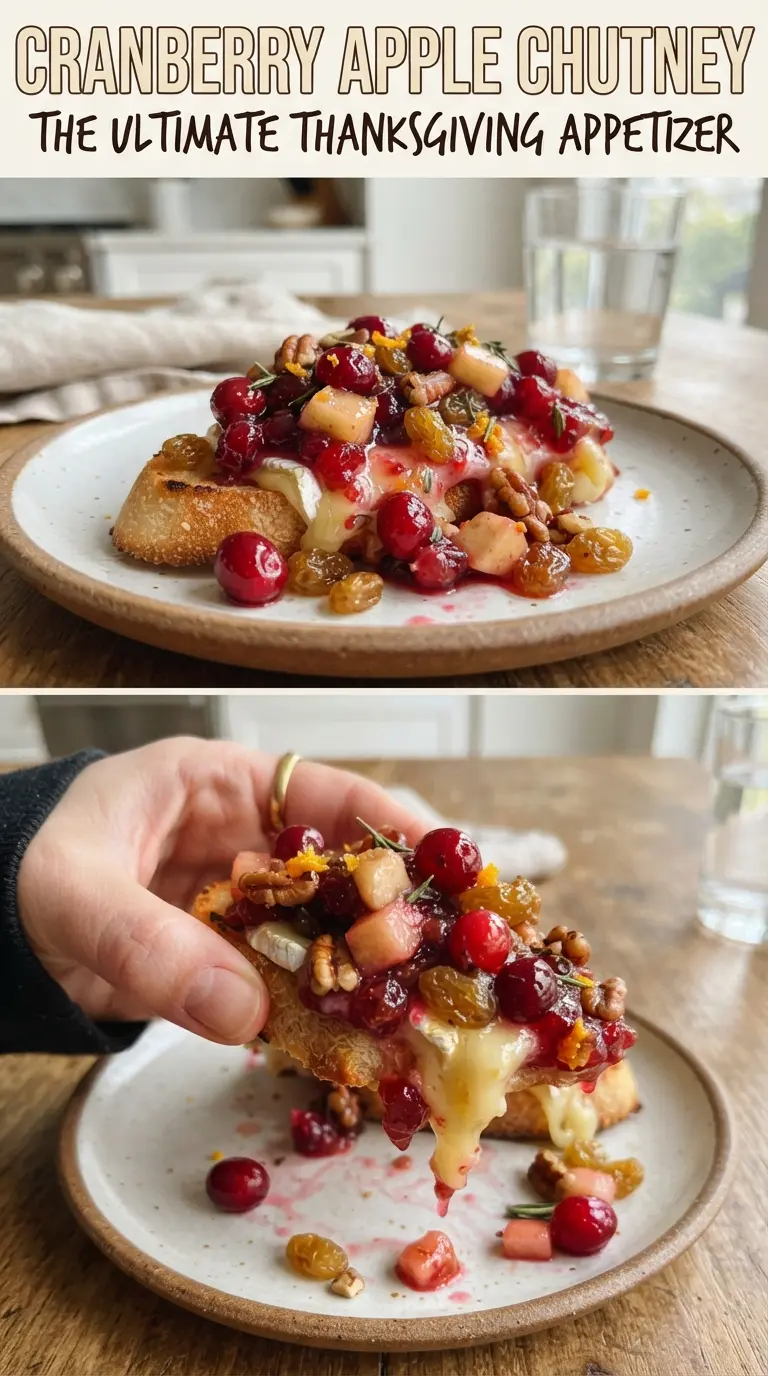
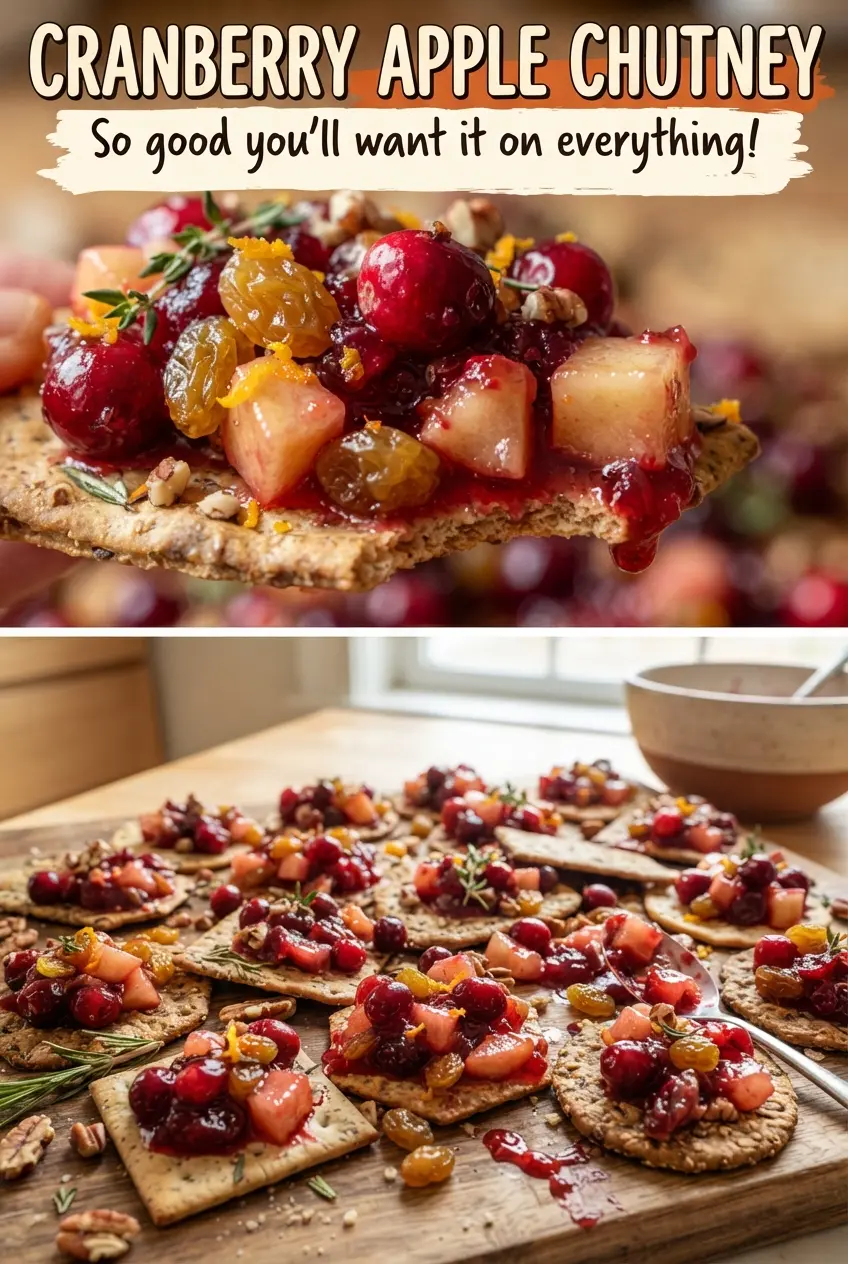
Thick cranberry apple chutney brings sharp, sweet, and spiced flavors into one spoonable condiment that belongs next to more than just holiday turkey. The cranberries burst into a glossy sauce while the apples hold enough shape to give every bite some texture, and the raisins settle in with little pockets of sweetness that round out the vinegar’s edge. It’s the kind of side that wakes up a plate of pork, cheese, sandwiches, or a plain roasted chicken dinner without asking for much work.
What makes this version worth keeping around is the balance. Brown sugar gives the chutney depth instead of just sweetness, apple cider vinegar keeps it bright, and ginger with cloves adds warmth without turning the whole thing into pie filling. The trick is to simmer the aromatics first so the onion loses its bite before the fruit goes in. That gives you a finished chutney that tastes developed, not raw and sharp.
Below, I’ve broken down the one part that matters most: getting the texture thick enough to cling to food without turning sticky or overcooked. I’ve also added a few ways to tweak it if you want it a little sweeter, a little hotter, or made ahead for a crowd.
I loved how the cranberries broke down into a thick jammy sauce while the apples stayed in little soft chunks. It was perfect on a turkey sandwich the next day, and the spices were warm without being overpowering.
Like this cranberry apple chutney? Save it for turkey, pork, and cheese boards when you want a thick, spiced condiment with real texture.
The Trick to Keeping Cranberries Tart, Not Harsh
Cranberries need enough sugar and enough time, but not so much heat that they disappear into sour jam. The first boil dissolves the sugar and starts the base, then the onion, ginger, and spices simmer long enough to soften their sharp edges before the fruit goes in. That sequence matters because cranberries cook fast; if they hit an underdeveloped base, the chutney tastes thin and one-note even after a long simmer.
The other thing worth watching is thickness. Chutney should mound on a spoon and leave a slow trail in the pan when stirred. If it still looks loose at the end, keep simmering and stir more often near the finish so the sugars don’t catch on the bottom. Once it cools, it thickens again, so stop cooking a little before it looks exactly done in the pot.
What the Apples, Vinegar, and Raisins Are Each Doing
- Cranberries — Fresh cranberries give the chutney its bright color and tart backbone. Frozen cranberries also work straight from the freezer, and there’s no need to thaw them first.
- Apples — Use an apple that holds some shape after simmering, like Honeycrisp, Gala, or Fuji. A mealy apple turns the chutney soft instead of chunky, which changes the whole texture.
- Apple cider vinegar — This keeps the chutney lively and prevents the sugar from tasting flat. White vinegar works in a pinch, but it tastes sharper and less rounded.
- Golden raisins — They melt into the mixture a little more gently than dark raisins and add sweetness without weighing the chutney down. If you don’t have them, chopped dried apricots give a similar chewy finish with a brighter fruit note.
- Fresh ginger — Fresh ginger gives a cleaner heat than dried ginger powder. Powdered ginger can work, but use less; it reads warmer and less fresh.
Building the Chutney So It Cooks Down Right
Start with the syrup base
Bring the brown sugar, vinegar, and water to a boil before anything else goes in. That dissolves the sugar fully and gives you a smooth base instead of grainy patches at the bottom of the pan. Use a saucepan with a little room to spare, because the fruit will bubble up once it goes in.
Softening the aromatics first
Add the onion, ginger, cinnamon, cloves, red pepper flakes, and salt, then simmer for five minutes. The onion should lose its raw bite and look glossy, not browned. If the pan boils too hard here, the spices can turn harsh, so keep the heat at a steady simmer.
Cooking the fruit to a glossy finish
Stir in the cranberries, apples, and raisins, then simmer 20 to 25 minutes, stirring often. You’re looking for most of the cranberries to burst, the apples to soften but not collapse, and the liquid to turn thick and jammy. If the chutney starts sticking before the fruit is tender, lower the heat and scrape the bottom of the pan more often; concentrated sugar burns fast near the end.
Cooling for the final texture
Take the chutney off the heat once it’s thick enough to coat a spoon. It will loosen a little while hot and firm up as it cools, which is why people often overcook it by mistake. Let it cool completely before refrigerating so the steam doesn’t water it down.
How to Adjust This Chutney for Different Tables
Make it brighter and more tart
Cut the brown sugar back by 2 to 3 tablespoons if you want the cranberries to stay front and center. The chutney will taste sharper and less dessert-like, which works well with rich meats and aged cheese.
Make it gluten-free and dairy-free
This recipe is naturally both, so there’s nothing to swap. That’s one reason it works so well on a holiday table, since it fits a wide range of diets without losing texture or flavor.
Add more heat
Increase the red pepper flakes to 1/2 teaspoon for a chutney that leans spicy at the finish. The heat shows up after the sweetness, which is exactly where it should be in a condiment like this.
Storage and Reheating
- Refrigerator: Store in an airtight container for up to 2 weeks. The flavor gets deeper after a day, and the texture tightens as it chills.
- Freezer: It freezes well for up to 3 months. Pack it in small containers and leave a little space at the top for expansion.
- Reheating: Warm gently over low heat or use it straight from the fridge. If it seems too thick after chilling, stir in a teaspoon of water at a time instead of blasting it with high heat, which can make the sugars stick.
Questions I Get Asked About This Recipe
Cranberry Apple Chutney
Ingredients
Equipment
Method
- Combine brown sugar, apple cider vinegar, and water in a Dutch oven and bring to a boil over medium-high heat. Look for steady bubbling across the surface, then immediately proceed.
- Add red onion, fresh ginger, ground cinnamon, ground cloves, red pepper flakes, and salt. Simmer for 5 minutes, stirring once or twice, until the mixture smells fragrant and the onion softens.
- Stir in fresh cranberries, apples, and golden raisins. Return to a simmer and make sure everything is evenly distributed.
- Simmer for 20-25 minutes, stirring often, until the chutney is thick and jammy. Watch for the mixture to cling to the spoon and look glossy rather than watery.
- Cool completely at room temperature, then refrigerate until ready to serve. The chutney will thicken further as it chills, making it easier to spoon.
- Serve cranberry apple chutney with turkey, pork, or on a cheese board. Spoon it into jars or alongside meats for a chunky, spiced bite.