Cold, creamy, and spoonable straight from the freezer, cottage cheese ice cream hits the same comfort zone as classic ice cream but with a lighter finish and a nice protein boost. The big win here is texture: when it’s blended long enough, the cottage cheese loses its curds completely and turns into a smooth base that freezes up thick instead of icy. A little honey rounds out the tang, while vanilla and salt keep the flavor from tasting flat.
The part that makes this work is the blending. If the mixture is even a little grainy before it goes into the freezer, that texture will show up later, so the base needs to be completely silky before you stop the machine. The second thing that matters is the freeze time. Pull it too early and it’ll be soft like a milkshake; leave it long enough and it scoops like a real frozen dessert after a short rest on the counter.
Below, I’ve included the exact cues I watch for, the swaps that still keep the texture on track, and the small fixes that help if your first batch doesn’t freeze the way you expected.
I was skeptical, but after blending for a full 2 minutes it turned out completely smooth. Mine froze in 4 hours and scooped like soft serve after 5 minutes on the counter — no icy bits at all.
Creamy cottage cheese ice cream is worth saving for when you want a high-protein dessert that scoops like the real thing.
The One Step That Decides Whether This Tastes Creamy or Grainy
The freezer isn’t what makes cottage cheese ice cream tricky. The blender is. Cottage cheese starts out with curds, and if you stop while you can still feel even tiny bits, those bits freeze into a sandy texture. A full 2 minutes in a high-powered blender or food processor is what turns the base from lumpy to genuinely smooth.
There’s also a small but important balance between sweetener and freeze time. Honey or maple syrup doesn’t just add flavor; it helps keep the texture softer and less icy. If you use less than the recipe calls for, expect a firmer freeze and a more pronounced tang. That isn’t wrong, but it changes the final scoop.
- Blending time — Don’t rush this. The mixture should look glossy and uniform, with no visible curds on the sides or bottom of the blender jar.
- Sweetener — Honey gives a round, floral sweetness and a slightly softer freeze. Maple syrup works too, though the flavor reads a little deeper and less neutral.
- Lemon juice — It brightens the flavor and keeps the cottage cheese from tasting heavy. Skip it only if you want a flatter, dairy-forward result.
What Each Ingredient Is Actually Doing in This Bowl
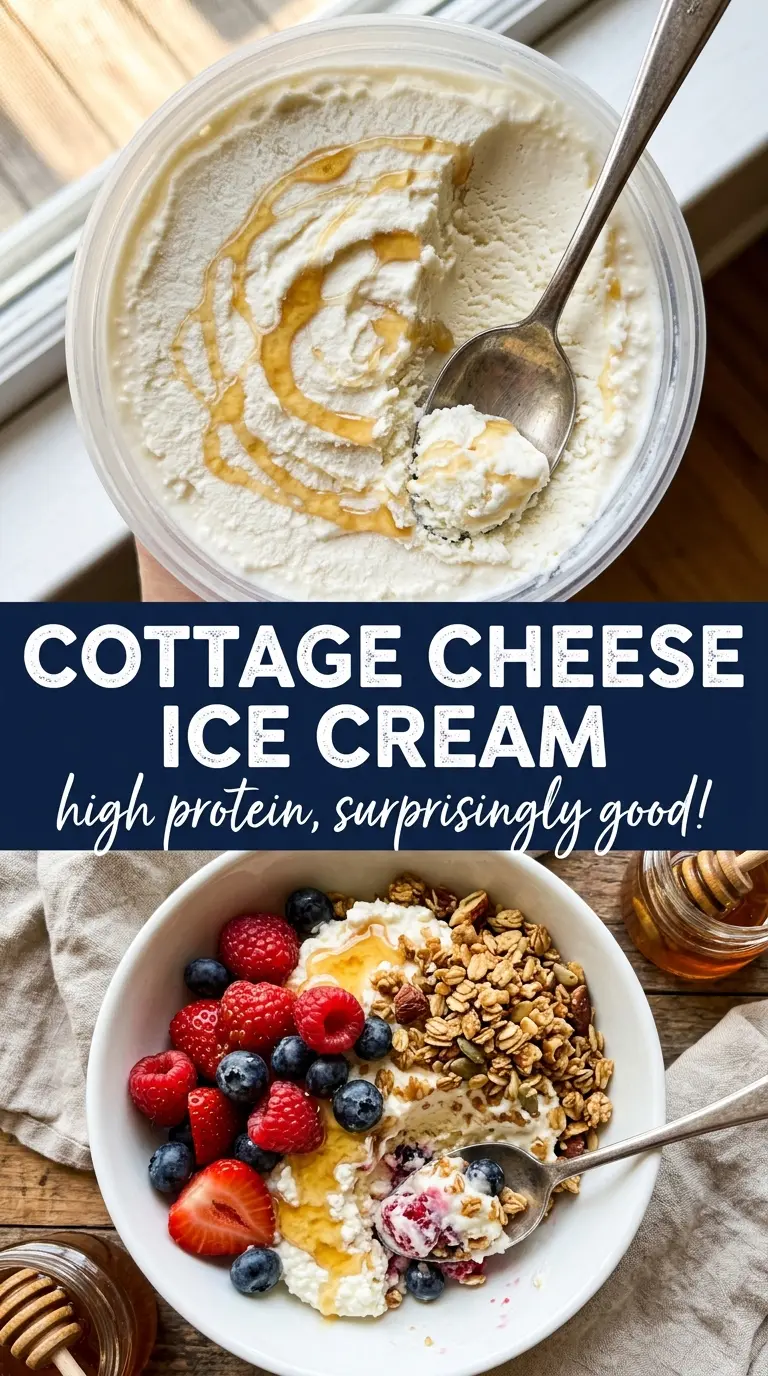
- Full-fat cottage cheese — This is the base and the body of the ice cream. Full-fat gives the creamiest result and freezes softer than low-fat versions. If you use low-fat cottage cheese, the texture turns a little icier and less rich.
- Honey or maple syrup — Either one helps sweeten and soften the finished ice cream. Honey keeps the flavor clean and classic; maple adds a warmer note that works especially well with berries or chocolate chips.
- Vanilla extract — This takes the edge off the tang and makes the whole thing taste more like dessert. Use real vanilla if you can, since it carries through even after freezing.
- Lemon juice — A small amount sharpens the flavor enough to keep it from tasting heavy or flat. It doesn’t make the ice cream taste lemony; it just wakes everything up.
- Salt — You won’t taste salt directly, but you’ll notice the difference if it’s missing. It keeps the sweetness in check and makes the vanilla and dairy flavor taste fuller.
How to Blend, Freeze, and Scoop It Without Fighting the Texture
Getting the Base Completely Smooth
Add the cottage cheese, honey, vanilla, salt, and lemon juice to a high-powered blender or food processor. Blend until the mixture looks silky and thick, with no visible curds or grainy streaks. Stop and scrape down the sides once or twice if needed, because dry bits clinging to the jar can stay lumpy even after the center looks smooth. If the base still feels gritty on your tongue, keep blending; that texture won’t disappear in the freezer.
Freezing It the Right Way
Pour the blended mixture into a freezer-safe container and spread it into an even layer. A shallow container freezes more evenly than a deep one, which helps the whole batch firm up at the same pace. Freeze for about 4 hours, or until the center is set and the edges are fully firm. If you cover the top with a tight lid, press a piece of parchment or plastic wrap directly on the surface first to reduce ice crystals.
Letting It Relax Before You Scoop
After freezing, let the container sit at room temperature for about 5 minutes before scooping. That short rest takes the edge off a hard freeze and gives you clean scoops instead of cracked, crumbly chunks. If it has been in the freezer overnight, it may need a couple of extra minutes. Don’t leave it out too long or it starts to melt fast and loses that dense, ice-cream texture.
Three Ways to Adjust This Without Losing the Creamy Texture
Berry Swirl Finish
Fold in fresh berries after blending if you want pockets of tart fruit instead of a fully smooth base. Keep the berries small and dry so they don’t water down the mixture. This adds texture and a brighter finish, but the ice cream will freeze a little firmer around the fruit pieces.
Chocolate Chip Version
Stir in chocolate chips after the base is blended and right before freezing. If you add them too early, the blades break them down and the mix loses that clean chip-and-cream contrast. Mini chips distribute best and are easier to scoop straight from the freezer.
Lower-Sugar Version
You can cut the honey or maple syrup a little, but the ice cream will freeze harder and taste tangier. If you go this route, let it soften a few extra minutes before scooping. The texture still works, but it leans more toward a firm frozen yogurt than classic ice cream.
Dairy-Light Swap
Low-fat cottage cheese will work, but the result freezes firmer and tastes less plush. If that’s what you have, add the full amount of sweetener and don’t skip the resting time before scooping. The extra sweetness helps keep the texture from tasting thin.
Storage and Reheating
- Refrigerator: Not recommended. It softens quickly and loses the frozen texture that makes it work.
- Freezer: Store in a freezer-safe container for up to 2 weeks. After that, it can pick up ice crystals and the texture gets rougher.
- Reheating: Not applicable. For serving, let it sit at room temperature for 5 to 10 minutes so it scoops cleanly instead of cracking.
Answers to the Questions Worth Asking
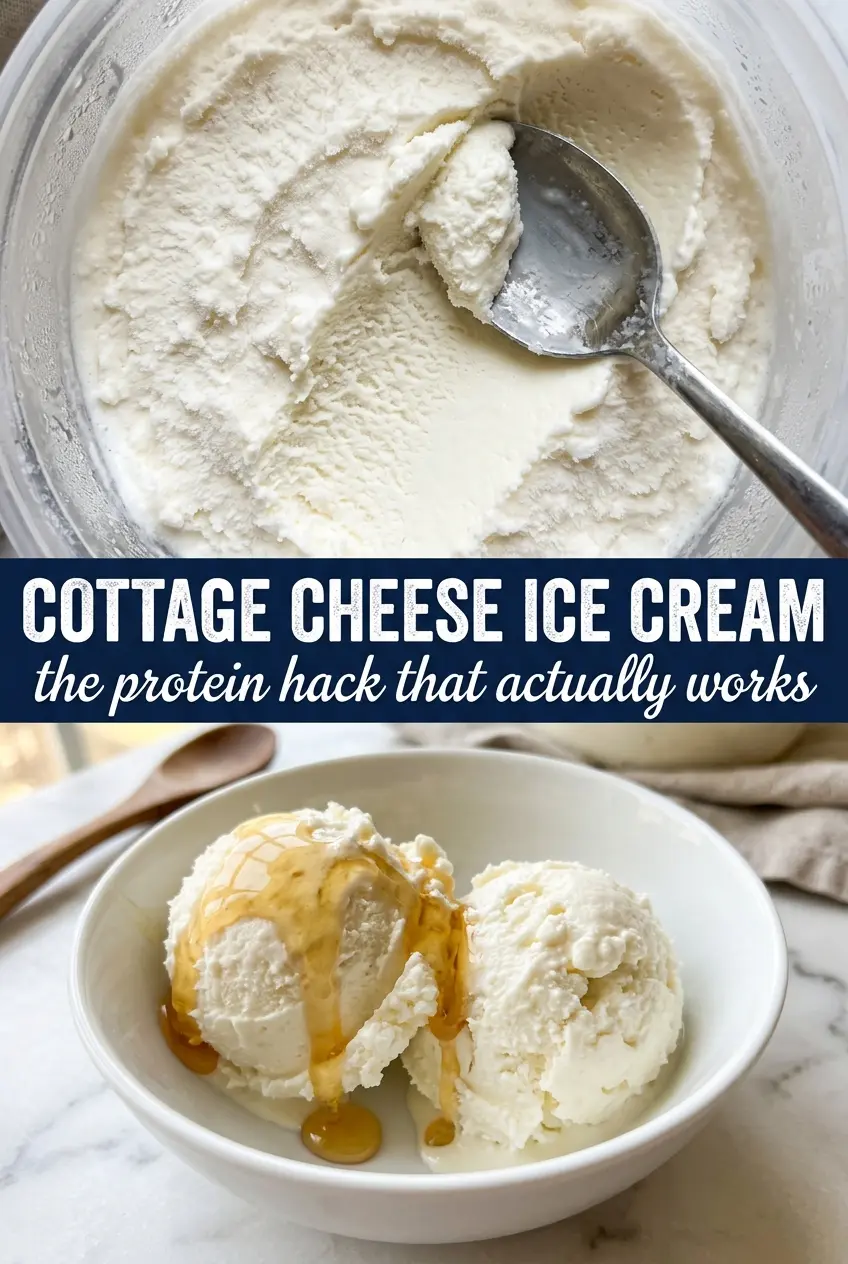
Cottage Cheese Ice Cream
Ingredients
Equipment
Method
- Add full-fat cottage cheese, honey or maple syrup, vanilla extract, salt, and lemon juice to a high-powered blender and blend until completely smooth with no lumps, about 2 minutes, scraping the sides once if needed.
- Taste the blended mixture and adjust sweetness by adding a little more honey or maple syrup if desired, then blend again for 10 to 15 seconds to fully incorporate.
- Pour the mixture into a freezer-safe container, cover, and freeze for 4 hours until firm and scoopable.
- Let the container sit at room temperature for 5 minutes before scooping so the texture softens slightly for easier serving.
- Scoop the cottage cheese ice cream into bowls and top with fresh berries, chocolate chips, or a drizzle of extra honey to serve.