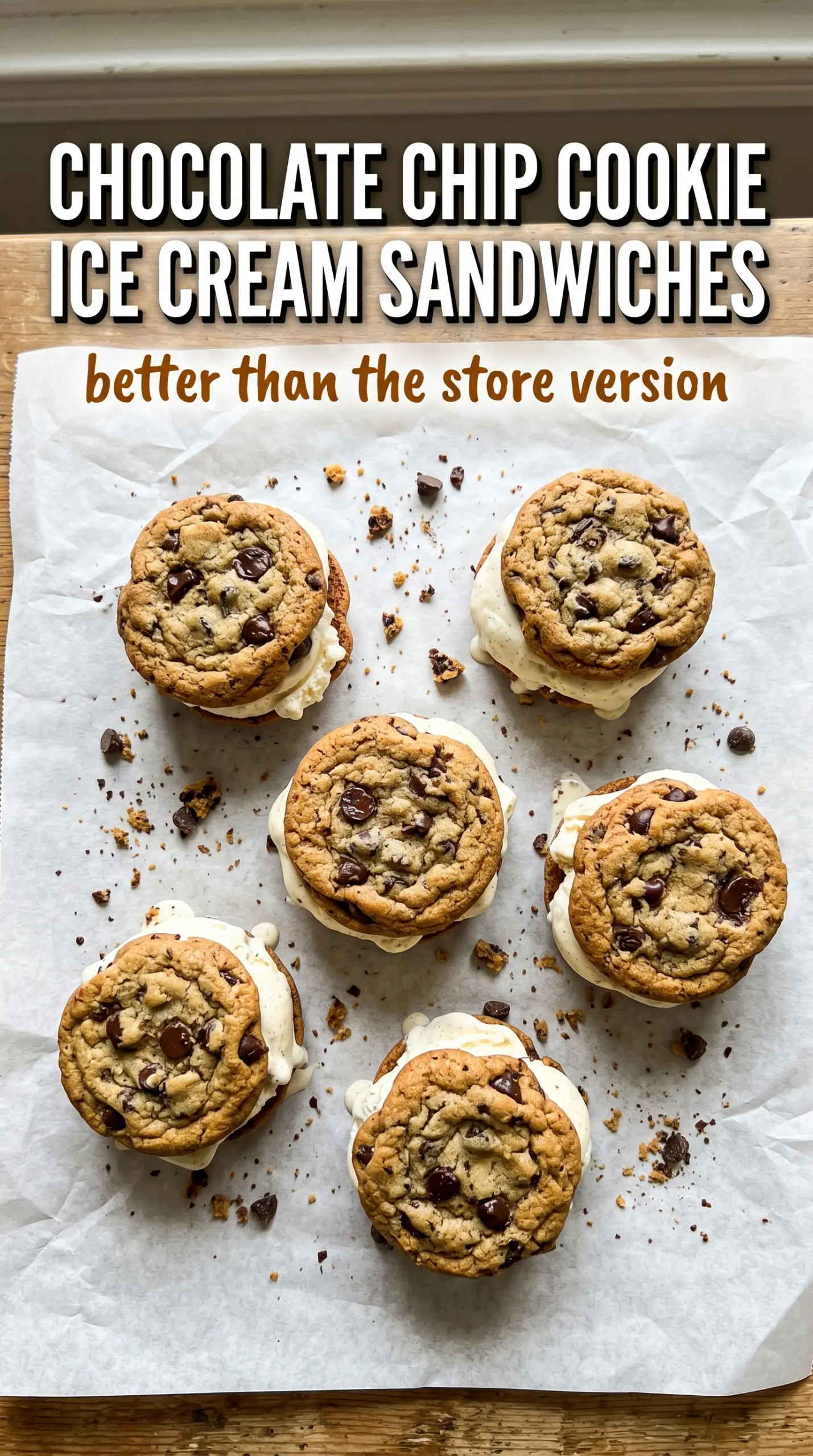
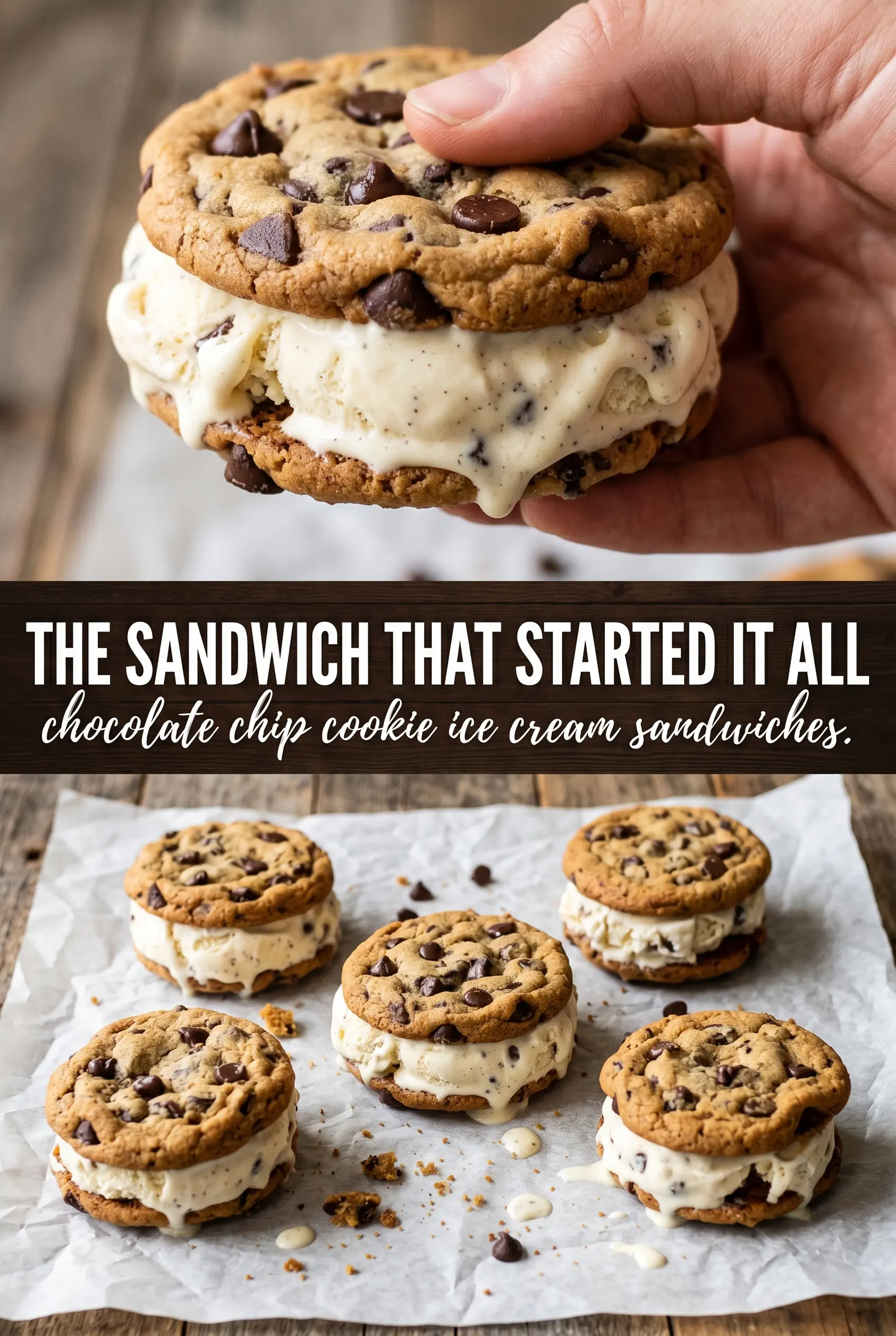
Chocolate chip cookie ice cream sandwiches land on the table with the kind of contrast people notice right away: crisp edges, chewy centers, and cold vanilla ice cream that stays neatly tucked between the cookies instead of sliding out after the first bite. The best versions don’t rely on store-bought cookies that go hard in the freezer. They use a cookie dough that bakes up sturdy enough to hold its shape, but still soft enough to keep that classic bakery-style chew once frozen.
The trick is in the bake. Pull the cookies when the centers still look a little underdone and let them finish setting on the pan. That gives you a cookie that stays tender after freezing instead of turning into a dry, brittle shell. A thick vanilla ice cream layer helps too, especially if you slice or cut it into discs before assembling so every sandwich is even from edge to edge.
Below you’ll find the timing that keeps the cookies soft, the easiest way to match the ice cream to the cookie size, and a few variations for different flavors and dietary needs. If you’ve ever had the filling squish out the sides, the assembly notes here will save you from that mess.
The cookies stayed soft after freezing, and slicing the ice cream into discs made assembly so much cleaner. Mine held together perfectly and didn’t spill out the sides.
Save these chocolate chip cookie ice cream sandwiches for the days when you want chewy cookies, cold vanilla ice cream, and clean layered bites.
The Secret to Cookies That Stay Soft After Freezing
The failure point in most homemade ice cream sandwiches is the cookie itself. Bake it too long and the frozen sandwich eats like cardboard; underbake it too much and the cookie crumbles once the ice cream starts softening. This dough is balanced for that middle ground, with enough butter and brown sugar to keep the texture chewy, plus just enough structure from the flour to hold up after freezing.
That means two things matter most: don’t overbake, and don’t assemble while the cookies are warm. Warm cookies melt the ice cream immediately, which leads to sliding, lopsided sandwiches, and messy edges. Fully cooled cookies give you a clean build and a better final bite. The other quiet advantage here is the size. Larger cookies give you room for a thick scoop of ice cream without making the whole thing awkward to eat.
- Brown sugar brings chew and moisture. It’s a big part of why these cookies stay tender after freezing instead of going dry.
- Butter gives the cookies their crisp edges and rich base. Softened butter creams properly, which helps the dough bake evenly.
- Vanilla ice cream is the cleanest, easiest filling because it freezes firm and slices neatly. If you use a softer homemade ice cream, freeze it a little longer before cutting discs.
- Semi-sweet chocolate chips give you pockets of chocolate without making the cookies too fragile. Mini chips can be rolled around the edges for a cleaner finish if you want a neater look.
What Each Ingredient Is Actually Doing in This Ice Cream Sandwich
- Cookie or bread base (the structural holder) — This needs to be sturdy enough to hold ice cream without crumbling, but tender enough to bite through. Freshness matters.
- Ice cream or frozen yogurt (the filling) — This should be slightly soft so it adheres to the cookies without melting off. Temperature matters here.
- Texture of the cookies (crispy vs. soft) — Crispy cookies stay crunchy; soft cookies meld with the ice cream. Choose based on the texture experience you want.
- Coating (optional chocolate, sprinkles, or nuts) — This adds visual appeal and texture. Dip in melted chocolate while ice cream is still cold so it sets immediately.
- Sandwich technique (speed matters) — Assemble sandwiches quickly so the ice cream doesn’t melt. Work in batches and keep ice cream scoops in the freezer.
- Freezing before serving (the set-up) — Let assembled sandwiches freeze for 30 minutes so they hold together when eaten. This also prevents ice cream from squishing out.
- Flavor pairing (cookies and ice cream together) — The cookie flavor should complement the ice cream, not compete. Think chocolate with vanilla or peanut butter with chocolate.
- Storage in the freezer (wrapped well) — Wrap individually so they don’t absorb freezer odors. They last 2-3 weeks when wrapped tightly.
Building the Cookie-and-Ice-Cream Layers Without a Mess
Creaming the Butter and Sugars
Beat the softened butter with both sugars until the mixture looks fluffy and a little paler. That air is what helps the cookies spread just enough without turning thin and greasy. If the butter is too cold, the dough will look clumpy and won’t cream properly; if it’s melted, the cookies spread too fast and lose their shape.
Mixing the Dough Without Toughening It
Add the eggs and vanilla, then stir in the dry ingredients just until the flour disappears. Overmixing at this stage makes the cookies tighter and less tender once frozen. Fold in the chocolate chips last so the dough stays evenly speckled without getting overworked.
Shaping for Sandwich Size
Scoop large portions, about 3 tablespoons each, and press them into rounds before baking. You want them wider than a standard cookie so the finished sandwich has a generous ice cream layer and enough edge to hold onto. If the rounds bake too unevenly, trim them lightly with a cutter while they’re still warm and pliable.
Baking to the Right Doneness
Pull the cookies when the edges look set and the centers still look soft in the middle. They continue baking on the hot pan, so waiting for a fully browned cookie means you’ve already gone too far. Cool them completely on a rack before you even think about filling them.
Slicing and Assembling the Sandwiches
Cut the ice cream into thick discs with a round cutter that matches the cookies, then work quickly. Place the disc on one cookie, top with a second cookie, and press just until the ice cream reaches the edges. Roll the sides in mini chocolate chips right away if you’re using them, then wrap each sandwich tightly before freezing so the ice cream firms back up cleanly.
How to Adapt These Cookie Ice Cream Sandwiches for Different Kitchens
Dairy-Free Version
Use a plant-based butter with a solid stick consistency and choose a dairy-free vanilla ice cream that freezes firmly. The cookies won’t taste identical, but they’ll still bake up chewy and hold together well if the butter substitute is meant for baking, not spreading.
Gluten-Free Swap
A 1:1 gluten-free baking blend can work here, but the dough may need a short rest before baking so the flour hydrates. Expect a slightly more delicate cookie, and handle the baked rounds carefully once they cool.
Chocolate Chip Edge Roll
Rolling the ice cream edge in mini chips adds a little crunch and keeps the sandwich from feeling plain. It also helps seal the seam visually, which makes the finished dessert look neater after freezing.
Storage and Reheating
- Refrigerator: Not ideal. The cookies soften too much and the ice cream starts melting.
- Freezer: Wrap each sandwich individually in plastic wrap and freeze for up to 2 weeks for the best texture. After that, the cookies can pick up freezer flavor.
- Reheating: No reheating needed. Let a frozen sandwich sit at room temperature for 3 to 5 minutes before eating so the cookie softens just enough and the ice cream isn’t rock hard.
Questions I Get Asked About This Recipe
Chocolate Chip Cookie Ice Cream Sandwiches
Ingredients
Equipment
Method
- Preheat oven to 375F, then beat softened unsalted butter with granulated sugar and brown sugar until fluffy. Add eggs and vanilla extract and beat until smooth.
- Whisk all-purpose flour with baking soda and salt, then stir into the butter mixture. Mix just until no dry flour remains.
- Fold in semi-sweet chocolate chips. Stop mixing once the chips are evenly distributed.
- Scoop dough into large rounds (about 3 tablespoons) and press flat to about 3.5 inches wide on lined baking sheets. Space them apart for spreading.
- Bake for 10-12 minutes, until edges are set but centers are still slightly soft with a lightly golden color. Cool completely on the baking sheets before assembling.
- Slice vanilla ice cream into 1-inch thick discs using a round cookie cutter matching the cookie size. Keep the ice cream cold as you work.
- Sandwich each ice cream disc between two baked cookies and press gently to seal. Roll the edges in mini chocolate chips from the remaining semi-sweet chocolate chips.
- Wrap each cookie ice cream sandwich individually in plastic wrap. Freeze at least 1 hour before serving until firm.