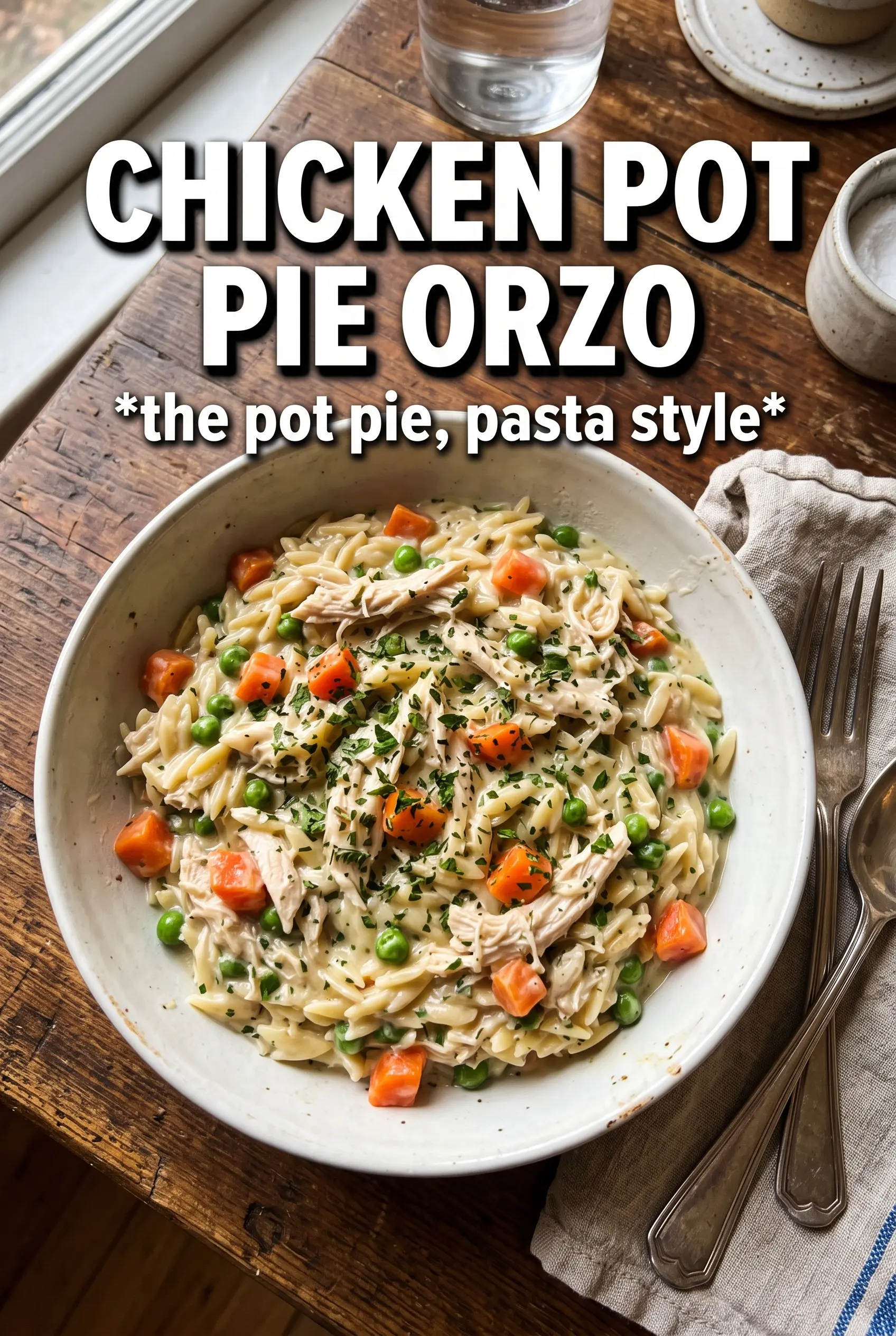
Chicken pot pie orzo brings all the comfort of a classic pot pie into one creamy skillet-friendly dinner, and the orzo gives it a softer, silkier finish than a traditional crust ever could. The broth thickens into a sauce that coats every piece of pasta, the chicken stays tender, and the peas, carrots, and celery keep every bite tasting like the filling everyone goes after first.
What makes this version work is the balance between the flour-butter base and the liquid you add after it cooks for a minute. That short step takes away the raw flour taste and gives the sauce enough body to cling to the orzo without turning gluey. Cooking the pasta right in the sauce also lets the starch help thicken everything naturally, which is why this dish ends up creamy instead of soupy.
Below you’ll find the small details that matter most: when to stir, when to lower the heat, and how to keep the sauce from tightening up too much as the orzo finishes. If you’ve ever wanted pot pie flavor without rolling out pastry, this is the version worth keeping on repeat.
The sauce thickened up exactly right and the orzo stayed tender without getting mushy. I added rotisserie chicken like you suggested and my husband scraped the pot clean.
Save this chicken pot pie orzo for a creamy one-pot dinner with shredded chicken, tender vegetables, and that classic pot pie flavor.
The Trick Is Letting the Orzo Finish in the Sauce, Not Beside It
Orzo can go wrong fast if you treat it like a side dish and cook it separately. Here, it needs the sauce around it so it can release starch and absorb flavor at the same time. That is what turns this from chicken and pasta in cream sauce into something that actually tastes like pot pie filling.
The other thing that matters is heat control once the broth and cream go in. If the pot is too hot, the sauce can tighten unevenly or look grainy before the orzo is even close to done. Keep it at a steady simmer and stir often enough that the pasta doesn’t catch on the bottom.
- Orzo — This pasta gives you the most pot pie-like spoonable texture. Larger pasta won’t create the same creamy, almost stew-like finish, and rice won’t give the same body.
- Chicken broth — Use a broth you like the taste of, because it carries most of the savory base here. Low-sodium is the safest choice if you want control over the final seasoning.
- Heavy cream — This is what gives the dish its rich, pot-pie filling feel. Half-and-half can work in a pinch, but the sauce will be lighter and a little less stable.
- Shredded chicken — Rotisserie chicken is perfect here because it stays moist and saves time. If you’re cooking chicken fresh, pull it early and shred it while it’s still warm so it doesn’t dry out.
- Frozen peas — Add them near the end so they stay bright and sweet. If they go in too early, they lose their pop and fade into the sauce.
What Each Ingredient Is Actually Doing in This Recipe

- Primary ingredient (the star) — Quality matters most. Choose the best you can find.
- Cooking medium (oil, butter, or broth) — This carries flavors and prevents dryness.
- Seasonings (salt, pepper, spices, herbs) — Layer flavors so nothing overpowers. Build depth gradually.
- Aromatics (garlic, onion, herbs) — Cook with fat to bloom flavors. Become the foundation.
- Supporting ingredients — Complement the main ingredient without overpowering it.
- Sauce or liquid (if applicable) — Brings flavors together. Balance richness with acid.
- Acid (lemon, vinegar, wine, or other) — Brightens and prevents flat-tasting results.
- Final finish (garnish, glaze, or sauce) — Prevents one-dimensional taste and adds visual appeal.
Building the Pot Pie Flavor Without a Crust
Softening the Vegetables First
Start with the butter, onion, carrots, and celery and cook them until the onion is translucent and the carrots have begun to lose their raw edge. This is the base that gives the dish its pot pie character, so don’t rush it. If the vegetables are still hard when you add the liquid, they’ll stay a little underdone in the finished dish because the pasta thickens everything before they fully soften.
Cooking Out the Flour Before the Liquid Goes In
Once the garlic, thyme, garlic powder, and flour hit the pot, stir constantly for about a minute. The mixture should look paste-like and smell a little nutty, not dusty. That quick cook time gets rid of the raw flour taste and helps the sauce thicken smoothly instead of clumping once the broth and cream are added.
Letting the Orzo Work for You
Pour in the broth and cream gradually while whisking, then bring the pot to a gentle simmer before adding the orzo. Stir frequently as it cooks so the pasta doesn’t stick or settle into a heavy layer at the bottom. The sauce will look loose at first, then thicken as the orzo softens; stop cooking when the pasta is al dente and the sauce still looks a touch looser than you want, because it will tighten as it sits.
Finishing With Chicken and Peas
Stir in the chicken and peas near the end and cook just long enough to heat everything through. The chicken only needs a few minutes, and the peas should stay bright green. If the sauce seems too thick at this point, splash in a little broth to loosen it before serving, because the orzo keeps absorbing liquid after the heat is off.
Three Ways to Adjust Chicken Pot Pie Orzo Without Losing the Point
Gluten-Free Version
Swap the orzo for a gluten-free small pasta that holds shape well, and use a gluten-free flour blend for the roux. The texture will be a little different because gluten-free pasta can soften faster, so start checking it a minute or two early and keep the sauce on the looser side while it finishes.
Dairy-Free Swap
Use olive oil or a plant-based butter and replace the cream with full-fat unsweetened coconut milk or an unflavored dairy-free cream. The dish will still be creamy, but the flavor will lean a little less like classic pot pie and a little more rustic, so taste the seasoning before serving and add extra pepper if needed.
Use What Chicken You Have
Rotisserie chicken keeps this fast, but leftover roasted chicken or poached chicken works too. Dark meat gives you a deeper, juicier result, while breast meat stays lighter; either one is fine as long as it is shredded into bite-size pieces so it blends into the sauce instead of sitting in chunks.
Storage and Reheating
- Refrigerator: Store in an airtight container for up to 4 days. The orzo will continue to absorb sauce, so it gets thicker as it sits.
- Freezer: It freezes, but the cream sauce can separate a little when thawed. If you freeze it, cool it completely, portion it well, and expect a softer texture after reheating.
- Reheating: Warm it gently on the stove or in the microwave with a splash of broth or milk. The biggest mistake is reheating it too hard, which makes the sauce break and the orzo go dry before the center is hot.