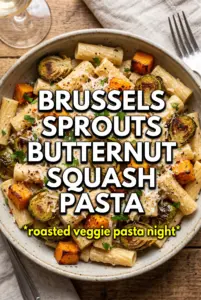
Roasted Brussels sprouts and butternut squash give this pasta the kind of contrast that keeps you going back for another forkful: crisp-edged vegetables, tender centers, and a brown butter sauce that clings to every ridge of rigatoni. The hazelnuts bring a toasted crunch, the parmesan melts into the sauce, and the sage pulls the whole dish toward that nutty, savory place where simple ingredients taste like they’ve been worked over with care.
What makes this version work is the way each piece gets handled separately before it all comes together. The vegetables need enough heat and space to caramelize instead of steam, and the butter has to brown before the garlic goes in so the sauce tastes deep instead of flat. A little pasta water ties everything together and keeps the parmesan from turning dry or clumpy.
Below, I’m walking through the part that matters most: getting the vegetables browned, not soggy, and building the sauce so it coats the pasta instead of pooling at the bottom of the bowl.
The Brussels sprouts got crisp around the edges and the squash stayed tender instead of mushy. The brown butter with sage made the whole pasta taste restaurant-worthy, and the toasted hazelnuts were the perfect finish.
Save this Brussels sprouts and butternut squash pasta for a night when you want brown butter, roasted vegetables, and a little crunch in one bowl.
The Part That Keeps the Vegetables from Going Soft
Brussels sprouts and butternut squash both reward high heat, but they don’t behave the same way in the oven. Squash gives up moisture quickly and can go from caramelized to collapsed if it’s crowded, while Brussels sprouts need the cut side exposed so it can take on color. Roast them separately and you give each vegetable the room it needs to brown on its own terms.
The other thing that matters here is the pan surface. If the vegetables sit in a wet layer, they steam, and once that happens you’re chasing flavor instead of building it. A light coating of olive oil is enough; too much just softens the edges. You want browned edges, tender centers, and a little resistance when you poke the squash with a fork.
What Each Ingredient Is Actually Doing in This Bowl
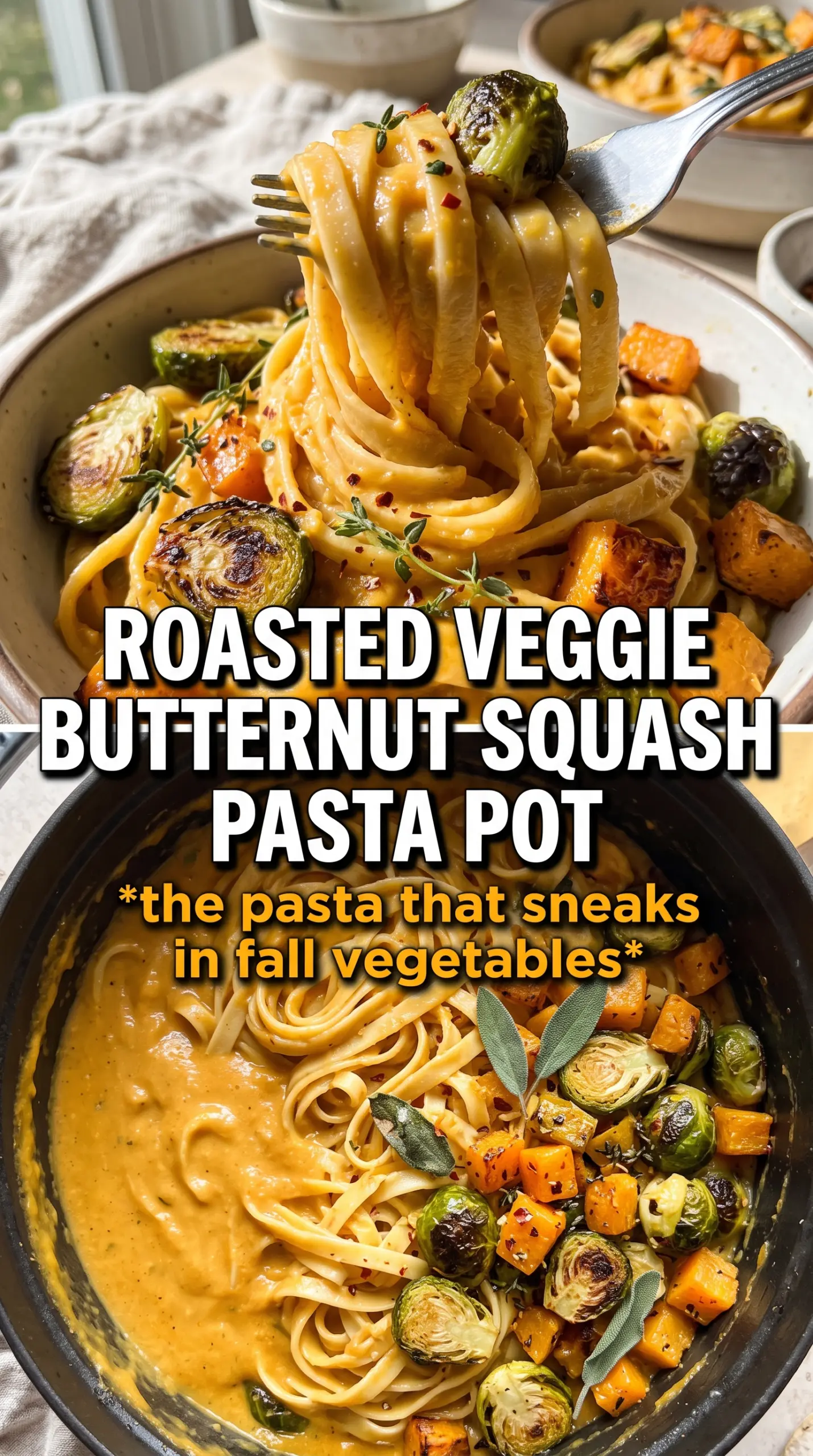
- Rigatoni or penne — A short pasta with ridges grabs the brown butter and catches bits of parmesan, nuts, and roasted vegetables. Long pasta works in a pinch, but it won’t hold the sauce in the same way.
- Butternut squash — This brings sweetness and a soft, almost creamy texture once roasted. Cut it into even cubes so it finishes at the same time as the sprouts; uneven pieces leave you with a mix of burnt and underdone.
- Brussels sprouts — Halved sprouts roast into crisp, nutty layers that balance the sweeter squash. If some outer leaves fall off in the pan, keep them; they turn into the best crunchy bits.
- Butter — This is the base of the sauce, and browning it is what gives the dish its depth. Salted butter can work if that’s what you have, but unsalted gives you better control once the parmesan goes in.
- Fresh sage — Sage blooms in the butter and flavors the whole dish without needing much. Dried sage won’t taste the same here; if you must substitute, use a smaller amount and cook it briefly so it doesn’t go dusty and bitter.
- Parmesan — Use the real grated stuff if you can. It melts into the sauce instead of sitting in strings or clumps, and that matters when you’re trying to coat pasta evenly.
- Toasted hazelnuts or walnuts — The nuts are there for crunch and a toasty finish. Hazelnuts taste a little sweeter and more elegant; walnuts are easier to find and still work well if you toast them first.
Building the Brown Butter Sauce So It Stays Glossy
Roast the Vegetables First
Get the squash and Brussels sprouts onto separate sheet pans and roast them until the edges are deeply golden and the centers are tender. The separation matters because the Brussels sprouts usually need more browning, while the squash can soften faster and release more moisture. If you pile them together, the pan fills with steam and the vegetables lose the roasted flavor that makes this dish worth making.
Cook the Pasta to the Edge of Done
Boil the pasta in well-salted water until it’s just shy of fully tender, then reserve at least a cup of the cooking water before draining. That starchy water is what helps the sauce cling later. If you drain everything and try to fix the sauce with plain water, it will taste thin and the parmesan won’t emulsify the same way.
Brown the Butter Before the Garlic Goes In
Melt the butter over medium heat and let it foam, then keep going until it smells nutty and the milk solids at the bottom turn golden brown. Add the garlic and sage only after the butter has browned, because garlic burns fast and turns bitter in hot fat. You’re looking for a deep toasted aroma, not dark specks that smell acrid.
Toss Everything Together with a Little Pasta Water
Add the pasta to the pan and splash in enough pasta water to loosen the butter into a light sauce before you add the parmesan. Stir until the cheese melts and the sauce turns glossy, then fold in the roasted vegetables and nuts at the end so they keep their texture. If the sauce looks greasy, it means it needs a little more pasta water and a little more tossing, not more butter.
Make It Dairy-Free
Swap the butter for a good olive oil and use a dairy-free parmesan-style alternative, then lean harder on the sage and toasted nuts for richness. You won’t get the same browned, nutty flavor from the butter, but the dish still lands in a savory, satisfying place.
Make It Gluten-Free
Use a sturdy gluten-free rigatoni or penne and pull it from the water while it still has a little bite. Gluten-free pasta can go soft fast once it hits the sauce, so keep the tossing quick and add the vegetables right at the end.
Swap the Nuts Based on What You Have
Hazelnuts give the cleanest toasted crunch, but walnuts work well and are easier to find. Skip raw nuts straight from the bag; toasting them first deepens the flavor and keeps them from tasting flat against the brown butter.
Storage and Reheating
- Refrigerator: Store leftovers in an airtight container for up to 4 days. The pasta will absorb some of the sauce as it sits, so it gets a little less glossy by day two.
- Freezer: This freezes, but the roasted vegetables soften after thawing. Freeze in a sealed container for up to 2 months if needed, though the texture is best fresh.
- Reheating: Warm it gently in a skillet with a splash of water over medium-low heat. The common mistake is blasting it in the microwave, which tightens the cheese and dries out the pasta before the sauce loosens again.
Answers to the Questions Worth Asking
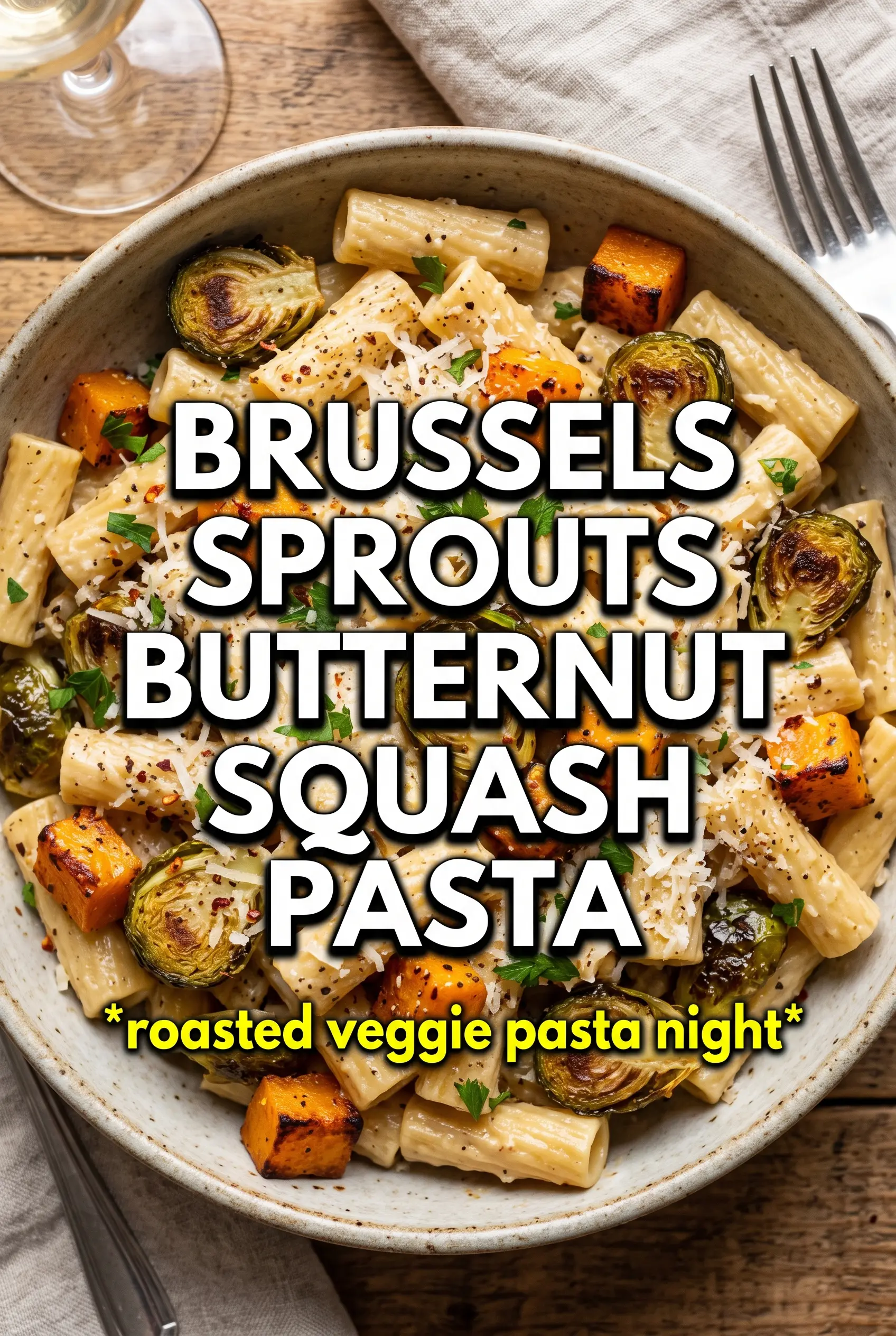
Brussels Sprouts And Butternut Squash Pasta
Ingredients
Equipment
Method
- Heat the oven to 425F. Toss the butternut squash cubes with half the olive oil and a pinch of salt and pepper, spread on a sheet pan, and roast for 25 minutes until caramelized and browned at the edges, turning once if needed for even color.
- On a second sheet pan, toss the halved Brussels sprouts with the remaining olive oil and salt and pepper. Roast at 425F for 25 minutes until caramelized and blistered, with darker spots visible.
- Bring a large pot of salted water to a boil and cook the rigatoni or penne according to package directions. Reserve 1 cup of pasta water before draining.
- In a cast iron skillet over medium heat, melt the unsalted butter. Add the garlic and chopped sage and cook until the butter turns golden and smells nutty, stirring often, about 3 to 5 minutes with visible golden-brown specks.
- Add the drained pasta to the brown butter and pour in pasta water gradually to loosen into a glossy coating. Toss vigorously for 30 to 60 seconds until clinging, not dry.
- Add the roasted butternut squash and roasted Brussels sprouts to the skillet along with grated parmesan. Toss until the vegetables are coated and the parmesan melts into the sauce.
- Season with salt and pepper to taste. Top each serving with toasted hazelnuts or walnuts and finish with any extra parmesan if desired.