Bubbling campfire baked beans come out smoky, sweet, and thick enough to cling to a spoon, with bacon running through every bite and a glossy sauce that tastes like it belonged on the fire from the start. The best version doesn’t just heat through. It concentrates. The onions soften into the beans, the brown sugar and ketchup round out the edges, and the uncovered simmer gives you that sticky, scoopable finish people always seem to go back for.
What makes this method work is balance and patience. The beans start with a built-in head start from the canned baked beans, which already have some sauce and seasoning. From there, the BBQ sauce, mustard, Worcestershire, and bacon add depth, while the uncovered cook is what keeps the final dish from staying thin and soupy. You’re not trying to boil it hard. A steady simmer lets the sauce tighten without breaking down the beans.
Below, I’m walking through the small details that keep campfire beans from turning watery, plus a few smart swaps if you’re cooking over charcoal, feeding a crowd, or working with what you already have in the pantry.
The beans thickened up perfectly over the fire and the bacon stayed crisp enough to stand out instead of disappearing into the sauce. I kept stirring every few minutes and ended up with the best side at the cookout.
Campfire baked beans with bacon are the side dish that actually gets scraped clean at the table.
The Part That Keeps Campfire Beans Thick Instead of Soupy
The biggest mistake with campfire beans is rushing the simmer or covering the pot too early. Covered beans trap steam, and steam turns the sauce loose. Uncovered cooking lets moisture escape while the sugars in the BBQ sauce, ketchup, and brown sugar concentrate into a deeper, stickier glaze.
Another thing worth knowing: the beans will look a little loose while they’re hot. That’s normal. They tighten as they sit for a few minutes off the heat, so don’t keep reducing them until they turn paste-thick in the pot. Stop when the sauce coats the back of a spoon and still moves slowly around the beans.
What Each Ingredient Is Actually Doing in the Pot
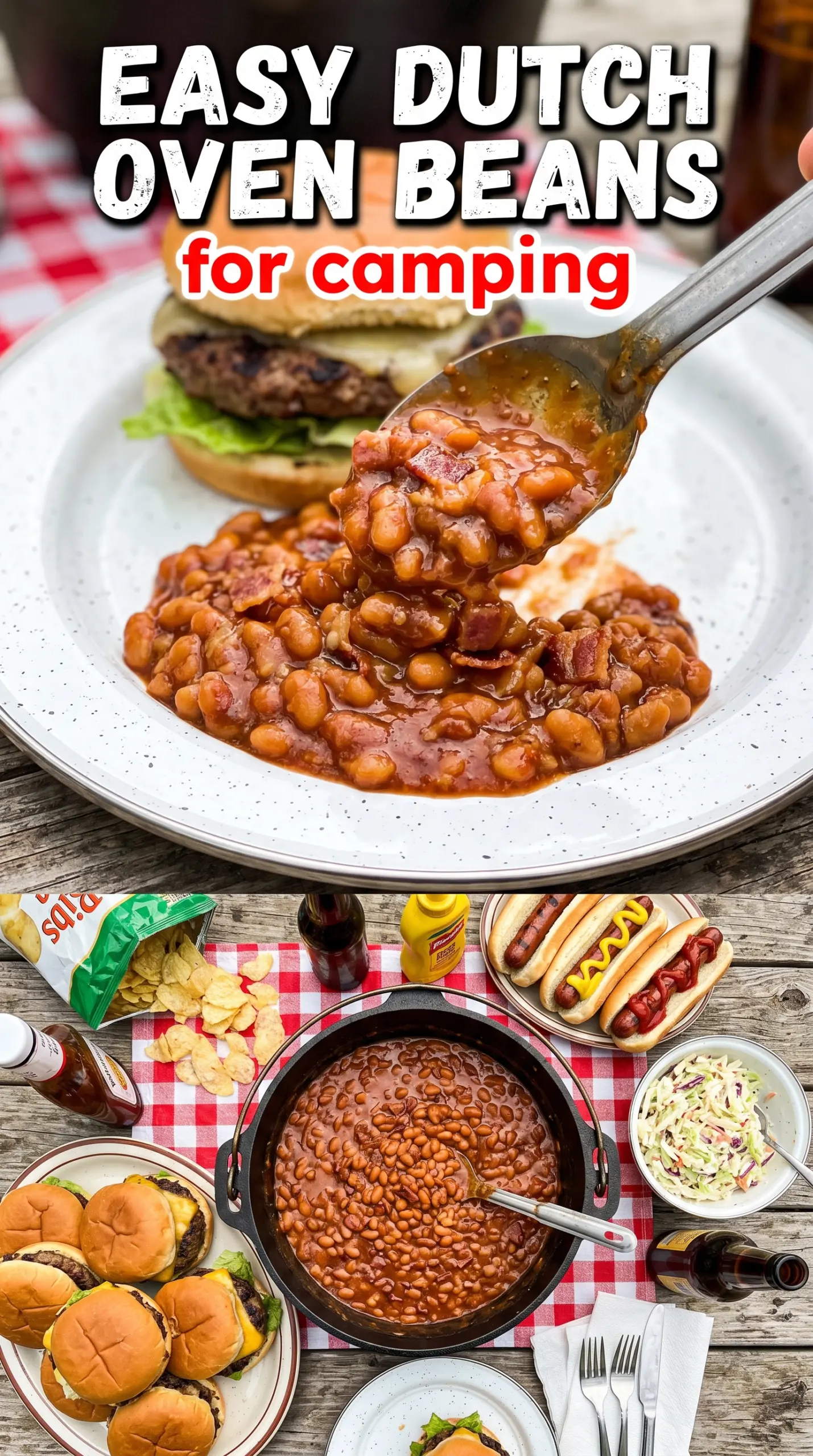
- Canned baked beans — These bring the saucy base and the soft bean texture without needing a long simmer. Use a good standard brand; the flavor difference shows because there isn’t much else to hide behind.
- Bacon — Bacon gives the smoke and salt that make the dish taste like campfire beans instead of sweet stovetop beans. Cook it first and crumble it in after it’s crisp so it doesn’t turn rubbery in the pot.
- BBQ sauce — This adds body, smoke, and a layered sweetness that plain ketchup can’t match. If yours is very thick or very sweet, reduce the brown sugar a little so the finished beans don’t tip into candy-sweet territory.
- Onion — Diced onion softens as the beans simmer and gives the sauce more depth. If you want a smoother finish, dice it small; bigger chunks stay more noticeable.
- Mustard and Worcestershire sauce — These are the sharp, savory notes that keep the beans from tasting flat. Don’t skip them; even small amounts matter here.
Getting the Simmer Right Over the Fire
Building the Base
Combine everything in a Dutch oven or sturdy pot and stir until the sauce looks evenly mixed, with the bacon and onion distributed throughout. At this stage, the mixture will look a little looser than the finished dish, and that’s exactly right. If you add too much extra liquid now, the beans will never reduce properly over the fire.
Bringing It Up to a Gentle Bubble
Set the pot over the campfire and let the beans come up to a simmer, not a rolling boil. A hard boil can break up the beans and make the sauce spit and scorch at the edges. You want steady bubbles breaking across the surface, with steam rising and the sauce starting to look glossy.
Cooking Until the Sauce Clings
Leave the pot uncovered and stir every few minutes, scraping along the bottom so nothing catches. The beans are done when the sauce thickens enough to mound on a spoon instead of sliding right off. If the fire is hot in spots, rotate the pot occasionally so one side doesn’t reduce too fast while the other stays thin.
Finishing Before Serving
Pull the pot off the heat when the beans look a touch looser than you want to serve them. They’ll settle and thicken as they cool for a few minutes. If they get too thick, stir in a spoonful or two of hot water or a little extra BBQ sauce to loosen them back up.
How to Adjust These Beans for Different Crowds and Cooking Setups
No-campfire stovetop version
Cook this in a Dutch oven or heavy pot on medium-low heat until it simmers, then keep it uncovered and stir often. You’ll get the same thick finish without the smoke, and the only real difference is that the flavor will be a little less rustic unless you use a smoky BBQ sauce.
Vegetarian campfire beans
Skip the bacon and add a teaspoon of smoked paprika plus a little extra salt to replace some of that savory depth. The beans will still be rich and sticky, but they’ll taste cleaner and less smoky, so choose a BBQ sauce that already has a strong smoke note.
Gluten-free check
This recipe can work gluten-free if both your BBQ sauce and Worcestershire sauce are certified gluten-free. The texture stays the same; the only thing that changes is making sure the condiments are safe.
Storage and Reheating
- Refrigerator: Store leftovers in an airtight container for 4 to 5 days. The beans thicken as they chill, which is normal.
- Freezer: They freeze well for up to 2 months. Cool completely first and freeze in a flat, sealed container for the best texture.
- Reheating: Rewarm gently on the stovetop over low heat or in the microwave in short bursts, stirring between rounds. Add a splash of water if the sauce has tightened too much, and don’t blast it over high heat or the sugars can catch and scorch.
Answers to the Questions Worth Asking
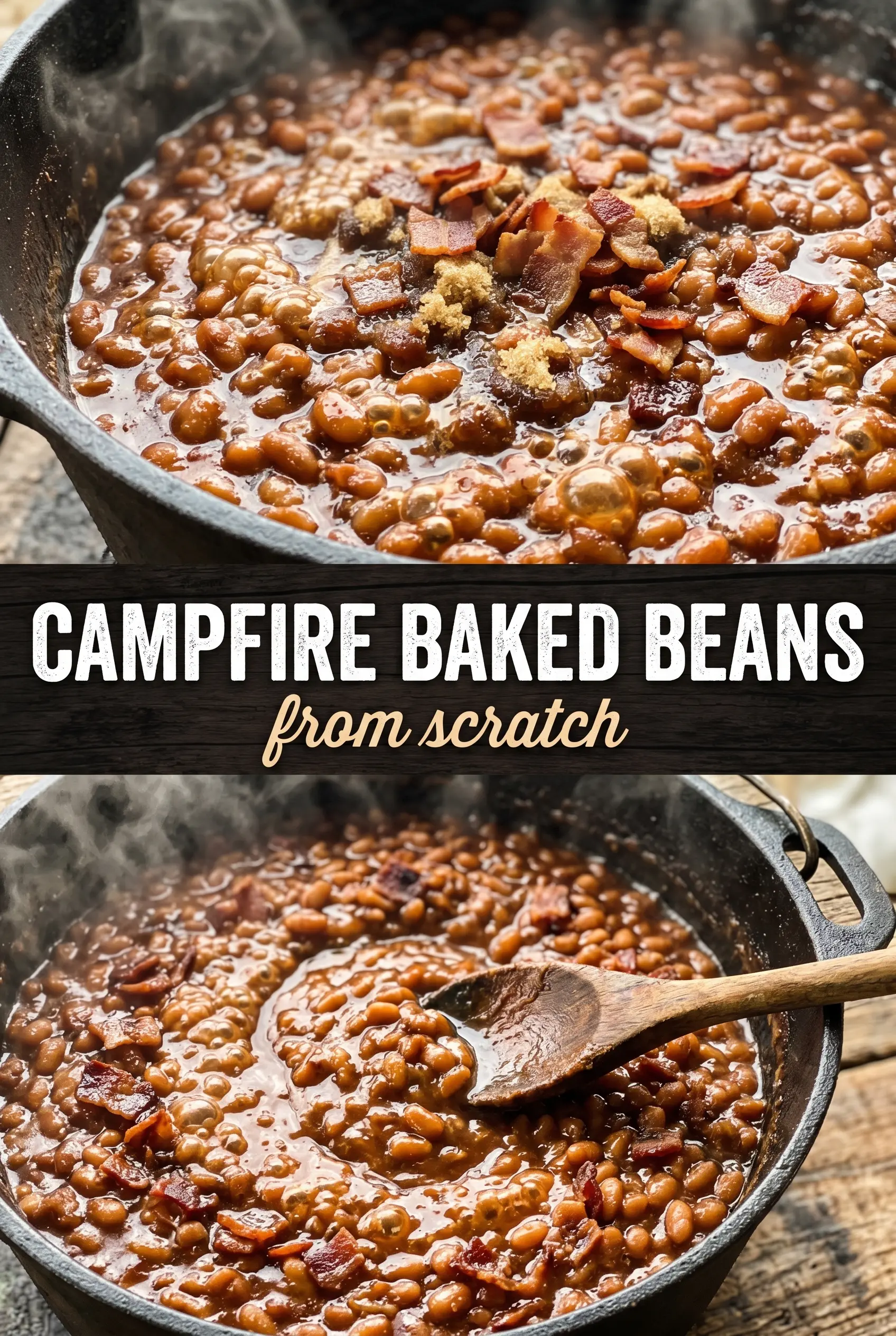
Campfire Baked Beans
Ingredients
Equipment
Method
- Combine baked beans, bacon, BBQ sauce, brown sugar, ketchup, onion, mustard, and Worcestershire sauce in a Dutch oven.
- Place the Dutch oven over the campfire and bring the mixture to a simmer, looking for steady bubbling around the edges.
- Cook uncovered for 25-30 minutes, stirring occasionally with a wooden spoon, until the beans are thickened and actively bubbly.
- Serve hot as a side dish, spooning out the thick, bubbling campfire beans.