Campfire cinnamon roll ups on a stick come off the fire with a crackly, golden outside and a soft, steamy center that tastes like a fairground treat made outside under open flame. The dough browns fast, the cinnamon sugar melts into the butter, and that last drizzle of glaze turns each spiral into something worth guarding with both hands.
The trick is using breadstick dough or biscuit dough that can wrap cleanly around a stick without tearing, then keeping it in constant motion over the heat. If the fire is too hot or you leave one side parked in the flames, the outside scorches before the center cooks. A steady rotation gives you even color, a cooked-through middle, and that slightly crisp edge everyone goes after first.
Below, I’ve included the exact fire-side cues I watch for, the best dough swap if you can’t find breadstick dough, and a few ways to keep the glaze from sliding right off a hot roll up. The details matter here, and they’re the difference between a burnt shell and a proper campfire dessert.
The dough crisped up on the outside but stayed soft inside, and rotating it over the coals kept it from burning. My kids loved brushing on the glaze themselves.
These campfire cinnamon roll ups on a stick come out golden, gooey, and perfect for brushing with glaze at the table.
The Part That Keeps the Dough from Burning Before It Cooks
The biggest mistake with stick-roasted dough is treating it like marshmallows. Breadstick dough needs a slower, steadier heat so the outside can set while the center cooks through. If the flame is licking the dough, it will blacken before the middle has a chance to lose that raw, gummy look.
Rotation matters more than distance here. Turn the stick constantly and hold it just above the hottest flames, not buried in them. You’re aiming for even browning all the way around, with the dough feeling light and firm when you tap it instead of soft and slick.
What the Dough, Butter, and Cinnamon Sugar Each Bring to the Fire
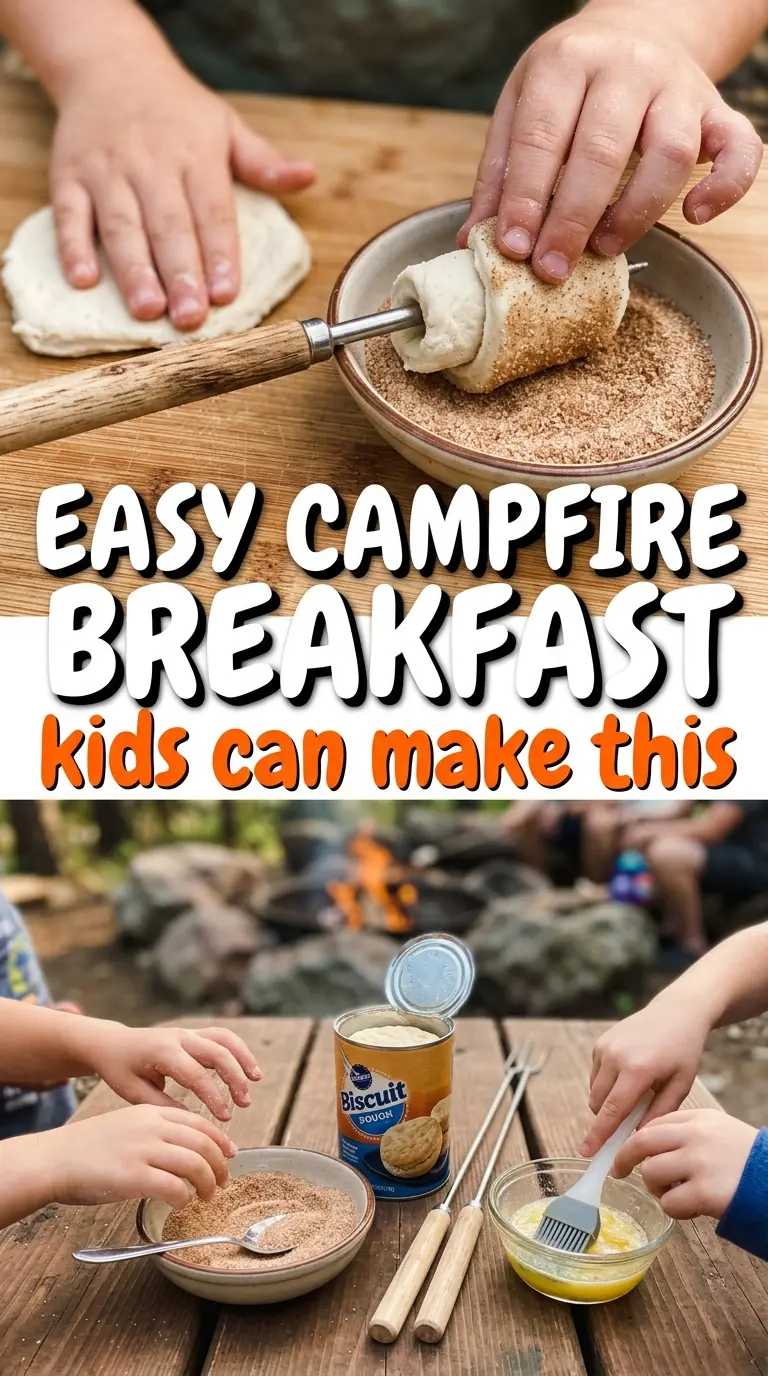
- Breadstick dough — This gives you a strip that wraps neatly around the stick and bakes into a pull-apart spiral. Biscuit dough works too, but it can be thicker and a little more uneven, so expect a softer, more rustic finish. If the dough is cold and stiff, let it sit for a few minutes so it doesn’t tear when you spiral it.
- Melted butter — Butter helps the cinnamon sugar cling and gives the surface that toasted, bakery-style finish. You can use margarine in a pinch, but the flavor won’t be as rich and the browning won’t taste as round. Brush it on after wrapping so it coats the outside instead of making the dough slippery.
- Cinnamon sugar — The sugar melts into the butter and forms the sweet crust that makes these taste like a cinnamon roll instead of plain toasted bread. Pre-mixed cinnamon sugar is fine, but if yours is old and dull, mix a fresh batch so the spice actually shows up against the dough.
- Roasting sticks — You need a sturdy stick with enough length to keep your hands away from the heat. Clean, food-safe sticks matter here because the dough sits directly on them while cooking. If you’re using wooden skewers, soak them first so they don’t scorch immediately.
How to Roast Them So the Center Cooks Without Charred Edges
Wrapping the Spiral
Separate the dough into individual pieces and stretch each one into a rope long enough to wind around the end of the stick. Spiral it with small gaps between the loops so heat can move through the dough; if you press it on too tightly, the inside stays doughy. The wrap should feel secure but not compressed.
Butter and Cinnamon Sugar Coating
Brush the entire surface with melted butter, then shower it with cinnamon sugar so the coating sticks to every ridge. The butter should look glossy, not pooled, because too much will drip into the fire and can cause flare-ups. If the sugar clumps, break it up with your fingers and keep going; even coverage matters more than perfection.
The Fire Side Finish
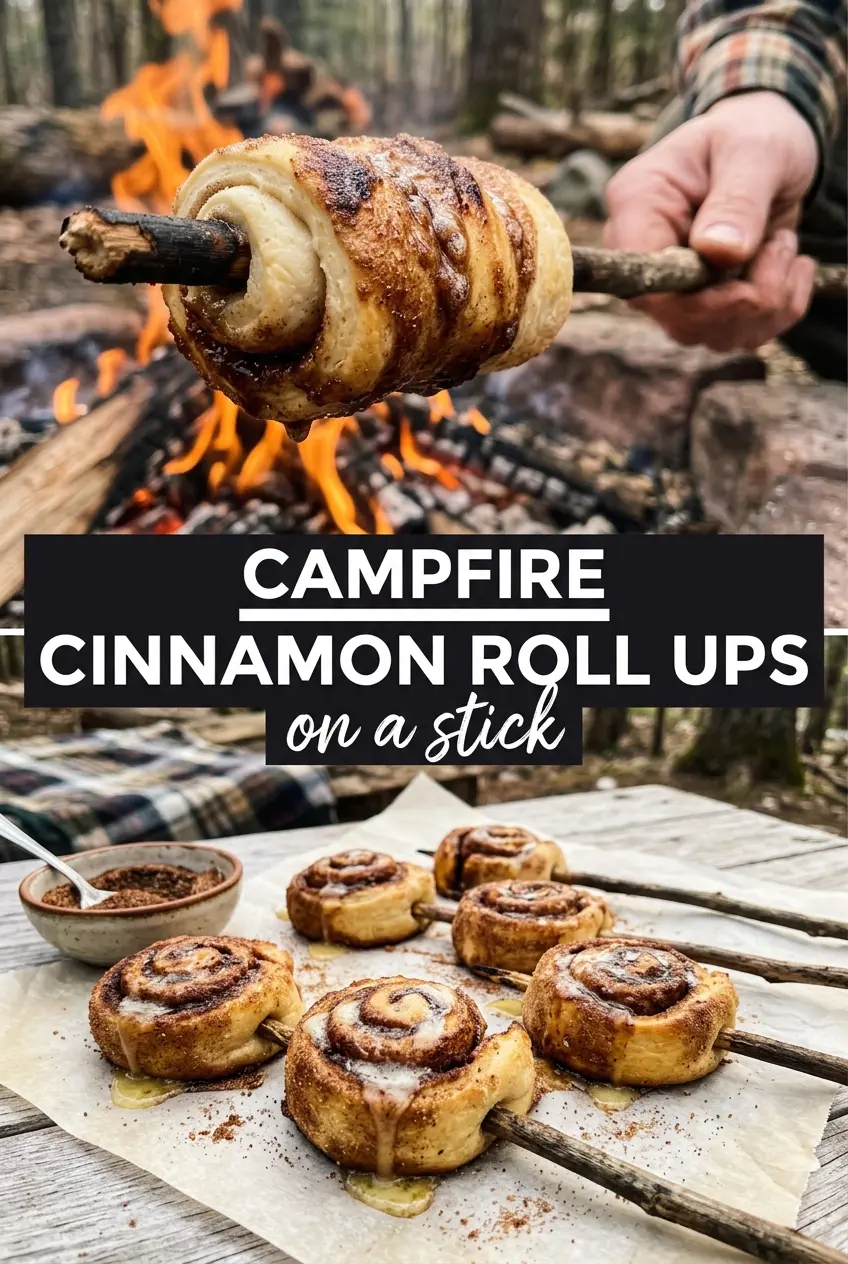
Hold the stick over the campfire and rotate constantly for 8 to 10 minutes, watching for a deep golden color and a dry, set surface. If one spot starts darkening too fast, move the stick higher immediately and keep turning. Pull it off when the outside is browned and the spiral feels cooked through when gently pressed, then slide it off the stick and let it cool for 2 minutes before glazing.
Glazing Without Losing the Heat
Stir powdered sugar and milk until smooth and thick enough to drizzle. If the glaze is too thin, it runs off the warm roll ups instead of clinging to the ridges, so add the milk slowly. Drizzle while the pastries are still warm, not blazing hot, so the glaze softens without disappearing.
How to Adapt These for Different Campsites and Crowds
Use biscuit dough for a softer, more rustic roll up
Biscuit dough works when breadstick dough isn’t available, but it bakes up thicker and less tidy. Expect a fluffier center and a little less spiral definition. Keep the pieces smaller so the outside cooks before the inside turns dense.
Make them dairy-free with a simple swap
Use a plant-based butter and unsweetened non-dairy milk for the glaze. The texture stays close, though the flavor will be a touch lighter and less rich. The key is still to brush, not soak, so the coating doesn’t slide off over the fire.
Make them gluten-free only if your dough holds a stick well
A gluten-free dough can work, but it needs to be sturdy enough to wrap without cracking and firm enough to stay on the stick. Chill it slightly if it feels sticky, and keep the spirals small. If the dough is too soft, it will slump before it browns.
Make a bigger batch by prepping the spirals first
You can wrap and butter all the dough before anyone heads to the fire. Keep the prepared sticks on a tray and cook them one at a time so each roll up gets the same even heat. That keeps the first ones from sitting too long and turning soggy from the butter.
Storage and Reheating
- Refrigerator: Store leftovers in an airtight container for up to 2 days. The outside softens as it sits, so the texture is best fresh off the fire.
- Freezer: These don’t freeze well after cooking. The spiral turns damp when thawed, and the glaze loses its texture.
- Reheating: Warm in a 300°F oven for a few minutes until heated through. Don’t microwave them unless you want the dough to go rubbery and the sugar topping to turn sticky.
Questions I Get Asked About This Recipe
Campfire Cinnamon Roll Ups On A Stick
Ingredients
Method
- Separate the refrigerated breadstick dough into individual pieces. You should have several small pieces ready to wrap.
- Wrap each dough piece around the end of a roasting stick in a spiral pattern. Leave a tight wrap with no big gaps so it roasts evenly.
- Brush the dough on each stick with melted butter. Add a visible sheen so the cinnamon sugar sticks.
- Sprinkle the wrapped dough with cinnamon sugar. Make sure the surface is evenly covered for browning.
- Hold the sticks over the campfire, rotating constantly, for 8-10 minutes until golden brown and cooked through. Look for even caramelized color and dough that feels set in the center.
- Slide the roll ups off the sticks and let them cool for 2 minutes. Set them down so steam can escape and the glaze won’t melt instantly.
- Mix powdered sugar and milk until smooth to form a drizzle glaze. Aim for a thick but pourable consistency.
- Drizzle the glaze over the warm roll ups right before serving. Let the glaze run slightly for a classic campfire drip.