Glossy bourbon peach salmon lands on the plate with crisp edges, a caramelized glaze, and salmon that stays tender in the center. The peach sauce brings sweetness without turning syrupy, and the bourbon adds a warm, almost oaky depth that keeps the whole dish from tasting one-note.
The trick is giving the glaze time to reduce before it ever touches the fish. That simmer pulls off the sharp edge of the bourbon, cooks the peach puree into something spoonable, and helps the honey and brown sugar cling to the salmon instead of sliding off in the pan. A short marinade follows, but it doesn’t need to be long enough to cure the fish — just enough to season the surface and start building flavor.
Below you’ll find the part that matters most: how to get the glaze thick enough to lacquer the salmon, how to keep the fillets from overcooking, and what to do if your peaches are firm or a little bland.
The glaze thickened up exactly like you described, and it caramelized on the salmon instead of running all over the skillet. My husband kept picking at the peach slices in the pan while it rested.
Save this bourbon peach salmon for the nights when you want a glossy peach glaze and seared salmon with almost no cleanup.
The Part That Keeps the Glaze From Sliding Off the Fish
Most peach salmon recipes rush the sauce straight from the pan to the fish before it has any body. That gives you good flavor for about two minutes, then you end up with a puddle under the salmon and not much on the salmon. Here the glaze has to reduce until it coats a spoon and leaves a trail when you drag a spatula through it. That texture matters more than the exact simmer time.
The other thing that helps is the brief marinade. Thirty minutes is enough to season the fillets and give the surface a head start on flavor, but longer than that can start softening the texture of the fish, especially if your peaches are very acidic or the pieces are thin. The oven finish is what sets the glaze without overcooking the salmon on the stovetop.
What Each Ingredient Is Actually Doing in This Dish
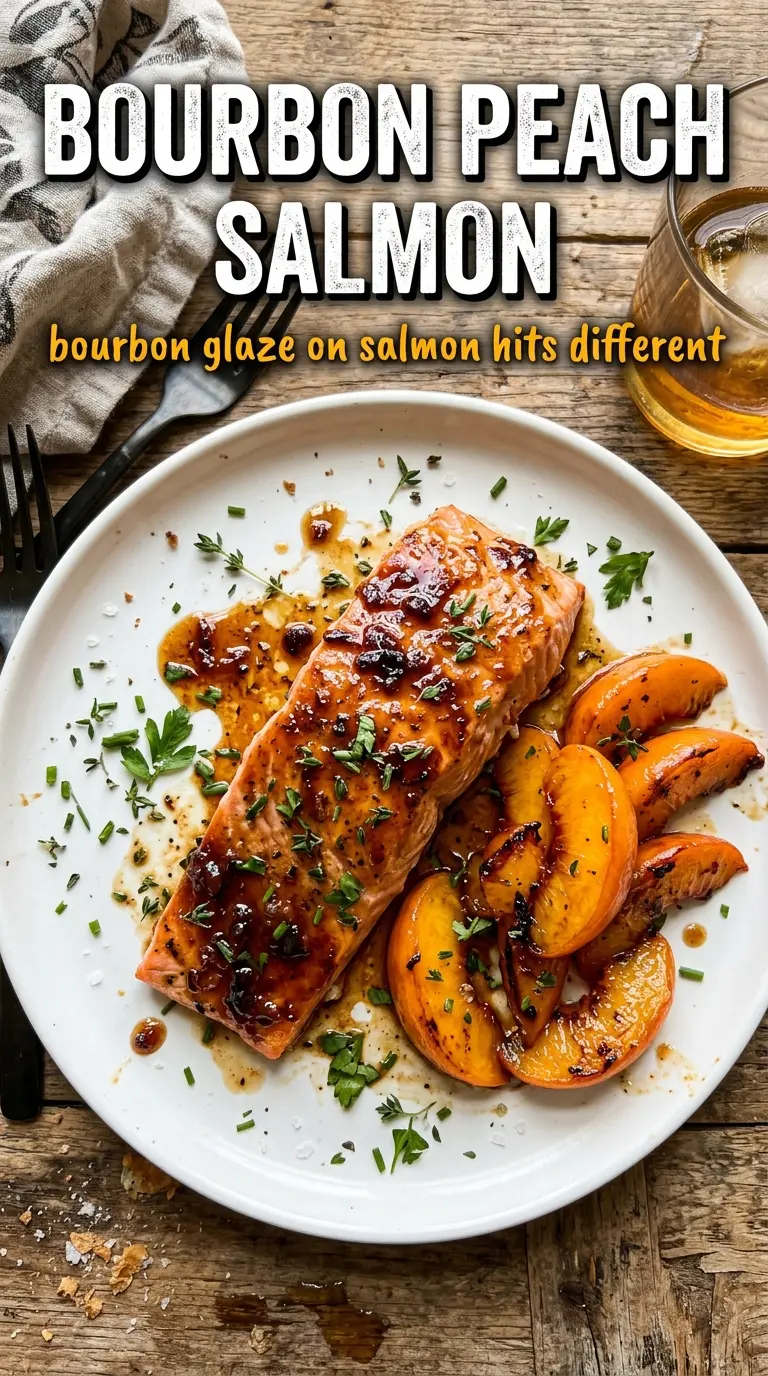
- Salmon fillets — Skin-on fillets hold together better during the sear and stay juicier in the oven. If you can choose, pick center-cut pieces that are similar in thickness so they finish at the same time.
- Peaches — Ripe peaches give the glaze its body and sweetness. If peaches are underripe, the sauce can taste flat, so let them soften on the counter first or add a small extra spoonful of honey to round things out.
- Bourbon — This brings depth and a little vanilla-caramel note after it reduces. You don’t need an expensive bottle, but don’t skip the simmer; raw bourbon tastes harsh and thin.
- Honey and brown sugar — These are what help the glaze lacquer instead of just sweeten. Honey gives shine, while brown sugar adds a deeper molasses note that plays well with the salmon’s richness.
- Soy sauce — A small amount sharpens the glaze and keeps it from tasting like peach jam. Use low-sodium if that’s what you keep around; the flavor still comes through.
- Garlic and ginger — They keep the glaze from going soft and sugary. Fresh ginger gives the cleanest lift here, and grating it finely helps it disappear into the sauce instead of leaving stringy bits.
- Olive oil — This is just for the sear, so a standard bottle is fine. You want enough to coat the skillet, not deep-fry the fish.
Building the Glaze, Then Finishing the Salmon Without Overcooking It
Reduce the peach mixture first
Combine the peach puree, bourbon, honey, soy sauce, brown sugar, garlic, and ginger in a saucepan and bring it to a steady simmer over medium heat. Stir often at the beginning, then watch for the bubbles to get smaller and the sauce to look shiny and slightly thickened. If it still runs off the spoon like juice, it isn’t ready for the fish yet.
Marinate only long enough to season
Pour half of the warm glaze over the salmon and let it sit in the refrigerator for 30 minutes. That gives the surface flavor, but it doesn’t turn the fish mushy or overly sweet. If the glaze seems hot when you pour it on, let it cool first so it doesn’t start cooking the salmon unevenly.
Sear for color, not doneness
Heat the oil in an oven-safe skillet over medium-high heat and place the salmon in skin-side up first. You want a deep golden crust on the presentation side before the flip, because that is what gives the glaze something to cling to. If the fish sticks, leave it alone a little longer; it will release once the sear is set.
Finish in the oven with the glaze on top
Flip the salmon, brush on the remaining glaze, and move the skillet to a 400°F oven for 8 to 10 minutes. The fish is done when it flakes at the edges but still looks slightly translucent in the center. Pull it before it turns opaque all the way through, because carryover heat will finish the job while the glaze stays glossy instead of drying out.
How to Adapt This When Your Pantry or Dinner Plans Change
Make It Gluten-Free Without Losing the Savory Balance
Swap in gluten-free tamari for the soy sauce. The glaze keeps the same salty backbone and glossy finish, and the rest of the recipe doesn’t need to change.
Use Peaches That Aren’t Quite Ripe Yet
If your peaches are firm or bland, cook the puree a minute or two longer before adding the bourbon and sweeteners. You can also add a small spoonful more honey, but keep the reduction going until the sauce tastes balanced, not just sweeter.
Make It Dairy-Free and Naturally Rich
This recipe already works without dairy, so the main thing is serving it with sides that carry the sauce well, like rice, potatoes, or grilled vegetables. The salmon and glaze do all the work on their own.
If You Don’t Want to Use Bourbon
Replace the bourbon with apple juice or peach nectar plus a teaspoon of apple cider vinegar. You’ll lose the warm oak note, but the glaze still reduces into a sweet-savory coating with enough bite to keep it from tasting flat.
Storage and Reheating
- Refrigerator: Store leftovers in an airtight container for up to 2 days. The glaze will thicken and the salmon will firm up a little as it chills.
- Freezer: You can freeze it, but the salmon texture softens after thawing and the peach glaze may loosen. Freeze only if you need to, and wrap portions tightly for up to 1 month.
- Reheating: Warm gently in a 300°F oven, covered loosely with foil, just until heated through. The biggest mistake is blasting it in the microwave, which dries out the fish and makes the glaze separate.
Answers to the Questions Worth Asking
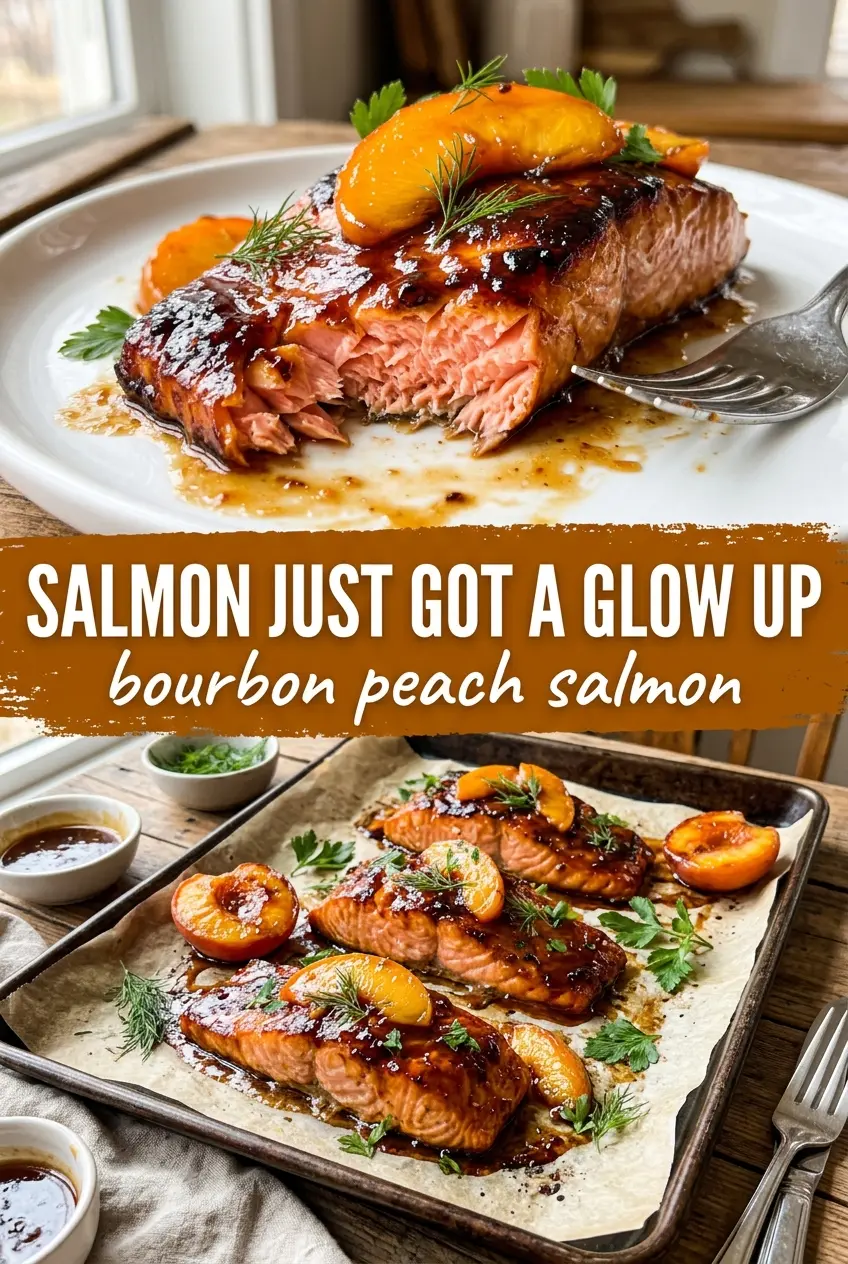
Bourbon Peach Salmon
Ingredients
Equipment
Method
- Combine peach puree, bourbon, honey, soy sauce, brown sugar, garlic, and ginger in a saucepan over medium heat. Simmer for 5-8 minutes, stirring until thickened into a glossy glaze.
- Season the salmon fillets with salt and pepper, then marinate in half the glaze. Refrigerate for 30 minutes so the surface takes on a light peachy coating.
- Heat olive oil in an oven-safe cast iron skillet over medium-high heat until shimmering. Place salmon skin-side up and sear for 3-4 minutes until the edges look deeply golden.
- Flip the salmon and brush generously with the remaining glaze. You should see a lacquered, caramelizing surface as the glaze thins slightly in the pan.
- Transfer the skillet to a 400F oven and bake for 8-10 minutes until the salmon flakes and looks opaque. The glaze should appear glossy and caramelized on top.
- Serve immediately with extra warm bourbon peach glaze drizzled over the salmon. The glaze should pool lightly and cling to the lacquered edges.