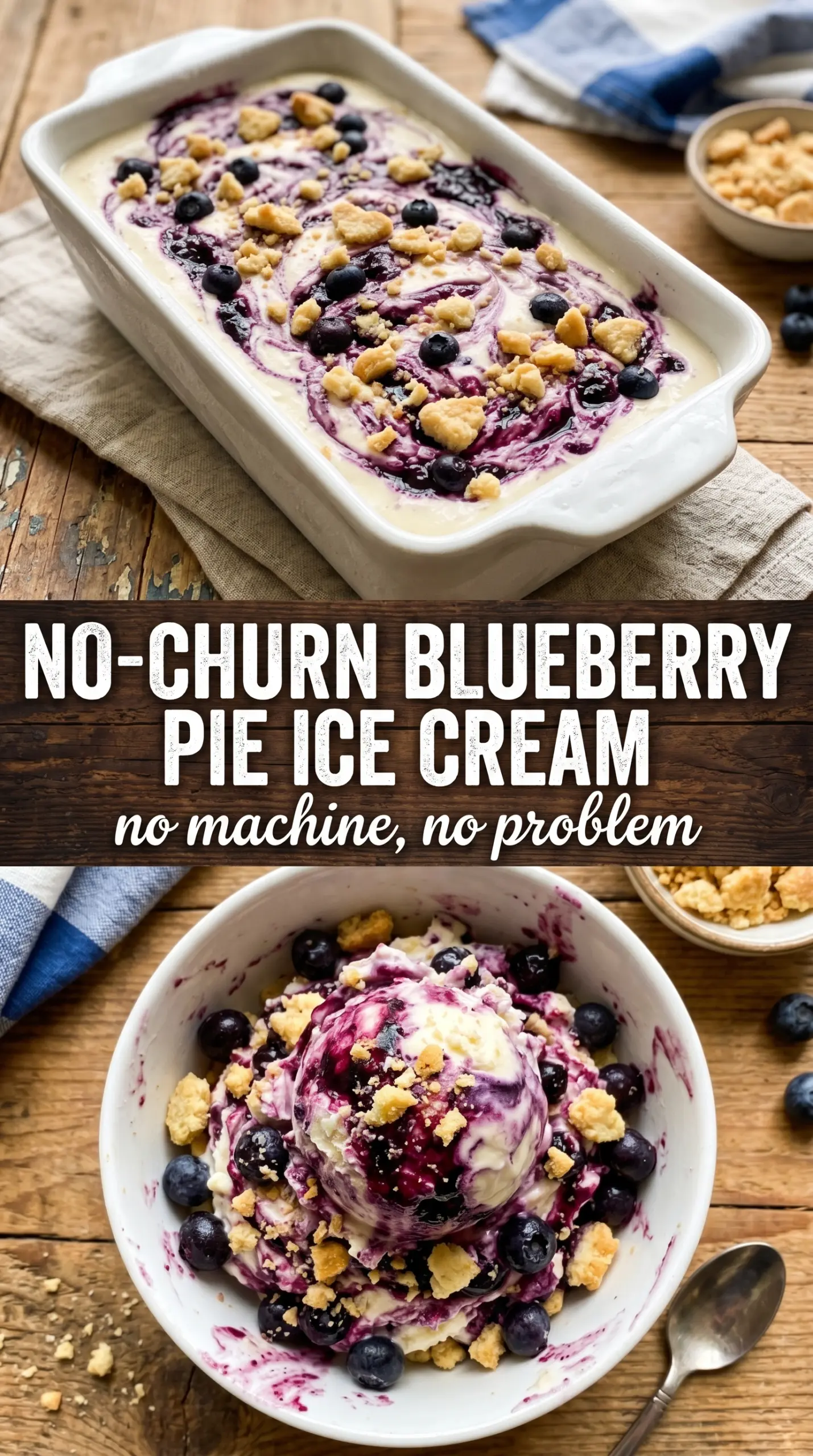
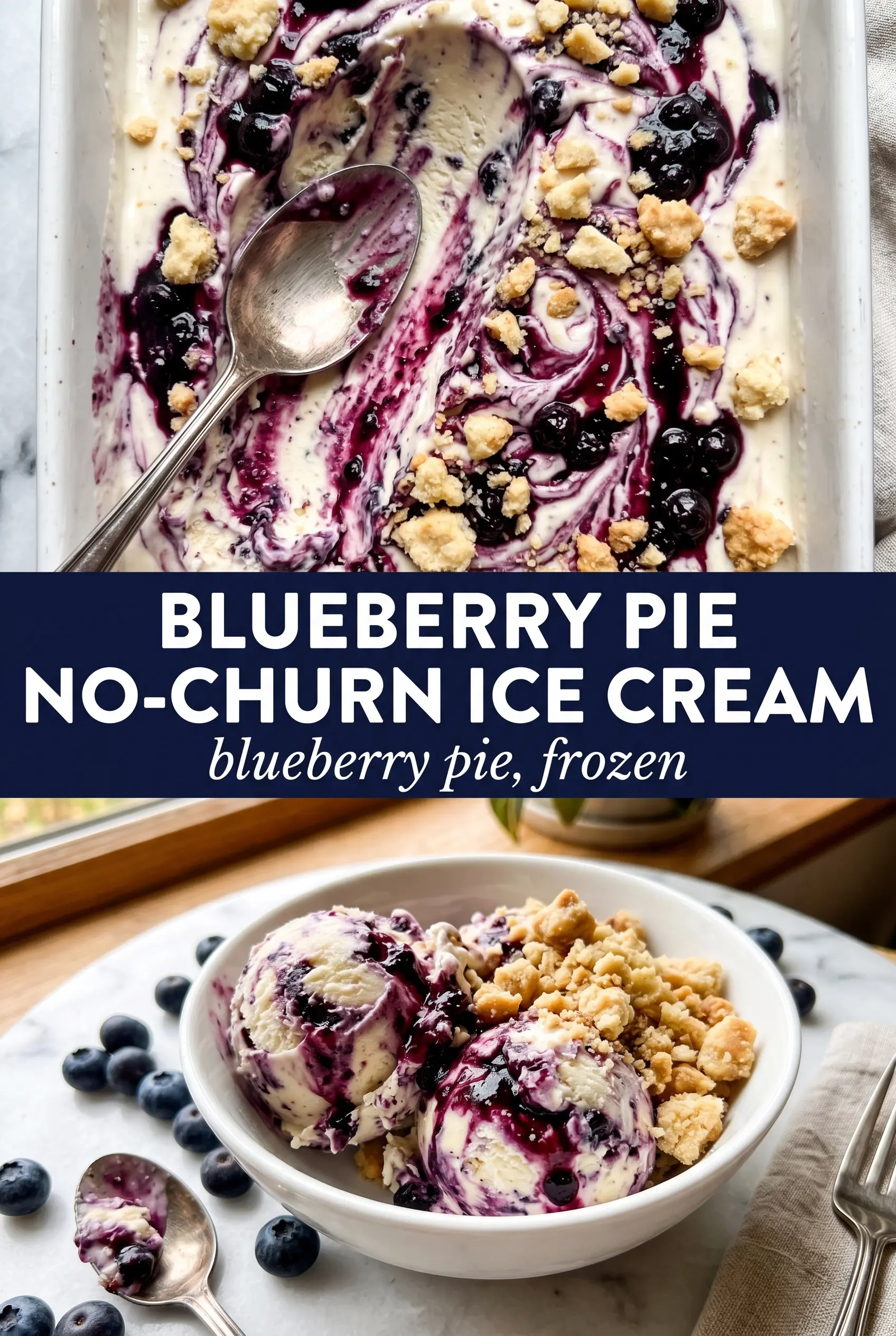
Blueberry pie no-churn ice cream tastes like the best part of a bakery slice and a scoop of vanilla ice cream melted together in one spoonful. The base stays plush and creamy, the blueberry swirl turns jammy instead of icy, and the pie crust pieces add those little buttery hits that keep every bite interesting. It’s the kind of dessert that disappears fast because people keep going back for “just one more” scoop.
What makes this version work is the balance. The blueberry compote is cooked long enough to thicken before it goes into the ice cream, which keeps it from freezing into hard, icy streaks. The condensed milk base keeps the texture smooth without an ice cream maker, and the whipped cream gives the mixture enough body to hold swirls and pieces without collapsing.
Below, I’m walking through the part that matters most: how to get a clean blueberry ripple, how to keep the crust pieces from turning soggy, and what to do if you want to make it a little more tart or a little more dessert-heavy.
The blueberry swirl stayed thick after freezing, and the pie crust bits kept their crunch instead of disappearing into the base. My kids kept asking for the “blueberry pie ice cream” again after the first scoop.
Love the jammy blueberry swirl and buttery pie crust pieces? Save this blueberry pie no-churn ice cream for the next time you want a frozen dessert that tastes like pie in a scoop.
Why the Blueberry Swirl Has to Be Thick Before It Hits the Cream
The biggest mistake with no-churn fruit ice cream is folding in fruit that still behaves like sauce. If the blueberry mixture is thin, it sinks, spreads, and freezes into hard icy pockets instead of staying in visible ribbons. Cooking it with the cornstarch slurry gives you that spoon-coating texture that holds its shape in the freezer.
Let it cool all the way down before swirling it in. Warm compote melts the whipped base and knocks out the air you just built, which leaves you with denser ice cream and muddy purple streaks instead of clean swirls. If you want those dramatic pockets of blueberry, stop cooking as soon as it’s thick enough to mound on a spoon and let it come to room temperature first.
What Each Ingredient Is Actually Doing in This Frozen Treat
- Base ingredient (cream, yogurt, or fruit) — This determines the texture and richness. Cream makes it scoopable; yogurt makes it tangy; fruit makes it refreshing.
- Sweetener (sugar or honey) — This prevents the mixture from freezing rock-solid and creates a smooth texture. Too much and it won’t freeze; too little and it’s icy.
- Egg yolks (if using custard method) — These create richness and a silky texture. Tempering is important so they don’t scramble.
- Thickener (cornstarch, gelatin, or egg) — This prevents ice crystals from forming and keeps the texture smooth instead of grainy.
- Flavoring (vanilla, chocolate, fruit, or spices) — Use quality flavorings because they’re essential to the taste. Dilute-tasting ice cream comes from cheap extract.
- Stabilizers (gum, gelatin, or dairy) — These keep the ice cream from becoming icy during storage. They prevent large ice crystals from forming.
- Mix-ins (nuts, chunks, or swirls) — These add texture and interest. Freeze-stable chocolate works better than regular chocolate, which gets hard.
- Proper chilling and churning (the technique) — This incorporates air and prevents ice crystals. An ice cream maker makes a huge difference in texture.
What Each Ingredient Is Actually Doing in This Ice Cream
- Heavy cream — This is what gives the ice cream its body. Whip it to stiff peaks so it can hold the fruit swirl and pie crust pieces without turning soupy; lower-fat cream won’t whip the same way.
- Sweetened condensed milk — This keeps the base smooth and scoopable without an ice cream maker. There isn’t a direct substitute that does the same job, because it brings both sweetness and texture in one ingredient.
- Blueberries — Fresh or frozen both work here. Frozen berries are fine straight from the freezer, and they often break down a little faster, which is helpful when you want a thick compote.
- Lemon juice — This wakes up the blueberry flavor and keeps the compote from tasting flat. It matters more here than in many desserts because the ice cream base is rich and needs that sharp edge.
- Cornstarch slurry — This is the difference between a pretty swirl and a frozen syrupy streak. Mix it with cold water first so it disperses evenly; dumping in dry cornstarch will leave lumps.
- Pie crust pieces — Bake and cool them before crumbling. That keeps them crisp longer in the freezer, and the buttery, toasted flavor is what makes this taste like actual pie instead of just blueberry ice cream with mix-ins.
Building the Swirl and Keeping the Crust Pieces Crisp
Cooking the Blueberry Compote
Set the blueberries, sugar, and lemon juice over medium heat and let them simmer until the berries burst and the juices look glossy. Stir in the cornstarch slurry and cook just until the mixture thickens and loses its raw, pasty look. If it still pours like syrup, it hasn’t reduced enough yet, and it will freeze too hard. Cool it completely before moving on; warm fruit is the fastest way to deflate the ice cream base.
Whipping the Base to the Right Texture
Whip the heavy cream to stiff peaks, which means the cream stands up straight when you lift the beaters. Stop there. If you push it too far, it starts to look grainy and can turn buttery when folded with the condensed milk. Whisk the condensed milk, vanilla, and salt together first so the flavor is even, then fold it into the whipped cream with a light hand to keep as much air in the mixture as possible.
Layering the Pan
Spoon in half the base, add half the blueberry compote, and scatter in some pie crust pieces. Repeat with the remaining mixture, then drag a knife through the pan once or twice for swirls. Don’t overmix or you’ll lose the contrast between the white base and the purple ribbons. A few visible streaks always freeze up prettier than a pan that’s been stirred until uniform.
Freezing Until It Slices Cleanly
Press a piece of parchment or plastic wrap directly onto the surface if you want extra protection from ice crystals, then freeze for at least 6 hours. The top should feel firm and the center should scoop without slumping. If it’s still soft in the middle, give it more time; no-churn ice cream needs patience at the end or it turns messy the second you try to serve it.
How to Adapt This Blueberry Pie Ice Cream for Different Kitchens
Make It Gluten-Free
Use a gluten-free pie crust or a gluten-free cookie crumble instead of standard crust pieces. You’ll still get that buttery crunch, but check that the crust is fully baked and cooled before crumbling so it stays crisp in the freezer.
Use Frozen Blueberries Without Thawing
Frozen berries work just as well as fresh and often make a thicker compote because they release juice quickly. Add them straight to the pan from frozen, but give them the full simmer time so the extra water cooks off before you swirl them into the cream.
Make It More Pie-Heavy
If you want more of a dessert-shop pie vibe, add a few extra pie crust pieces to the top right before freezing. Keep some pieces larger instead of crushing them all fine; those bigger bits stay more noticeable after freezing and give the ice cream a better pie crust bite.
Storage and Reheating
- Refrigerator: Don’t store this in the fridge; it will melt into a loose cream mixture within an hour or two.
- Freezer: Keeps well for about 2 weeks in a tightly covered loaf pan or freezer container. After that, the texture starts to pick up more ice crystals, especially around the edges.
- Reheating: There isn’t a reheating step here. For the best scoop, let the pan sit at room temperature for 5 to 10 minutes before serving so the edges soften slightly without turning the whole batch slushy.
Answers to the Questions Worth Asking
Blueberry Pie No-Churn Ice Cream
Ingredients
Equipment
Method
- Simmer blueberries, granulated sugar, and lemon juice in a medium saucepan over medium heat for 5 minutes, stirring often until the berries burst and thicken slightly.
- Stir the cornstarch slurry into the simmering berries and cook 2 more minutes over medium heat until the compote becomes noticeably thick and glossy.
- Cool the compote completely, then scrape any thickened bits into the pan so it swirls evenly later.
- Whip the heavy cream to stiff peaks so the base holds structure for no-churn freezing.
- Whisk the sweetened condensed milk, vanilla extract, and salt together until smooth, then fold into the whipped cream just until combined.
- Layer the vanilla base and blueberry compote into a 9x5 loaf pan, swirling with a knife to create purple streaks, and scatter pie crust pieces between layers.
- Freeze the loaf pan at 0°F until firm, at least 6 hours, then let it sit 5 minutes before scooping for cleaner cuts.