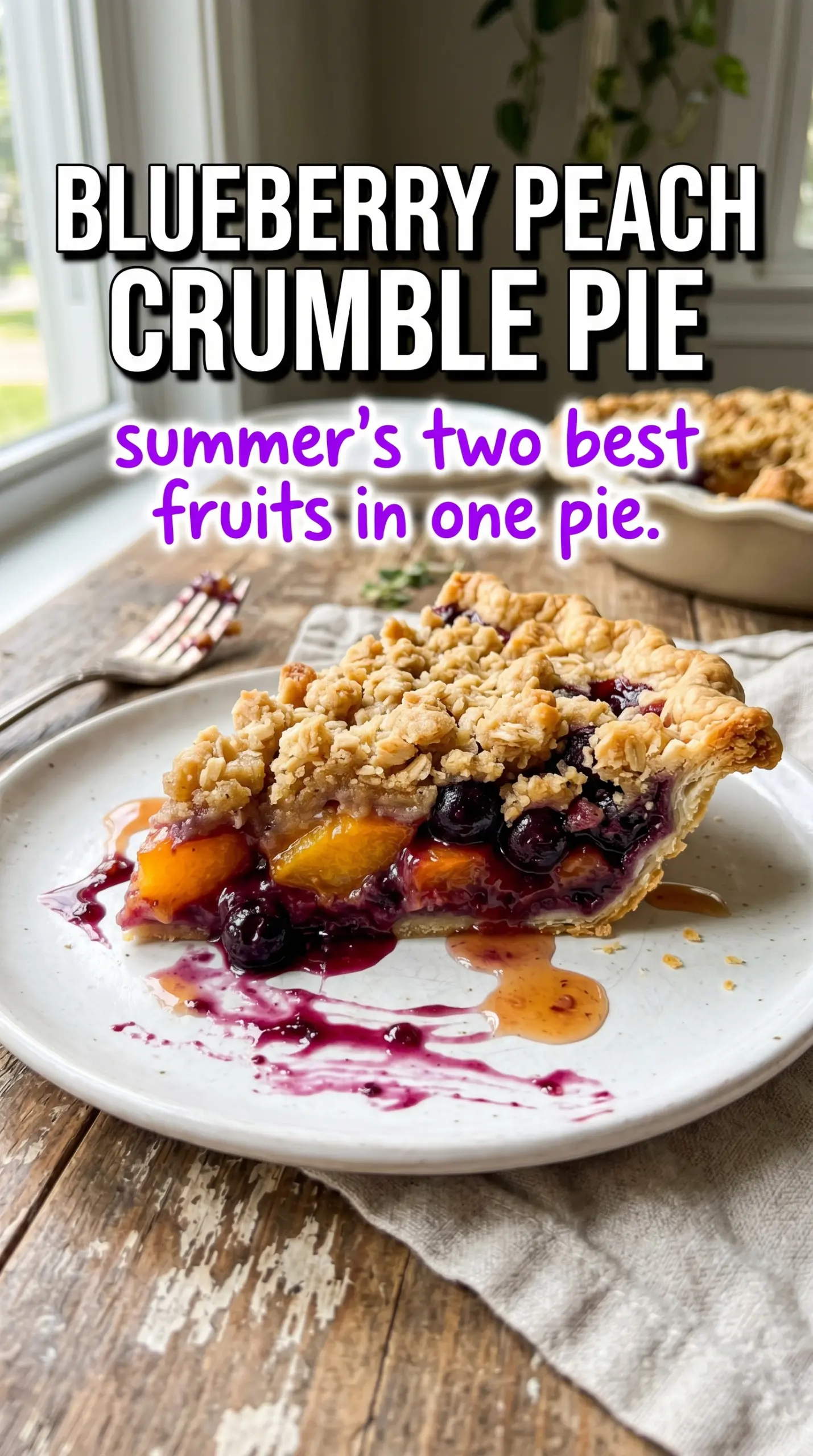
Blueberry peach crumble pie delivers the kind of slice that disappears fast: a flaky bottom crust, thick jammy fruit filling, and a browned oat crumble that stays crisp on top instead of turning soggy. The peaches soften into sweet ribbons, the blueberries burst and stain the filling a deep purple, and the whole pie sets up into neat wedges once it cools enough to cut cleanly.
The thing that makes this version work is balance. Cornstarch thickens the juices without making the filling gluey, and the lemon juice keeps the fruit tasting bright instead of flat. The crumble is built with cold butter and oats, so it bakes into crunchy clusters rather than a sandy layer that melts into the fruit.
Below, I’ve included the small details that matter most: how to keep the crust from over-browning, what to look for when the filling is done, and a few smart swaps if your peaches are extra juicy or you need to work with frozen fruit.
The filling set up beautifully and the crumble stayed crisp even after we had leftovers the next day. I covered the edges halfway through baking like you said, and the crust came out perfectly golden.
Save this blueberry peach crumble pie for the moment you want a bubbling fruit filling and a crisp brown sugar oat topping in one pan.
The Small Trick That Keeps a Crumble Pie from Going Soggy
Fruit pie filling fails in two places: it turns watery, or it boils over and turns the oven into a sticky mess. This pie avoids both by using cornstarch and a deep-dish structure that gives the juices room to bubble before they spill. You want the filling thick enough to mound slightly under the crumble before baking, not soupy in the bowl.
The other thing that matters is the topping. A crumble that’s packed too tightly bakes into a paste, while a loose, buttery one turns into crisp clusters that hold their texture over the fruit. If the butter is warm when it goes in, the topping starts melting before it hits the oven and you lose that clean, nubby crumb.
- Peaches — Use ripe peaches that still hold their shape. Overripe fruit turns mushy and can flood the filling with juice, which means a longer bake and a softer slice.
- Blueberries — Fresh berries give the cleanest texture, but frozen berries work if you don’t thaw them first. Thawed berries dump excess liquid and can make the filling loose.
- Cornstarch — This is what turns the fruit juices into a glossy, spoonable filling. Flour won’t thicken as cleanly here and can leave the fruit looking dull or pasty.
- Cold butter — The crumble depends on it. Cube it, keep it cold, and cut it in just until the mixture looks like uneven pebbles and clumps.
What Each Ingredient Is Actually Doing in This Pie
The pie crust is the base that keeps this from becoming a fruit crisp in disguise. A store-bought crust works fine here, especially if you want a shortcut, but it needs to be pressed firmly into the dish so it doesn’t shrink as the filling heats up. If you’re using homemade dough, chill it well before baking so the bottom stays flaky.
Brown sugar in the crumble brings a deeper caramel note than white sugar alone. The oats add texture and help the topping bake into those golden clusters that give each bite a little crunch. Cinnamon ties the peaches and blueberries together without taking over; a half teaspoon in the filling and another in the topping is enough to warm the pie without making it taste spiced.
- Lemon juice — This keeps the peaches and blueberries tasting lively and helps the filling read as fruity instead of heavy. It also balances the sugar once the pie is baked.
- Rolled oats — Old-fashioned oats give the crumble its chewy-crisp texture. Quick oats will work in a pinch, but they break down faster and make a finer topping.
- Brown sugar — Packed brown sugar gives the topping moisture and a caramel edge. If you swap in white sugar, the crumble will taste flatter and bake up drier.
Building the Filling and Crumble in the Right Order
Mixing the Fruit Until the Coating Disappears
Start by tossing the peaches and blueberries with sugar, cornstarch, lemon juice, and cinnamon until every piece looks lightly coated. The cornstarch needs to be distributed evenly or you’ll end up with thin pockets of juice and a few gummy spots where it clumped. Pour the filling into the crust right away; if it sits too long, the fruit starts shedding liquid before it hits the oven.
Cutting in the Butter for Real Crumbles
Mix the flour, oats, brown sugar, and cinnamon first, then work in the cold butter until the mixture looks like a mix of damp sand and small chunks. Stop before it turns uniform. Those uneven bits are what bake into the crisp, craggy topping instead of one flat layer. If the butter starts to smear, the bowl is too warm and the topping needs a quick chill.
Baking Until the Filling Bubbsles at the Center
Scatter the crumble over the fruit and bake at 375F until the top is deeply golden and the filling is actively bubbling through the center, not just around the edges. That bubbling is the signal that the cornstarch has thickened the juices. If the crust edges are getting dark early, cover them loosely with foil after about 30 minutes so the bottom and center can keep baking without burning the rim.
Letting the Pie Set Before You Slice
This is the part people rush, and it’s the difference between a neat wedge and a fruit spill. Let the pie cool at least 30 minutes before cutting, longer if you want the cleanest slices. The filling thickens as it cools, and the crust holds together better once the steam has had time to leave the pan.
How to Adapt This Pie When You Need a Different Fruit Mix
Frozen Fruit Version
Use frozen peaches and blueberries straight from the freezer. Don’t thaw them first or the filling will get watery before it ever hits the oven. Expect to add a few extra minutes of bake time, and watch for the same visual cue: the filling must be bubbling in the center.
Gluten-Free Crumble
Swap the all-purpose flour in the topping for a cup-for-cup gluten-free flour blend. The texture will be a little more delicate, but the oats still give you enough crunch to keep the topping interesting. Just check that your oats are certified gluten-free if that matters for your kitchen.
Dairy-Free Crumble
Use a plant-based butter that’s meant for baking, not a soft spread from a tub. You need something that stays cold long enough to form crumbs in the oven. The flavor shifts slightly, but the topping still bakes up golden and crisp if the butter substitute has enough fat.
Storage and Reheating
- Refrigerator: Store covered for up to 4 days. The topping softens a little, but the filling holds well.
- Freezer: Freeze baked slices tightly wrapped for up to 2 months. The crumble loses a little crispness after thawing, but it still tastes great.
- Reheating: Warm slices in a 325F oven for 10 to 15 minutes. The oven brings the crust and crumble back better than the microwave, which turns the topping soft and the filling loose.
Questions I Get Asked About This Recipe
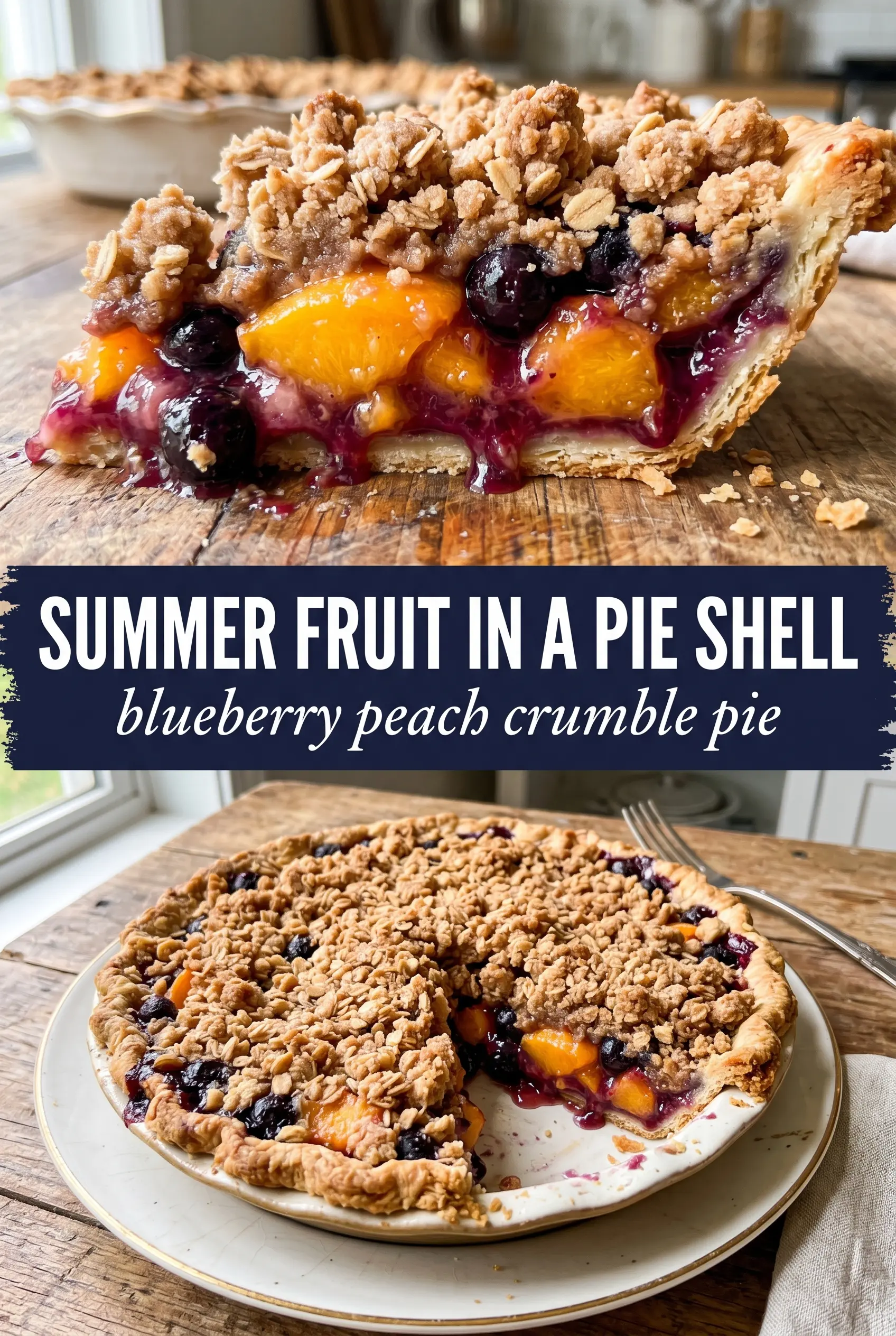
Blueberry Peach Crumble Pie
Ingredients
Equipment
Method
- Preheat the oven to 375F and place a sheet pan on the middle rack to help brown the bottom crust.
- Press the pie crust into a 9-inch pie dish and crimp the edges.
- Toss peaches and blueberries with granulated sugar, cornstarch, lemon juice, and cinnamon, then pour the filling into the crust.
- Combine all-purpose flour, rolled oats, brown sugar, and cinnamon, then cut in cold unsalted butter until the mixture looks like coarse crumbs.
- Scatter the crumble evenly over the fruit filling.
- Bake for 50-55 minutes at 375F until the crumble is deeply golden and the filling is bubbling up through the topping.
- After 30 minutes, cover the pie edges with foil if they brown too fast.
- Cool at least 30 minutes before slicing so the filling sets.