Cold noodles, crisp vegetables, and a sesame-ginger dressing give this Asian pasta salad the kind of balance that keeps people going back for another scoop. It’s sturdy enough to sit on a buffet, bright enough to wake up a plain dinner, and flexible enough to make ahead without turning limp or muddy.
The trick is in the dressing ratio and the chill time. Soy sauce brings the salt, rice vinegar brings the sharpness, and sesame oil adds depth without taking over. Rinsing the pasta after boiling stops the cooking fast and keeps the noodles from soaking up too much dressing before the salad has a chance to rest.
Below, I’ve included the little details that matter: how to keep the cabbage crisp, when to add the sesame seeds, and what to change if you want to make it vegetarian-friendly, gluten-free, or a little more substantial.
The dressing soaked into the noodles just enough after an hour in the fridge, and the cabbage stayed crisp instead of getting soggy. I added extra sesame seeds on top and it tasted even better the next day.
Save this Asian Pasta Salad for the days when you want a chilled sesame-ginger noodle bowl with crunch in every bite.
The Reason This Salad Stays Crisp Instead of Turning Heavy
The difference between a good pasta salad and one that feels weighed down is temperature and timing. Warm noodles act like a sponge, and if you toss them with the dressing right away, the vegetables lose their snap and the sauce disappears into the pasta. Rinsing the noodles under cold water stops that process and keeps the finished salad light.
The other thing that matters here is the dressing balance. Sesame oil is powerful, so you want enough to taste it without making the whole bowl greasy. Rice vinegar keeps the salad bright, and the honey rounds out the edges so the soy sauce doesn’t read as harsh after chilling.
What Each Ingredient Is Actually Doing in the Bowl
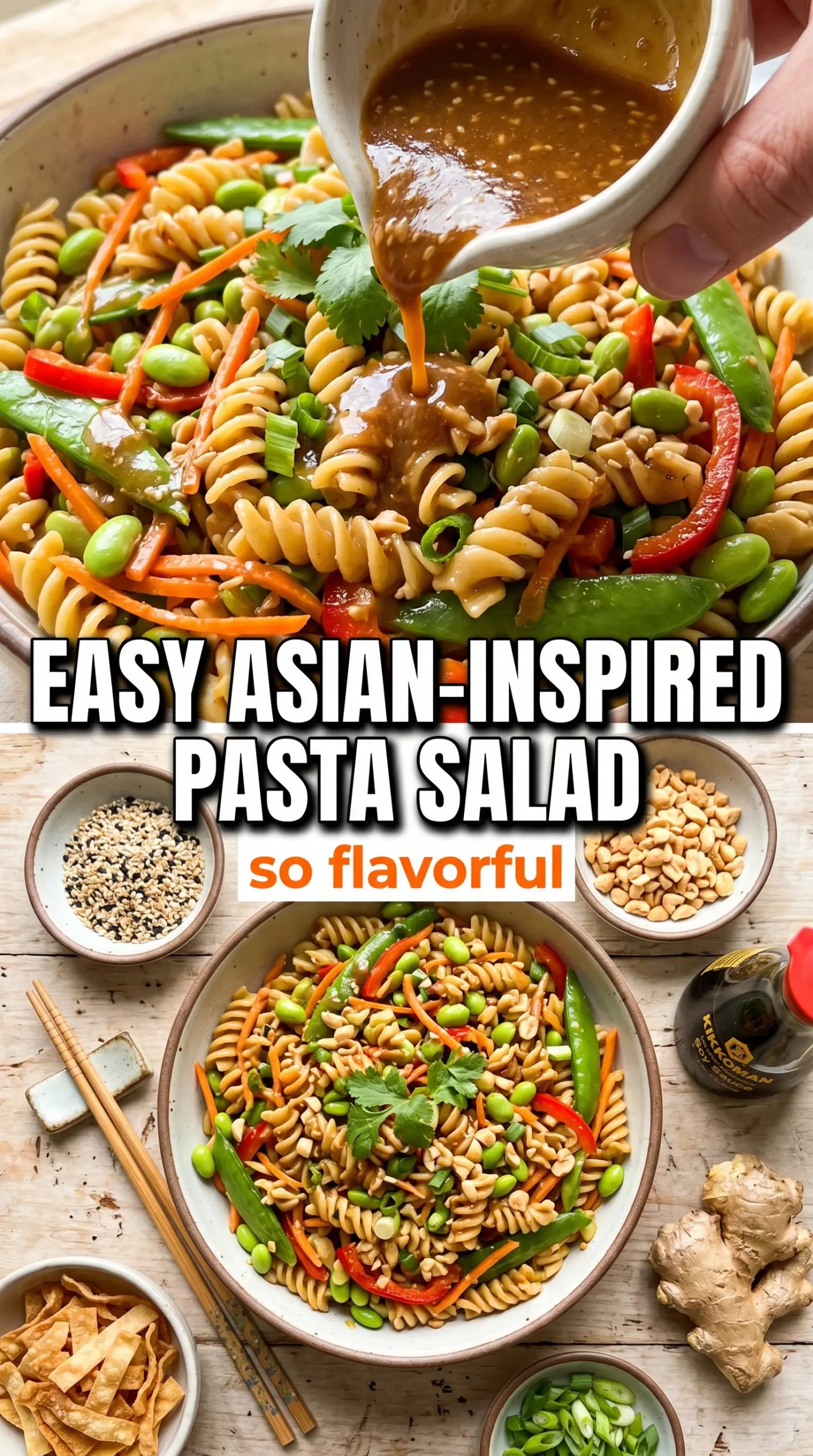
- Spaghetti or linguine — These noodles hold the dressing well and give you a familiar bite that doesn’t collapse after chilling. Broken strands work better here because they mix evenly with the vegetables and are easier to serve.
- Edamame — This adds protein and a soft, meaty bite that makes the salad feel more complete. Frozen shelled edamame is fine; just cook it long enough to thaw through and drain it well.
- Red cabbage and carrots — These bring crunch and color, and they’re the main reason the salad still feels fresh after an hour in the fridge. Shred them finely so they catch the dressing instead of sitting in big blunt pieces.
- Sesame oil, rice vinegar, soy sauce, ginger, and garlic — This is the core of the flavor. Don’t swap sesame oil for a neutral oil unless you’re willing to lose the nutty depth that makes this taste like more than plain noodles in vinaigrette.
- Honey — It softens the vinegar and soy just enough to keep the dressing balanced. If you want a vegan version, use maple syrup in the same amount.
- Green onions and sesame seeds — Add these at the end so they stay fresh and noticeable. If they go in early, the onions lose their bite and the seeds disappear into the dressing.
Building the Sesame-Ginger Salad So It Stays Fresh
Cooking the Noodles the Right Way
Boil the pasta until it’s just tender, then drain it and rinse it under cold water until it feels cool all the way through. That rinse isn’t optional here; it stops the cooking and removes surface starch, which keeps the salad from turning sticky. If the noodles go into the bowl even a little warm, they’ll drink up the dressing before the vegetables have a chance to stay crisp.
Whisking the Dressing Until It Tastes Balanced
Combine the soy sauce, rice vinegar, sesame oil, honey, ginger, and garlic in a bowl and whisk until the honey disappears. Taste it before it hits the salad. It should be salty, tangy, and slightly sweet with a clear sesame finish. If it tastes flat, the problem is usually not enough vinegar or not enough salt, not more oil.
Coating the Salad Without Crushing the Vegetables
Add the pasta, edamame, cabbage, carrots, and bell pepper to a large bowl before you pour in the dressing. Toss with tongs or clean hands and lift from the bottom instead of stirring aggressively, which can break the noodles and bruise the cabbage. Once everything is coated, let it sit in the fridge for at least an hour so the flavor settles in and the pasta softens just enough to taste seasoned, not raw.
Finishing With the Right Texture on Top
Hold back the green onions and sesame seeds until just before serving. That keeps the onions sharp and the seeds visible instead of soggy or buried. If the salad seems a little dry after chilling, add a small splash of rice vinegar and a drizzle of sesame oil, then toss again rather than dumping in more soy sauce, which can make it too salty.
How to Adapt This Salad for Different Tables
Gluten-Free Version
Use rice noodles or a certified gluten-free pasta and swap the soy sauce for tamari. Rice noodles give the salad a softer, more delicate texture, while gluten-free pasta keeps it closer to the original bite.
Vegan Swap
Replace the honey with maple syrup in the same amount. It won’t taste exactly the same, but the dressing still gets that rounded sweetness that keeps the vinegar from reading sharp.
Make It Heartier
Add shredded rotisserie chicken, chilled shrimp, or cubes of baked tofu. The salad already has enough acid and sesame flavor to handle extra protein, so you don’t need to change the dressing unless you add a lot more pasta.
Storage and Reheating
- Refrigerator: Keeps for 3 to 4 days. The cabbage softens a little, but the flavor holds up well.
- Freezer: Don’t freeze this salad. The vegetables turn watery and the pasta texture goes dull after thawing.
- Reheating: Serve it cold or let it sit at room temperature for 15 to 20 minutes. If it seems dry after chilling, toss in a small splash of rice vinegar and a few drops of sesame oil instead of heating it.
Questions I Get Asked About This Recipe
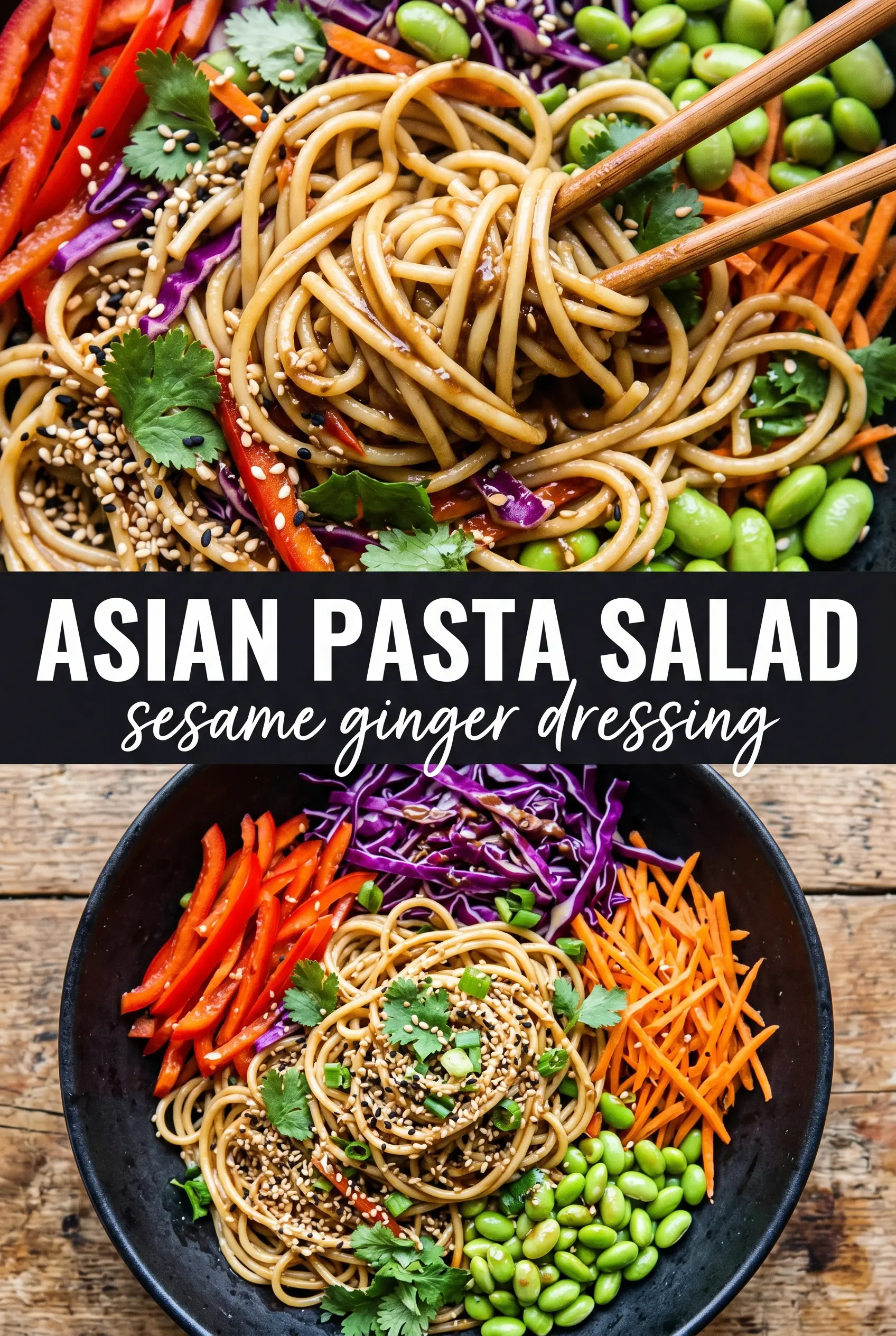
Asian Pasta Salad
Ingredients
Method
- Cook spaghetti or linguine according to package directions, then drain and rinse with cold water to stop the cooking.
- Spread the pasta on the counter briefly until it’s cool to the touch, then let it sit while you mix the dressing.
- Whisk soy sauce, rice vinegar, sesame oil, honey, ginger, garlic, salt, and pepper together until uniform.
- Taste and adjust with more salt and pepper if needed, then whisk again to fully combine.
- Combine spaghetti or linguine, edamame, red cabbage, carrots, and red bell pepper in a large bowl.
- Pour the dressing over the salad and toss to coat every piece.
- Refrigerate for at least 1 hour to let the flavors meld and the vegetables stay crisp.
- Top with green onions and sesame seeds before serving for added crunch and visible sesame flecks.