Deep, wine-braised beef stew earns its place when the meat turns spoon-tender and the sauce tightens into something glossy enough to cling to every carrot and onion. The flavor lands rich and layered, with browned beef, sweet onions, and a little sharpness from the Burgundy pulling the whole pot into balance. It tastes like the kind of dish that improves as it sits, which is exactly why it never feels like a one-and-done dinner.
The difference here is in the browning and the order. The beef needs space in the pot so it actually sears instead of steaming, and the onions cook in those same drippings until they soften and pick up color. Flour goes in after the meat comes back to the pot, where it can cook for a few minutes before the wine hits. That keeps the sauce from tasting raw or turning pasty later.
Below, you’ll find the small choices that matter most: which wine gives the stew depth without bitterness, how to tell when the sauce has reduced enough, and what to do if you want to make it a day ahead. The recipe rewards patience, but it doesn’t require guesswork.
The beef turned meltingly tender and the sauce reduced into this deep, silky gravy after the full simmer. I served it with crusty bread and my husband went back for seconds before I even sat down.
Love the slow-braised beef, glossy red-wine sauce, and tender carrots? Save this stew for the next night you want a French-style pot dinner that tastes like it simmered all afternoon.
The Browning That Gives This Stew Its Backbone
Most beef stews go flat because the meat never gets dark enough before the braise starts. Pale beef makes a pale sauce. Here, the beef needs to be browned in batches until the surface looks almost mahogany at the edges, because that crust is where the stew gets its depth. If the pan gets crowded, the meat gives off steam and you lose the sear, which leaves the final sauce tasting thin.
The flour goes in after the beef goes back into the pot, not before the sear. That gives it a chance to cook into the fat and drippings for a few minutes, which keeps the finished sauce from tasting chalky. When the wine hits, scrape up every brown bit from the bottom. That’s the base of the whole dish.
What the Wine, Onions, and Bouquet Garni Are Actually Doing

- Beef chuck — This cut is built for long cooking. It has enough connective tissue to turn silky over a gentle braise, while leaner cuts tend to dry out before the sauce finishes. Cut it into large cubes so it stays juicy through the full cook time.
- Red Burgundy wine — Use a wine you’d drink. It doesn’t need to be expensive, but it does need to taste clean and dry, because harsh wine stays harsh after two hours on the stove. Pinot Noir is the best easy substitute if Burgundy isn’t available.
- Onions — The onions cook down in the drippings and become part of the sauce, not just a vegetable in it. Thin slices help them melt and sweeten faster. Skip rushing this stage or they stay sharp and stringy.
- Bouquet garni — The tied bundle gives the stew herbal backbone without scattering stems through the pot. If you don’t have one made up, tie thyme, parsley stems, and a bay leaf in a little bundle of cheesecloth or kitchen twine.
- Carrots — Add them with the braise so they hold their shape but still soak up the winey broth. If you cut them too small, they disappear into the sauce before the beef is ready.
Building the Pot So the Sauce Stays Deep and Glossy
Searing the Beef in Batches
Heat the oil until it shimmers before the beef goes in. The cubes should hiss on contact and sit there long enough to form a dark crust before you turn them. If the meat sticks badly, leave it alone another minute; it will release once the browning is set. Pull each batch out before it starts to crowd the pan, or the temperature drops and the meat stews instead of sears.
Softening the Onions in the Same Pot
The onions go into the same pot without cleaning it out. Those browned bits left behind are the foundation of the sauce, and the onions loosen them as they cook. Ten minutes is about right for soft, golden onions that taste sweet instead of raw. If the pot looks dry, lower the heat rather than adding water too early.
Letting the Braise Finish Gently
Once the wine, carrots, garlic, herbs, and liquid go in, bring everything to a bare simmer and keep it there. A hard boil tightens beef and can make the sauce greasy. You want the surface to move lazily, with only a few bubbles breaking through. After about two hours, the beef should give easily when pressed and the liquid should coat a spoon.
How to Adapt the Stew Without Losing What Makes It Good
Make it gluten-free
Swap the all-purpose flour for a gluten-free flour blend or skip it and reduce the braising liquid a little longer at the end. The blend gives you a closer texture to the original, while skipping the flour leaves the sauce a touch lighter and more naturally brothy.
Use a different red wine
Pinot Noir, Côtes du Rhône, or another dry medium-bodied red works if Burgundy isn’t on hand. Skip anything overly oaky or sweet, because the long simmer concentrates those notes and can throw the stew off balance.
Make it a day ahead
This stew gets better after a night in the fridge. The beef firms up enough to slice neatly if you want, and the sauce settles into a deeper, rounder flavor. Reheat it slowly so the fat doesn’t split and the meat stays tender.
Add more vegetables
Mushrooms or pearl onions fit naturally here, but add them partway through the braise or they’ll vanish into the sauce. What they add is sweetness and body, not a new direction, so keep the additions restrained if you want the beef to stay center stage.
Storage and Reheating
- Refrigerator: Keeps for 4 days. The sauce will thicken and the flavors deepen overnight.
- Freezer: Freezes well for up to 3 months. Cool completely first, then pack it in airtight containers with a little headspace.
- Reheating: Warm it slowly over low heat on the stove, adding a splash of stock or water if needed. High heat can tighten the beef and separate the sauce before it comes back together.
Questions I Get Asked About This Recipe
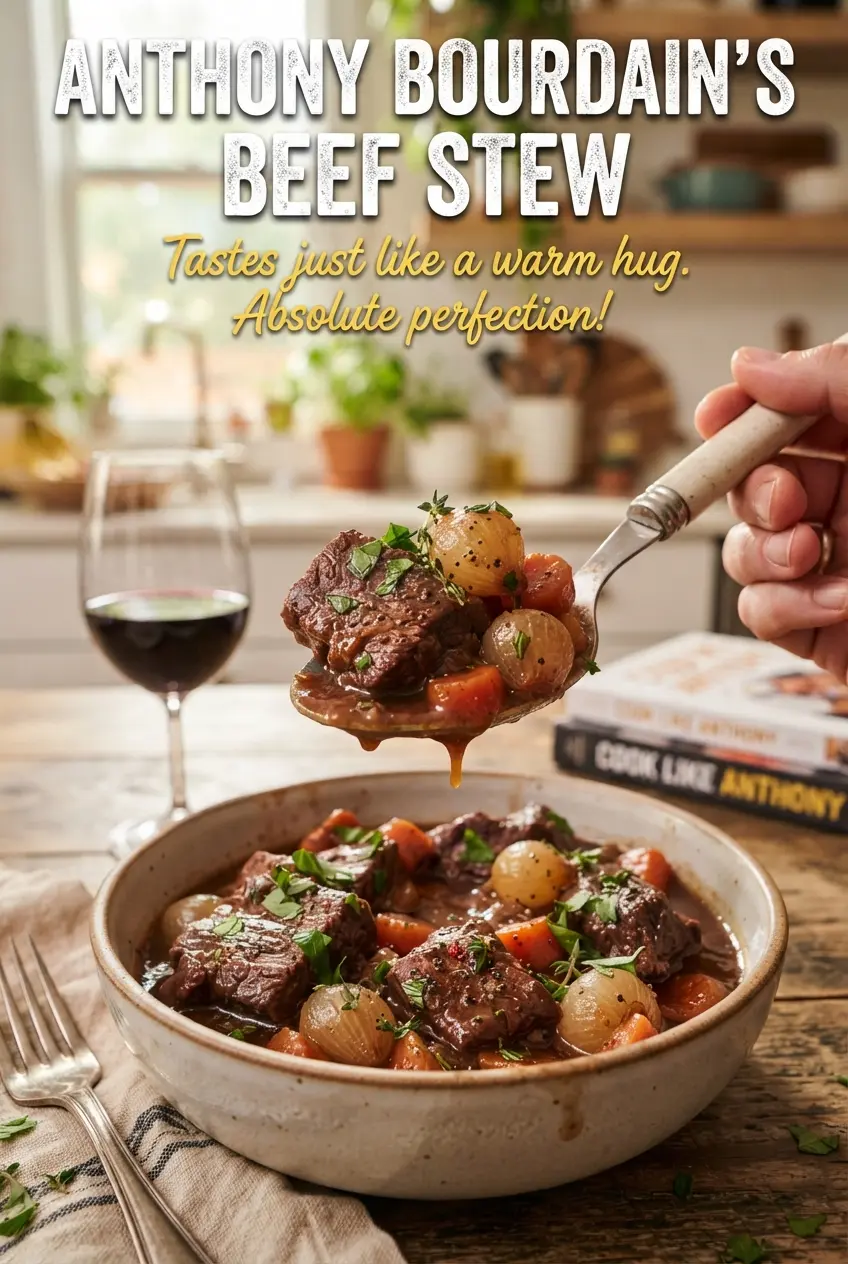
Anthony Bourdains Beef Stew
Ingredients
Equipment
Method
- Season the beef chuck cubes with salt and black pepper. Heat the olive oil in a very hot Dutch oven, sear the beef in batches until deeply browned, then set aside.
- Cook the onions in the same Dutch oven for 10 minutes until soft and golden. Stir and scrape as needed to pick up browned bits.
- Return the beef to the pot and sprinkle with all-purpose flour, stirring for 3-4 minutes until browned. Keep the heat high enough to darken the flour slightly.
- Pour in the red Burgundy wine and scrape the bottom to release the fond. Add the carrots, garlic, bouquet garni, and enough water or beef stock to just cover the beef.
- Simmer the stew gently, partly covered, for 2 hours until the beef is very tender and the sauce is thick. Check occasionally and add a splash of water or stock only if the level drops below the beef.
- Remove the bouquet garni and finish with chopped fresh parsley. Stir to distribute the herbs and serve.