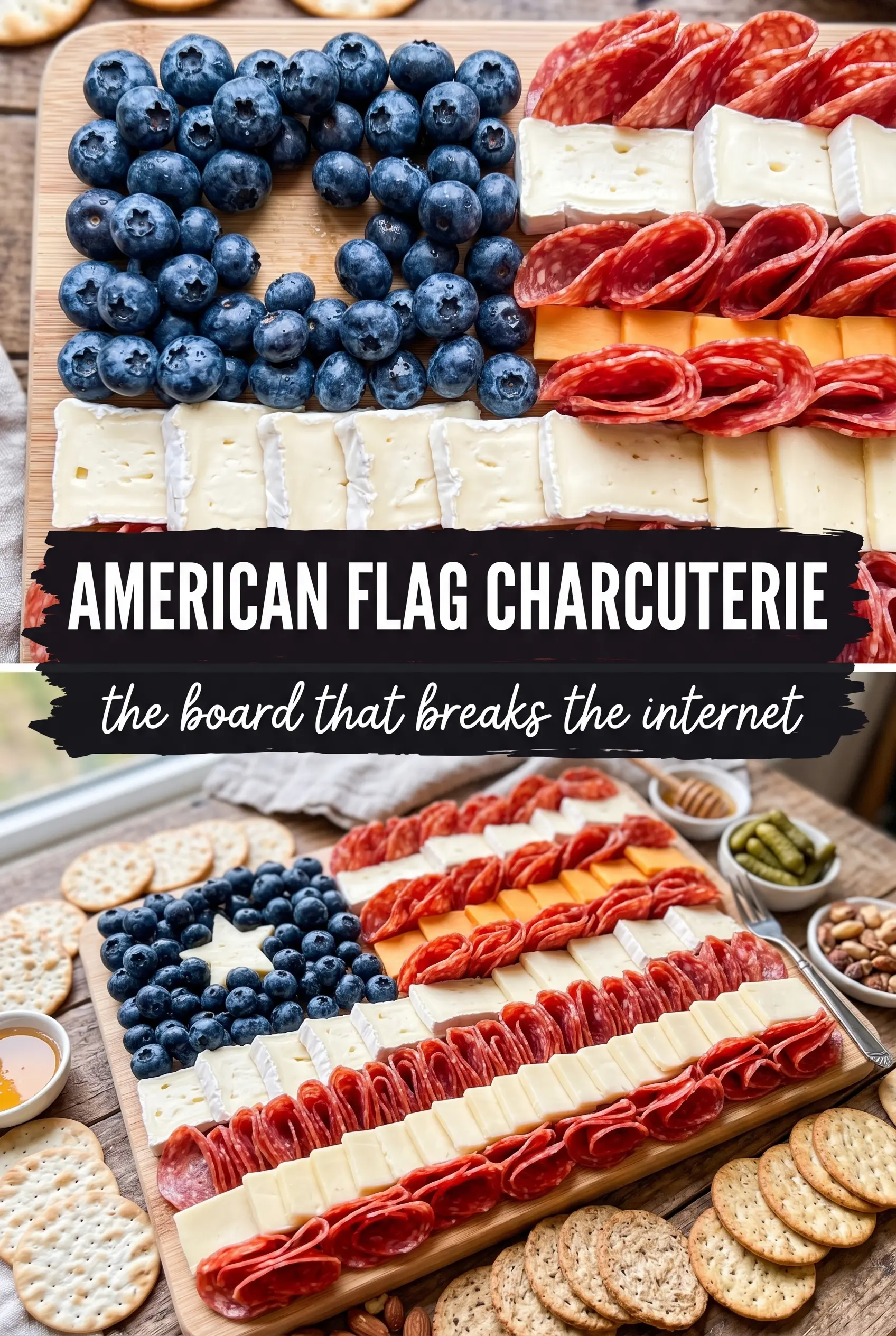
American Flag Charcuterie Board turns a simple spread into the kind of centerpiece people circle back to all party long. The trick is that it looks elaborate, but it’s really just smart placement: tight blueberry clusters for the canton, clean rows for the stripes, and a mix of cured meats and cheeses that hold their shape long enough to keep the design sharp. When the colors are packed closely instead of scattered, the whole board reads instantly as a flag from across the table.
The key is choosing ingredients that behave well at room temperature. Blueberries stay put, rolled salami gives the canton a little texture and height, and sliced provolone or mozzarella creates bright white bands without weeping all over the board. Pepperoni and prosciutto do the heavy lifting for the red stripes, while strawberries can fill in gaps if you need a little extra color. Build it on a large rectangular board so the proportions have room to breathe; cramped boards make the flag look cluttered instead of crisp.
Below, I’ve included the visual cue I use to keep the stripes even, plus a few smart swaps if you need to work with what’s already in the fridge. There’s also a quick note on how far ahead you can assemble it without losing that clean, party-ready look.
The stripes stayed neat for the whole party, and the rolled salami in the blue corner made it look way fancier than the effort it took. I loved that the blueberries didn’t slide around once the board was filled in tightly.
Like this American flag charcuterie board? Save it to Pinterest for your next patriotic party when you want a bold centerpiece with zero cooking.
The Secret to Making the Flag Read Clearly From Across the Table
The board works when the colors are dense. Thin, scattered placement makes the design look accidental, and the flag loses its shape the second people start serving themselves. Pack the blueberries close in the canton so the top-left corner reads as a solid blue field, then line up the red and white elements in distinct bands with as little overlap as possible.
What usually goes wrong is scale. Too-small boards leave you no room to define the stripes, and the result looks like a snack platter with a patriotic theme instead of an actual flag. A large rectangular tray gives you enough length to stretch the stripes across the full width, which is what makes the design instantly recognizable.
- Blueberries — These create the canton, and they need to be packed tightly so the area reads as a block of color. Loose berries with gaps between them make the pattern look unfinished.
- Rolled salami — The rolls act like the star shapes in the canton and add height so the upper-left corner doesn’t look flat. Pepperoni can work in a pinch, but salami gives a better sculpted look.
- White cheddar or provolone — Sliced cheese makes the cleanest white stripes because it holds its shape and gives you a strong contrast against the reds. Mozzarella balls work too, but they create a rounder, softer stripe.
- Prosciutto and strawberries — These help reinforce the red stripes and fill gaps without making the board heavier. Use prosciutto if you want a savory board; use strawberries if you want more brightness and a fresher finish.
Why Each Ingredient Earns Its Spot on the Board
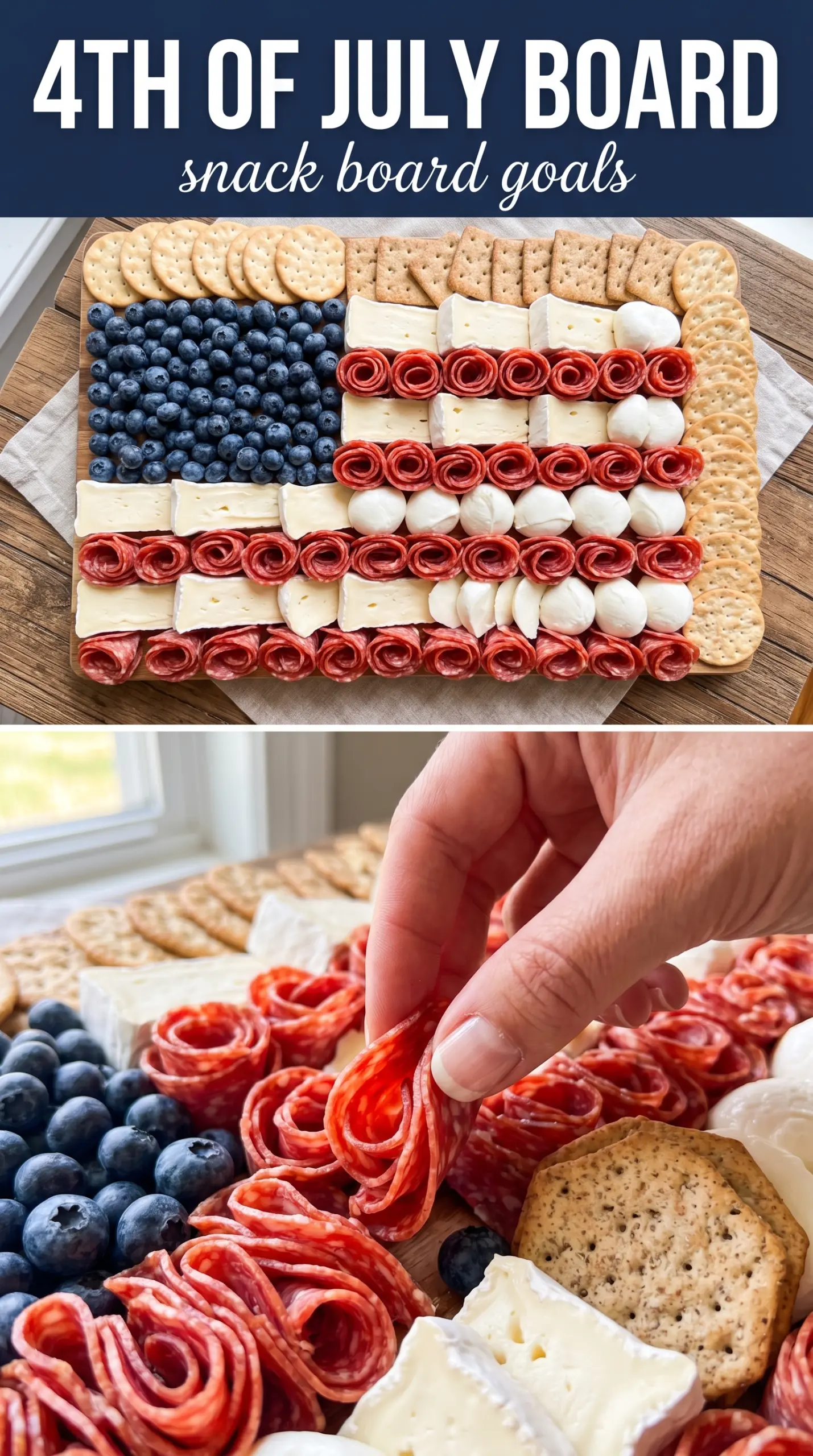
The ingredients here aren’t interchangeable decoration. They’re chosen for color, shape, and how well they hold up once the board is assembled. Blueberries are the most reliable choice for the canton because they’re small, uniform, and naturally deep blue, while rolled salami gives you a little structure that plain slices can’t match. If you skip the rolls, the top-left corner looks flat and loses that star-like effect.
For the stripes, sliced white cheddar gives the sharpest edges, but provolone or mozzarella balls are both useful depending on the look you want. Cheddar slices create long, crisp bands. Mozzarella balls soften the look and work best when you want a more abundant, casual board. Pepperoni brings the strongest red color and a clean circular shape, while prosciutto adds drape and texture. Strawberries are more than filler; they keep the red rows from feeling too heavy and add a fresh note next to the cured meats.
Crackers belong around the outside, not mixed into the flag, because they frame the design without breaking the stripes. Rosemary sprigs are optional in terms of flavor, but they help visually by adding a little green contrast at the corners and edges.
Building the Board in the Right Order
Map Out the Canton First
Start with the upper-left rectangle and treat it like its own small board. Fill that area before anything else, because once the stripes go in, it gets harder to correct the proportions. A tight layer of blueberries gives you the background, then you tuck the rolled salami into the middle so the corner has depth instead of looking like a flat patch of fruit.
Lay the Stripes From the Top Down
Work across the board in long rows so the flag keeps its clean lines. Start with a red stripe, then a white stripe, and keep alternating all the way down. If the slices overlap too much, the edges blur; if they’re too sparse, the board looks patchy. The best result comes from slightly overlapping the edges just enough to cover the board underneath without hiding the shape of each ingredient.
Fill Gaps After the Main Design Is Set
Once the structure is in place, use prosciutto folds and strawberry halves to tighten the red rows where needed. This is the stage that fixes the look, so don’t start here. Add rosemary sprigs only at the corners and along the border, where they frame the design instead of competing with it. Finish by tucking crackers around the perimeter so guests can serve themselves without disturbing the flag.
How to Adapt This for Different Crowds and Diets
Make It Fully Gluten-Free
Swap in certified gluten-free crackers and check the labels on the cured meats and cheese, since some packaged versions use gluten-containing additives. The flag design itself doesn’t change, and the texture stays just as varied and satisfying.
Lean Into the Vegetarian Version
Replace the salami, pepperoni, and prosciutto with red grapes, cherry tomatoes, roasted red pepper strips, and extra strawberries. You’ll lose the cured-meat edge, but the board still reads clearly as a flag and becomes lighter and fresher.
Build It Ahead Without Letting It Sag
You can assemble the board up to 2 hours ahead if you keep it covered and chilled. Add the crackers just before serving so they stay crisp, and wait to place the rosemary until the end if you want it to look fresh and perky.
Scale It Up for a Bigger Crowd
Use a larger tray and repeat the stripe pattern with more cheese and cured meat rather than stretching the same amount thinner. A sparse flag looks unfinished; a fuller one keeps the shape bold and makes it easier for guests to serve themselves without collapsing the design.
Storage and Reheating
- Refrigerator: Keep leftovers covered for up to 2 days. The crackers will soften if they sit on the board, so pull them off and store them separately.
- Freezer: Don’t freeze this board. The cheeses lose their texture, the berries get mushy, and the whole layout falls apart once thawed.
- Reheating: No reheating is needed. If the board has been chilled, let it sit out for 15 to 20 minutes before serving so the cheeses lose their fridge chill and the flavors open up again.
Questions I Get Asked About This Recipe
American Flag Charcuterie Board
Ingredients
Equipment
Method
- Use a large rectangular wooden board or serving tray and mentally divide the upper left into a canton rectangle.
- Fill the canton with blueberries packed tightly together, then tuck rolled salami pieces in the center to resemble stars.
- Starting from the top right of the board, create a red stripe by layering pepperoni slices in a clean row across the full width of the board.
- Create the white stripes using rows of sliced white cheddar or mozzarella balls, alternating with the red stripes down the full board.
- Add prosciutto folds or strawberry halves to reinforce the red stripes and fill any gaps.
- Tuck rosemary sprigs at the corners and edges, then arrange crackers around the perimeter and serve.