Red, white, and blue fruit kabobs disappear fast because they solve the hardest part of party food: they look festive, they hold up well, and nobody needs a fork. The mix of juicy strawberries, cool blueberries, and soft white marshmallows gives each skewer a clean sweet bite with just enough contrast to keep people reaching for another. They’re light enough to sit alongside heavier cookout food, but fun enough to work as dessert too.
The key is keeping the fruit dry and the pattern tight. Strawberries with surface moisture slide around on the skewer, and if the marshmallows get handled too much they pick up moisture and lose that soft, clean texture. I like using halved strawberries when they’re large so the skewers stay balanced and easy to eat. The blueberries stay whole, which keeps the color crisp and the threading simple.
Below you’ll find the small details that matter most: how to keep the kabobs neat, what to use if you want a different finish, and how far ahead you can assemble them without losing their best texture.
I made these for a block party and they were the first thing gone. The strawberries stayed neat on the skewer, and the marshmallows made them feel like dessert without being heavy.
These patriotic fruit kabobs are the easiest way to make a red, white, and blue platter look polished in minutes.
The Skewer Pattern That Keeps Every Bite Balanced
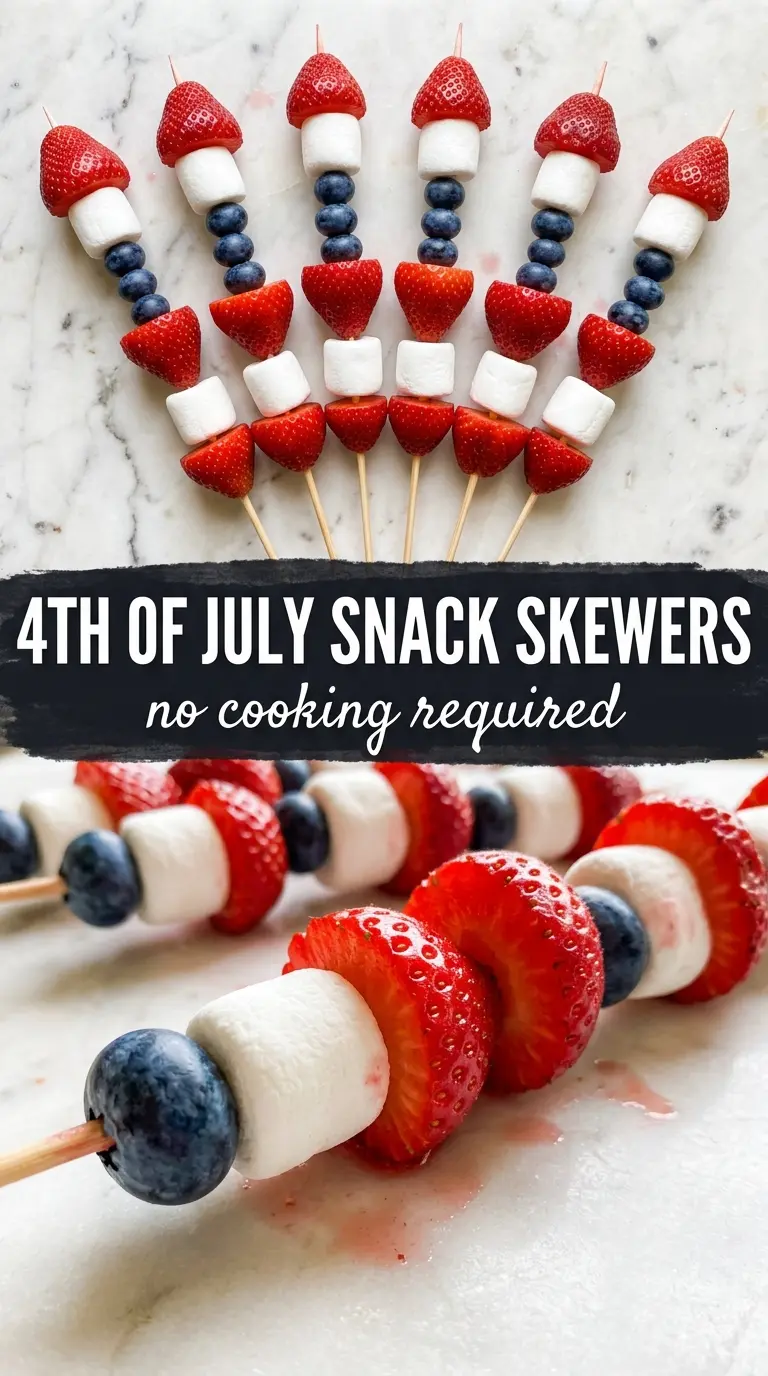
The pattern matters more than it looks like it should. If you load one side of the skewer with only fruit and the other with only marshmallows, the kabobs feel lopsided and the softer pieces start slipping. Alternating blueberry, marshmallow, and strawberry gives you a stable grip and a better bite from start to finish.
Wooden skewers work best because they’re firm enough to hold the fruit without bending. Short bamboo picks also work for appetizer trays, but they fit fewer pieces and read more like finger food than a full kabob. If your strawberries are especially large, halving them keeps the sequence tight and helps the finished skewers sit flat on the tray instead of rolling around.
- Strawberries — These carry the red color and the fresh, juicy bite. Large berries should be hulled and halved so they thread cleanly and don’t overpower the skewer.
- Blueberries — Whole blueberries give you a neat, polished look and a burst of acidity. There isn’t a substitute that behaves exactly the same, but blackberries can work if you want a larger fruit with a softer finish.
- White marshmallows or grapes — Marshmallows give the classic patriotic look and a softer, dessert-like texture. If you want a fresher, less sweet version, use firm green or white grapes. Grapes hold better for longer parties, while marshmallows read more playful.
- Wooden skewers — These do the structural work. If you only have decorative picks, they’ll work for a tray, but longer skewers make assembly faster and give you the clean striped effect that makes this recipe stand out.
What Each Ingredient Is Actually Doing in This Recipe
- Primary ingredient (the star) — This carries the main flavor. Quality matters here most.
- Base ingredient (if applicable) — This provides structure or creaminess. Choose quality options.
- Seasonings (salt, spices, herbs) — These define the personality and prevent flat-tasting results.
- Acid (lemon, vinegar, citrus) — This brightens and prevents heavy dishes from tasting one-dimensional.
- Fat (oil, butter, or cream) — This carries flavors and creates satisfying mouthfeel. Don’t skip it.
- Aromatics (garlic, onion, herbs) — These add depth and complexity. They change character as they cook.
- Texture element (crunch, creaminess, etc.) — This makes the dish interesting and prevents monotony.
- Final finish (garnish, fresh herbs, glaze) — These prevent one-dimensional taste and add visual appeal.
How to Assemble Them So They Stay Neat on the Platter
Prep the Fruit First
Wash the strawberries and blueberries, then dry them thoroughly. Any extra moisture makes the fruit slippery and shortens how long the kabobs look fresh. Hull the strawberries and cut the larger ones in half so the pieces sit flat and thread without tearing. Set the marshmallows or grapes within easy reach before you start threading so the pattern stays consistent.
Build a Repeating Color Pattern
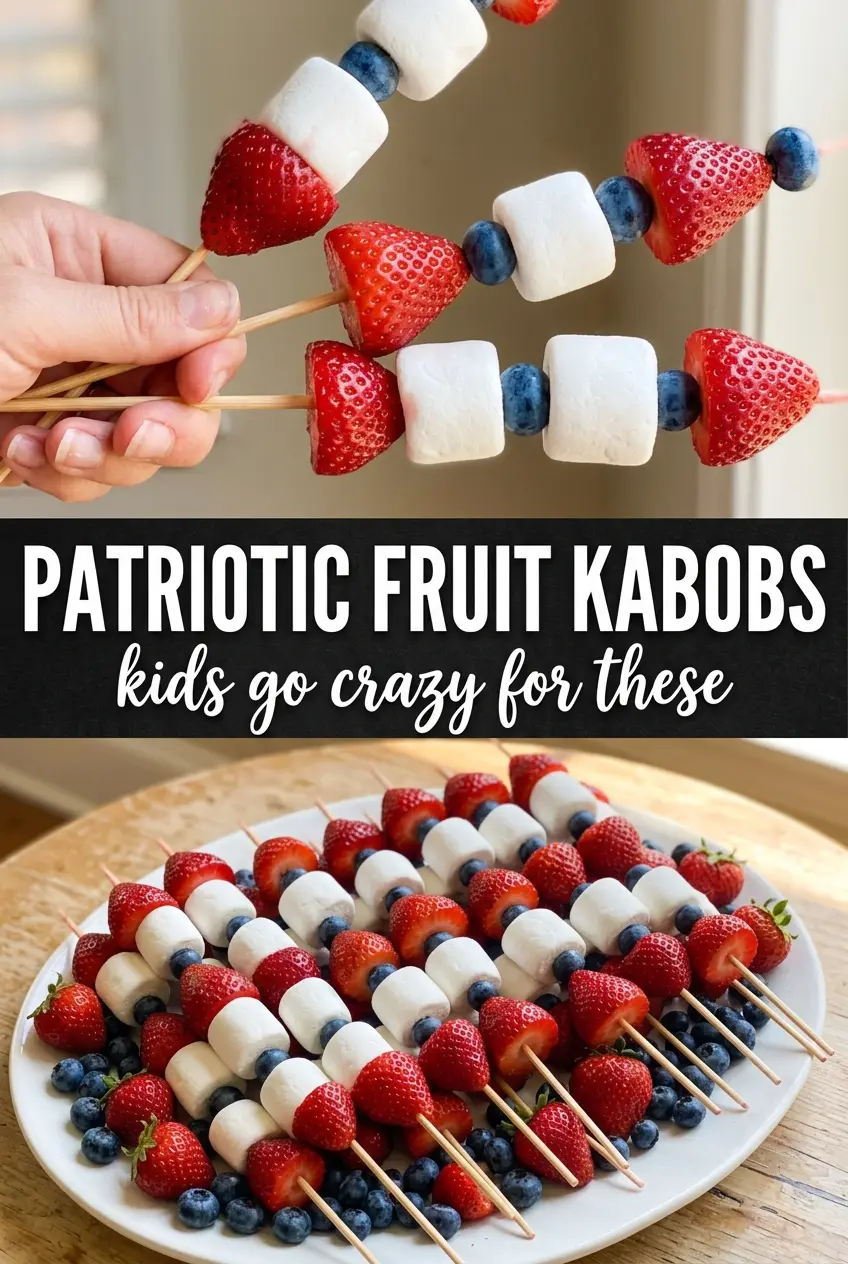
Thread each skewer in the same order: blueberry, marshmallow, strawberry, then repeat. That repeating sequence gives the kabobs a balanced look and makes assembly fast because you aren’t stopping to think about each one. Keep the pieces snug, but don’t pack them so tightly that the fruit splits. Leave a little space at the bottom of the skewer so people can hold them without touching the food.
Arrange and Chill Just Before Serving
Lay the finished kabobs in a single layer on a tray or platter. If you stack them, the marshmallows can flatten and the berries can bruise. Chill them until serving time, but don’t let them sit for hours uncovered in the fridge or the fruit can dry out. Two hours ahead is the sweet spot for both texture and convenience.
How to Change the Kabobs Without Losing the Patriotic Look
Use Grapes Instead of Marshmallows for a Fresher Snack
Swap the marshmallows for green or white grapes if you want a less sweet kabob that holds up longer on a buffet. Grapes add a firmer bite and stay cleaner in warm weather, but you lose the soft, dessert-like finish that marshmallows bring.
Make It Dairy-Free and Gluten-Free Without Changing Anything
This recipe is naturally dairy-free and gluten-free as written, which is part of why it works so well for mixed crowds. Just check that your marshmallows fit your dietary needs, since some brands handle gelatin differently, and you’re set.
Turn It Into a Fruit-Only Kabob
If you want something lighter, use strawberries, blueberries, and white grapes only. The kabobs will look a little less like dessert and a little more like a clean appetizer tray, and they’ll travel better because the fruit won’t soften the way marshmallows can.
Storage and Reheating
- Refrigerator: Best within 1 day. The fruit stays fine, but the marshmallows can start to dry out on the outside if they sit too long.
- Freezer: Not recommended. The fruit turns mushy after thawing and the marshmallows lose their texture completely.
- Reheating: No reheating needed. Serve chilled straight from the fridge, and keep them covered until the last minute so the fruit doesn’t dry at the cut edges.
Answers to the Questions Worth Asking
Red, White & Blue Fruit Kabobs
Ingredients
Equipment
Method
- Wash and prep all fruit: hull the strawberries and leave the blueberries whole. Visual cue: strawberries look neatly halved with no green stems.
- Thread each skewer with a repeating pattern of 1 blueberry, 1 marshmallow, and 1 strawberry, continuing for 2–3 repeats per skewer depending on skewer length. Visual cue: the colors line up in an even sequence from tip to tip.
- Line the completed skewers on a serving platter or tray. Visual cue: skewers are spaced so the patriotic pattern stays visible.
- Refrigerate the kabobs until ready to serve, up to 2 hours ahead. Visual cue: they look chilled and slightly firm for clean grab-and-go eating.
- Serve chilled. Visual cue: the red strawberries, white marshmallows, and blue blueberries stay vibrant and distinct.