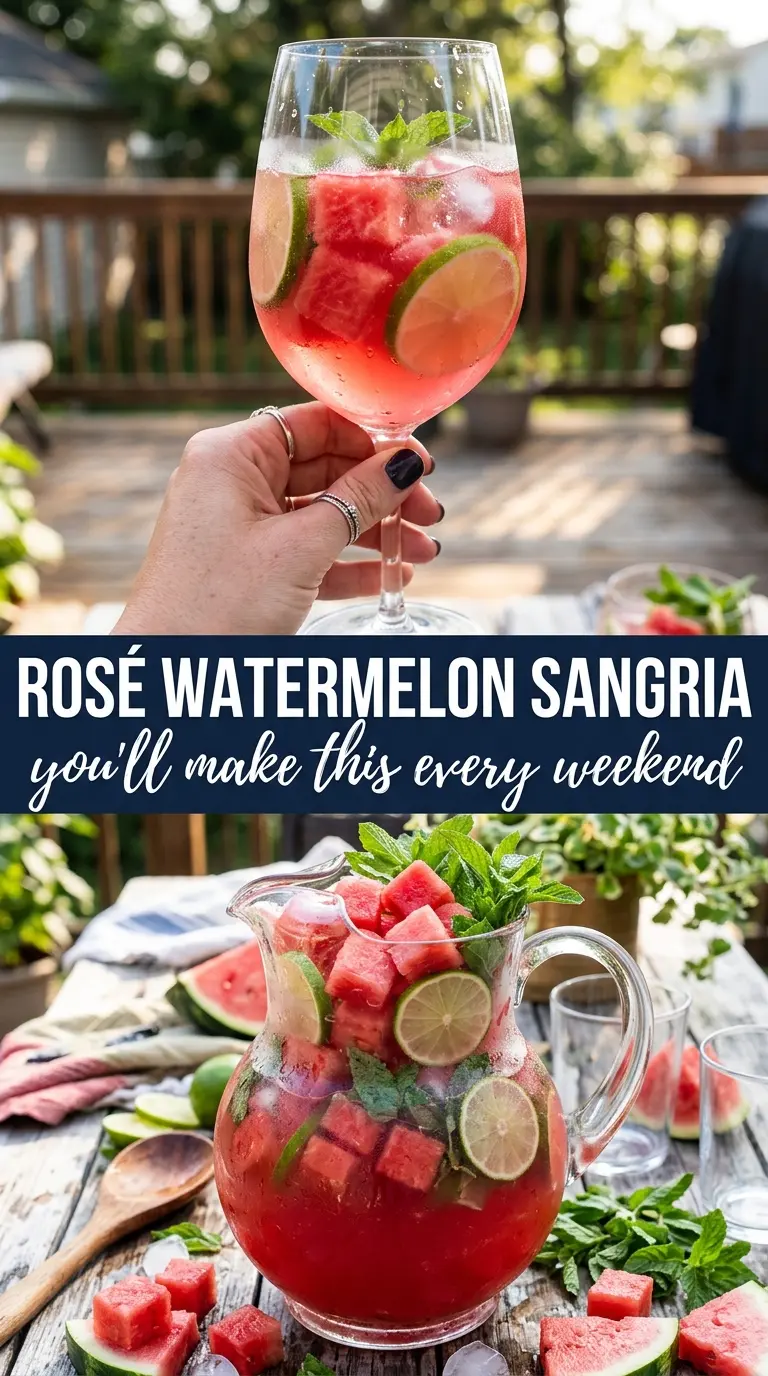
Blush-pink watermelon sangria tastes like the kind of pitcher that disappears before the ice has a chance to melt. The watermelon shows up in two ways here: blended into fresh juice for clean, bright flavor, then folded back in as cubes that soak up the wine and citrus. That double hit is what gives this sangria its fresh, juicy finish instead of the flat sweetness a lot of fruit punches fall into.
The balance matters. Dry rosé keeps the drink crisp, vodka adds a little backbone without stealing the spotlight, and triple sec gives just enough orange lift to round out the melon. A spoonful of honey smooths the edges, but the drink still needs the chill time so the citrus can soften the wine and everything can meld into one coherent pitcher instead of floating around separately.
Below, I’ll walk you through the one step people skip when they rush sangria, plus a couple of easy swaps for making it with white wine or serving it for a bigger crowd.
The watermelon juice made it taste fresh instead of overly sweet, and after two hours in the fridge the mint and citrus had mellowed into the wine perfectly. I also liked that the sparkling water stayed fizzy because I added it at the end.
Like this watermelon sangria? Save it to Pinterest for your next pitcher night when you want something chilled, fruity, and ready for the fridge to do the work.
The Trick to Keeping Watermelon Sangria Bright Instead of Watery
Watermelon is high in water and low in acid, which is why a lot of watermelon sangrias taste thin after they sit. The fix is to pull real juice from part of the melon, then leave the rest of the fruit in pieces so the pitcher keeps some body. If you skip the straining step and dump in blended watermelon, the drink turns pulpy and cloudy fast.
The other thing that matters is when the bubbles go in. Sparkling water should wait until the very end because it goes flat quickly once it sits with fruit and wine. That last-minute pour gives the sangria a lift in the glass and keeps the texture lively.
- Watermelon: Choose a ripe melon with deep color and a heavy feel. Seedless is easiest here because you only need to strain the juice once, and fewer seeds means less bitterness from over-processing.
- Rosé or dry white wine: Dry wine keeps the sangria balanced. A sweet bottle makes the drink heavy and pushes the watermelon into candy territory, which is hard to fix once everything is mixed.
- Watermelon vodka or plain vodka: Watermelon vodka boosts the fruit note, but plain vodka works perfectly if that’s what you have. Vodka adds alcohol without muddying the flavor, so don’t swap in a strongly flavored spirit unless you want to change the drink on purpose.
- Triple sec: This adds orange peel brightness that bridges the watermelon and citrus slices. If you don’t keep triple sec around, a small splash of orange liqueur or even a little orange juice can stand in, though the result will be less crisp and a touch sweeter.
- Honey or simple syrup: Start with a little, then taste after the wine and fruit are combined. Watermelon ripeness varies a lot, and this is the one ingredient you can adjust to match the melon instead of forcing a fixed sweetness level.
- Lime and lemon: The mix of both keeps the sangria from tasting one-note. Lime gives sharper acidity, while lemon softens it a little, and together they keep the pitcher tasting fresh after chilling.
What Each Ingredient Is Actually Doing in This Drink
- Base liquid (juice, soda, or alcohol) — This is the foundation. Quality juice makes a better drink than artificial flavoring.
- Secondary liquid (complementary juice or spirit) — This adds complexity and prevents the drink from tasting one-dimensional or too sweet.
- Sweetener (sugar, syrup, or fruit) — This balances tartness and adds flavor. Fresh fruit is better than simple syrup for drinking beverages.
- Acid (lemon, lime, or vinegar) — This brightens the drink and prevents it from tasting flat or cloying. Fresh citrus juice is essential.
- Fresh fruit (berries, citrus, or stone fruit) — These add flavor, visual appeal, and natural sweetness. Float them or muddle them based on the style.
- Garnish (fresh herbs or fruit) — Mint, citrus, or berries add aroma and flavor. These should be fresh and pretty.
- Ice (proper chilling) — Cold drinks taste better and stay refreshing longer. Clear ice looks better than cloudy.
- Layering technique (density or temperature) — Heavier liquids sink; lighter ones float. Temperature differences help keep layers separate.
The 10 Minutes That Make the Pitcher Worth Serving
Turning the Watermelon Into Juice
Blend half of the watermelon cubes until completely smooth, then strain the puree through a fine mesh sieve. Press with a spoon to get a full cup of juice, but don’t push so hard that the pulp forces through the mesh and clouds the drink. You want a clean, bright base that looks rosy in the pitcher.
Building the Sangria Base
Stir the watermelon juice, wine, vodka, triple sec, and honey together in a large pitcher until the honey dissolves. If the honey hangs at the bottom, the first glasses taste sweeter than the last ones, so give it a good stir before anything else goes in. Add the citrus slices and remaining watermelon cubes after the liquid is mixed.
Letting the Fruit Mellow the Wine
Cover the pitcher and chill it for at least 2 hours. That resting time is where the flavor comes together: the citrus softens, the watermelon cubes take on the wine, and the whole drink tastes more integrated instead of just alcoholic fruit juice. Taste it cold before serving, since sweetness and acidity read differently after refrigeration.
Finishing With the Fizz
Pour in the sparkling water right before serving and stir once or twice, gently. Too much stirring knocks out the bubbles and makes the sangria seem flat even when it’s freshly opened. Serve over ice with mint on top so the aroma hits first when the glass is lifted.
Three Ways to Adjust Watermelon Sangria Without Losing the Balance
Make It Rosé-Forward
Use a dry rosé and keep the honey at the lower end. This version tastes softer and a little more elegant, with the wine showing through more than the fruit. It’s the best path when you want a pitcher drink that still feels crisp and not sugary.
Skip the Vodka for a Lighter Crowd-Pleaser
Leave out the vodka and replace it with an extra 1/2 cup sparkling water at serving. The sangria becomes lighter and a little more wine-forward, which works well for long patio pours where people want something refreshing instead of strong.
Use a Nonalcoholic Base
Swap the wine and spirits for white grape juice, a splash of white tea, and extra sparkling water. You’ll lose the wine’s dryness, so add a little more lime and lemon to keep the drink from turning flatly sweet. It still gives you the same chilled pitcher feel and works well for mixed-age gatherings.
Storage and Reheating
- Refrigerator: Keep leftovers covered for up to 2 days. The fruit softens and the bubbles fade, but the flavor still holds up well for a second round.
- Freezer: Don’t freeze finished sangria. The wine texture changes and the sparkling water loses everything you want from it once thawed.
- Reheating: No reheating needed. If the sangria sits overnight, top it with a fresh splash of sparkling water and a few new mint leaves before serving to wake it back up.
Answers to the Questions Worth Asking
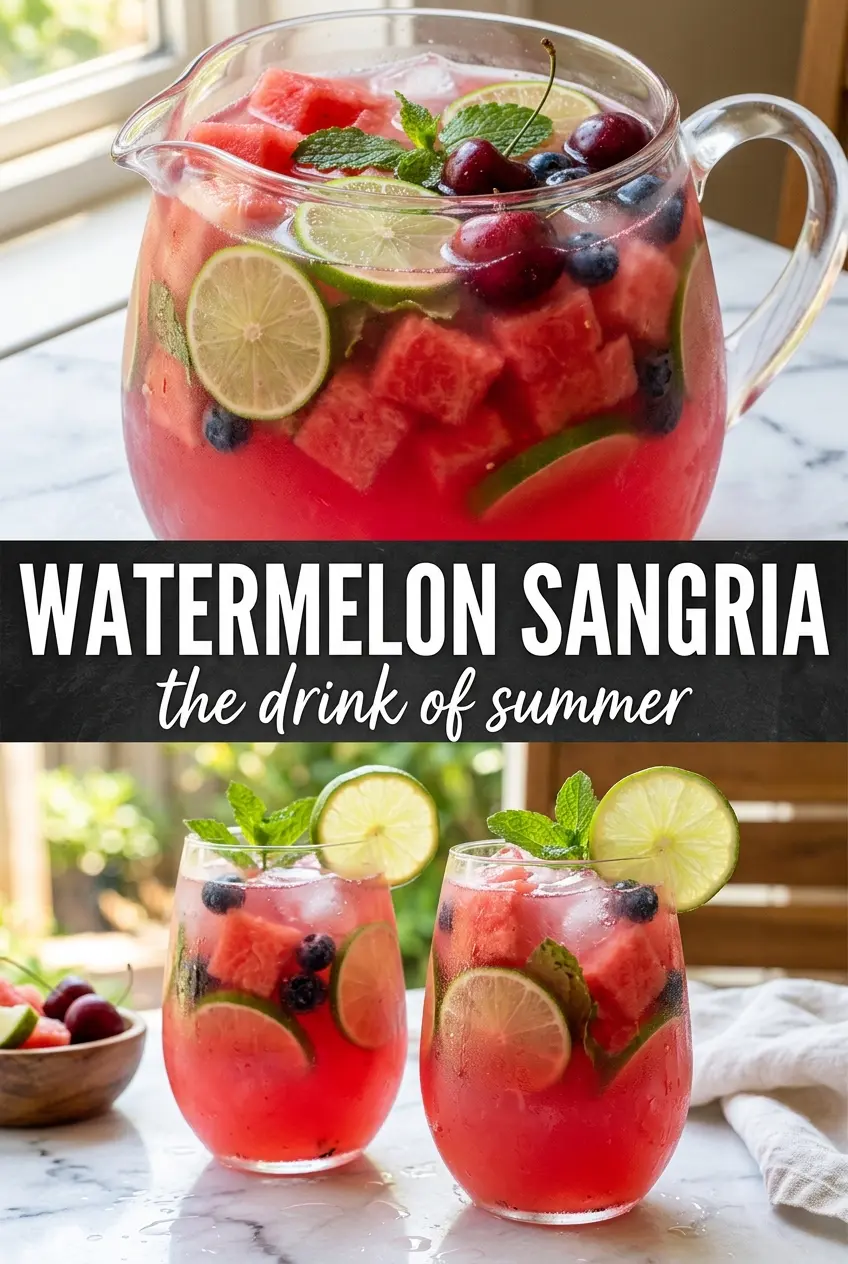
Watermelon Sangria
Ingredients
Equipment
Method
- Blend 2 cups of the fresh watermelon cubes until smooth, then strain through a fine mesh sieve to get 1 cup of fresh watermelon juice.
- Add the watermelon juice, dry rosé or white wine, watermelon vodka or plain vodka, triple sec, and honey or simple syrup to a large pitcher and stir until combined.
- Add the remaining fresh watermelon cubes, thinly sliced lime, and thinly sliced lemon to the pitcher.
- Cover and refrigerate for at least 2 hours to chill and allow flavors to meld.
- Right before serving, top with sparkling water or club soda, stir gently, and pour into ice-filled glasses garnished with fresh mint.