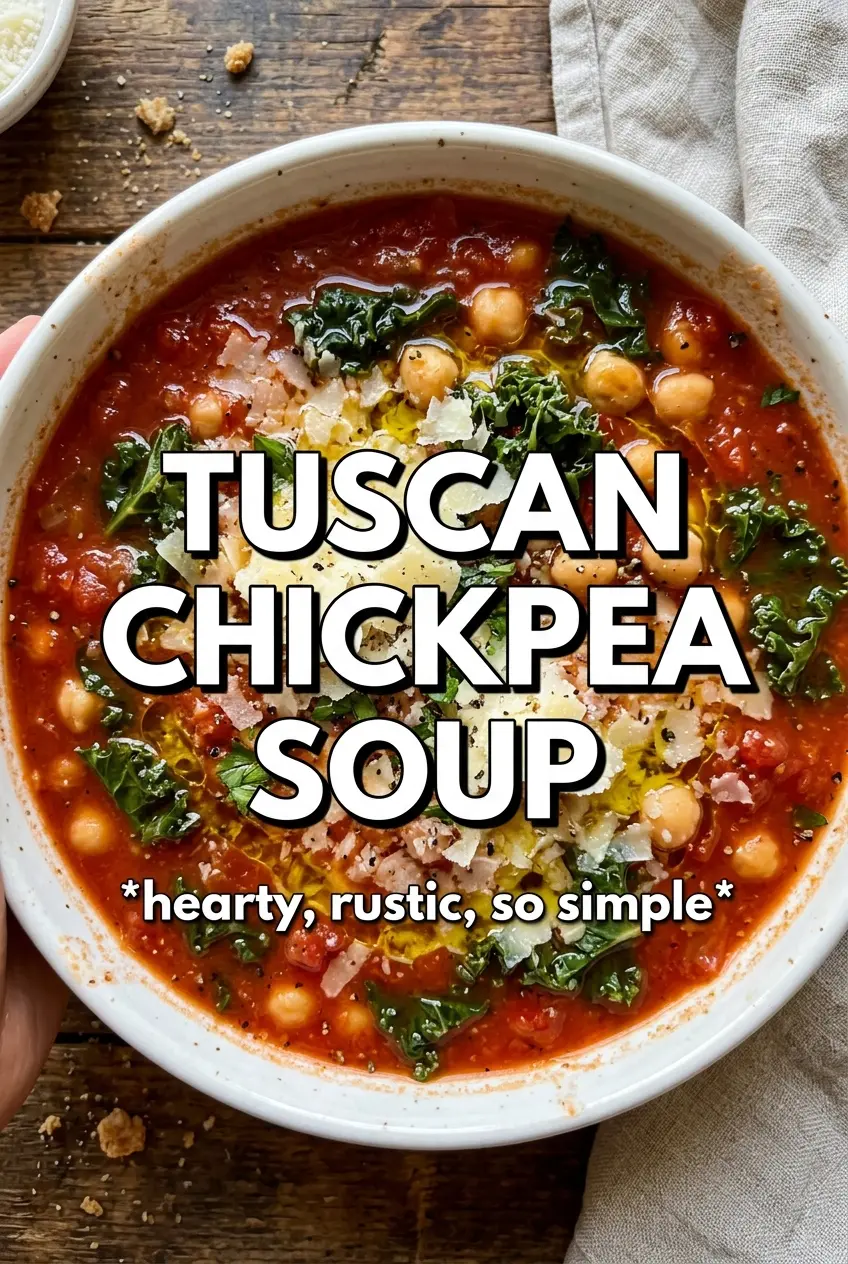
Tuscan chickpea soup lands in that perfect middle ground between hearty and light: brothy enough to feel clean, but thick enough that a bowl actually eats like dinner. The chickpeas turn creamy at the edges, the kale softens without going limp, and the rosemary and garlic give the broth that slow, savory depth that keeps you going back for another spoonful.
What makes this version work is restraint. The onions cook down first so the broth starts sweet, then the garlic and red pepper flakes bloom just long enough to wake everything up without turning bitter. A few chickpeas get mashed at the end, which gives the soup body without needing cream or flour, and the parmesan rind adds a round, salty finish if you have one tucked in the fridge.
Below, I’ve included the small things that matter here: when to add the kale so it stays green, why the lemon goes in at the end, and the easiest way to make the soup thicker without losing that rustic texture.
The broth got noticeably thicker after I mashed a few chickpeas, and the lemon at the end made the rosemary and garlic taste brighter instead of heavy.
Save this Tuscan chickpea soup for a thick, lemony broth with chickpeas, kale, and rosemary.
The Reason This Broth Stays Rich Without Turning Heavy
The biggest mistake with chickpea soup is rushing the base. If the onions stay pale, the broth tastes flat no matter how good the tomatoes are. Let them soften until they look glossy and a little translucent, then give the garlic and red pepper flakes just long enough to smell fragrant. That tiny window is where the flavor builds.
Another thing that matters here is how you thicken it. Blending the whole pot would make this soup lose its rustic feel, but leaving every chickpea whole can make it read thin. Mashing or blending about a third gives you a creamy background and keeps enough whole beans for bite.
- Don’t brown the garlic. Once it starts taking on color, it turns sharp instead of sweet.
- Use fire-roasted tomatoes if you can. They add a deeper, slightly smoky note that plain diced tomatoes won’t fully match.
- Add the kale near the end. It only needs a few minutes. Any longer and it loses its color and turns limp in the broth.
What Each Ingredient Is Actually Doing In This Soup

- Chickpeas — They’re the body of the soup. Canned chickpeas work well here because they soften fast and mash beautifully into the broth. If you cook your own, use very tender beans or they’ll stay too firm.
- Parmesan rind — Optional, but worth using if you have it. It melts slowly into the broth and adds a savory, rounded finish that plain salt can’t copy. If you skip it, add a little extra parmesan at serving.
- Fresh rosemary — This is where the Tuscan character comes from. Dried rosemary can work in a pinch, but use less and crush it between your fingers first so it doesn’t taste woody. Pull the sprigs out before serving or the soup gets too piney.
- Kale — It holds up better than spinach and keeps the soup from turning mushy. Chop it fairly small so it wilts evenly in the hot broth.
- Lemon — Don’t leave this out. It wakes up the chickpeas, sharpens the tomatoes, and keeps the final bowl from tasting dull. Add it at the end so it stays bright.
Building the Soup So the Broth Stays Balanced
Softening the Onion Base
Heat the olive oil in a large pot and cook the diced onion until it softens and starts to turn translucent, about five minutes. You want the onion sweet and tender, not browned. If the pot is too hot, the edges will color before the centers soften, and that gives the broth a harsh note instead of a rounded one.
Waking Up the Garlic and Spice
Add the garlic and red pepper flakes and stir them for about two minutes. The garlic should smell fragrant and mellow, not sharp. If it starts to brown fast, lower the heat right away. Burnt garlic will carry through the whole pot, and there’s no fixing that later.
Simmering the Broth with Chickpeas
Add the chickpeas, tomatoes, broth, rosemary, Italian seasoning, and parmesan rind, then bring everything to a boil before lowering it to a steady simmer. Twenty minutes is enough for the flavors to come together and for the rosemary to steep into the broth. If you boil it hard the whole time, the tomatoes can taste rough and the chickpeas can break down too far.
Thickening and Finishing the Pot
Remove the rosemary and parmesan rind, then mash or blend about a third of the chickpeas right in the pot. Stir in the kale and cook just until it wilts and turns bright green, about five minutes. Finish with salt, pepper, and lemon, then drizzle each bowl with olive oil and parmesan. That last hit of fat and acid is what makes the soup taste finished instead of just cooked.
Three Smart Ways to Adjust This Soup Without Losing What Makes It Good
Make It Dairy-Free
Skip the parmesan rind and serve the soup with olive oil and lemon instead of parmesan shavings. The soup still tastes rich because the chickpeas thicken the broth and the rosemary does the heavy lifting. Add a pinch more salt at the end to replace the savory depth you’d normally get from the cheese.
Make It Heartier with Pasta or Grain
Stir in a handful of small pasta or cooked farro during the last few minutes if you want a more filling bowl. Pasta will soak up broth as it sits, so add extra vegetable broth if you’re not serving it right away. Farro keeps a firmer bite and holds up better for leftovers.
Swap the Kale for Spinach
Spinach works if that’s what you have, but add it in the final minute because it wilts almost instantly. The soup will taste a little softer and less earthy than it does with kale, and it won’t hold up quite as well for leftovers. Use baby spinach if possible so the stems don’t get stringy.
Make It Gluten-Free and Low-Carb
This soup is naturally gluten-free as written, and it stays fairly low-carb for a bean soup because the broth and greens carry the bowl. If you want it even lighter, reduce the chickpeas slightly and add extra kale. You’ll lose some creaminess, so compensate by mashing a few more beans before serving.
Storage and Reheating
- Refrigerator: Store in an airtight container for up to 4 days. The broth thickens as it sits, which is normal.
- Freezer: Freezes well for up to 3 months. Cool completely first and leave a little space in the container because the broth expands.
- Reheating: Warm gently on the stove over medium-low with a splash of broth or water. Don’t boil it hard or the kale can turn dull and the chickpeas can get mealy.
Answers to the Questions Worth Asking
Tuscan Chickpea Soup
Ingredients
Equipment
Method
- Heat 2 tbsp olive oil in a large pot over medium heat, then sauté the diced onion for 5 minutes until softened and lightly translucent.
- Add the minced garlic and red pepper flakes, then cook for 2 minutes until fragrant and sizzling.
- Add the drained chickpeas, fire-roasted diced tomatoes, vegetable broth, rosemary sprigs, Italian seasoning, and parmesan rind (if using) to the pot and bring to a boil.
- Reduce to a simmer and cook for 20 minutes, stirring occasionally, until the flavors deepen.
- Remove the rosemary sprigs and the parmesan rind after simmering, leaving the broth infused.
- Mash or blend about a third of the chickpeas in the soup to create a thicker consistency.
- Add the chopped kale and cook for 5 minutes until wilted and tender.
- Season with salt and black pepper to taste, then finish with lemon and drizzle with olive oil; serve with parmesan shavings.


