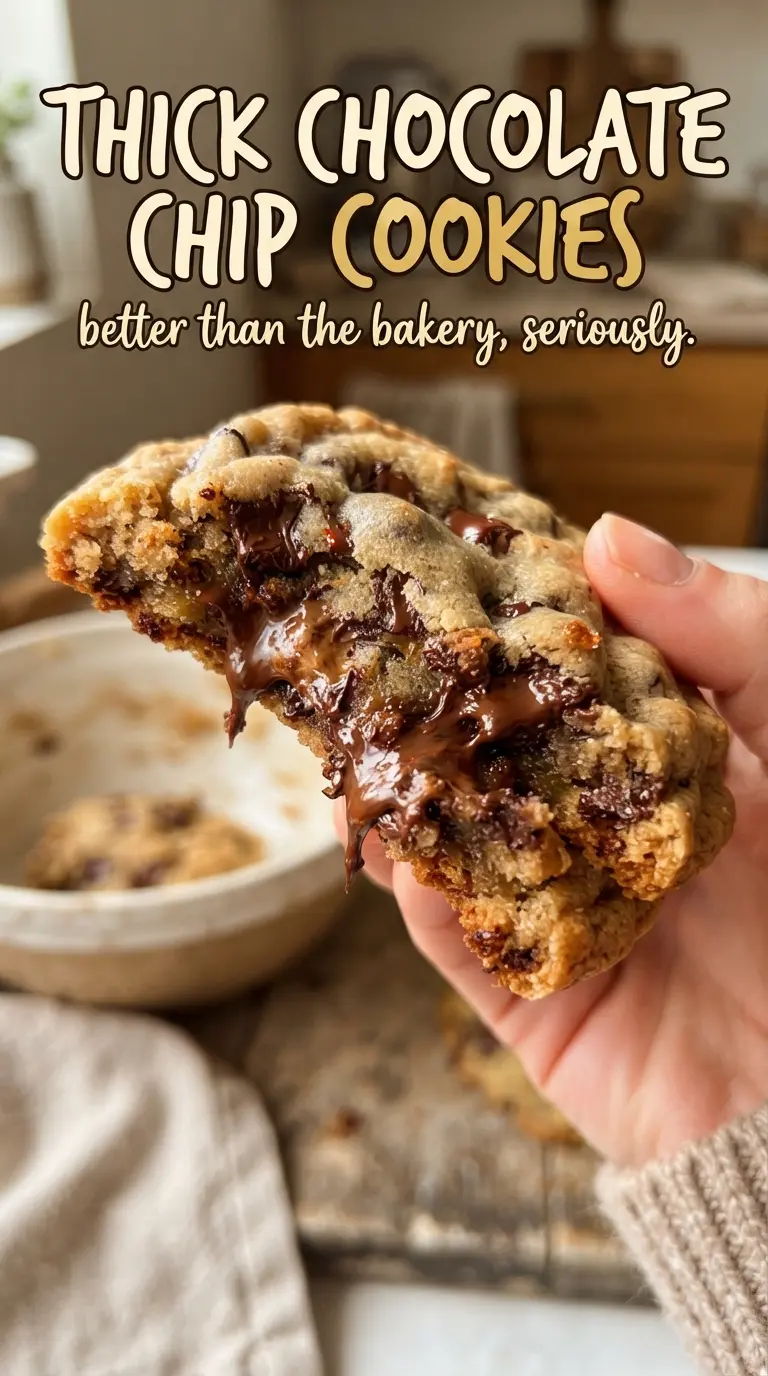
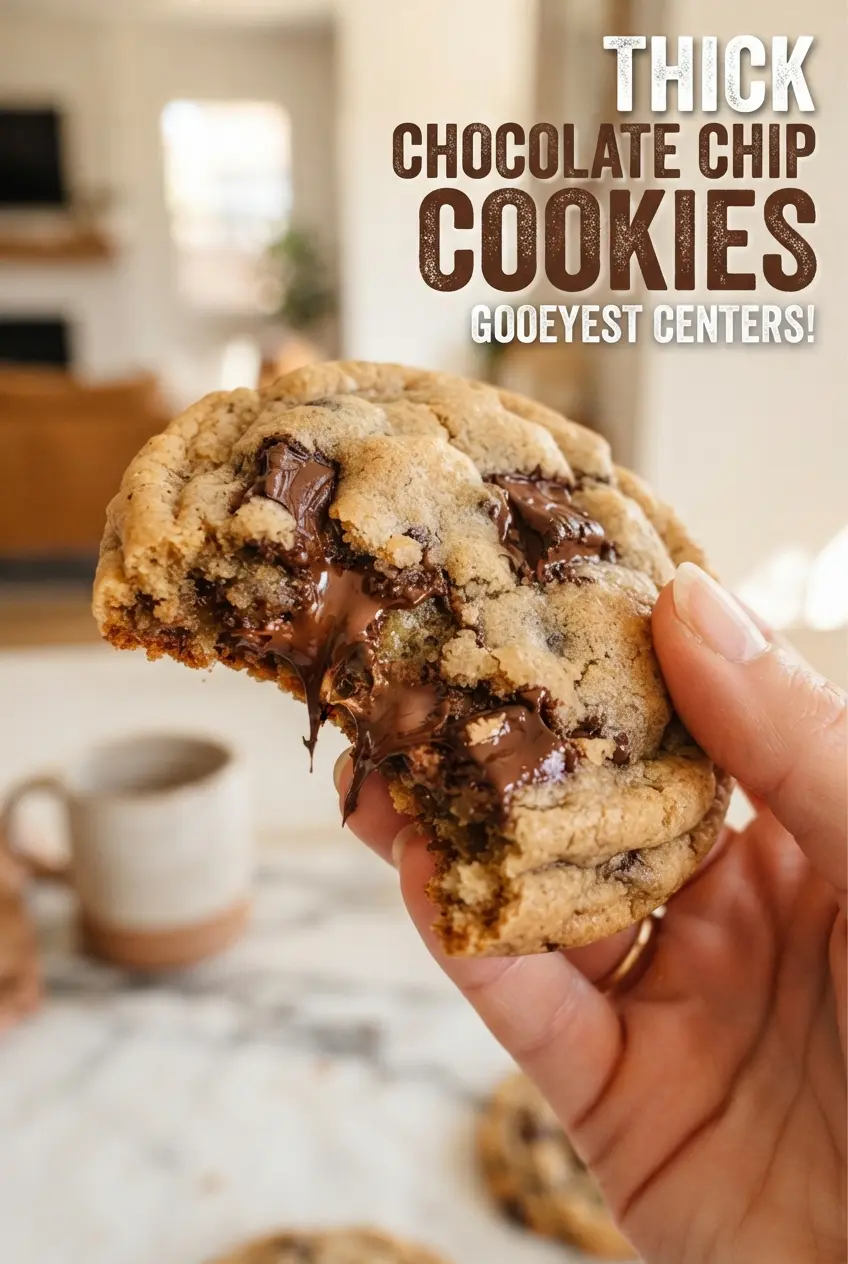
Thick chocolate chip cookies should lift off the tray with tall, craggy tops and a soft center that stays tender after cooling. The best ones don’t spread into flat discs; they hold their shape, bake up with crisp edges, and keep that dense, bakery-style middle that breaks open around puddles of melted chocolate. That balance is what makes these cookies worth repeating.
The trick is using cold butter and cold eggs, then stopping the mixing the second the dough comes together. Cold ingredients keep the dough firm enough to chill into tall portions, and the blend of cake flour, all-purpose flour, and a little cornstarch gives the cookies height without turning them dry. Baking at 400°F sets the edges fast before the centers can flatten out.
Below, I’ve included the small details that matter most: how to shape the dough so the cookies bake tall, what the dough should look like before it chills, and the one timing step that keeps the centers soft instead of cakey.
I chilled the dough for the full hour and the cookies baked up tall instead of spreading. The centers stayed soft and the edges had that perfect crisp bite.
Tall, bakery-style chocolate chip cookies with soft centers are worth keeping close for late-night baking.
The Part That Keeps These Cookies Thick Instead of Flat
Most cookies spread because the dough starts too warm or the butter gets beaten too long. This dough works the other way. Cold butter gets only partially blended, which leaves tiny pockets that soften in the oven without melting into a puddle. The chilled dough firms up even more, so the cookies go into the oven tall and stay tall long enough for the center to set around the edges.
The higher oven temperature matters just as much. At 400°F, the outside sets before the fat has time to run everywhere, which is what gives you that domed top and the soft middle. If your cookies usually bake up thinner than you want, the problem is almost always either warm dough or an oven that’s running cooler than you think.
What Each Ingredient Is Doing in the Dough
- Cold unsalted butter — Cold butter gives you structure and height. If you use softened butter, the dough will spread faster and the cookies will lose that thick center. Unsalted is the right choice here because the salt level is already controlled in the dough.
- Brown sugar — This brings chew and a deeper caramel note. It also holds more moisture than white sugar, which helps the centers stay soft after baking.
- Granulated sugar — This gives the edges a little crispness and helps the tops bake with a cleaner set. Using all brown sugar would make the cookies denser and softer, but less defined.
- Cake flour plus all-purpose flour — The cake flour keeps the texture tender, while the all-purpose flour gives the dough enough strength to stay thick. That combination matters more than adding extra flour at the end, which can make the cookies dry.
- Cornstarch — Just a teaspoon changes the crumb. It softens the bite and helps the center stay plush without making the dough cakey.
- Semi-sweet chocolate chips — Chips hold their shape and create those pockets of melted chocolate inside the cookie. Chopped chocolate works too, but it melts into larger pools and gives a messier, richer finish.
Shaping and Baking the Dough So It Stays Tall
Mixing Just Until the Dough Comes Together
Start by beating the cold butter with both sugars until the mixture looks creamy but still a little uneven. You’re not trying to whip air into it the way you would for cake batter. Beat in the cold eggs and vanilla just until they disappear, then add the dry ingredients and stop as soon as no flour streaks remain. Overmixing here builds too much gluten and makes the cookies tougher instead of thick and tender.
Making Rough Tall Balls, Not Smooth Ones
Divide the dough into 12 portions and shape them into high, rough mounds, about 1/3 cup each. Don’t roll them into perfect smooth balls, because rough edges bake into a better craggy top. If the dough feels sticky, chill it before shaping rather than adding more flour. That keeps the texture right and protects the soft middle.
Chilling Before the Oven
The hour in the fridge is not optional if you want the thickest cookie possible. Chilling firms the butter and gives the flour time to hydrate, which helps the cookies bake taller and more evenly. If you skip this step, they’ll spread faster in the first few minutes and you’ll lose that domed shape before the center sets.
Watching for the Right Bake Color
Bake the cookies until the tops are golden and the centers still look soft. The cookies finish setting on the sheet while they cool, so pulling them when they still seem a little underdone is the right move. If you wait until the centers look firm in the oven, they’ll be dry by the time they cool. Let them sit on the pan for 15 minutes so the structure finishes without overbaking.
How to Adapt These Cookies Without Losing the Thick Center
Extra chocolate, less sweet
Swap half the chips for chopped dark chocolate. The cookies will taste richer and less sugary, and the melted pockets will be larger and more dramatic. Keep the total amount of chocolate the same so the dough doesn’t get overloaded and fall apart.
Gluten-free version
Use a 1:1 gluten-free baking flour in place of both flours. The cookies will still be thick, but the texture will be a little more delicate and less chewy. Chill the dough fully and bake on the parchment-lined sheet without overhandling it, because gluten-free dough breaks down faster when worked too much.
Deeper caramel flavor
Replace a few tablespoons of the granulated sugar with dark brown sugar. That gives the cookies a richer molasses note and a slightly softer middle. Don’t switch all the sugar to dark brown sugar unless you want a denser, more moist cookie that spreads a touch more.
Storage and Reheating
- Refrigerator: Store baked cookies in an airtight container for up to 5 days. The centers will firm up a little, but they’ll still stay chewy.
- Freezer: Freeze the shaped dough balls or baked cookies for up to 2 months. Dough balls can go straight from freezer to oven; add 1 to 2 minutes to the bake time.
- Reheating: Warm baked cookies for 8 to 10 seconds in the microwave, or a few minutes in a low oven. Long reheating dries out the centers, which is the fastest way to lose the soft middle.
Questions I Get Asked About This Recipe
Thick Chocolate Chip Cookies
Ingredients
Equipment
Method
- Beat the cold cubed butter with both sugars for 2 minutes until just combined and creamy, scraping the bowl once so the mixture stays smooth and thick.
- Beat in the cold eggs and vanilla extract until the dough looks glossy and fully blended.
- Mix in the cake flour, all-purpose flour, cornstarch, baking soda, and salt just until combined, then fold in the chocolate chips so you don’t overwork the dough.
- Divide the dough into 12 tall rough balls (about 1/3 cup each), leaving a jagged surface for extra dome, then chill for 1 hour so the dough firms up.
- Preheat the oven to 400F and line a sheet pan with parchment, then place 6 chilled dough balls per sheet with space between them.
- Bake for 12 to 14 minutes until the tops are golden and the centers are still soft, with visible thickness and a slightly underbaked center.
- Cool for 15 minutes on the sheet pan so the cookies set before transferring, keeping the centers soft while they finish stabilizing.