Strawberry tres leches cake is the kind of dessert that disappears one soft forkful at a time. The sponge stays light even after it soaks up the milk mixture, and the whipped cream on top keeps each bite from feeling heavy. Fresh strawberries cut through all that richness with brightness and a little tartness, so the whole cake tastes cool, creamy, and clean instead of cloying.
The trick is baking a sturdy-enough sponge that can handle the soak without turning to mush. Separating the eggs and folding in the whites at the end gives you that airy crumb, while the milk mixture needs to go onto a fully cooled cake so it absorbs evenly instead of pooling on the surface. The strawberries matter too: sliced fresh and added right before serving, they keep their shape and don’t bleed juice all over the cream.
Below you’ll find the little details that make this cake work the way it should, from getting the crumb light enough for the soak to topping it so every slice looks as good as it tastes.
The cake soaked up the milk mixture evenly and stayed fluffy instead of soggy. I loved how the strawberries kept it from feeling too sweet, and the whipped cream held its shape even after a day in the fridge.
Love a cake that soaks up every drop of the milk mixture? Save this strawberry tres leches cake for your next dessert table.
The Sponge Has to Hold Its Shape Before It Soaks
With tres leches, the biggest mistake is baking a cake that’s too delicate to survive the soak. If the crumb is too loose, it collapses into pudding before the cream ever gets a chance to do its job. This version uses separated eggs for a reason: the yolks build richness, and the whipped whites give the cake enough lift and structure to stay tender after hours in the fridge.
Don’t underbake it. The top should spring back when touched lightly, and a toothpick should come out clean from the center. If the cake is still gummy in the middle, it’ll absorb unevenly and turn dense where the milk pools. A fully cooled cake also matters; pouring the milk over warm cake can make the texture break down too fast.
What the Three Milks Are Doing Here
- Sweetened condensed milk — This brings the sweetness and that thick, creamy body you can’t fake with regular milk. There isn’t a good substitute if you want the classic tres leches texture, though a homemade caramelized milk will change the flavor in a good but different direction.
- Evaporated milk — This keeps the soak from tasting one-note sweet. If you’re in a pinch, half-and-half works, but the result will be richer and a little less balanced.
- Heavy cream in the soak — This softens the condensed milk and helps the liquid spread through the cake more evenly. If you skip it, the soak gets denser and can sit more on top instead of sinking in cleanly.
- Fresh strawberries — Use ripe berries with good color and aroma. Frozen strawberries turn watery on top of the whipped cream, so they’re not a good swap here.
- Heavy cream for whipping — This is what gives the top its cloud-like finish. Lower-fat cream won’t hold peaks as well, and the topping will slump before you finish slicing the cake.
How to Build the Soak Without Turning the Cake Heavy
Whipping the eggs into volume
Beat the yolks and sugar until they turn pale and thick enough to ribbon off the whisk. That stage matters because it traps air and gives the cake body before the whites are added. If the mixture still looks grainy or loose, keep going; under-whipped yolks won’t support the light crumb this cake needs. Stir in the vanilla after the yolks are airy so it doesn’t weigh them down.
Folding for lift, not deflating everything
Add the flour mixture in batches, then fold in the whipped egg whites gently. Use a spatula and sweep from the bottom up; if you stir aggressively, the batter loses the air that keeps the cake tender after soaking. The batter should look smooth but still feel light. A few streaks of egg white are better than overmixing until it turns tight.
Pouring the milk slowly
Pierce the cooled cake all over with a fork so the milk has somewhere to go. Pour the mixture over the surface in stages and let each addition disappear before adding more. If you dump it all at once, the top can flood while the middle stays dry. Chill the cake for at least 3 hours so the milk distributes all the way through the crumb.
Finishing with cream and strawberries
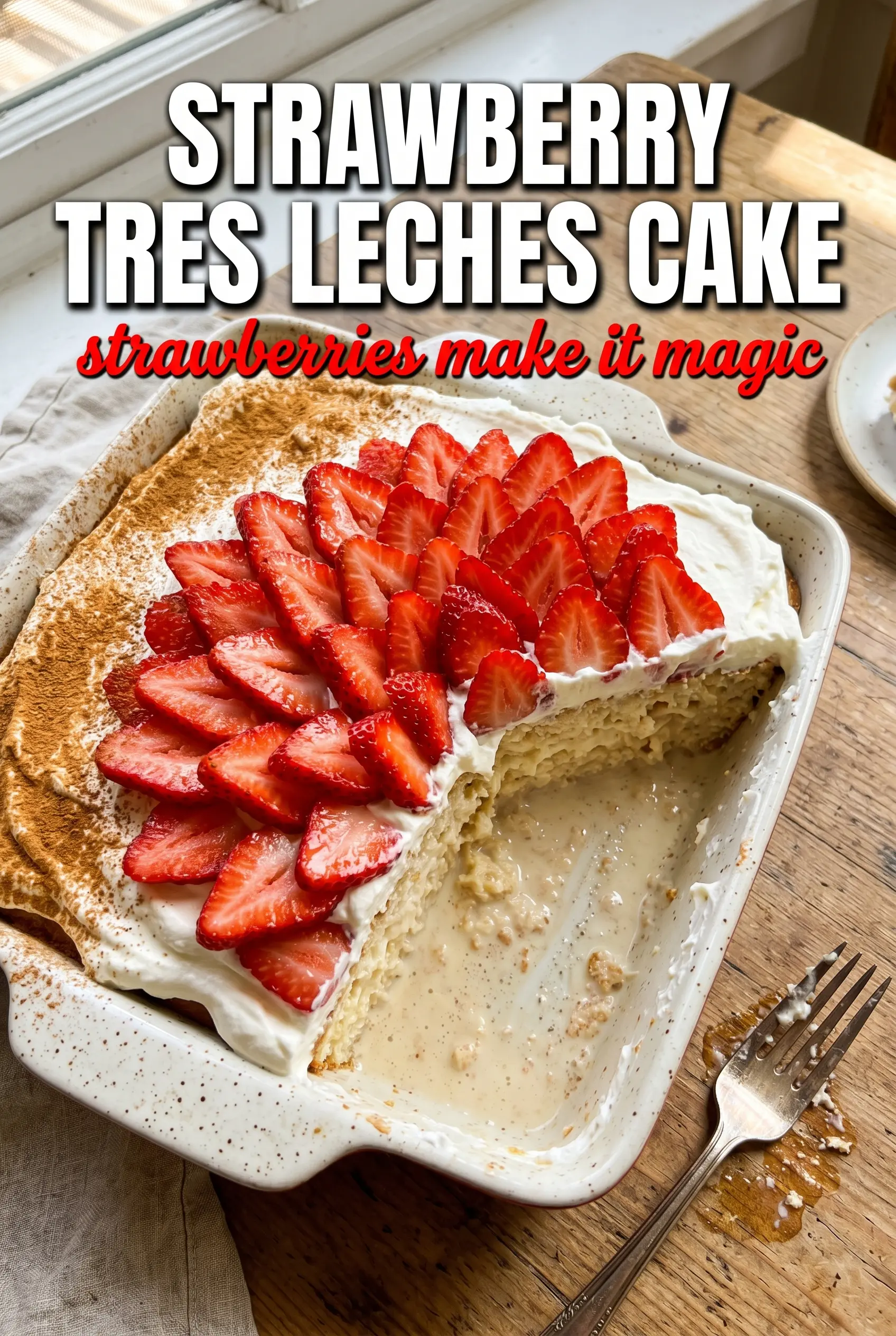
Whip the cream and powdered sugar until you get stiff, glossy peaks that hold their shape when lifted. Spread it over the chilled cake only after the soaking time is complete. Slice the strawberries right before topping the cake so they stay bright and don’t stain the cream. If you add them too early, the juice runs and the top starts to look messy.
How to Adapt This Cake When You Need a Different Finish
Dairy-Free Version With Coconut Milk
Use full-fat coconut milk in place of the evaporated milk and heavy cream in the soak, then whip chilled coconut cream for the topping. The cake will still soak well, but it’ll taste more tropical and a little less classic. The texture stays creamy if you chill the coconut milk first and only use the thick part for whipping.
Gluten-Free Cake That Still Holds the Soak
Swap in a 1:1 gluten-free baking flour that includes xanthan gum. The cake won’t have exactly the same bounce as the original, but it should still stay tender and sliceable after soaking. Don’t overmix the batter once the flour goes in, since gluten-free batters can tighten up fast and bake up dense.
Make It Ahead Without Losing the Fresh Strawberry Finish
Bake the cake and add the milk mixture a full day ahead if you want. Hold the whipped cream and strawberries until a few hours before serving so the top stays clean and the berries stay perky. This is the best way to serve it for guests because the crumb gets even softer overnight without losing structure.
Storage and Reheating
- Refrigerator: Store covered for up to 4 days. The cake gets softer each day, but it should still slice cleanly if it’s well chilled.
- Freezer: Freeze the cake without the whipped cream and strawberries for up to 1 month. Thaw overnight in the refrigerator, then top it fresh before serving.
- Reheating: This cake isn’t meant to be reheated. Serve it cold straight from the fridge, because warming it will loosen the milk soak and collapse the whipped topping.
Questions I Get Asked About This Cake
Strawberry Tres Leches Cake
Ingredients
Equipment
Method
- Preheat the oven to 350°F and grease a 9x13 baking dish. Make sure the dish is fully coated so the cake releases cleanly.
- Whisk together all-purpose flour, baking powder, and salt. Stop when the mixture looks evenly blended with no visible clumps.
- Beat egg yolks with granulated sugar until pale and fluffy. Mix until the batter has increased in volume and looks lighter in color.
- Stir in vanilla extract into the yolk mixture. Mix just until incorporated and no streaks remain.
- Alternately fold the flour mixture and stiffly beaten egg whites into the yolk mixture. Fold gently to keep the batter airy.
- Pour the batter into the prepared baking dish and bake for 20-25 minutes at 350°F. Bake until a toothpick comes out clean from the center.
- Combine sweetened condensed milk, evaporated milk, and 1/2 cup heavy cream in a bowl. Stir until smooth and uniformly creamy.
- Pierce the cooled cake all over with a fork. Make even holes across the surface so the milk soaks in thoroughly.
- Pour the milk mixture over the entire surface of the cake. Use a steady pour so the liquid reaches the edges and fills the holes.
- Chill the cake for at least 3 hours until fully saturated. Cover it to prevent the top from drying out.
- Beat 2 cups heavy cream with powdered sugar until stiff peaks form. Stop when the cream holds ridges and doesn’t droop.
- Top the chilled cake with whipped cream and fresh sliced strawberries before serving. Add strawberries right before slicing so the fruit looks fresh and bright.