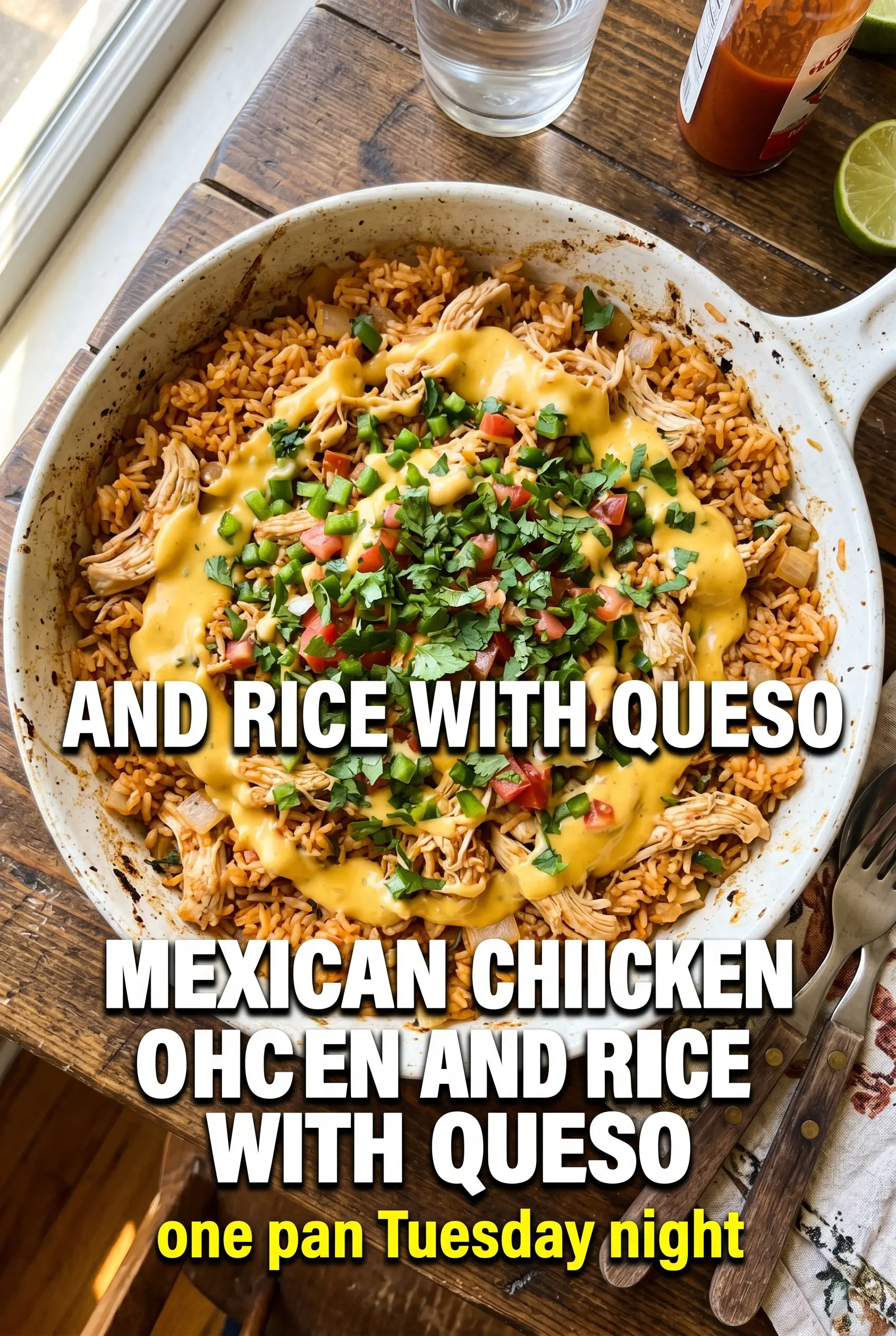
Golden rice, tender chicken, and a blanket of melted white queso make this skillet dinner the kind of meal that disappears fast. The rice soaks up salsa, broth, cumin, and chili powder as it cooks, then gets finished with creamy queso that coats every grain instead of sitting on top like an afterthought. It’s hearty without feeling heavy, and it lands right in that sweet spot where one pan does most of the work.
What makes this version stand out is the order. The chicken gets a quick browning first, which gives the rice a little more savoriness to build on, and the rice is toasted before the liquid goes in so it stays separate and fluffy instead of turning mushy. The queso goes in at the end, off the high heat, so it melts smoothly into the skillet instead of tightening up or turning grainy.
Below, you’ll find the small details that matter most: how to keep the rice from sticking, what to do if your queso is thick, and a few smart ways to adapt the dish when you want to stretch it or adjust the heat.
The rice turned out fluffy and the queso melted right into the skillet without getting clumpy. I liked that the chicken stayed juicy even after the last simmer, and the red bell pepper still had a little bite.
Save this Mexican Chicken and Rice with Queso for a one-pan dinner with fluffy rice, tender chicken, and a creamy queso finish.
The Rice Needs a Head Start, Not a Rescue
The biggest mistake in one-pot chicken and rice is dumping everything in at once and hoping the grain cooks through before the chicken dries out. Rice needs time to absorb liquid evenly, and if the pan is crowded with too much moisture from the start, you get soft spots on top and underdone rice underneath. Browning the chicken first builds flavor in the pan, but the real payoff is toasting the rice for a full minute or two before the broth goes in. That step helps the grains stay separate and gives the final dish a better texture.
The other thing that matters here is heat control. Once the liquid goes in, the mixture should come to a real boil before you drop it to low and cover it. If the simmer is too aggressive, the broth evaporates too fast and the rice can catch on the bottom before the center is tender.
What the Queso and Salsa Are Doing in This Skillet
Salsa does more than season the dish. It brings acidity, moisture, and a little body, so the rice cooks in something that tastes built, not plain. Use a salsa you already like the taste of, because its flavor concentrates as it simmers. White queso dip is the finishing move. It melts into the rice and chicken instead of hardening into strings, which is why a prepared queso dip works better here than shredded cheese alone.
Long-grain white rice is the right choice because it stays fluffy under this amount of liquid. Short-grain rice turns soft faster, and brown rice needs a different liquid ratio and much longer cooking time. Corn and red bell pepper add sweetness and texture near the end, after the rice is mostly cooked, so they keep a little bite instead of going dull.
- Chicken broth: Use low-sodium if your salsa and queso are already salty. That gives you control at the end.
- White queso dip: A smooth, pourable queso melts best. If yours is thick, loosen it with a splash of broth before stirring it in.
- Red bell pepper: Dice it small so it softens in a few minutes. Bigger pieces stay too firm for this dish.
Building the Skillet Without Ending Up With Mushy Rice
Browning the Chicken First
Heat the olive oil in a large skillet until it shimmers, then add the seasoned chicken in a single layer. Let it sit long enough to get color before you stir, because pale chicken won’t give you the same savory base. You’re not cooking it all the way through here; you’re building flavor and giving the pan some browned bits for the rice to pick up later.
Toasting the Rice in the Aromatics
Add the onion and garlic and cook just until fragrant, then stir in the rice and let it toast for about two minutes. The grains should look a little translucent around the edges and smell nutty, not raw. If you rush this part, the rice can turn soft and bland, and the final skillet will taste flatter than it should.
Letting the Simmer Do the Work
Pour in the broth, salsa, cumin, and chili powder, bring everything to a boil, then cover and turn the heat down low. Keep the lid on for the full 15 minutes so the steam finishes the rice evenly. If the heat is too high, the bottom layer dries out before the top layer has a chance to cook.
Finishing With Queso
Once the rice is tender, stir in the queso, corn, and bell pepper and cook uncovered for a few minutes until the cheese is fully melted. The skillet should look creamy and glossy, with the rice still distinct in the sauce. If the queso looks tight or grainy, take the pan off the heat for a minute and stir again; high heat is what usually causes the problem.
How to Adapt This When You Want It Lighter, Spicier, or Dairy-Free
Make it dairy-free
Swap the queso for a dairy-free queso-style sauce that melts smoothly, or use a cashew-based sauce with enough salt and seasoning to stand up to the rice. The dish will be a little less rich, but the skillet texture still works as long as the sauce is added at the end.
Turn up the heat
Use a hot salsa or add diced jalapeño with the onion and garlic. That gives the whole skillet more warmth without changing the rice texture. Add heat early instead of at the table so it blends into the sauce instead of sitting on top.
Use chicken thighs instead of breasts
Boneless thighs stay juicier and give the dish a deeper chicken flavor. Cut them into the same size pieces and use the same browning time. They’re more forgiving if the skillet runs a little hot.
Add beans to stretch it
Stir in drained black beans with the corn near the end for extra bulk and a heartier finish. The beans absorb some of the queso and make the skillet feed more people without changing the cooking method.
Storage and Reheating
- Refrigerator: Store in an airtight container for up to 4 days. The rice will firm up a little as it sits, but the flavors deepen.
- Freezer: It freezes well for up to 2 months, though the queso may separate slightly after thawing. Cool it completely first and freeze in portioned containers.
- Reheating: Warm it gently on the stove or in the microwave with a splash of broth to loosen the rice. High heat dries the chicken and makes the queso oily, so go low and stir often.
Questions I Get Asked About This Recipe
Mexican Chicken and Rice with Queso
Ingredients
Equipment
Method
- Heat olive oil in a large skillet over medium-high heat. Season the cubed chicken breasts with salt and pepper, then brown on all sides for about 5 minutes, until lightly golden.
- Add the diced onion and minced garlic, cooking for 2 minutes until fragrant. Stir in the long-grain white rice and toast for 2 minutes.
- Pour in the chicken broth, salsa, cumin, and chili powder, then bring to a boil. Reduce heat to low, cover, and simmer for 15 minutes until the rice absorbs most of the liquid.
- Stir in the white queso dip, corn, and diced red bell pepper. Cook uncovered for 3-5 minutes until the queso is melted and the rice is tender, with a creamy bubbling surface.
- Garnish with fresh cilantro and serve hot. Look for steady steam rising from the skillet before plating.