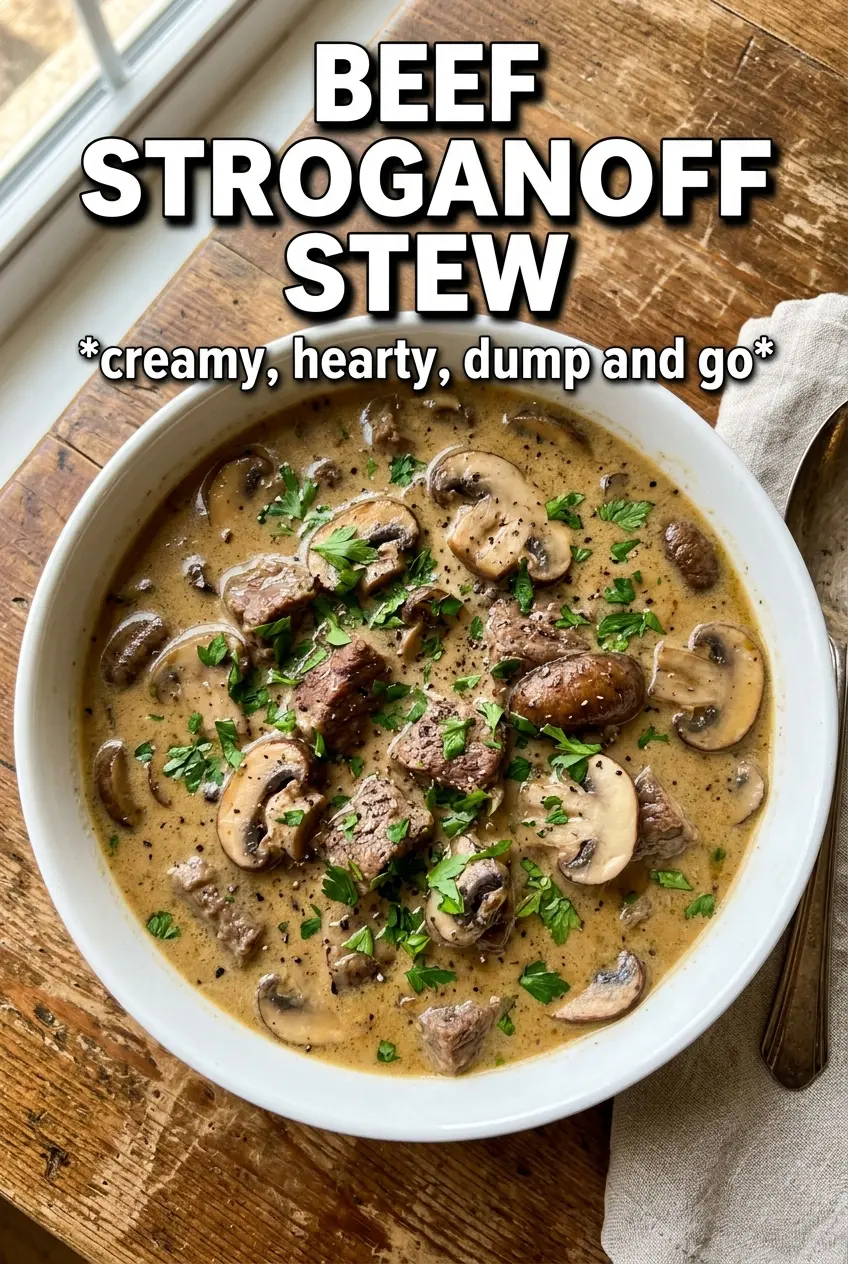
Slow cooker beef stroganoff stew lands in the bowl with tender chunks of beef, mushrooms that have soaked up every bit of savory broth, and a creamy sauce that clings to egg noodles instead of sliding off them. It eats like comfort food should: rich, spoonable, and sturdy enough to hold up to a long simmer without turning muddy or flat.
The difference here is in the order. The beef cooks low and slow with the mushrooms, onion, garlic, broth, Worcestershire, Dijon, thyme, and smoked paprika so the sauce builds flavor from the start. Then the cornstarch slurry goes in near the end, after the meat is tender, and the sour cream and cream cheese are stirred in off the heat so the sauce stays smooth instead of grainy.
Below, I’ll show you the one timing step that keeps the dairy from splitting and the best way to serve this so the noodles stay glossy and the stew still feels like stew, not soup.
The beef got fork-tender and the sauce thickened up beautifully after the slurry. I was worried the sour cream would curdle, but adding it at the end kept everything smooth and cozy over the noodles.
Save this slow cooker beef stroganoff stew for a night when you want tender beef, creamy mushroom sauce, and almost no hands-on work.
The Secret to Keeping the Stroganoff Sauce Creamy After 8 Hours
The most common mistake with slow cooker stroganoff is adding the dairy too early. Sour cream and cream cheese can take the heat at the end, but after hours on low they’re much more likely to split, turn grainy, or taste flat. That’s why this stew gets its body from the broth, mushrooms, and a quick cornstarch slurry first, then the creamy ingredients go in only after the beef is already tender.
There’s another small thing that matters here: don’t rush the thickening step. The slurry needs the full 20 minutes on High to lose its starchy taste and turn the liquid into a sauce that coats the meat instead of pooling under it. If it still looks loose at first, give it a minute. Slow cooker sauces usually thicken a little more as they sit.
What Each Ingredient Is Actually Doing in This Stew

- Beef chuck — This is the cut that turns tender after a long cook. It has enough fat and connective tissue to break down into soft, rich bites. Stew meat works in a pinch, but chuck gives you better flavor and a silkier texture.
- Cremini mushrooms — They bring a deeper, earthier flavor than white button mushrooms and hold their shape better over the long cook. Slice them thick so they don’t disappear into the sauce.
- Worcestershire sauce and Dijon mustard — These do the quiet work of making the broth taste finished. Worcestershire adds savory depth, and Dijon sharpens the sauce so the cream doesn’t taste heavy.
- Smoked paprika and dried thyme — The paprika gives the stew a warm, slightly smoky edge, while thyme keeps it tasting like a true stroganoff-style dish instead of plain beef and cream.
- Cream cheese and sour cream — Both add body, but they do it differently. Cream cheese thickens and rounds out the sauce, while sour cream gives it that classic tang. Full-fat versions hold up best here.
- Cornstarch slurry — This is what turns the cooking liquid into a proper stew sauce. Mix it with cold water first so it disperses smoothly; if you dump in dry cornstarch, you’ll get little lumps that never fully disappear.
Building the Stew So the Beef Turns Tender, Not Dry
Loading the Slow Cooker
Season the beef with salt and pepper, then add it to the slow cooker with the mushrooms, onion, garlic, broth, Worcestershire, Dijon, paprika, and thyme. Everything goes in together because this stew needs time for the flavors to marry. Keep the beef in mostly even cubes so it cooks at the same pace; bigger chunks stay chewy while smaller ones can dry out by the end.
Letting Time Do the Work
Cook on Low for 7 to 8 hours, or High for 4 to 5 hours if you’re short on time. The beef is ready when it breaks apart easily with a fork and the mushrooms have shrunk down into the broth. If the meat still feels tight or springy, it needs more time, not more heat. High heat gets you there faster, but Low gives the most tender result.
Thickening Before the Dairy Goes In
Stir the cornstarch slurry into the slow cooker, then cook on High for about 20 minutes. The sauce should go from thin and brothy to glossy and lightly clingy. This is the point where people get impatient and add the sour cream too soon, but the slurry needs to finish first or the dairy will loosen the stew again.
Finishing With the Cream
Stir in the sour cream and cubed cream cheese until the sauce turns smooth and pale. If the cream cheese takes a minute to melt, keep stirring gently until it disappears into the stew. Don’t let the slow cooker stay on High after the dairy goes in; residual heat is enough, and too much direct heat can make the sauce look broken or grainy. Taste at the end and adjust salt and pepper after the cream has been added.
Three Ways to Make This Work for Your Table
Dairy-Free Version
Skip the sour cream and cream cheese, then stir in an unsweetened dairy-free cream alternative at the end, off the heat. The sauce won’t have the same tangy richness, but it will still be silky if you keep the thickening step. Coconut-based products work, but choose one with a neutral flavor or the stew will pick up a faint coconut note.
Gluten-Free Serving Option
The stew itself is already gluten-free as long as your Worcestershire sauce is labeled gluten-free. Serve it over gluten-free noodles, mashed potatoes, or rice. The sauce is sturdy enough for any of those, though rice gives you the cleanest finish if your noodles tend to get soft fast.
Extra Mushroom, Less Beef
If you want a lighter version, cut the beef back to 1 1/2 pounds and add another 8 ounces of mushrooms. The stew will still taste rich because the mushrooms carry a lot of the savory base, but the texture shifts from hearty beef stew toward a more mushroom-forward stroganoff.
Storage and Reheating
- Refrigerator: Store for up to 4 days. The sauce thickens as it chills, and the noodles are best kept separate so they don’t soak up all the gravy.
- Freezer: Freeze the stew without the noodles for up to 2 months. Cream-based sauces can separate a little after thawing, so reheat gently and whisk well.
- Reheating: Warm it over low heat on the stove or in short bursts in the microwave, stirring between each one. If it looks too thick, add a splash of broth. High heat is what usually causes the dairy to split.