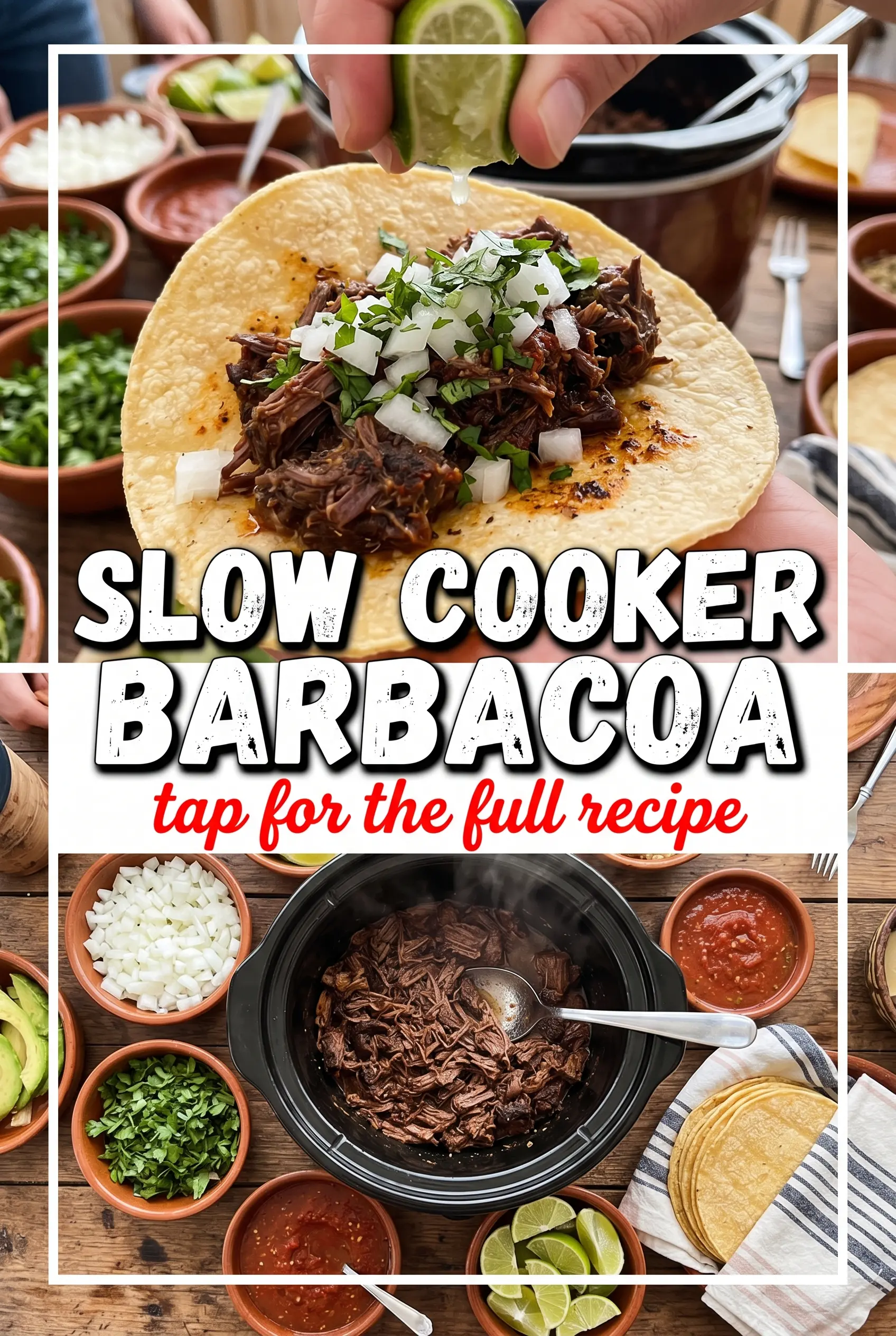
Slow cooker barbacoa turns a tough chuck roast into deeply seasoned, fork-tender beef that shreds into glossy strands and holds onto every bit of its chile sauce. The flavor lands in that sweet spot between earthy, smoky, tangy, and warm-spiced, which is why it works just as well piled into tacos as it does spooned over rice or tucked into burritos. The best part is that the slow cooker does the heavy lifting, but the final dish still tastes like you spent real time building the base.
What makes this version stand out is the blend of guajillo and ancho chiles. Guajillos bring a bright, slightly tangy heat, while ancho chiles add deeper, raisin-like richness. Blooming the dried chiles in a dry pan first wakes them up, and blending them with vinegar, broth, garlic, and spices creates a sauce that clings instead of thinning out into the crock. Browning the beef first matters too; it gives the finished barbacoa a darker, fuller flavor that you just don’t get from dropping raw meat straight into the slow cooker.
Below you’ll find the little details that keep the sauce bold and the texture silky, plus a few ways to adapt it depending on what you have on hand. If you’ve ever had barbacoa come out bland or watery, the steps below will help you avoid both.
The sauce came out thick and clingy instead of watery, and the beef shredded into perfect little strands after 8 hours. I served it with corn tortillas and my husband went back for thirds.
Save this slow cooker barbacoa for taco night — the mahogany shredded beef and rich chile sauce make it worth coming back to.
The Browned Beef and Toasted Chile Step That Keeps Barbacoa From Tasting Flat
The biggest mistake with barbacoa is treating the slow cooker like it can create flavor from nothing. It can’t. If the beef goes in pale and the chiles go in raw, the finished meat tends to taste muddy instead of layered.
Browning the chuck roast first gives you those dark, savory edges that hold up through the long cook. Toasting the dried chiles for a minute or two does the same thing on the flavor side: it brings out their aroma and keeps the sauce from tasting dusty. Don’t let the chiles burn, though. Once they smell fragrant and turn a shade darker, they’re ready.
What Each Ingredient Is Actually Doing in This Barbacoa
- Beef chuck roast — This is the cut that earns its keep in a slow cooker. It has enough fat and connective tissue to turn silky after hours of low heat. Leaner beef will dry out before it gets tender in the same way.
- Guajillo chiles — These give the sauce its bright red color and a clean, tangy chile flavor. If you can’t find them, use dried New Mexico chiles for a similar result, though the flavor will be a little less fruity.
- Ancho chiles — Anchos add depth and a subtle sweetness that rounds out the sharper edges of the guajillos. Chipotle would make the barbacoa smokier and hotter, which is a different dish entirely.
- Apple cider vinegar and lime juice — The vinegar goes into the blender and helps cut through the richness during the long cook. The lime juice goes in at the end so the finished meat tastes brighter instead of sour and dull.
- Cumin, oregano, cloves, and cinnamon — These are the backbone of the barbacoa flavor. The spices need to be measured carefully, especially the cloves and cinnamon, because too much can push the sauce into potpourri territory fast.
- Beef broth — This helps the blender move and gives the sauce enough body to coat the meat without turning thin. Use a good low-sodium broth if you can, since the salt is already built into the recipe.
The Part of the Cook Time That Actually Matters
Browning the Roast
Heat the olive oil until it shimmers, then brown the seasoned roast on all sides until you see a deep crust, not just a pale tan surface. That crust builds flavor in the meat itself and in the skillet, where some of the best browned bits collect. If the pan looks crowded or the beef steams instead of sears, the heat is too low or the skillet is too small. Work with enough space for the surface to actually contact the hot pan.
Building the Chile Sauce
Toast the dried chiles in a dry pan for a minute or two, just until they smell nutty and flexible. Then blend them with the broth, vinegar, garlic, and spices until completely smooth. If the blender struggles, add the broth in a little at a time and keep blending; a grainy sauce won’t disappear during cooking, it just stays grainy in the finished barbacoa.
Letting the Slow Cooker Do Its Job
Pour the sauce over the beef, add the bay leaves, and cook on low for about 8 hours. The meat is ready when it falls apart with almost no resistance from a fork. If it still feels tight or springy, it needs more time, not more heat. High heat can tighten the fibers before they have a chance to soften.
Finishing With Lime
Shred the beef right in the slow cooker so it soaks up the sauce, then stir in the lime juice at the end. This is the moment that wakes everything up. Without that fresh acid, the barbacoa can taste heavy, especially after a long cook. Add the lime after shredding so the brightness stays sharp and doesn’t fade away.
Three Ways to Make This Barbacoa Fit What You Have
Make It Dairy-Free and Gluten-Free Without Changing the Flavor
The barbacoa itself is naturally dairy-free and gluten-free, so the only thing to watch is what you serve with it. Use corn tortillas, rice, or lettuce cups, and check your broth label if you want to stay strict on gluten. The flavor and texture stay exactly where they should.
Swap the Chuck Roast for Brisket
Brisket works if that’s what you have, but it cooks a little differently and can slice rather than shred if it gets too far past done. Keep the same sauce, then start checking earlier so you catch the point where it pulls apart but still holds some structure. You get a slightly meatier bite and a bit less of that melt-away texture.
Turn It Down for Less Heat
If you want a milder barbacoa, cut back the black pepper and use 3 guajillos instead of 4. The ancho chiles already bring warmth and depth, so you don’t need to chase heat to get a big flavor payoff. The beef still tastes rich and layered, just a little gentler.
Stretch It Into More Meals
This barbacoa freezes into portioned containers better than a lot of shredded beef recipes because the sauce keeps it from drying out. Spoon it over tostadas, fold it into quesadillas, or use it for breakfast hash with potatoes and eggs. The flavor gets even better after a day in the fridge.
Storage and Reheating
- Refrigerator: Store in an airtight container for up to 4 days. The beef stays moist because of the sauce, and the flavor deepens overnight.
- Freezer: Freeze for up to 3 months in flat, meal-sized containers or freezer bags. Let it cool first, and include plenty of sauce so the meat doesn’t dry out when thawed.
- Reheating: Warm gently on the stove or in the microwave with a spoonful of extra broth or sauce. The common mistake is blasting it until the beef turns stringy and dry; low heat keeps the texture tender.
Answers to the Questions Worth Asking
Slow Cooker Barbacoa
Ingredients
Equipment
Method
- Heat olive oil in a large skillet over medium-high heat, then wait until it shimmers. Season beef generously with salt and pepper and brown on all sides for about 8 minutes total, until deeply browned.
- Remove stems and seeds from dried guajillo chiles and dried ancho chiles, then toast them in a dry pan for 1-2 minutes. Add beef broth, apple cider vinegar, garlic, cumin, oregano, cloves, cinnamon, and black pepper to a blender with the toasted chiles, then blend until smooth.
- Place browned beef in a slow cooker and pour the chile mixture over the top, then add bay leaves. Cover and cook on low for 8 hours until the beef shreds easily with a fork.
- Shred the meat directly in the slow cooker and stir until the strands are coated in the glossy mahogany sauce. Stir in juice of 2 limes, then let rest for 10 minutes before serving.
- Serve the barbacoa warm as a taco filling with tortillas, onions, and cilantro.