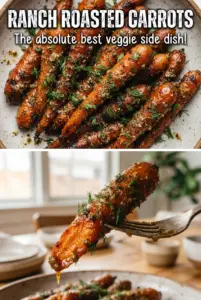
Ranch roasted carrots come out with the kind of edge that keeps people reaching back to the pan: tender in the center, browned at the tips, and coated in a salty-herby crust that tastes a lot more interesting than plain roasted vegetables. The Parmesan melts just enough to cling to the carrots, and the ranch seasoning does the heavy lifting with garlic, dill, and that familiar tangy finish.
What makes this version work is the balance of moisture and heat. Carrots need enough oil to carry the seasoning, but not so much that they steam on the pan. A hot oven and a single layer give you caramelized edges instead of soft, pale sticks. Adding the Parmesan after roasting keeps it from scorching, and the fresh herbs at the end keep the whole dish from tasting flat.
Below, I’ve included the one pan habit that makes the biggest difference, plus a few smart swaps if you want to change the cheese, herbs, or seasoning without losing the texture that makes these carrots worth repeating.
The carrots got those crispy little browned edges I was hoping for, and the ranch seasoning stuck instead of sliding off. My husband kept sneaking them off the pan before dinner.
Save these ranch roasted carrots for the nights when you want a fast side with crispy edges, cheesy finish, and almost no cleanup.
The Reason These Carrots Brown Instead of Steam
The difference between roasted carrots with color and roasted carrots that turn soft is almost always pan space. When the carrots are crowded, they release moisture and sit in it. The oven can’t caramelize wet carrots efficiently, so you get a pale, tender pile instead of browned edges.
A parchment-lined sheet pan helps with cleanup, but the real trick is heat and movement. Four hundred twenty-five degrees gives the carrots enough energy to brown before they collapse, and a halfway toss exposes the less-cooked sides to the hottest part of the pan. If your carrots are cut too thick on one end and too thin on the other, some pieces will burn before others are tender, so try to keep the sticks close in size.
What the Ranch Mix and Parmesan Are Actually Doing Here
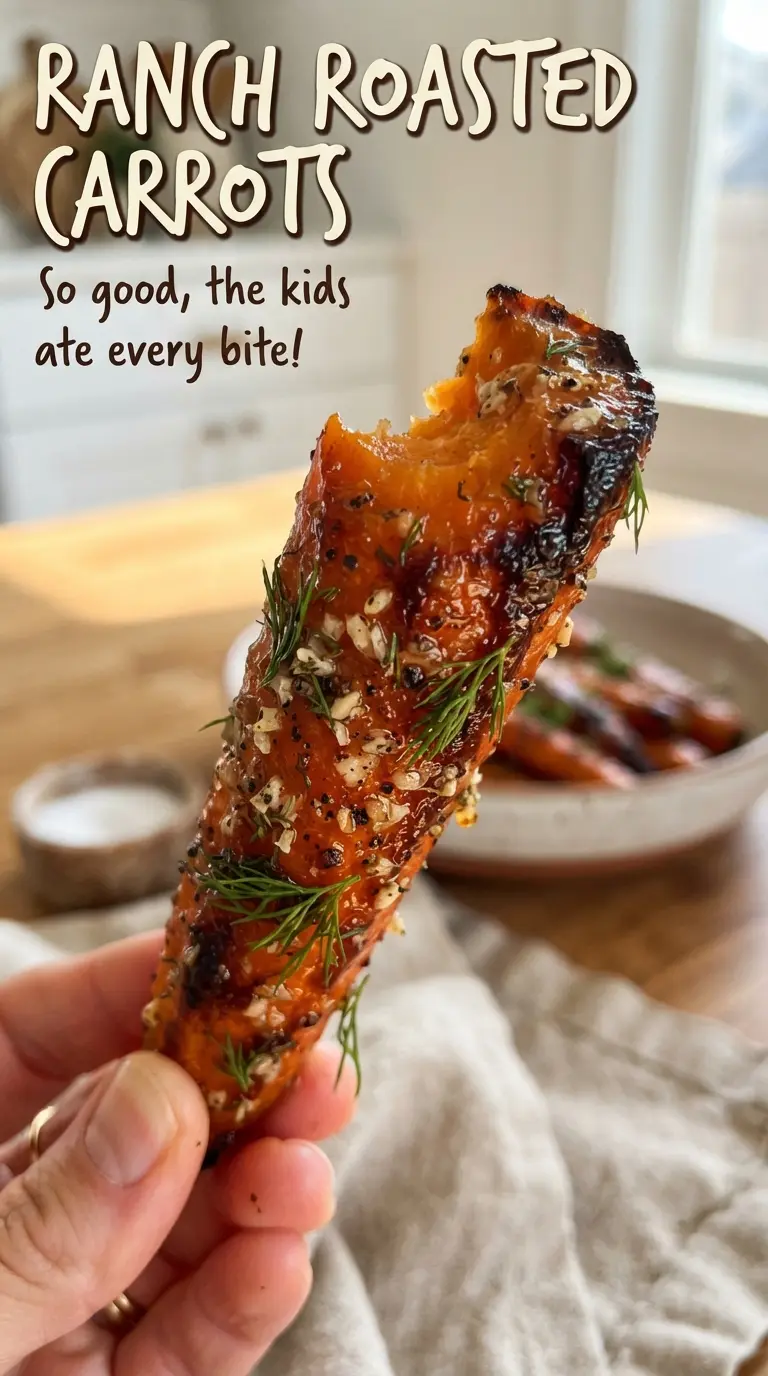
- Carrots — These need enough time in the oven to soften all the way through while the outside edges catch. Medium carrots are ideal because they roast evenly and hold their shape better than baby carrots, which can go limp faster.
- Olive oil — This helps the seasoning stick and promotes browning. You can use avocado oil if that’s what you keep on hand, but don’t skip the oil or the ranch mix will bake on in dry patches instead of forming a light coating.
- Ranch seasoning — This is the main flavor driver, so use a packet that tastes good on its own. Homemade ranch seasoning works too, but the bottled stuff usually has the salt level and herb balance people expect from this dish.
- Parmesan — Grated Parmesan adds a salty finish and a little savory crunch once it hits the hot carrots. Use the finely grated kind for the best cling; larger shreds won’t melt and coat the same way.
- Fresh dill or parsley — This wakes everything up at the end. Dill leans into the ranch flavor, while parsley keeps it a little cleaner and brighter.
How to Roast the Carrots So the Edges Catch
Tossing the Carrots Evenly
Put the carrots in a bowl with the oil and ranch seasoning and toss until every piece looks lightly coated. Dry spots turn into bland spots, and clumps of seasoning can burn on the pan. If the carrots look dusty instead of glossy, add just enough oil to help the seasoning cling.
Spreading Them for Real Roasting
Move the carrots to the sheet pan in a single layer with a little breathing room around them. Overlap is the enemy here because stacked carrots steam before they brown. If your pan looks packed, use a second pan instead of trying to force it all onto one.
Finishing at the Right Moment
Roast until the carrots are tender enough to pierce with a fork and the tips look browned, not blackened. Toss them halfway through so the underside gets a chance to color. Sprinkle the Parmesan and herbs on after they come out of the oven so the cheese softens on contact instead of turning gritty or scorched.
Three Ways to Work This Recipe Into Your Week
Dairy-Free Version
Skip the Parmesan and finish with extra herbs plus a pinch of flaky salt. You lose the savory cheesy finish, but the carrots still roast beautifully and the ranch seasoning carries most of the flavor on its own.
Use Baby Carrots When That’s What You Have
Baby carrots work in a pinch, but they brown a little less deeply and can soften faster because they’re thinner. Keep an eye on them near the end of the bake time and pull them once the edges start to caramelize.
Make Them a Little More Herby
Add a pinch of dried dill or a little extra fresh parsley if you want the ranch flavor to read brighter. Don’t overdo it with fresh herbs before roasting, though, or they’ll darken and lose their fresh taste.
Storage and Reheating
- Refrigerator: Store leftovers in an airtight container for up to 4 days. The carrots will soften a little, but the seasoning stays flavorful.
- Freezer: Not my first choice. Frozen roasted carrots tend to lose their roasted texture and come back softer, so make them fresh when you can.
- Reheating: Warm them on a sheet pan in a 400F oven until hot. The microwave works in a pinch, but it turns the carrots wetter and dulls the browned edges.
Questions I Get Asked About This Recipe
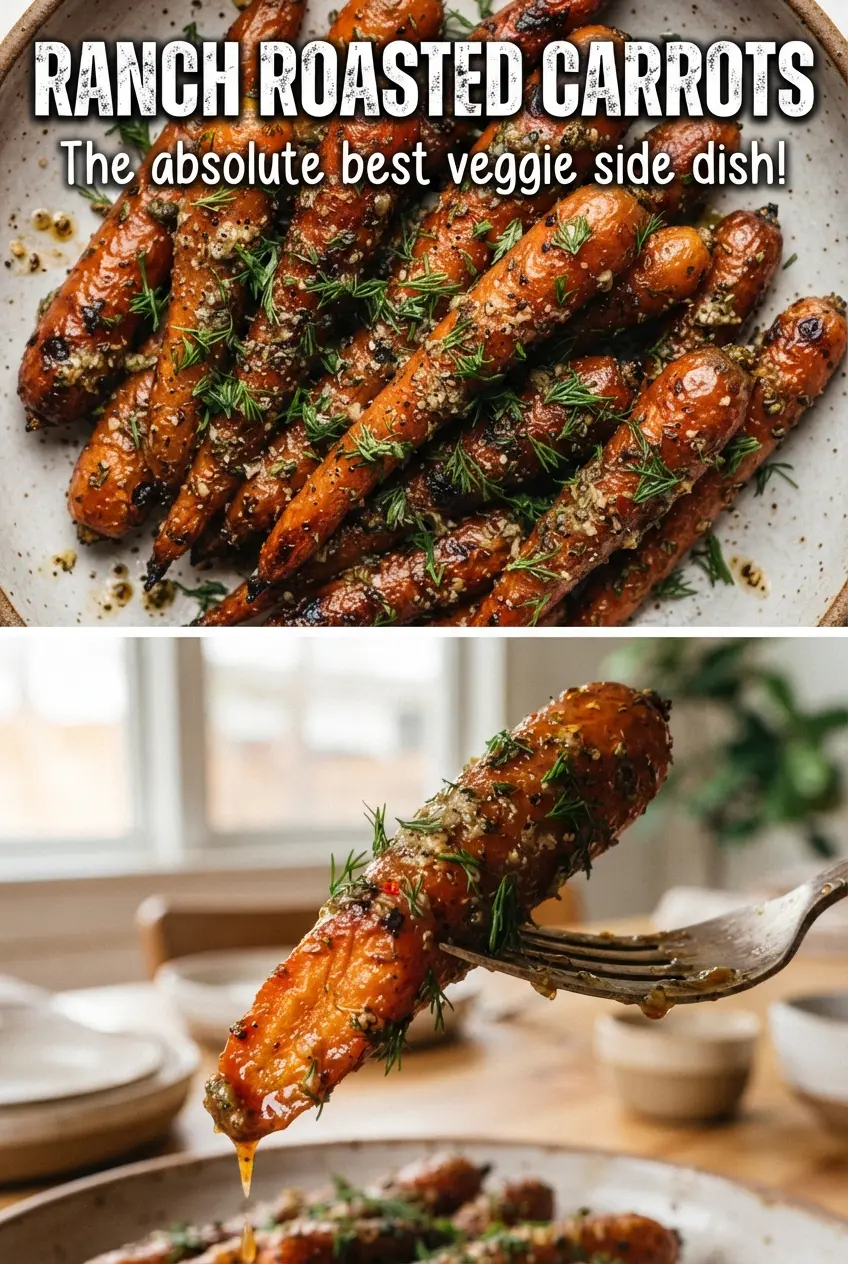
Ranch Roasted Carrots
Ingredients
Equipment
Method
- Preheat oven to 425F and line a sheet pan with parchment so the carrots roast evenly without sticking.
- Toss the carrots with olive oil and ranch seasoning until evenly coated, then spread them in a single layer.
- Roast for 20-25 minutes, tossing halfway, until the carrots are tender and browned at the edges, with visible caramelization along the edges.
- Sprinkle the roasted carrots with Parmesan and fresh dill or parsley, then serve warm right away for best flavor and aroma.