Glossy peach bourbon glaze turns a plain piece of salmon, chicken, or pork into something that tastes like it came off a much better grill. It clings in a thick, shiny layer, with enough fruit to taste bright and enough bourbon to give it that warm, rounded depth you notice after the first bite. The best versions don’t taste boozy for the sake of it; they taste concentrated, balanced, and just a little sticky at the edges.
The trick is reduction, not just mixing. Fresh peach puree gives you body and natural sweetness, while brown sugar and honey build the lacquered finish that lets the glaze coat a spoon instead of running right off it. Soy sauce adds salt and darkness, vinegar keeps the sweetness from flattening out, and the garlic, ginger, and cayenne keep the whole thing from tasting one-note.
Below, I’ll walk through the part that matters most: how long to cook it so it thickens without turning into jam. I’ve also included a few practical swaps for when your peaches aren’t perfect and a storage note for making it ahead.
The glaze reduced down beautifully and coated the salmon without sliding off, and the little hit of ginger with the bourbon made it taste much more balanced than the usual sweet peach sauce.
Keep this peach bourbon glaze handy for grilled salmon, chicken, or pork when you want a glossy finish with real depth.
The Reduction That Gives Peach Glaze Its Shine
A good peach glaze lives or dies by how far you cook it down. If you stop too early, it tastes thin and watery and slides off the food before it can do any work. If you push it too far, the sugars tighten up and it goes from glossy sauce to sticky syrup on the edge of burnt.
The sweet spot is when the glaze has reduced by about half and leaves a clean trail when you drag a spoon across the pan. That’s when the peaches have concentrated enough to taste deep and ripe, but there’s still enough moisture for the glaze to brush on smoothly. The soy sauce and bourbon need that reduction time too, because both get rounder and less sharp as the liquid cooks off.
If the glaze looks a little loose in the pan, it usually thickens another notch as it cools. That’s normal. What you’re looking for on the stove is a texture that coats the back of a spoon without running immediately back into the pan.
What Each Ingredient Is Actually Doing in This Glaze
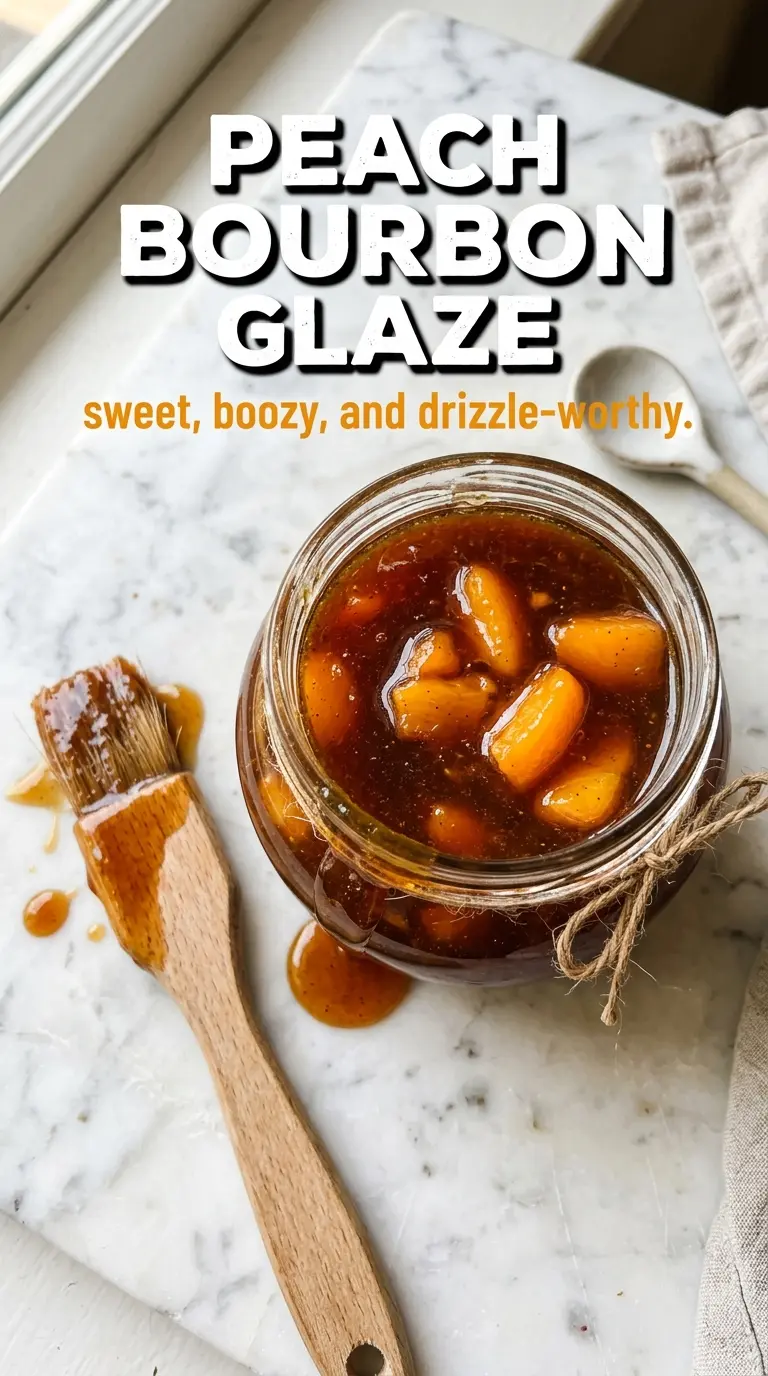
- Peaches — Ripe peaches give this glaze its body and fruit flavor. If your peaches are a little soft, that’s fine; you want sweetness and puree, not perfect slices. Very firm peaches won’t break down as smoothly, so they’ll take longer to cook and won’t taste as plush.
- Bourbon — Bourbon adds warmth, oak, and a little edge that plain fruit juice can’t replace. It cooks down fast, so don’t worry about the alcohol staying bold; what remains is depth. If you need to skip it, a splash of apple juice with a tiny pinch of smoked paprika gives some of the same rounded effect, but it won’t taste identical.
- Brown sugar and honey — These are what help the glaze turn lacquered and glossy. Brown sugar brings molasses notes, while honey keeps the sweetness smooth instead of flat. You can swap the honey for maple syrup, but the finish will taste a touch earthier.
- Apple cider vinegar — This keeps the glaze from reading as dessert. It sharpens the peach, wakes up the bourbon, and makes the whole sauce taste intentional on savory food. Don’t leave it out unless you want a softer, sweeter glaze.
- Soy sauce, garlic, ginger, and cayenne — Soy sauce adds salt and color; garlic and ginger give the glaze a savory backbone; cayenne adds just enough heat to stop the sweetness from settling in. If you’re using this on something delicate like salmon, keep the cayenne gentle. For pork, a little more heat works beautifully.
Cooking Peach Bourbon Glaze Without Burning the Sugars
Build the Base in One Pan
Combine everything in a small saucepan before turning on the heat. The puree should look loose and slightly cloudy at this stage, and that’s exactly what you want. Medium heat is enough to get it moving; higher heat can scorch the sugars before the peaches have a chance to concentrate. Stir often from the start so the honey and brown sugar don’t settle and catch on the bottom.
Let the Simmer Do the Work
Once the mixture starts bubbling, lower the heat so it holds a steady simmer instead of a hard boil. You’re looking for small bubbles around the edges and an occasional lazy burst in the center. That slower simmer is what gives the bourbon time to mellow and the glaze time to thicken evenly. If it starts sputtering like crazy, the heat is too high and the bottom can darken before the top reduces.
Stop at Spoon-Coating Thickness
After 15 to 20 minutes, lift the spoon and watch how the glaze falls. It should ribbon back into the pan slowly and leave a thin coating on the spoon’s back. Taste it at that point, because peaches vary a lot in sweetness. If it needs more brightness, add a few drops more vinegar; if it tastes flat, a pinch more salt or a touch more honey usually fixes it faster than more bourbon.
Use It Hot, Warm, or Cooled
This glaze works right away on brushed-on grilled meat, but it also tightens a little as it cools. For finishing salmon or chicken, I like it warm so it spreads in a thin, shiny layer. If you’re glazing pork near the end of cooking, a slightly thicker glaze clings better and gives you that sticky edge without running off the meat.
How to Adapt This Peach Bourbon Glaze for Different Dishes
Dairy-Free and Naturally Gluten-Free Serving
This glaze is already dairy-free, and it can be gluten-free if you use a certified gluten-free soy sauce or tamari. The flavor stays the same, but tamari usually tastes a little rounder and less sharp. That swap matters most if you’re serving it with a simple grilled protein where the glaze is carrying the whole dish.
No Bourbon, Still Deep
If you don’t want to cook with bourbon, replace it with apple juice plus a tiny splash of extra vinegar. You’ll lose the oak and caramel edge, so the glaze tastes a little brighter and less complex, but it still works well on chicken and pork. Add a pinch of smoked paprika if you want a little more warmth back.
Thicker for Grilling, Looser for Finishing
For a grilling glaze, cook it a few minutes longer so it brushes on in a thicker layer and clings during the last minutes over heat. For a finishing sauce, stop earlier so it pours more easily over salmon or sliced pork. The difference is small, but it changes how the glaze behaves on the plate.
Storage and Reheating
- Refrigerator: Store in a sealed jar or container for up to 1 week. It will thicken as it chills.
- Freezer: It freezes well in a small airtight container for about 2 months. Thaw overnight in the fridge before reheating.
- Reheating: Warm gently on the stove over low heat or in short microwave bursts, stirring between each one. Don’t boil it hard again or the sugars can tighten up and the glaze can turn sticky instead of glossy.
Answers to the Questions Worth Asking
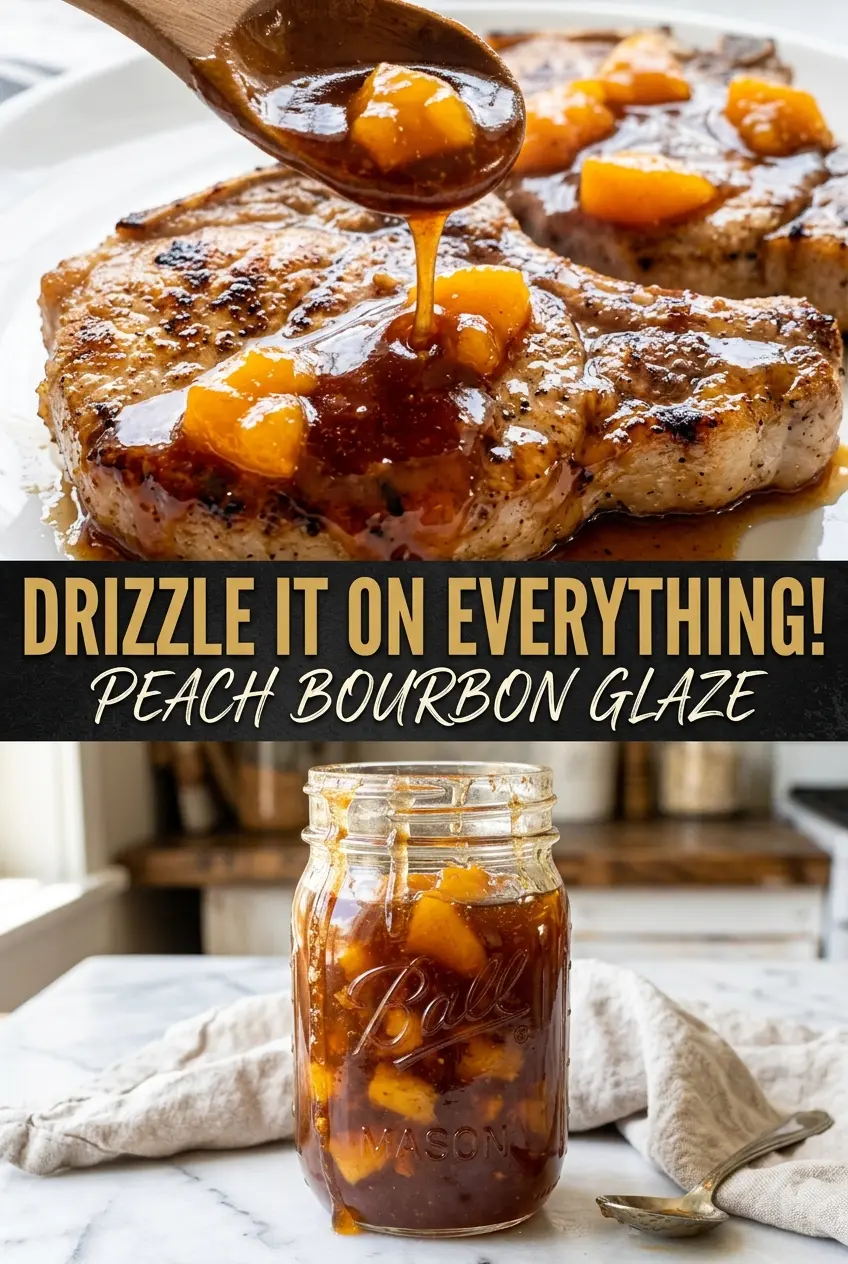
Peach Bourbon Glaze
Ingredients
Equipment
Method
- Combine peach puree, bourbon, brown sugar, honey, vinegar, soy sauce, garlic, ginger, and cayenne in a small saucepan. Stir until the sugar looks dissolved and the mixture is evenly mixed.
- Heat over medium heat until the mixture reaches a simmer, stirring frequently. You should see steady small bubbles across the surface rather than a rolling boil.
- Simmer for 15-20 minutes, stirring often, until the glaze is reduced by about half. It should coat the back of a spoon thickly and leave a glossy trail when you draw a line with your finger through it.
- Taste the glaze and adjust sweetness, bourbon, or heat level as needed. Aim for a balance where the peaches read clearly and the glaze still has enough body to cling.
- Use immediately as a glaze for salmon, chicken, or pork. Spoon a thin layer on hot meat so it turns shiny as it warms.
- Cool and refrigerate in a covered container for up to 1 week if you’re not using right away. Reheat gently before using so it loosens back into a pourable, glossy glaze.