Peach BBQ sauce earns its place when you want something that tastes brighter and more layered than a standard bottled sauce. The peaches soften into the ketchup base and give the whole thing a glossy finish that clings to grilled chicken, ribs, pork tenderloin, and even roasted vegetables. It’s sweet, tangy, smoky, and still tastes like actual fruit instead of candy.
The trick is letting the peaches cook long enough to lose their raw edge before you blend them. That simmer time matters. It gives the vinegar and Worcestershire a chance to round out the sweetness, while the garlic and smoked paprika keep the sauce from leaning flat or jammy. A quick blend at the end turns the mixture silky and spoon-coating, which is what you want if you’re brushing it on anything hot off the grill.
Below, I’ve included the texture cue I watch for when the sauce is ready, plus the easiest way to thin or thicken it depending on how you plan to use it. If you’ve only ever made barbecue sauce from a bottle, this is the version that makes the homemade route worth it.
The peaches cooked down into the sauce beautifully and the blender made it silky. I brushed it on pork chops and it thickened up enough to stay on the meat without running off everywhere.
Save this peach BBQ sauce for grilled chicken nights when you want a glossy, fruit-forward glaze that thickens beautifully.
The Step That Keeps Peach BBQ Sauce from Turning Jammy
The biggest mistake with fruit-based barbecue sauce is treating the peaches like a jam filling and cooking off too much liquid too fast. That leaves you with something sticky and sweet, but not balanced enough to work as a sauce. Here, the peaches simmer with vinegar, Worcestershire, and soy sauce long enough to soften completely before you blend, which keeps the final texture smooth instead of chunky or syrupy.
Blending after the simmer is what gives this sauce that restaurant-style shine. If you blend before the peaches have gone soft, you’ll still get little bits of fruit that can separate later. If the sauce looks thin at first, keep simmering after the blend. It tightens as it cooks, and the consistency you want is thick enough to coat a spoon but still loose enough to brush.
What Each Ingredient Is Actually Doing in This Sauce
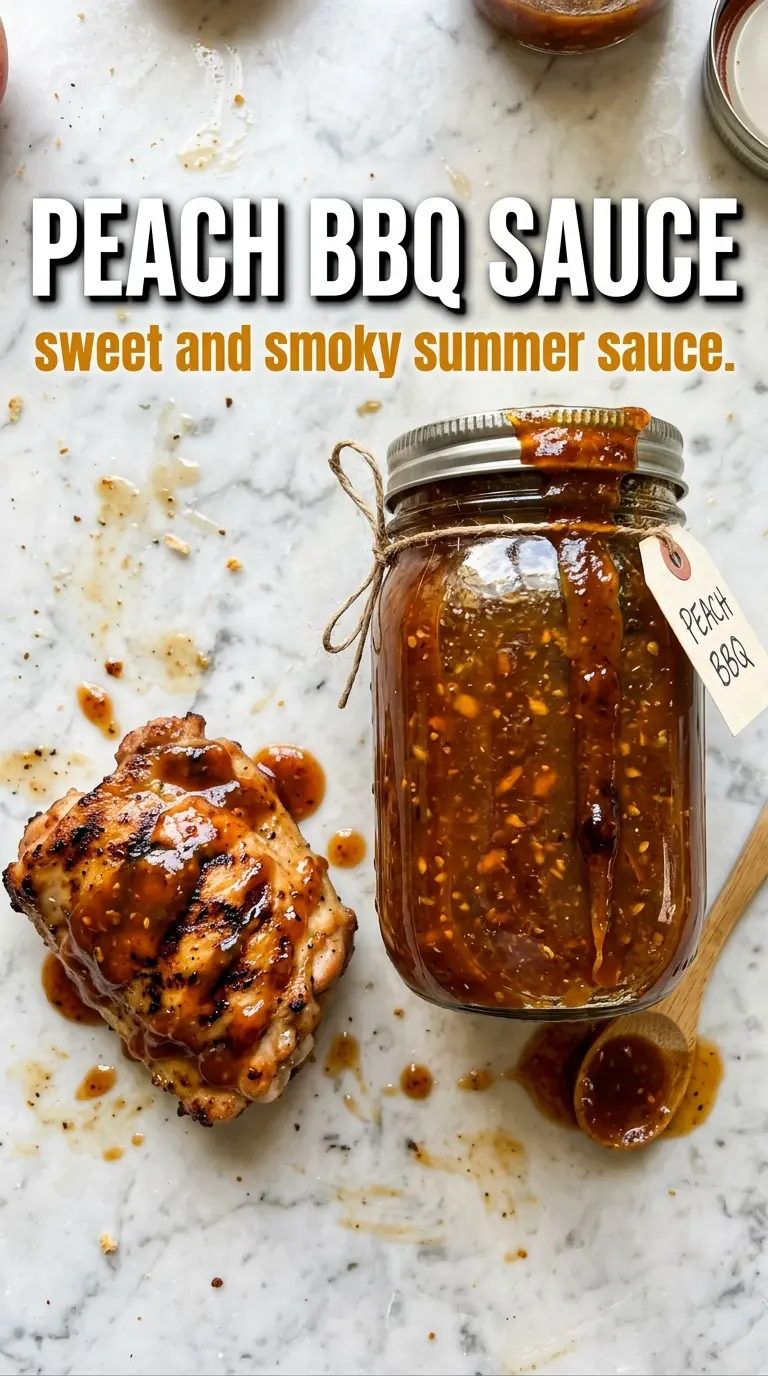
- Peaches — Fresh ripe peaches give the sauce its body and natural fruit sweetness. Use peaches that are fragrant and soft at the stem end; hard peaches need longer simmering and won’t break down as evenly. If you only have frozen peaches, thaw them first and drain off excess liquid so the sauce doesn’t turn watery.
- Ketchup — This gives you the tomato base, color, and thickness without needing to start from scratch. It also brings salt and acidity, which helps the peaches taste more like barbecue sauce and less like dessert. A good-quality ketchup matters more here than usual because it makes up a large part of the final flavor.
- Brown sugar — This reinforces the caramel notes and helps the sauce glaze once it’s reduced. If your peaches are extremely ripe, you can pull this back slightly, but don’t cut it entirely or the vinegar will feel sharp. The sauce should taste balanced before it hits the grill, because heat will concentrate it further.
- Apple cider vinegar, Worcestershire, and soy sauce — These three ingredients keep the sauce from going one-dimensional. Vinegar brightens, Worcestershire adds depth, and soy sauce gives the savory backbone that makes the peach flavor taste intentional instead of sweet. If you need a gluten-free version, use a gluten-free Worcestershire and tamari in place of regular soy sauce.
- Garlic, smoked paprika, onion powder, and cayenne — These are the seasoning notes that make the sauce taste cooked and layered. Smoked paprika is especially important because it supplies the barbecue character you’d normally get from smoke or a long pit cook. The cayenne stays in the background, so the sauce finishes warm rather than hot.
Building the Sauce Until It Clings to the Spoon
Combining the Base
Add everything to a medium saucepan before turning on the heat. That lets the peaches begin softening in the acidic base right away, which helps them break down evenly. Stir once or twice at the start so the brown sugar dissolves and doesn’t sit on the bottom in a gritty layer. If your pan is too small, the sauce will bubble aggressively and splatter once it starts reducing.
The Long Simmer
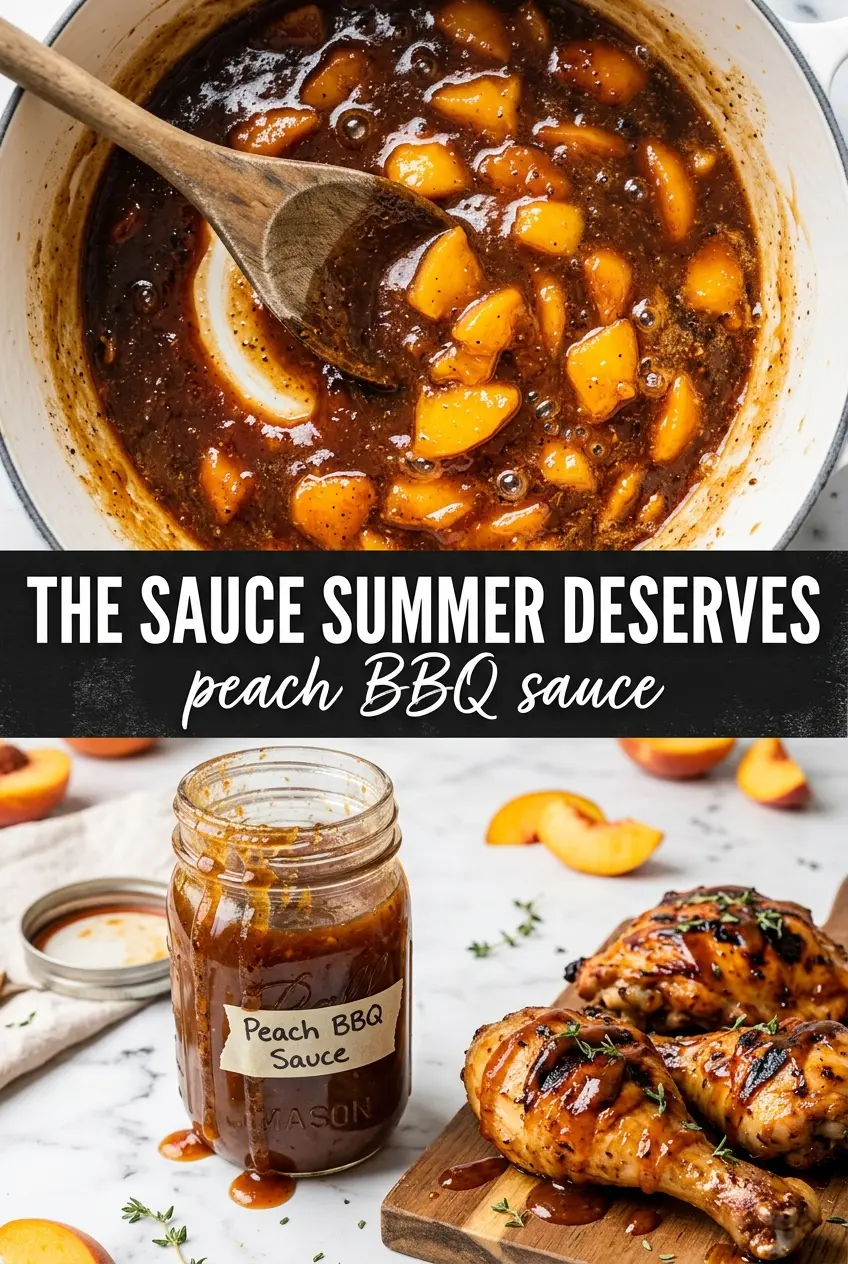
Cook the mixture over medium heat for 20 to 25 minutes, stirring every few minutes so nothing sticks. You want a steady simmer, not a hard boil; aggressive boiling can make the sugars catch before the peaches are tender. By the end, the peach pieces should collapse easily when stirred, and the sauce should look glossy and slightly thickened at the edges.
Blending for a Smooth Finish
Use an immersion blender to puree the sauce until completely smooth. If you skip this step, the sauce stays rustic and chunky, which is fine for some uses but not for brushing or glazing. Blend carefully to avoid splashes because the sauce is hot, then check the texture. If you want a silkier finish, blend longer rather than adding liquid.
Reducing to the Final Consistency
Return the sauce to the pan and simmer for 5 more minutes if you want it thicker. This is the moment that decides whether it stays a brushable sauce or turns into something closer to a spread. Pull it off the heat when it coats the back of a spoon and leaves a clean line when you drag your finger through it. It will thicken more as it cools.
Three Ways to Adjust Peach BBQ Sauce Without Losing the Point
Make it gluten-free
Swap in tamari for the soy sauce and use a gluten-free Worcestershire sauce. The sauce will still have the same savory depth, and the peach flavor stays front and center. Check the ketchup label too, because some brands sneak in wheat-based additives.
Turn down the heat
Leave out the cayenne if you want a gentler sauce, or add it at the end a pinch at a time if you want more control. The sauce will still taste complete without the heat because the smoked paprika and Worcestershire carry enough depth. This is the better move if you’re using it on kids’ dinners or as a general-purpose condiment.
Use canned or frozen peaches when fresh aren’t at their best
Thaw frozen peaches first, or drain canned peaches well and choose fruit packed in juice rather than syrup. Either option will work, but you may need a few extra minutes of simmering to get the same body. Fresh peaches give the brightest flavor, while canned and frozen versions are a practical backup that still tastes good once the sauce is blended and reduced.
Storage and Reheating
- Refrigerator: Store in an airtight container for up to 2 weeks. It thickens as it chills, so it may look looser when warm than it does straight from the fridge.
- Freezer: It freezes well for up to 3 months. Portion it into small freezer containers so you can thaw only what you need.
- Reheating: Warm gently on the stove over low heat, stirring often. High heat can scorch the sugars and dull the peach flavor, so use a slow rewarm rather than a fast boil.
Questions I Get Asked About This Recipe
Peach BBQ Sauce
Ingredients
Equipment
Method
- Combine the diced peaches, ketchup, brown sugar, apple cider vinegar, Worcestershire sauce, soy sauce, minced garlic, smoked paprika, onion powder, and cayenne in a medium saucepan.
- Simmer over medium heat for 20-25 minutes, stirring occasionally, until the peaches break down and the sauce thickens to a spoon-coating consistency.
- Blend until smooth using an immersion blender, stopping when the sauce looks glossy and uniform.
- Return to the pan and simmer for 5 more minutes if a thicker consistency is desired, stirring until the sauce clings to the spoon.
- Season with salt and pepper to taste, then stir until fully incorporated.
- Cool completely, then refrigerate for up to 2 weeks in a sealed container.