Golden peaches, fresh basil, and a little jalapeño make this salsa bright, layered, and sharper than the usual fruit bowl-and-chip situation. The peaches stay chunky and juicy, the basil reads clean and herbal, and the balsamic glaze pulls the whole thing toward something that feels finished instead of casual. It lands on the table looking polished, but it only takes a few minutes to put together.
The trick is restraint. Dice the peaches finely enough that they mingle with the onion and jalapeño, but not so small that they turn mushy after resting. The 15-minute maceration matters here: the salt draws out just enough juice to create a light dressing without washing out the fruit. Balsamic glaze goes on at the end, not at the start, so it stays bold and glossy instead of disappearing into the bowl.
Below you’ll find the small details that keep the peaches from collapsing, plus a few smart ways to serve this beyond chips. It works as a starter, but it also does real work on grilled fish, chicken, or a slice of toasted bread with goat cheese.
The peaches held their shape and the basil stayed fresh even after sitting out for a bit. The balsamic glaze at the end made it taste restaurant-level, and it was gone before I could get a second bowl out.
Save this peach basil salsa for the next time you need a fresh appetizer with sweet peaches, basil, and a glossy balsamic finish.
The Step That Keeps Peach Salsa from Turning Watery
Peach salsa fails when the fruit gets too soft too fast. Peaches are juicy by nature, and once they sit with salt and lime, they start releasing liquid. That isn’t a problem if you plan for it. It’s a problem if you cut the peaches too large or let the bowl sit for too long before serving.
This version leans into that short resting time. Fifteen minutes is enough for the flavors to meld without collapsing the peaches into a saucy mess. The jalapeño and red onion need that rest to lose their raw edge, but the basil should stay bright. Stir it gently and stop as soon as the ingredients are coated. Heavy mixing bruises the fruit and dulls the texture.
What Each Ingredient Is Actually Doing in This Salsa
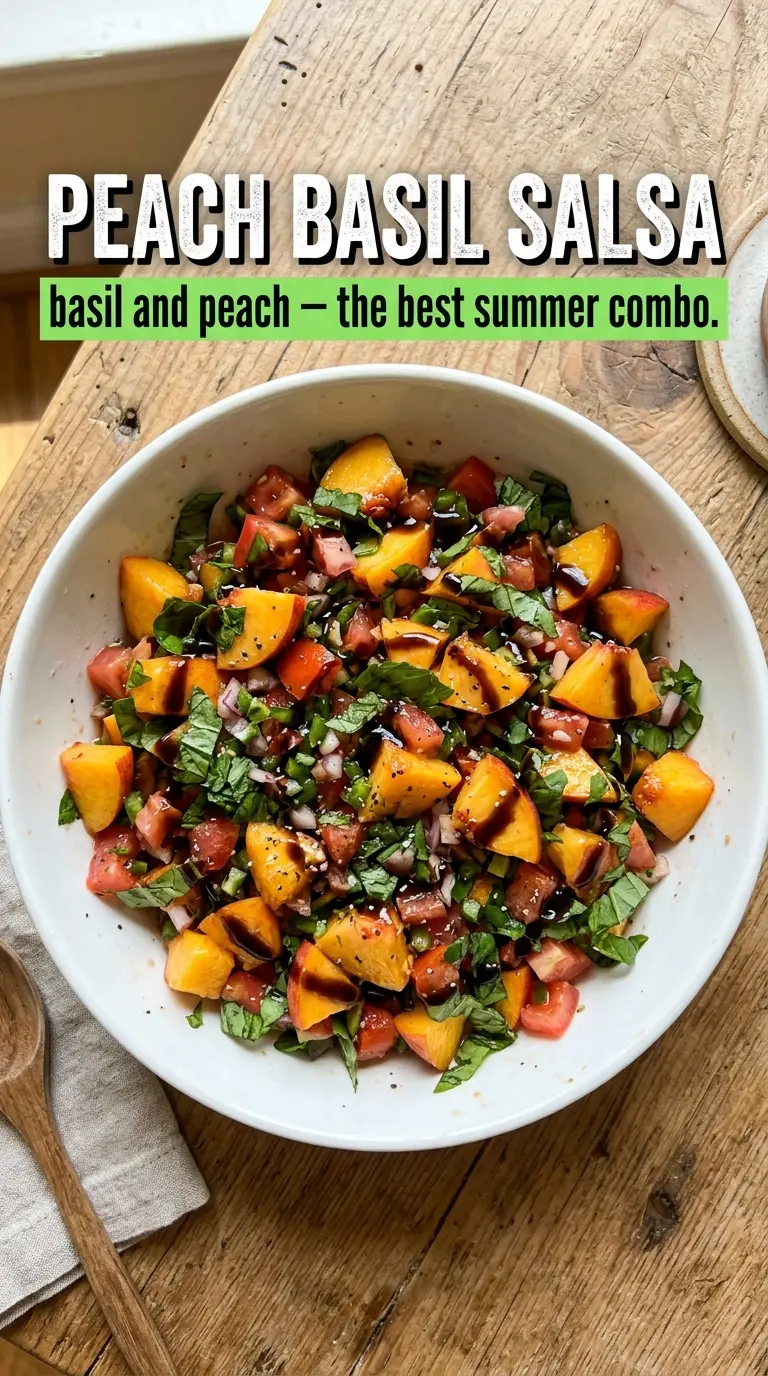
- Peaches — Use ripe but still firm peaches. Soft peaches taste great, but they’ll break down fast and make the salsa loose. If yours are underripe, let them sit on the counter for a day or two first.
- Basil — Thin slicing matters more than you think. Chiffonade the leaves so they disperse through the fruit instead of clumping. Dried basil won’t give the same clean, fresh finish.
- Red onion — It brings the sharp bite that keeps the salsa from tasting like dessert. Dice it finely so it gives flavor without dominating each bite. If red onion is too harsh, soak the diced onion in cold water for 5 minutes and drain well.
- Jalapeño — This adds heat without changing the character of the salsa. Remove the seeds for a gentler version, or leave some in if you want more bite. For a milder swap, use a small amount of minced poblano.
- Balsamic glaze — This is what makes the whole bowl taste finished. It adds sweetness, acidity, and a little stickiness that clings to the peaches. Regular balsamic works in a pinch, but reduce it slightly first or the salsa can turn thin and sharp.
- Lime juice and olive oil — Lime wakes up the fruit, and olive oil rounds out the edges so the salsa doesn’t taste flat. Use a good-tasting olive oil since there are only a few ingredients. Don’t skip the oil; it helps carry the basil and keeps the texture glossy.
Building the Bowl So the Peaches Stay Bright
Mix the Fruit First
Combine the diced peaches, basil, red onion, and jalapeño in a medium bowl. This gives you a chance to see whether the peaches are firm enough before anything else goes in. If the fruit is already soft and fragile, handle it like a tomato salad and keep the mixing light from the start.
Add the Acid and Oil
Drizzle the lime juice and olive oil over the top and toss gently. The goal is to coat, not stir aggressively. If the bowl starts looking watery right away, the peaches were on the ripe side; that’s fine, but serve it sooner and use a slotted spoon when plating.
Season and Let It Rest
Season with salt and black pepper, then let the salsa sit at room temperature for 15 minutes. This rest gives the onion time to soften and the fruit time to release a little juice. Don’t chill it during this short rest or the flavors stay muted and the glaze won’t settle as cleanly on top.
Finish with the Glaze
Drizzle the balsamic glaze over the top just before serving. If you add it early, it sinks in and disappears. Added at the end, it stays in ribbons and gives each bite a sweet-tart finish that makes the salsa taste more composed.
Three Ways to Make This Peach Basil Salsa Work for Different Tables
Make It Milder for Kids or Sensitive Palates
Leave out the jalapeño seeds and use only half the pepper, or skip it entirely. You’ll lose the slow heat, but the peaches, basil, and balsamic still carry enough character to keep the salsa interesting.
Make It Dairy-Free and Naturally Vegan
This recipe already fits both, so the only thing to watch is what you serve with it. Choose tortilla chips, crostini made without butter, or spoon it over grilled vegetables and tofu for a full plant-based appetizer.
Turn It into a Savory Topping
Cut the peaches a little smaller and go lighter on the balsamic glaze if you’re serving it over grilled fish or chicken. The salsa will read more like a fresh relish and less like a party dip, which is exactly what you want on a main dish.
Storage and Reheating
- Refrigerator: Store covered for up to 2 days. The peaches soften as they sit, so the texture is best on day one.
- Freezer: Don’t freeze it. The peaches turn mushy and the basil loses its fresh flavor after thawing.
- Reheating: Not needed. Serve it cold or at room temperature, and if it has been chilled, let it sit out for 15 to 20 minutes so the fruit tastes sweeter and the basil reads clearly.
Answers to the Questions Worth Asking
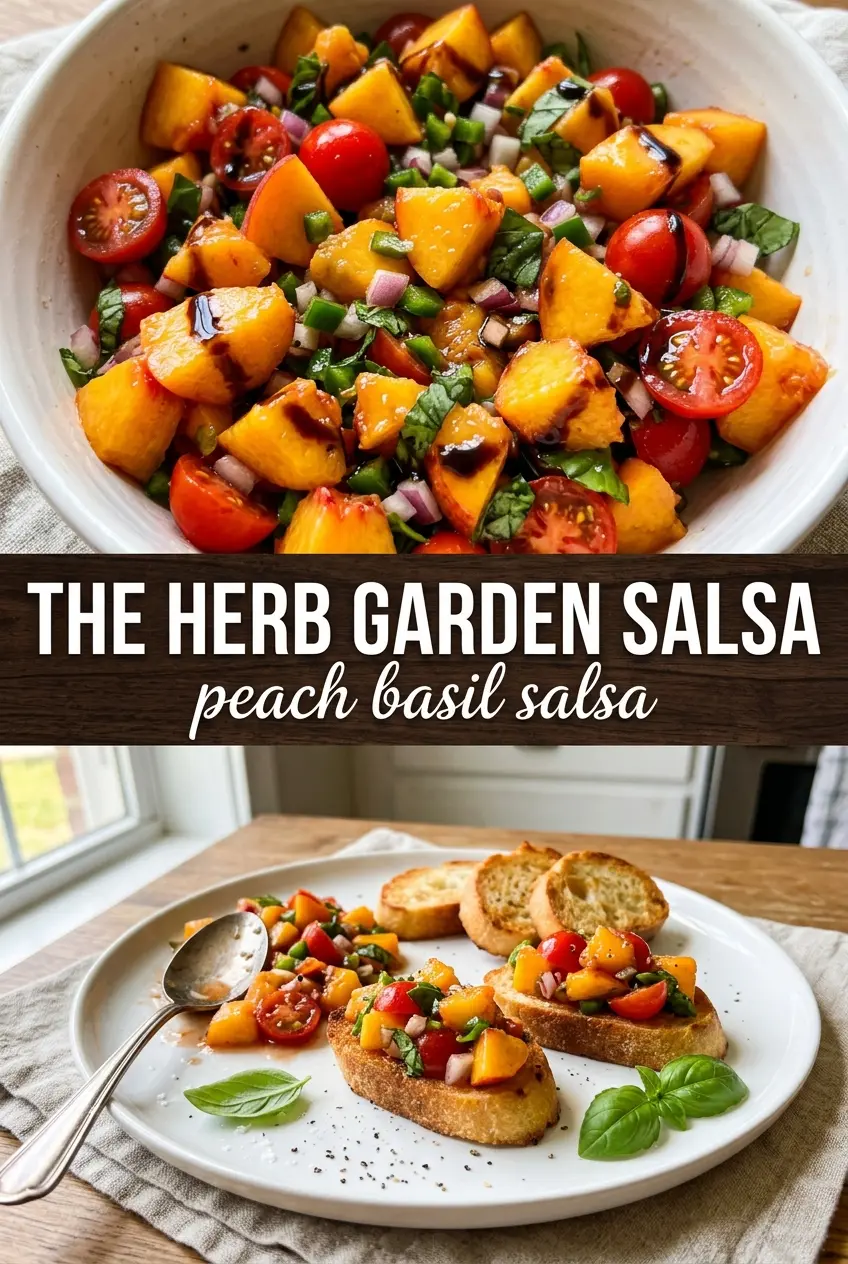
Peach Basil Salsa
Ingredients
Method
- Combine the diced peaches, basil, red onion, and jalapeño in a bowl.
- Drizzle the olive oil and lime juice over the mixture and toss gently to coat every piece.
- Season with salt and black pepper to taste and toss once more so the seasoning is evenly distributed.
- Let rest at room temperature for 15 minutes to macerate, stirring once halfway through so juices develop evenly.
- Drizzle the balsamic glaze over the top just before serving for a glossy sweet-tang finish.
- Serve with crostini or tortilla chips, or spoon over grilled fish or chicken as a fresh topping.