Peach balsamic grilled chicken lands on the plate with sticky, charred edges and a glaze that tastes sweet at first, then sharp, then smoky from the grill. Bone-in thighs hold onto that marinade in a way lean chicken breasts never quite do, and the skin turns deeply caramelized without drying out the meat underneath. The result is the kind of dinner that disappears fast and doesn’t need much beside it.
The trick is using ripe peaches as the base, not just as a garnish. Blended peaches bring body and natural sweetness to the marinade, while balsamic vinegar keeps the glaze from turning flat or cloying. A short marinate gives the chicken enough time to pick up flavor, and the grill does the rest, reducing the sugars into that glossy mahogany coating everyone wants from the first bite.
Below, I’ve included the part that matters most: how to keep the glaze from burning before the chicken cooks through, plus a few swaps for the nights when your peaches are a little too firm or you want to change up the herbs.
The glaze turned thick and shiny on the grill, and the chicken stayed juicy all the way through. I kept waiting for it to taste too sweet, but the balsamic balanced it perfectly.
Save this peach balsamic grilled chicken for the nights when you want sticky charred glaze, juicy thighs, and a fast grill dinner that tastes like more effort than it takes.
The Glaze Burns Fast If You Marinate Too Long
Peaches and honey bring a lot of sugar to the party, which is exactly why this chicken gets that shiny, lacquered finish on the grill. The same sugars can burn if the marinade is too thick on the surface or if the heat is too aggressive, so the sweet spot is a medium-high grill and a marinade window that gives flavor without turning the skin into a black crust before the meat cooks.
Bone-in, skin-on thighs give you some forgiveness here. They stay juicier than breasts and can handle the stop-and-start turning this recipe needs. If you use a hotter flame than you should, the glaze will darken too fast on the outside while the center still needs time. The answer isn’t more marinade. It’s steadier heat and turning every few minutes so the sugars caramelize instead of scorch.
What Each Ingredient Is Actually Doing in This Marinade
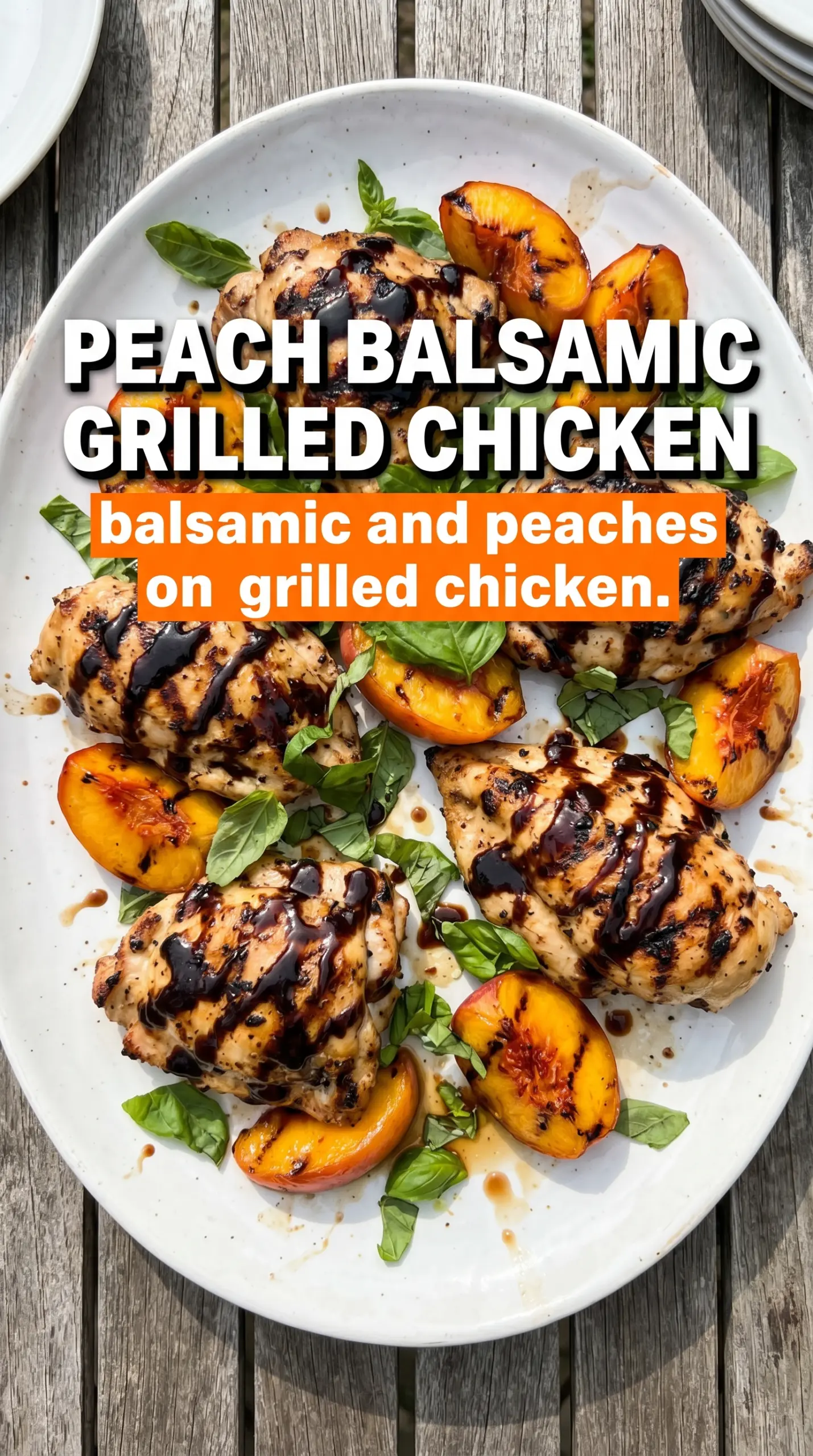
- Peaches — Ripe peaches are the base of the glaze, not a garnish. They add body, sweetness, and enough natural pectin to help the marinade cling to the chicken. If your peaches are firm, let them sit on the counter until fragrant and slightly soft so the puree tastes round instead of grassy.
- Balsamic vinegar — This keeps the glaze from reading as dessert. It brings the sharp edge that makes the peaches taste fuller and helps the surface caramelize into that deep mahogany finish. A cheap balsamic works here; save the fancy bottle for finishing.
- Honey — Honey thickens the marinade and helps the grill create that sticky sheen. It also gives you a little insurance against the peach puree seeming thin. Don’t add much more than listed, or the outside will color too quickly.
- Chicken thighs — Bone-in, skin-on thighs are the right cut for this recipe. The skin protects the meat, and the extra fat keeps the chicken tender while the glaze darkens. If you swap in breasts, shorten the grill time and watch the thermometer closely because they dry out faster.
- Garlic and thyme — These keep the marinade from tasting one-note. The garlic adds depth, while thyme gives a savory herb note that sits underneath the fruit. Fresh thyme works too, but dried thyme is strong enough here and holds up well in the marinade.
How to Get the Char Without Losing the Juiciness
Blend the Marinade Until It Clings
Blend the peaches with the balsamic, olive oil, honey, garlic, thyme, salt, and pepper until the mixture looks smooth and pourable, with no big chunks left behind. You want a sauce that coats the chicken in a thin layer, not a watery juice that runs straight off the skin. If the puree seems loose, that’s fine; it will tighten on the grill as the sugars reduce.
Let the Chicken Sit, but Not So Long It Turns Mushy
Marinate the thighs in the refrigerator for 30 minutes to 4 hours. Thirty minutes gives you enough flavor for a weeknight; four hours gives you deeper peach flavor without softening the surface too much. Much longer than that and the acidity starts to work against the texture, especially around the thinner edges of the chicken.
Grill Over Steady Heat and Turn Often
Heat the grill to medium-high, then cook the chicken for 20 to 25 minutes, turning every 5 minutes. That rotation helps the glaze brown evenly instead of burning in one spot while another side lags behind. The chicken is done when the internal temperature hits 165°F and the glaze has darkened into a sticky, lacquered coating with visible char marks underneath.
Rest Before You Serve It
Give the chicken 5 minutes off the grill before serving. That short rest lets the juices settle back into the meat instead of running onto the cutting board. If you slice too early, you’ll lose the moisture you worked to keep in the thighs, and the glaze won’t stay as glossy on the plate.
How to Adapt This for a Different Grill Night
Use Chicken Breasts Instead of Thighs
Chicken breasts work if that’s what you have, but they need gentler heat and less time. Pull them as soon as they reach 165°F, because the glaze can look done before the meat actually is. The result will be leaner and a little less forgiving than thighs, so keep the grill at the lower end of medium-high.
Make It Dairy-Free and Gluten-Free Without Changing the Method
This recipe already fits both dairy-free and gluten-free eating as written, which makes it handy for mixed-diet dinners. Just double-check your balsamic vinegar if you use a brand with added flavorings, and keep the glaze free of thickeners or bottled sauces with hidden starches if you’re serving someone who needs strict gluten-free food.
Swap the Herbs for Basil or Rosemary
Thyme keeps the marinade balanced, but basil gives you a brighter finish and rosemary pushes it in a more savory direction. Basil is best as a garnish or stirred in at the end so it doesn’t blacken on the grill. Rosemary should be used lightly because its flavor can take over the peaches fast.
Storage and Reheating
- Refrigerator: Store leftovers in an airtight container for up to 4 days. The glaze will thicken and lose a little shine, but the flavor holds up well.
- Freezer: This freezes better than you’d expect for a grilled chicken dish. Freeze the cooked thighs tightly wrapped for up to 2 months, then thaw in the refrigerator before reheating.
- Reheating: Warm gently in a 325°F oven, covered, until heated through. High heat dries out the thighs and can make the glaze go sticky in the wrong way, so skip the microwave unless you’re only warming one piece and don’t mind softer skin.
Answers to the Questions Worth Asking
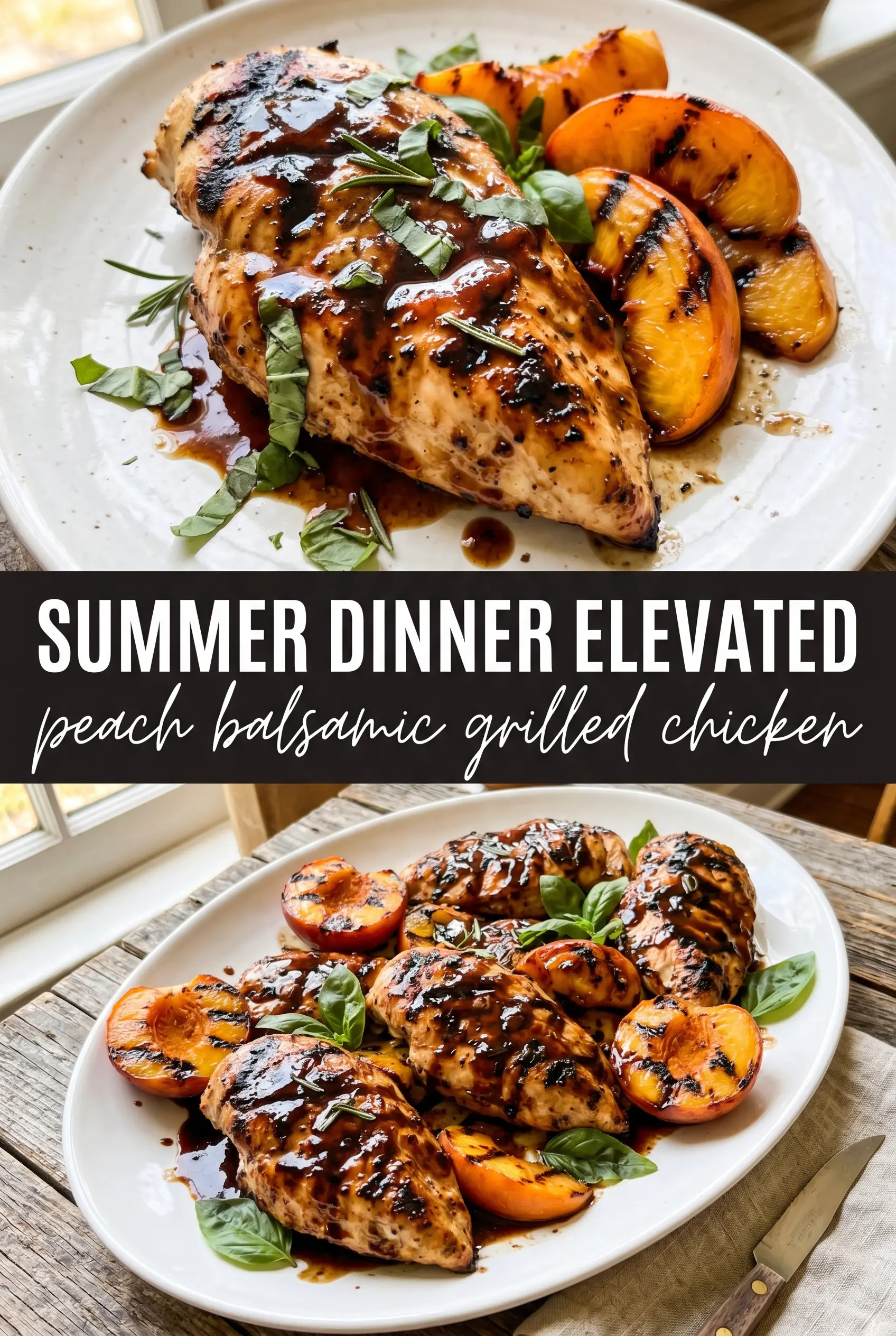
Peach Balsamic Grilled Chicken
Ingredients
Equipment
Method
- Puree the peaches, then blend them with balsamic vinegar, olive oil, honey, minced garlic, thyme, salt, and black pepper until smooth and glossy. Visual cue: the mixture should look thick and pourable, with no peach chunks.
- Place the chicken thighs in the peach balsamic mixture, cover, and refrigerate for 30 minutes to 4 hours. Visual cue: the surface of the thighs turns stained mahogany as it absorbs the glaze.
- Preheat the grill to medium-high heat. Visual cue: you should see steady heat with a light shimmer when you hold your hand above the grates.
- Place the marinated chicken on the grill and cook for 20-25 minutes total, turning every 5 minutes. Visual cue: the glaze will caramelize and darken, creating sticky shine and char marks.
- Continue grilling until the internal temperature reaches 165°F in the thickest part. Visual cue: juices run clear and the coating looks deeply caramelized and lacquered.
- Transfer the chicken to a plate and let rest for 5 minutes before serving. Visual cue: the juices settle and the glaze clings without running.
- Garnish with fresh basil and serve with grilled peach halves if desired. Visual cue: basil adds bright green contrast to the dark, sticky glaze.