Crushed Oreos, a thick vanilla cheesecake filling, and a chilled set that slices cleanly after a long rest make this no-bake Fireworks Oreo Cheesecake one of those desserts people remember. The Oreo crust stays firm without baking, and the filling stays airy instead of heavy, which gives you that cool, creamy bite that holds its shape on the plate.
The trick is building enough structure without turning the filling dense. Softened cream cheese gets beaten smooth first, then the whipped cream is folded in gently so the mousse-like texture survives the chill. That long rest in the refrigerator matters more than any garnish. It gives the filling time to set all the way through, so the slices come out tall instead of slumping at the edge.
Below, I’ve laid out the exact points where this recipe succeeds or fails, plus a few variations if you want to adjust the topping or make the dessert work a little farther ahead.
The crust pressed down beautifully and the filling set up overnight with a clean slice. The whipped cream border and Oreo crumble made it look like a bakery cake, and nobody believed it never went in the oven.
Save this Fireworks Oreo Cheesecake for the next time you want a no-bake dessert with a clean Oreo crust and a whipped filling that slices like a dream.
The Part That Keeps the Cheesecake From Going Soft at the Bottom
The crust has to be packed firmly enough to hold the filling, but not so tightly that it turns greasy or hard to cut. Oreos already contain the right amount of chocolate and fat for a no-bake crust, so melted butter is just there to bind the crumbs into a damp-sand texture. If the mixture looks dry, it won’t hold together after chilling. If it looks shiny and wet, it was over-buttered and may seep at the edges.
The filling has the opposite problem. It needs enough air to stay light, but not so much mixing that it loses body. Smooth cream cheese first. Then fold in the whipped cream with a light hand. That preserves the structure the cheesecake needs after six hours in the fridge. Skip the chill time and the center stays loose, even if the top looks set.
What Each Ingredient Is Actually Doing in This Cheesecake
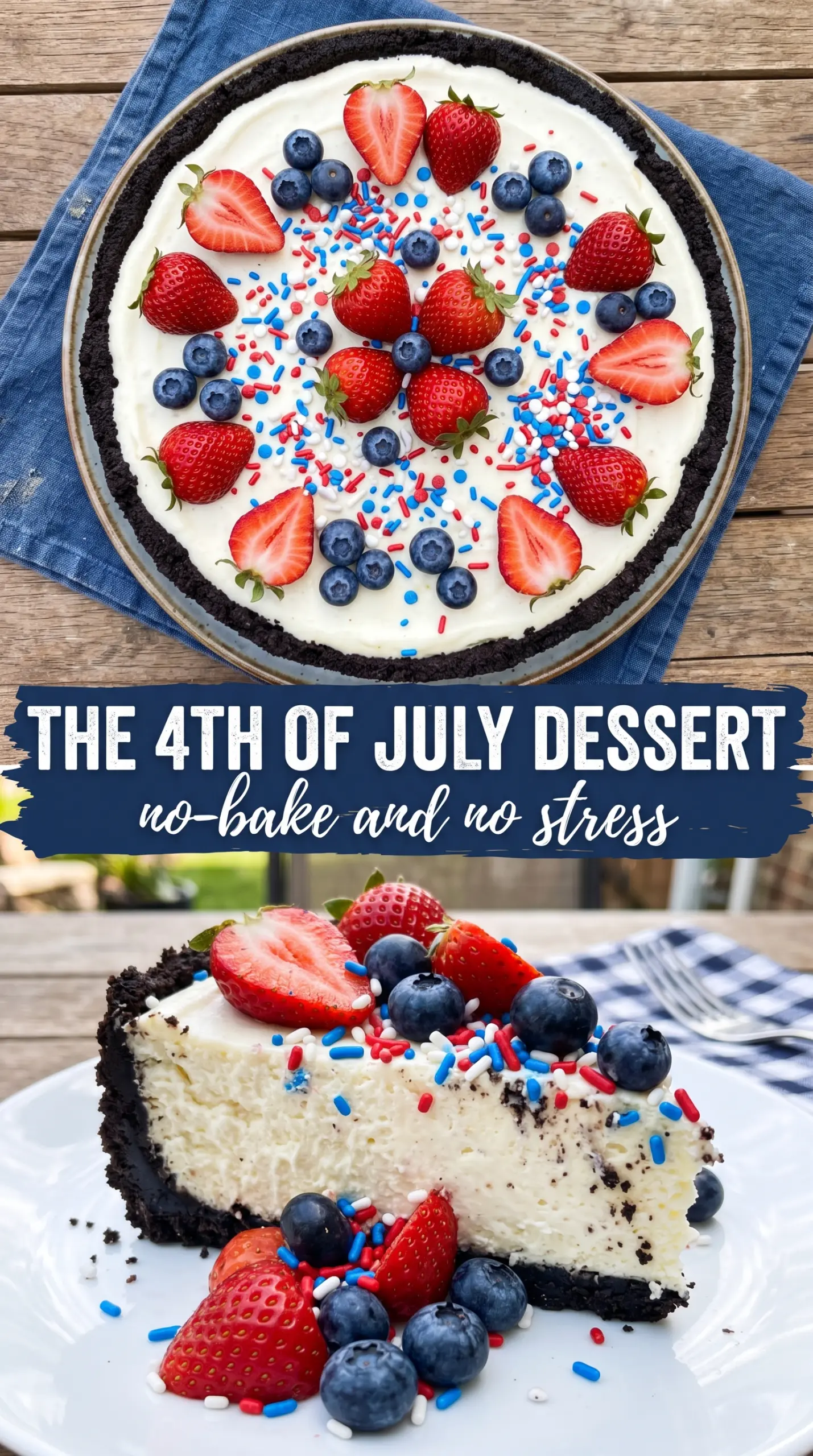
- Oreo cookies — These do double duty as flavor and structure. The filling helps the crust bind, so you don’t need to remove it. Fine crumbs press together better than chunky pieces, so pulse or crush them until they look even.
- Unsalted butter — This is the glue in the crust. Salted butter works in a pinch, but it can make the chocolate base taste sharper than you want. Melt it fully so it coats every crumb evenly.
- Cream cheese — This is the backbone of the filling, and it has to be softened all the way through before you beat it. Cold cream cheese leaves tiny lumps that never fully disappear. If you forgot to soften it, cut it into cubes and let it sit at room temperature until it gives slightly when pressed.
- Powdered sugar — It sweetens and thickens without leaving graininess behind. Granulated sugar won’t dissolve the same way in a no-bake filling and can leave the texture gritty.
- Vanilla extract — Vanilla rounds out the cream cheese and Oreo flavors. Use the real thing if you can, because it shows up in a filling this simple.
- Heavy whipping cream — This is what gives the cheesecake its lift. It needs to be whipped to stiff peaks before folding, or the filling will stay too loose to set into neat slices.
- Red and blue star sprinkles, crushed Oreos, and whipped cream — These are for the finish, not the structure. Add them after the cheesecake is fully chilled so the topping stays bright and the whipped cream doesn’t melt into the surface.
Building the Filling So It Sets Tall Instead of Slumping
Pressing the Crust With Enough Force
Pour the buttered Oreo crumbs into the springform pan and press them firmly across the bottom in an even layer. Use the bottom of a measuring cup or glass to compact the center first, then work toward the edges so the crust doesn’t end up thin in the middle. Chilling it before the filling goes in helps the butter reset, which keeps the crust from lifting or mixing into the cheesecake layer.
Beating the Cream Cheese Until It Loses the Grain
Beat the cream cheese, powdered sugar, and vanilla until the mixture looks smooth and glossy. Stop and scrape the bowl as needed, because a little unblended cream cheese hides along the bottom and shows up later as tiny lumps. If the mixture still looks dense at this stage, the filling will never become light enough after the whipped cream goes in.
Whipping and Folding Without Deflating the Air
Whip the heavy cream to stiff peaks, where the beater leaves clear ridges and the cream stands upright without drooping. Fold it into the cream cheese mixture in two additions, using a spatula and broad strokes from the bottom of the bowl. If you stir hard or keep going until it looks perfectly uniform in the bowl, you’ve knocked out the air that gives this cheesecake its texture.
Chilling Until the Center Holds Its Shape
Spoon the filling over the crust, smooth the top, and refrigerate for at least 6 hours, though overnight gives the cleanest slices. The cheesecake is ready when the edges are firm and the center no longer wobbles when the pan is nudged. If you cut it early, the filling will spread instead of standing in tall wedges, which is the most common mistake with no-bake cheesecake.
Three Ways to Make This Fireworks Cheesecake Fit the Table
Gluten-Free Version With the Same Finish
Use gluten-free chocolate sandwich cookies in place of the Oreos. The crust texture stays nearly the same, but check that your cookie brand creams and crumbs well, since some gluten-free versions are drier and may need the butter measured carefully to avoid a loose base.
Lighter Decoration Without Losing the Theme
Skip the full whipped cream border and use a lighter ring of small dollops around the edge instead. You still get the fireworks look from the red and blue sprinkles and Oreo crumble, but the top stays cleaner if you’re serving this in warm weather or transporting it to a party.
Chocolate-Forward Variation
Add a few tablespoons of extra crushed Oreos to the filling before folding in the whipped cream. That gives the cheesecake a slightly more cookie-heavy bite and a speckled look inside the slice, but too much will weigh the filling down, so keep the mix-ins modest.
Make-Ahead Timing for a Party Day
Assemble the cheesecake a day in advance and add the whipped cream, sprinkles, and Oreo crumble right before serving. That keeps the top fresh and the decorations crisp, and it gives the filling plenty of time to set without any last-minute stress.
Storage and Reheating
- Refrigerator: Store covered for up to 5 days. The crust softens a little over time, but the cheesecake still slices well.
- Freezer: Freezes well without the whipped cream garnish. Freeze the whole cheesecake or individual slices tightly wrapped for up to 1 month, then thaw in the refrigerator overnight.
- Reheating: No reheating needed. Serve straight from the refrigerator for the cleanest texture. If it sits out too long, the filling loosens and the slices lose their sharp edges.
Questions I Get Asked About This Recipe
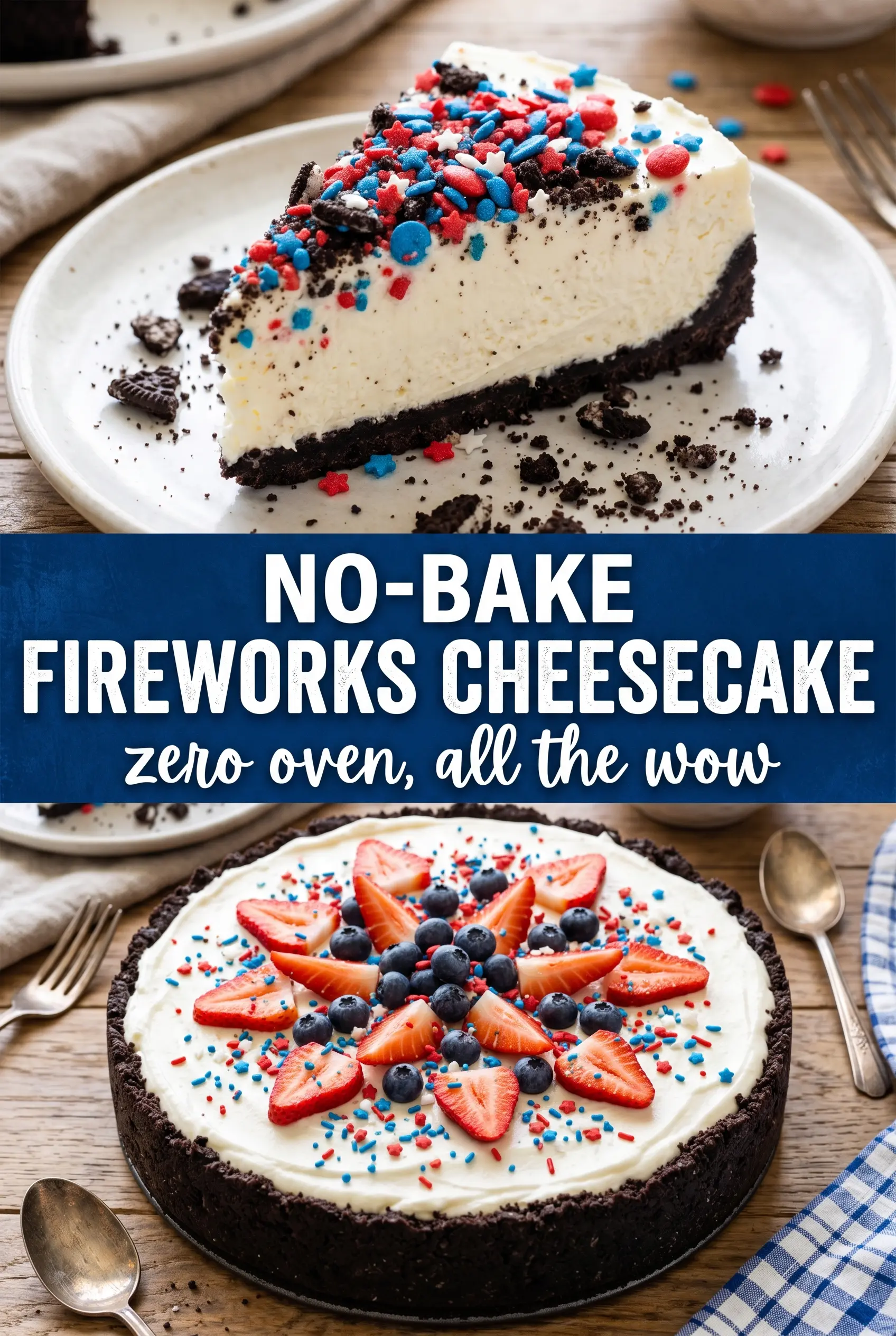
No-Bake Fireworks Oreo Cheesecake
Ingredients
Equipment
Method
- Mix the finely crushed Oreo cookies with melted unsalted butter until the texture resembles wet sand, then press firmly into the bottom of a 9-inch springform pan.
- Refrigerate the crust until firm, at least 10 minutes, so the filling won’t seep.
- Beat the softened cream cheese, powdered sugar, and vanilla extract until completely smooth with no lumps.
- In a separate bowl, whip the heavy whipping cream to stiff peaks, then fold gently into the cream cheese mixture in two additions.
- Pour the filling over the chilled crust and smooth the top with an offset spatula.
- Cover and refrigerate for at least 6 hours or overnight until fully set.
- Before serving, pipe whipped cream around the edge, scatter red and blue star sprinkles across the center, and dust with crushed Oreos in a fireworks burst pattern.