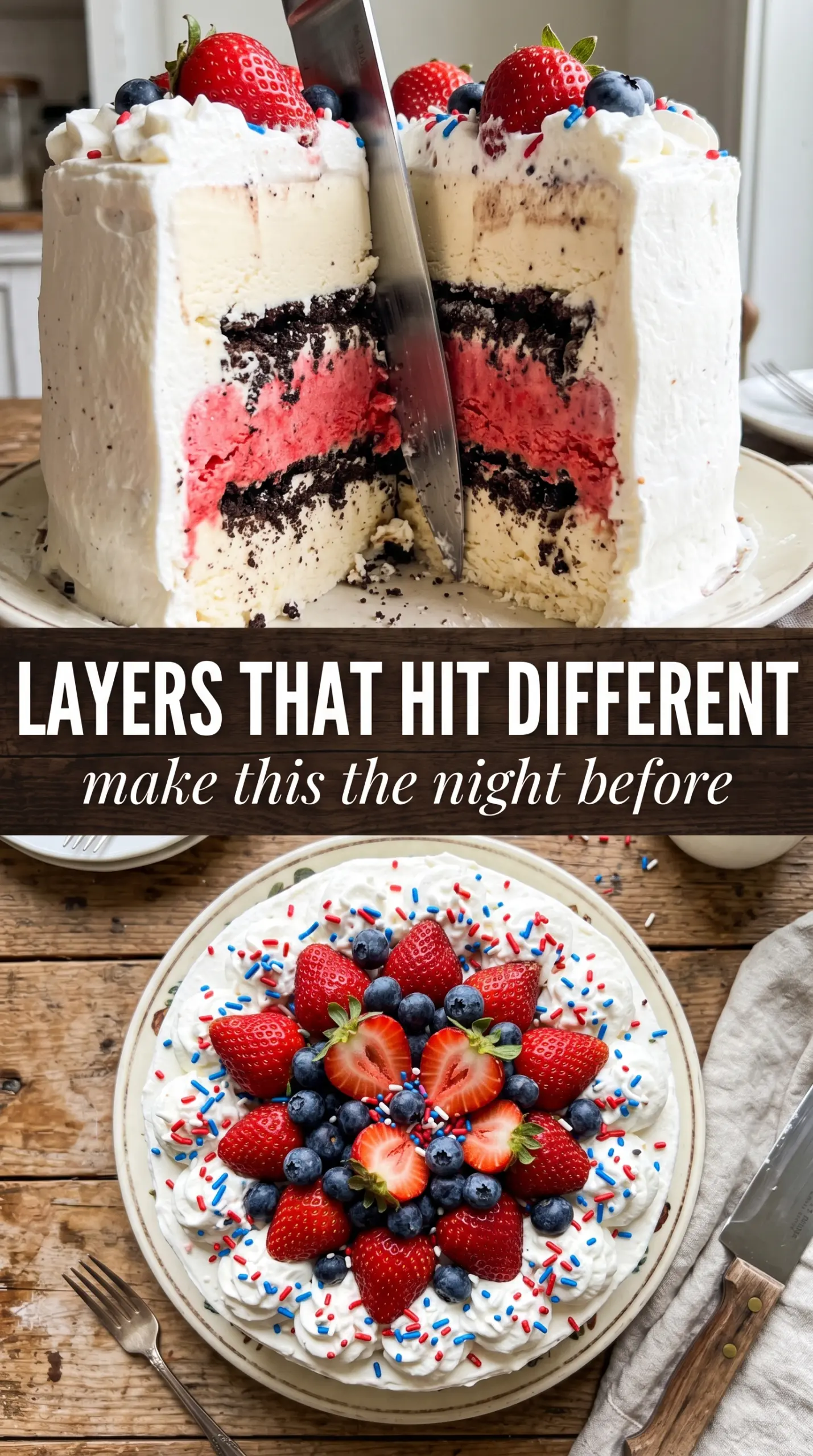
Ice cream cake works because it gives you contrast in every bite: a firm Oreo crust, clean layers of vanilla and strawberry ice cream, and a ribbon of fudge that stays soft enough to cut without turning the whole cake sloppy. The trick is not fancy equipment. It’s timing. Each layer has to freeze long enough to hold the next one, or the whole cake drifts into a muddy stack instead of distinct slices.
This version uses a springform pan, which makes unmolding much easier than wrestling it out of a regular cake pan. The crust gets a quick freeze first so it sets before the ice cream goes in, and the fudge is cooled just enough that it won’t melt the vanilla layer on contact. That gives you those clean, bakery-style stripes when you cut into it.
Below, I’ll walk through the exact freezing points that matter, the best way to soften ice cream without turning it soupy, and a few smart swaps if you want to change the flavors or serve it for a bigger crowd.
The Oreo crust held together perfectly and the fudge layer stayed distinct instead of soaking into the vanilla. I made it the day before my son’s birthday, and the slices came out clean even after sitting out for a few minutes.
Love the clean vanilla, strawberry, and fudge layers in this ice cream cake? Save it to Pinterest for the next birthday, cookout, or no-bake dessert night.
The part that makes ice cream cake slice clean instead of collapsing
The most common failure with ice cream cake is rushing the freezer time between layers. If the first layer is still soft when the fudge goes on, the layers smear together and the finished cake cuts like a milkshake. A firm base is what keeps the Oreo crust from floating and the fudge from disappearing into the ice cream.
The other thing that matters is temperature control. Softened ice cream should be spreadable, not melty. If it’s glossy and pouring off the spoon, it’s too warm and will never set into a neat layer. Let it sit just long enough to give when pressed, then work quickly and get it back into the freezer.
- Oreos — These make the crust without any baking. The cookie cream helps bind the crumbs, so you only need butter as backup. A food processor gives the finest crumb, but a sealed bag and rolling pin work if you want a more rustic texture.
- Butter — This holds the crust together once frozen. Salted or unsalted both work here. If you use store-bought cookie crumbs instead of whole Oreos, you may need a touch less butter because some crumb blends are finer and less absorbent.
- Vanilla ice cream — This is the clean middle layer that gives the cake structure and a familiar base flavor. Choose a full-fat ice cream if you can; lower-fat versions freeze harder and can taste icy after the long set.
- Strawberry ice cream — The fruit flavor cuts through the richness and gives the cake its striped look. If strawberry isn’t your thing, another fruit-forward ice cream works, but keep in mind that mix-ins or large chunks can make slicing less neat.
- Hot fudge sauce — This needs to be cooled slightly before layering. Warm enough to pour, cool enough not to melt the vanilla. Thick jarred fudge works well here; a thin chocolate sauce will seep too much and blur the layers.
- Whipped topping or stabilized whipped cream — This is for the finishing edge and gives the cake a classic party look. Stabilized whipped cream holds its shape longer if the cake sits out for a few minutes. Plain whipped cream tastes great, but it softens faster.
What Each Ingredient Is Actually Doing in This Frozen Treat
- Base ingredient (cream, yogurt, or fruit) — This determines the texture and richness. Cream makes it scoopable; yogurt makes it tangy; fruit makes it refreshing.
- Sweetener (sugar or honey) — This prevents the mixture from freezing rock-solid and creates a smooth texture. Too much and it won’t freeze; too little and it’s icy.
- Egg yolks (if using custard method) — These create richness and a silky texture. Tempering is important so they don’t scramble.
- Thickener (cornstarch, gelatin, or egg) — This prevents ice crystals from forming and keeps the texture smooth instead of grainy.
- Flavoring (vanilla, chocolate, fruit, or spices) — Use quality flavorings because they’re essential to the taste. Dilute-tasting ice cream comes from cheap extract.
- Stabilizers (gum, gelatin, or dairy) — These keep the ice cream from becoming icy during storage. They prevent large ice crystals from forming.
- Mix-ins (nuts, chunks, or swirls) — These add texture and interest. Freeze-stable chocolate works better than regular chocolate, which gets hard.
- Proper chilling and churning (the technique) — This incorporates air and prevents ice crystals. An ice cream maker makes a huge difference in texture.
Building the layers without melting the whole cake
Pressing the crust firmly enough
Mix the crushed Oreos with melted butter until every crumb looks damp, then press the mixture into the bottom of a 9-inch springform pan. Use the bottom of a measuring cup to compact it tightly so it doesn’t crumble when you slice the cake later. Freeze it for 15 minutes before adding anything on top. If the crust feels loose now, it will fall apart later.
Spreading the vanilla layer fast
Scoop the slightly softened vanilla ice cream over the chilled crust and smooth it into an even layer. Work from the center out so you don’t drag crumbs up into the ice cream. Freeze it for 1 hour until it feels firm to the touch. This layer needs to be set before the fudge goes on, or the chocolate will sink instead of sitting neatly on top.
Adding the fudge ribbon
Drizzle the cooled hot fudge over the vanilla layer in thin lines, then spread it gently if needed. You want a ribbon, not a thick blanket. Freeze for 15 minutes so it firms up before the strawberry layer goes on. If the fudge is too warm, it melts into the vanilla; if it’s too cold, it becomes hard to spread and tears the surface.
Finishing with the strawberry layer
Spread the strawberry ice cream over the set fudge layer and smooth the top. Cover the pan with plastic wrap and freeze for at least 4 hours, though overnight gives you the cleanest slices. The cake is ready when the center is hard all the way through and the top no longer gives when pressed lightly. That long freeze is what makes the knife glide through instead of dragging.
Chocolate ice cream instead of strawberry
Swap the strawberry layer for chocolate ice cream if you want a more classic cookies-and-cream style cake. The flavor gets deeper and less bright, but the structure stays the same. Keep the fudge layer thin so the whole cake doesn’t turn overly dense.
Dairy-free ice cream cake
Use dairy-free vanilla and strawberry frozen desserts, plus a plant-based butter for the crust. The result holds up well, but some non-dairy frozen desserts soften faster, so serve it straight from the freezer. Check the fudge label too, since some jarred sauces contain milk.
Birthday-style topping
Use whipped cream swirls, rainbow sprinkles, and a few extra crushed Oreos around the edge for a more festive finish. Add the decorations right before serving so the colors stay sharp and the topping doesn’t weep in the freezer. This is the easiest way to turn the cake into a birthday centerpiece without changing the flavor.
Storage and Reheating
- Refrigerator: Not recommended. Ice cream cake softens quickly and loses its structure in the fridge.
- Freezer: Keeps well for up to 1 week when covered tightly with plastic wrap and foil. After that, the crust can pick up freezer flavor.
- Reheating: No reheating needed. For clean slices, let the cake sit at room temperature for 5 to 10 minutes, then cut with a hot knife wiped clean between cuts.
Answers to the questions worth asking before you cut into it
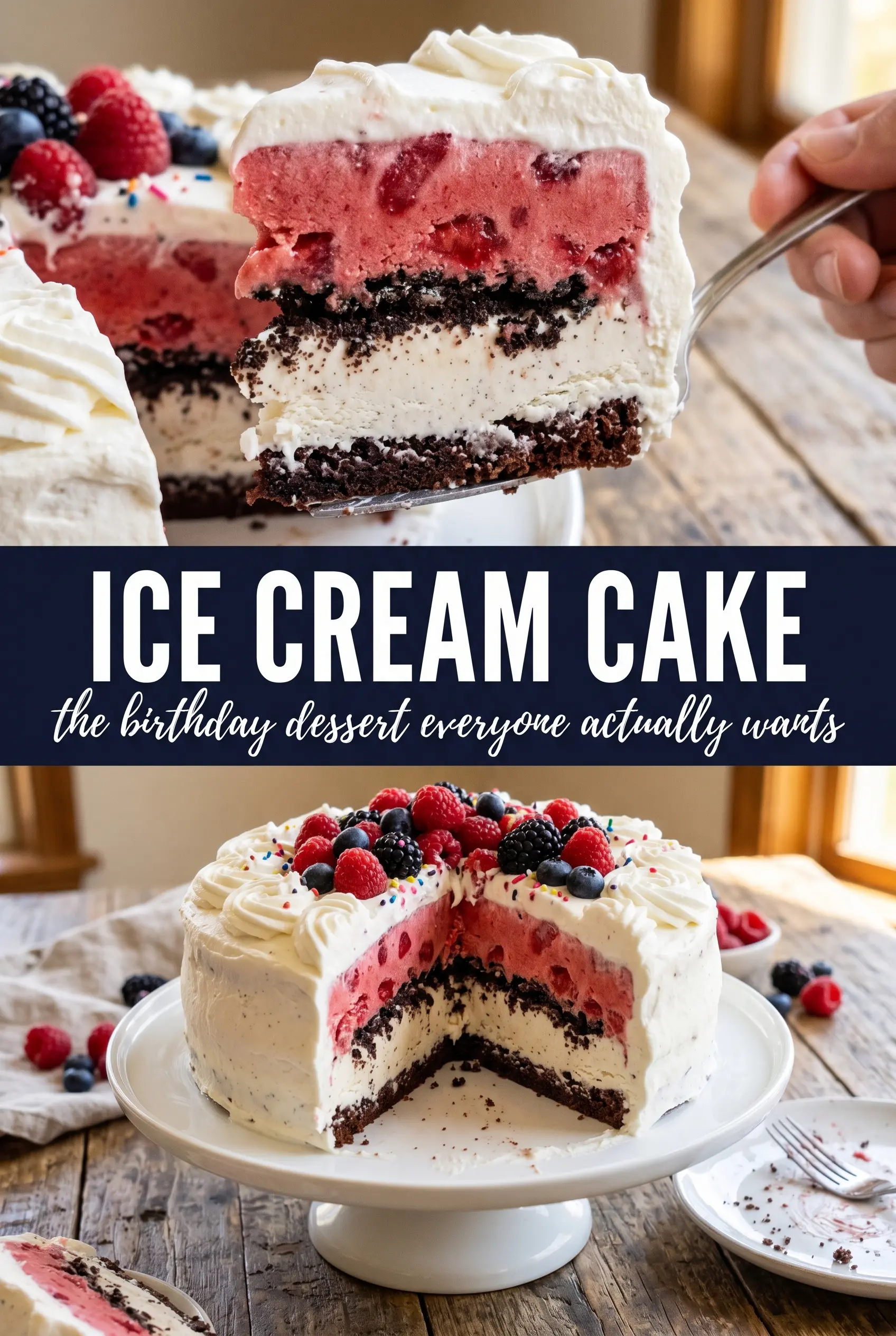
Ice Cream Cake
Ingredients
Equipment
Method
- Mix the crushed Oreo cookies with the melted butter until evenly combined, then press firmly into the bottom of a 9-inch springform pan. Freeze for 15 minutes until set.
- Spread the slightly softened vanilla ice cream in an even layer over the Oreo crust, smoothing the top. Freeze for 1 hour until firm.
- Drizzle the slightly cooled hot fudge sauce over the vanilla layer in a thin ribbon. Freeze for 15 minutes to firm up.
- Spread the slightly softened strawberry ice cream over the hot fudge layer and smooth the top. Cover with plastic wrap and freeze for at least 4 hours or overnight until fully solid.
- Run a warm knife around the edge, release the springform, and transfer the cake to a serving plate. Keep the slice-ready setup nearby.
- Pipe whipped cream swirls around the top edge and scatter sprinkles across the center. Slice with a hot knife and serve immediately for the cleanest layers.