Monster cookies have a way of disappearing before they’ve even cooled. They bake up thick and chewy with crisp edges, soft centers, and that classic peanut butter-oat base that holds plenty of candy and chocolate in every bite. The best ones don’t spread into flat puddles or turn dry in the oven; they stay substantial, with just enough give in the middle to feel bakery-style without being fussy.
What makes this version work is the balance. Peanut butter brings the structure and that familiar salty richness, while the brown sugar keeps the cookies tender. The oats add chew and help the dough hold all the mix-ins, so you get a cookie that feels loaded without falling apart. A short bake time matters here more than almost anything else. Pull them when the edges look set and the centers still seem a little soft. They finish on the pan, and that’s what keeps them chewy instead of crumbly.
Below you’ll find the small details that matter: how to keep the cookies from overbaking, why quick oats are the right choice, and a few ways to adapt them for different mix-ins or dietary needs.
The cookies stayed thick and chewy, and the M&Ms didn’t melt into a mess. I pulled them at 11 minutes like you said, and the centers set up perfectly once they cooled.
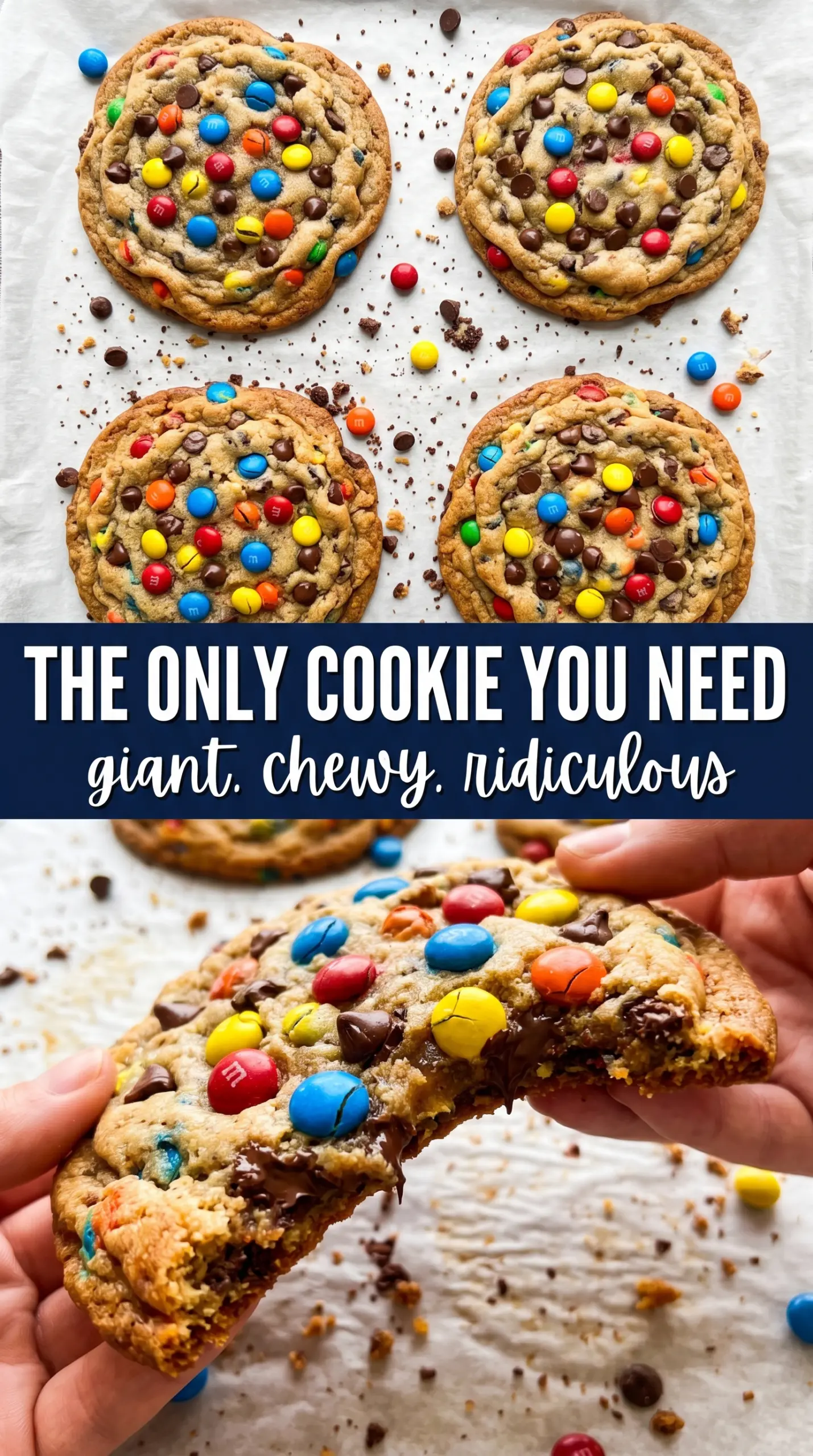
Chewy peanut butter monster cookies packed with colorful M&Ms and chocolate chips are the kind of bake that never lasts long.
The Trick to Keeping Monster Cookies Thick Instead of Spreading
Monster cookies can go wrong in one of two ways: they spread too much, or they bake up dry and gritty. The fix is in the balance of ingredients and the bake time. Peanut butter cookies don’t have flour to lean on, so the oats and eggs carry the structure. That means you want a dough that looks sturdy before it ever hits the oven.
The other common mistake is overbaking. These cookies should come out when the edges are set and the centers still look a little soft and pale. They keep cooking on the hot pan, and that carryover heat is what gives you the chewy middle. If you wait until the centers look fully done in the oven, you’ll lose that soft texture once they cool.
- Quick-cooking oats — These blend into the dough better than old-fashioned oats and give a more cohesive, chewy cookie. Old-fashioned oats will work in a pinch, but the texture turns a little rougher and the cookies may not hold together quite as neatly.
- Creamy peanut butter — Use the standard shelf-stable style for the most reliable texture. Natural peanut butter can work, but it often makes the dough looser and the cookies more prone to spreading unless you stir it very thoroughly and chill the dough.
- Eggs — Three eggs look like a lot, but they’re doing the job of binding a flourless dough. They help the cookies set without turning crumbly, so don’t cut them back.
What Each Ingredient Is Doing in These Cookies
- Peanut butter — This is the backbone of the recipe. It gives the cookies their richness, their chew, and enough fat to keep them tender without butter. Use a smooth peanut butter for the cleanest texture.
- Brown sugar and granulated sugar — Brown sugar keeps the centers softer and adds a deeper caramel note, while granulated sugar helps the edges set with a little more structure. The combination keeps the cookies from tasting flat.
- Eggs — These hold everything together since there’s no flour in the dough. They also help the cookies puff slightly in the oven before settling into that chewy middle.
- Quick oats — Oats are what make monster cookies feel hearty instead of just sweet. They absorb moisture and keep the mix-ins suspended through the dough, so every cookie bakes up packed with texture.
- M&Ms and chocolate chips — The candy gives you color and little pockets of crunch, while the chocolate chips melt into the dough and make each bite richer. The mini chips are worth keeping in the mix because they spread more evenly than standard chips.
Mix, Scoop, and Pull Them Before They Look Finished
Start with a smooth peanut butter base
Beat the peanut butter with both sugars until the mixture looks thick and fully combined, not sandy or streaked. That step gives the cookies an even texture from the start. When you add the eggs, vanilla, and baking soda, the dough should turn glossy and lighter in color. If it looks separated, keep mixing a little longer before adding the oats.
Fold in the oats and candy without crushing them
Stir the oats in until every bit is coated, then fold in the M&Ms and chocolate chips by hand. A heavy hand here can break the candy pieces and turn the dough muddy-looking. The finished dough should be stiff enough to scoop cleanly, but not dry or crumbly. If it seems too loose, let it sit for five minutes so the oats can absorb a little moisture.
Bake just until the edges set
Scoop the dough into 2-tablespoon portions and flatten them slightly so they bake evenly. The cookies are done when the edges look set and the tops are still a little soft and underbaked in the center. That underdone look is the cue to pull them. Let them sit on the baking sheet for five minutes before moving them, or they’ll fall apart while they’re still fragile.
Three Ways to Change These Cookies Without Losing the Good Part
Gluten-Free Without Any Special Flour Blend
These cookies are naturally gluten-free as written, as long as your oats are certified gluten-free. That keeps the texture chewy and hearty without changing the method. If you use oats that aren’t certified, you may pick up trace gluten from processing, which matters for anyone avoiding it strictly.
Swap the Candy for What You Have
You can trade the M&Ms for chopped peanut butter cups, Reese’s Pieces, or even butterscotch chips. The cookie will still bake up thick, but different mix-ins change the sweetness and the melt. If you use softer candy, chill the dough for 15 minutes so the cookies hold their shape better in the oven.
Make Them a Little More Peanut-Forward
If you want a stronger peanut butter flavor, add 1/2 cup chopped salted peanuts with the mix-ins. That gives the cookies more crunch and a bigger nutty finish without changing the base dough. I wouldn’t replace the peanut butter itself, because that’s what keeps the texture right.
Storage and Reheating
- Refrigerator: Store in an airtight container for up to 5 days. The cookies stay chewy, though the oats firm up slightly after chilling.
- Freezer: These freeze well. Freeze baked cookies in a single layer, then move them to a bag or container for up to 3 months. You can also freeze scooped dough balls and bake them straight from frozen, adding 1 to 2 minutes.
- Reheating: Warm a cookie in the microwave for 8 to 10 seconds if you want the chocolate soft again. Don’t overheat it or the edges will turn tough and the center will dry out.
Answers to the Questions Worth Asking
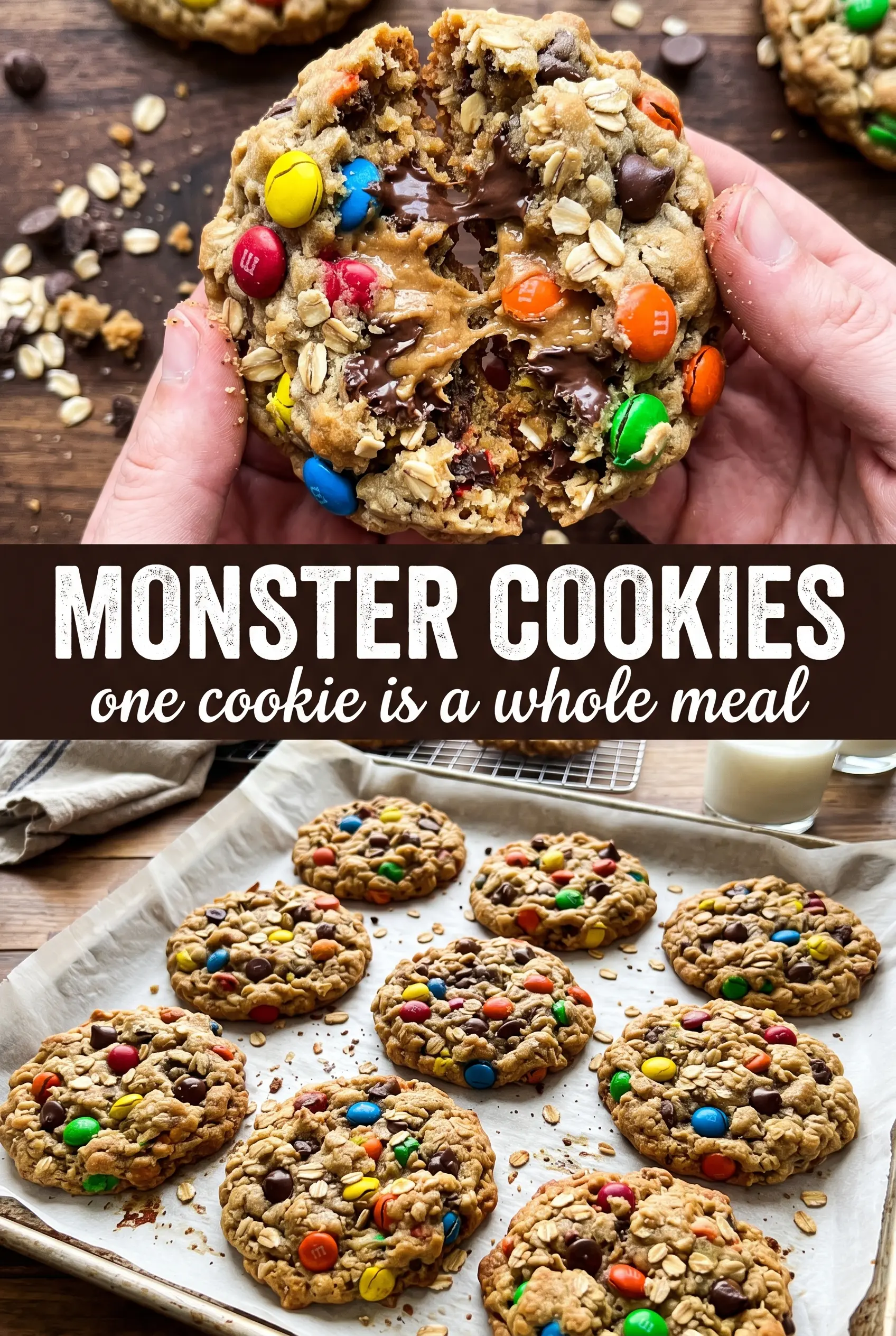
Monster Cookies
Ingredients
Equipment
Method
- Preheat the oven to 350°F and line two baking sheets with parchment paper.
- Set the baking sheets aside so they’re ready for scooping after the dough is mixed.
- Beat peanut butter, brown sugar, and granulated sugar together in a large bowl until combined.
- Add eggs, vanilla, and baking soda, then mix until smooth.
- Stir in quick-cooking oats until fully incorporated.
- Fold in M&Ms, chocolate chips, and mini chocolate chips until evenly distributed.
- Scoop dough into 2-tablespoon balls and place 2 inches apart on the prepared baking sheets, flattening slightly with your palm.
- Bake for 10–12 minutes at 350°F until the edges are set but the centers still look slightly underdone.
- Let cool on the baking sheet for 5 minutes before transferring to a wire rack so cookies firm up as they cool.