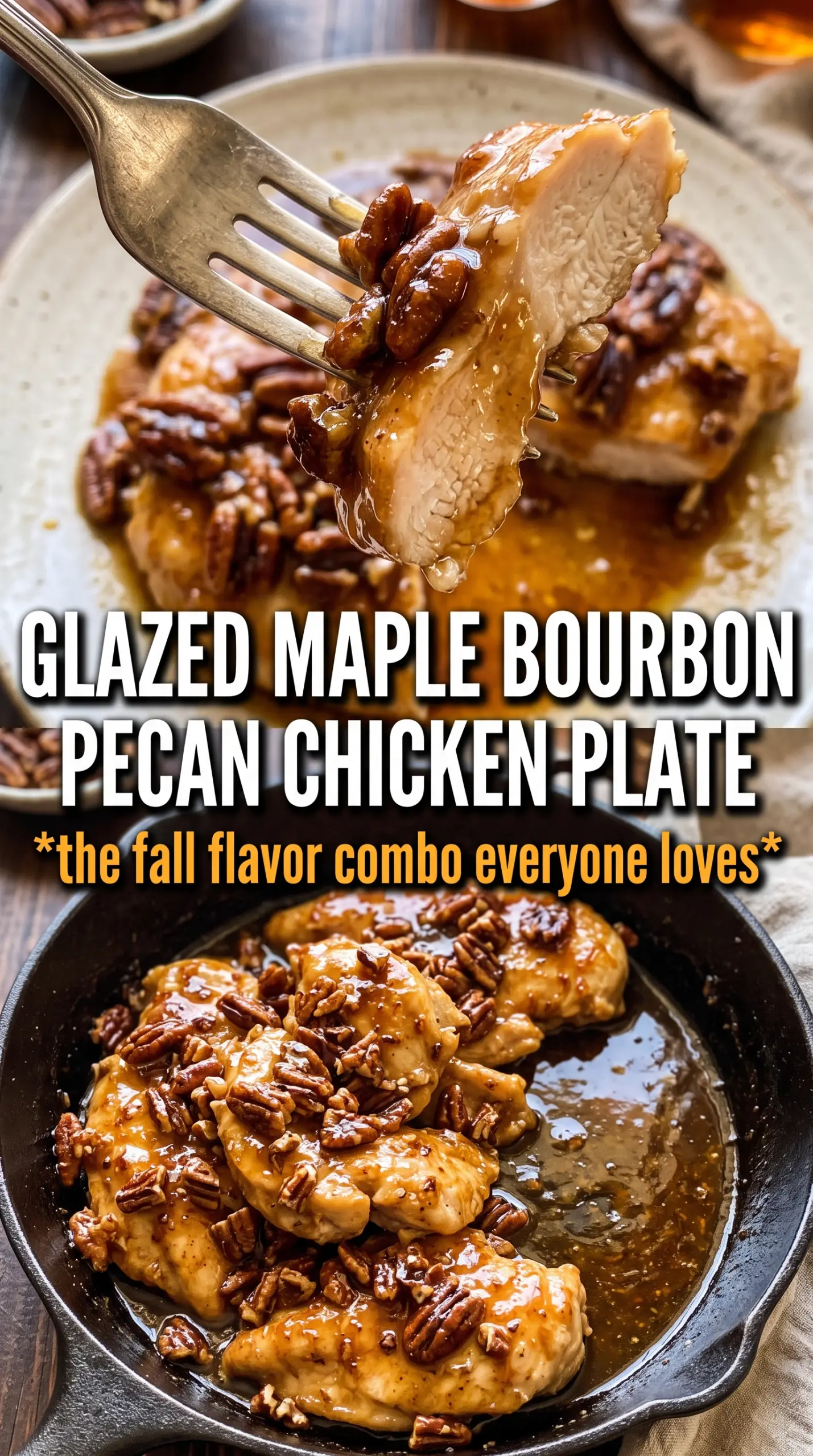
Golden seared chicken tucked into a glossy maple bourbon sauce has a way of tasting like far more effort than it takes. The sauce clings to every bite, the pecans stay toasted and buttery, and the Dijon keeps the sweetness from turning flat. It lands in that sweet spot where the chicken still tastes savory and the pan sauce does the heavy lifting.
What makes this version work is the order. The chicken is browned first so the pan picks up those deep savory bits, then the garlic goes in just long enough to bloom without burning. The bourbon gets a short simmer to cook off the harsh edge before the maple syrup, broth, and mustard come together into a sauce that thickens enough to coat the back of a spoon. The toasted pecans go on at the end so they keep their crunch.
Below, I’ve included the small timing details that keep the sauce smooth, plus a few swaps and storage notes in case you want to make it with what you already have.
The sauce thickened up beautifully and the bourbon stayed mellow instead of sharp. I served it over mashed potatoes and my husband went back for seconds before I’d even sat down.
Save this Maple Bourbon Pecan Chicken for nights when you want a glossy pan sauce, toasted pecans, and a dinner that feels special without extra cleanup.
The Step That Keeps the Bourbon Sauce from Turning Harsh
The biggest mistake in a pan sauce like this is rushing the bourbon. If it goes in while the pan is screaming hot, the alcohol can taste sharp instead of rounded, and the garlic can get lost behind it. A brief simmer gives the sauce time to settle into itself, which is what makes the maple taste warm instead of sticky-sweet.
The other thing worth paying attention to is the thickness before the chicken goes back in. You want the sauce to look lightly syrupy and leave a clear trail when you drag a spoon through the pan. If it’s still thin and watery, it won’t coat the chicken; if it reduces too far, it can turn gummy once the pecans are added.
- Boneless chicken breasts — Pound them to an even thickness if one end is much thicker than the other. That keeps the center from drying out before the outside browns.
- Pure maple syrup — Use the real stuff here. Pancake syrup will taste flat and can make the sauce cling in a greasy way instead of glazing cleanly.
- Bourbon — This adds depth, not a boozy bite. If you want to skip it, use extra chicken broth plus a small splash of apple cider vinegar to keep the sauce from tasting one-note.
- Dijon mustard — Dijon helps the sauce emulsify and gives the sweetness a little backbone. Yellow mustard won’t do the same job.
- Toasted pecans — Toasting matters. Raw pecans taste dusty; toasted pecans bring out the buttery crunch that makes the finish worth it.
What Each Ingredient Is Actually Doing in This Recipe
- Primary ingredient (the star) — Quality matters most. Choose the best you can find.
- Cooking medium (oil, butter, or broth) — This carries flavors and prevents dryness.
- Seasonings (salt, pepper, spices, herbs) — Layer flavors so nothing overpowers. Build depth gradually.
- Aromatics (garlic, onion, herbs) — Cook with fat to bloom flavors. Become the foundation.
- Supporting ingredients — Complement the main ingredient without overpowering it.
- Sauce or liquid (if applicable) — Brings flavors together. Balance richness with acid.
- Acid (lemon, vinegar, wine, or other) — Brightens and prevents flat-tasting results.
- Final finish (garnish, glaze, or sauce) — Prevents one-dimensional taste and adds visual appeal.
Building the Pan Sauce in the Same Skillet
Searing the Chicken First
Season the chicken well, then cook it in the olive oil and butter until the outside is deeply golden and the center reads cooked through. The pan should sound like a steady sizzle, not a frantic spit, and the chicken should release easily when it’s ready to turn. If it sticks hard, give it another minute; forcing it off too early tears the crust and leaves flavor behind.
Blooming the Garlic Without Burning It
Once the chicken comes out, add the garlic and stir for about a minute. You want it fragrant and just starting to soften, not browned. Burnt garlic turns bitter fast, and because the sauce is sweet, that bitterness will stand out even more.
Reducing the Bourbon and Finishing the Sauce
Add the bourbon carefully, then let it simmer until the sharp smell softens. If you’re cooking over an open flame, pull the pan off the heat before pouring it in, then return it once the bubbling settles. Stir in the maple syrup, Dijon, broth, and thyme, and keep the heat at a steady simmer until the sauce thickens enough to coat the spoon. Return the chicken to the pan and spoon the sauce over the top so every piece gets glossed before the pecans go on.
Make It Without Bourbon
Use an equal amount of chicken broth plus 1 teaspoon apple cider vinegar or lemon juice. You’ll lose the warm caramel note bourbon brings, but the sauce will still have enough depth to balance the maple.
Dairy-Free Version
Swap the butter for more olive oil or a dairy-free butter substitute. The sauce will still emulsify, though it won’t have quite the same round finish that real butter gives at the end.
For Chicken Thighs Instead
Use boneless skinless thighs and cook them a few minutes longer, until they’re fully tender and the juices run clear. Thighs give you a richer, juicier result and stand up well to the sweet-savory sauce.
Storage and Reheating
- Refrigerator: Store leftovers in an airtight container for up to 3 days. The sauce will thicken as it chills.
- Freezer: Freeze for up to 2 months, though the sauce may lose a little of its glossy finish after thawing. For best texture, freeze the chicken and sauce together in a shallow container.
- Reheating: Warm gently in a covered skillet over low heat with a splash of broth. High heat can tighten the chicken and make the sauce separate.
Questions I Get Asked About This Recipe
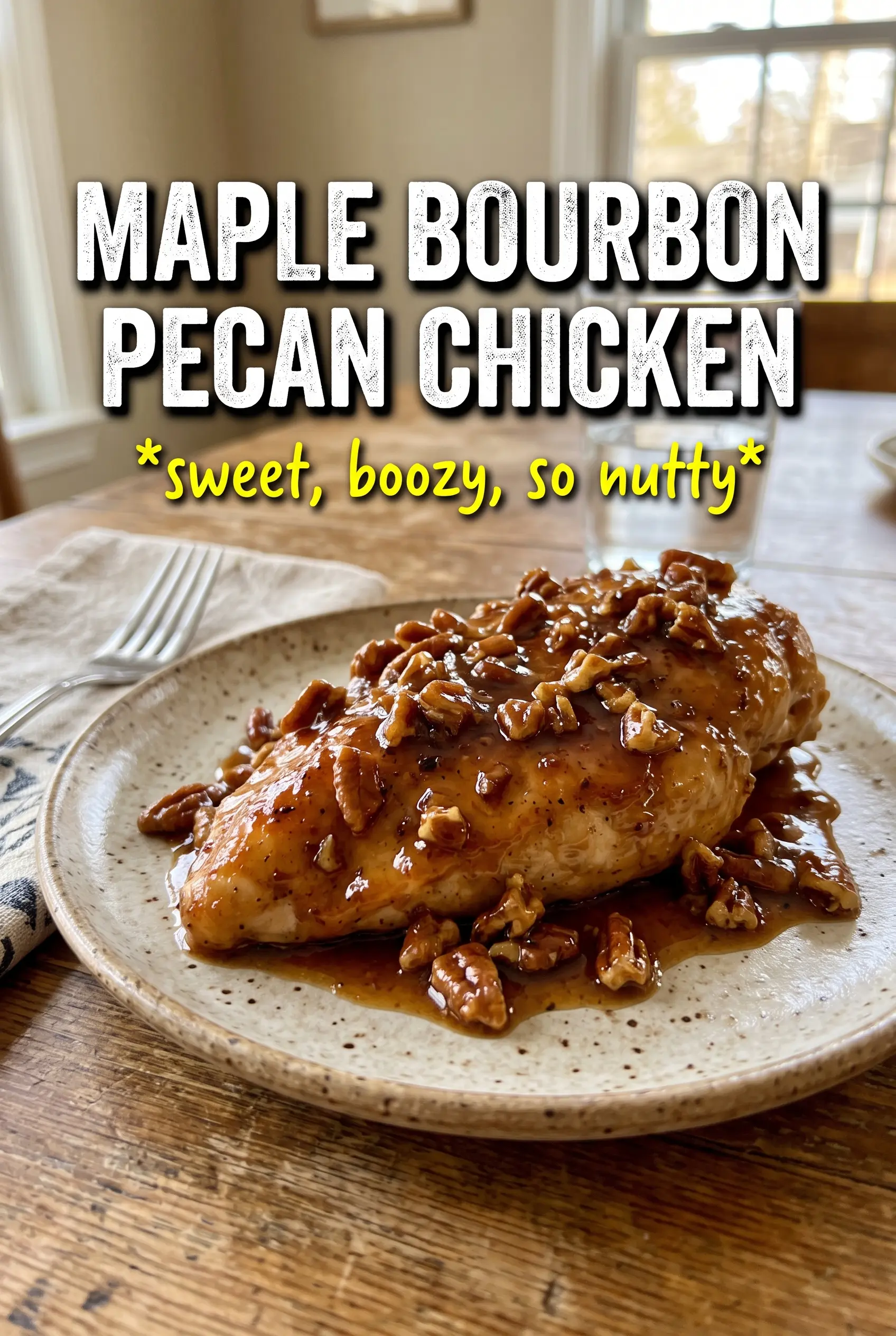
Maple Bourbon Pecan Chicken
Ingredients
Equipment
Method
- Season the boneless chicken breasts generously with salt and pepper. Heat olive oil and unsalted butter in a cast iron skillet over medium-high heat until shimmering, then sear the chicken for 5-6 minutes per side until cooked through and deeply golden.
- Remove the chicken from the skillet and set aside. Add the garlic and cook for 1 minute, stirring until fragrant but not browned.
- Carefully add the bourbon to the hot skillet and cook for 2 minutes, keeping the surface at a steady simmer; use off heat if you’re using an open flame. Scrape up browned bits as they loosen.
- Stir in the pure maple syrup, Dijon mustard, chicken broth, and fresh thyme, then simmer for 4-5 minutes until the sauce thickens and looks glossy. If it reduces too fast, lower the heat slightly.
- Return the chicken to the skillet and coat it in the maple bourbon pan sauce until warmed through and evenly glazed. Top with the toasted pecan halves for a crunchy finish.