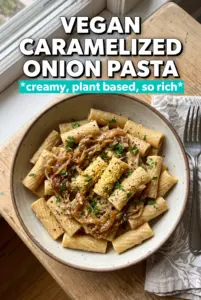
Sweet, jammy onions turn this pasta into something far more luxurious than the ingredient list suggests. The sauce clings to every ridge of the rigatoni, coating the noodles in a glossy, savory-sweet layer that tastes slow-cooked and polished without needing cream or cheese. It’s the kind of bowl that feels rustic and a little elegant at the same time, which is exactly why it earns a place in the regular dinner rotation.
The key is patience with the onions. Let them cook low and slow until they collapse, deepen, and pick up real color; that’s where the flavor comes from. The white wine lifts the browned bits from the pan, the balsamic sharpens the sweetness, and a splash of pasta water helps everything emulsify into a sauce that feels silky instead of oily. Nutritional yeast adds a savory edge that stands in for the missing parmesan without turning the dish heavy.
Below, I’ve included the one timing detail that keeps the onions from stalling out, plus a few swaps that still keep the pasta balanced and glossy. If you’ve ever wanted a plant-based dinner that tastes like it took much more effort than it did, this is the one to make.
The onions turned deeply golden without burning, and the pasta water made the sauce cling to the rigatoni in the best way. I didn’t miss the cheese at all.
Save this vegan caramelized onion pasta for the night you want glossy rigatoni, sweet onions, and a silky no-cream sauce.
The Part Most People Rush: Building Sweetness Without Burning the Onions
Caramelized onion pasta depends on one thing more than anything else: the onions need enough time to lose their raw edge before they ever meet the pasta. If they only soften, the sauce tastes flat and sharp. If the heat is too high, they brown unevenly, stick, and pick up bitter spots before the inside has a chance to turn jammy. The goal is a deep golden-amber color and a spoonable texture, not crispy edges.
The trick is medium-low heat and a pan that gives the onions enough contact with the surface without crowding them into a wet pile. Once the first moisture cooks off, you’ll notice the onions start to stick, then release, then darken. That cycle is what builds flavor. Stir often enough to keep the pan from scorching, but not so often that the onions steam themselves before they caramelize.
- Olive oil and vegan butter — The oil protects against scorching while the vegan butter adds richness and a rounder finish. Butter-only swaps tend to brown too fast; oil-only works, but the sauce tastes a little leaner.
- Dry white wine — This lifts the browned fond from the pan and adds acidity that keeps the finished pasta from tasting sweet. If you don’t cook with wine, use a splash of vegetable broth plus a teaspoon of lemon juice.
- Nutritional yeast — This is the savory backbone that makes the dish taste complete without dairy. Don’t skip it unless you’re replacing it with a vegan parmesan you already like, because it adds both nuttiness and body.
- Balsamic vinegar — Just a teaspoon is enough to sharpen the sweetness of the onions. More than that can push the sauce toward syrupy, so measure it rather than pouring by instinct.
How to Turn the Onion Pan Into a Sauce That Clings
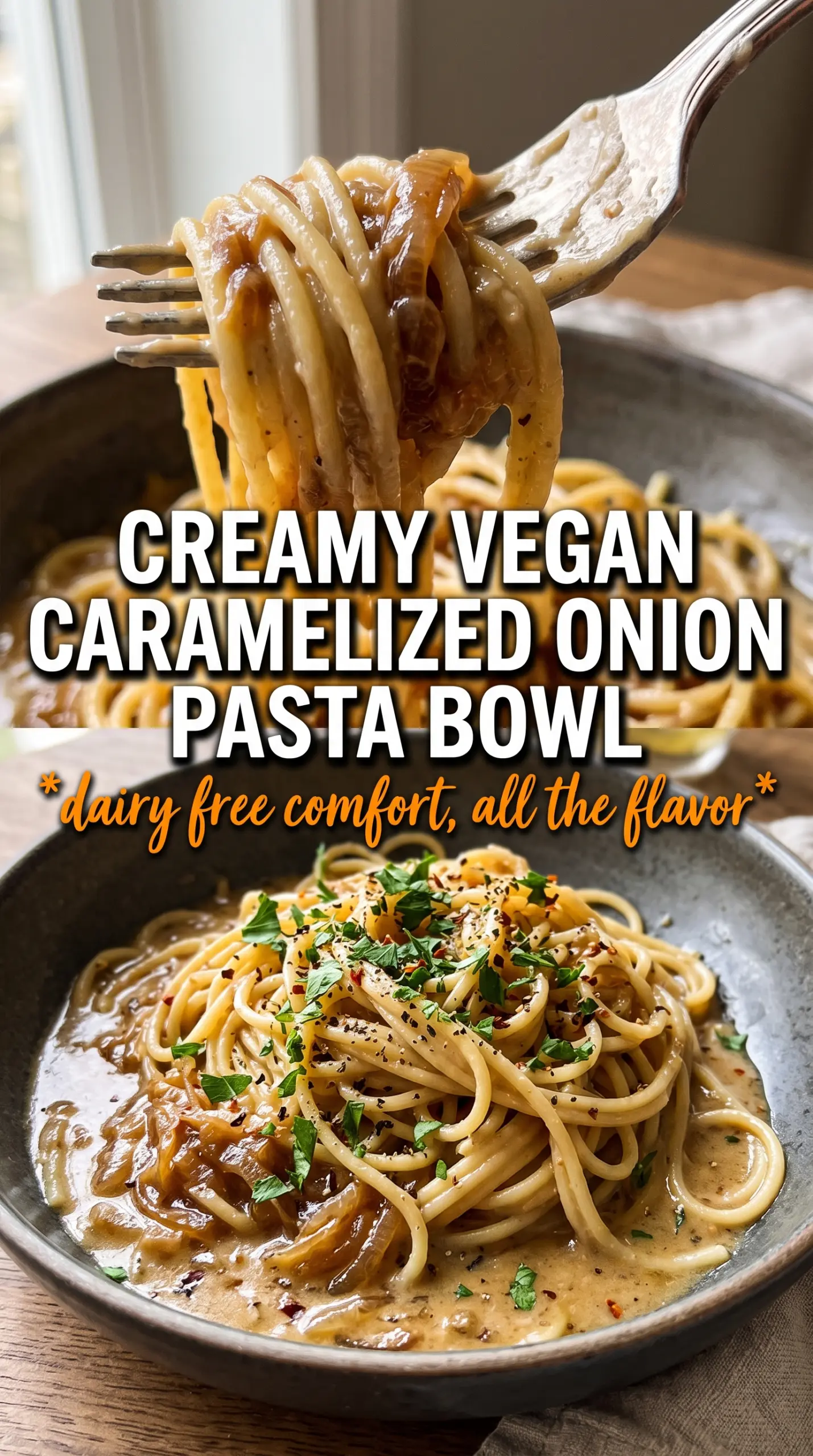
Cook the onions first and give them the full 35 to 40 minutes. When they’ve gone from pale and floppy to deep gold with a soft, almost spreadable texture, add the garlic and thyme for just long enough to smell them bloom. Garlic burns fast in a pan full of concentrated onion sugars, so two minutes is enough; if it starts to brown hard, the sauce will carry that bitterness all the way through.
Deglaze with the white wine while the pan is still hot. It should sizzle and loosen the browned bits on contact. After that, the pasta water does the heavy lifting. Add it a little at a time while tossing the pasta with the onions and nutritional yeast so the starch can emulsify the sauce instead of leaving you with slick onions sliding off the noodles.
Getting the Onions Deeply Golden
Start with a large pan and enough fat to coat the bottom. Add the sliced onions and cook them over medium-low heat, stirring every few minutes so the bottom layer doesn’t scorch. At first they’ll look too crowded and watery; that’s normal. Keep going until the liquid cooks off and the onions shrink to a soft, golden pile with browned edges and a sweet smell.
Building the Sauce in the Pan
Once the onions are ready, add the garlic and thyme, then the wine. Scrape the bottom of the pan as the wine bubbles; that’s where the flavor is. Stir in the balsamic and red pepper flakes, then add the cooked pasta along with a splash of pasta water and the nutritional yeast. Toss until the noodles look lightly glossy and the sauce coats the ridges instead of pooling underneath.
The Final Toss and Taste Check
Season at the end with salt and pepper after the pasta has had a chance to absorb the sauce. The onions, wine, and nutritional yeast all bring their own saltiness, so tasting late keeps you from overshooting. If the pasta looks dry, add another spoonful of pasta water. If it looks loose and watery, keep tossing for a minute or two; the starch will tighten it up.
Make It Gluten-Free Without Losing the Bite
Use a sturdy gluten-free rigatoni or spaghetti that holds up to tossing. The sauce itself is naturally gluten-free, but GF pasta can go mushy fast if it sits too long, so pull it when it still has a little chew and finish it in the pan only for the last minute.
Skip the Wine and Keep the Depth
Use vegetable broth instead of wine, then add a small squeeze of lemon at the end to bring back the acidity the wine would have supplied. The sauce will be a little rounder and less sharp, but it still clings well and keeps the onion flavor front and center.
Make It Richer With a Creamy Finish
Stir in a splash of unsweetened oat cream or cashew cream at the end if you want a fuller, more velvety sauce. Add it off the heat so it doesn’t break, and use a little less pasta water since the creamy addition already loosens the sauce.
Storage and Reheating
- Refrigerator: Store leftovers in an airtight container for up to 4 days. The pasta will absorb some of the sauce as it sits, so it may look thicker the next day.
- Freezer: This freezes, but the texture of the onions softens a bit more after thawing. Freeze in portions for up to 2 months if you don’t mind a softer finish.
- Reheating: Rewarm gently on the stove with a splash of water or broth and a drizzle of olive oil. The common mistake is blasting it in the microwave until the sauce turns dry and tight; low heat brings the gloss back.
Answers to the Questions Worth Asking
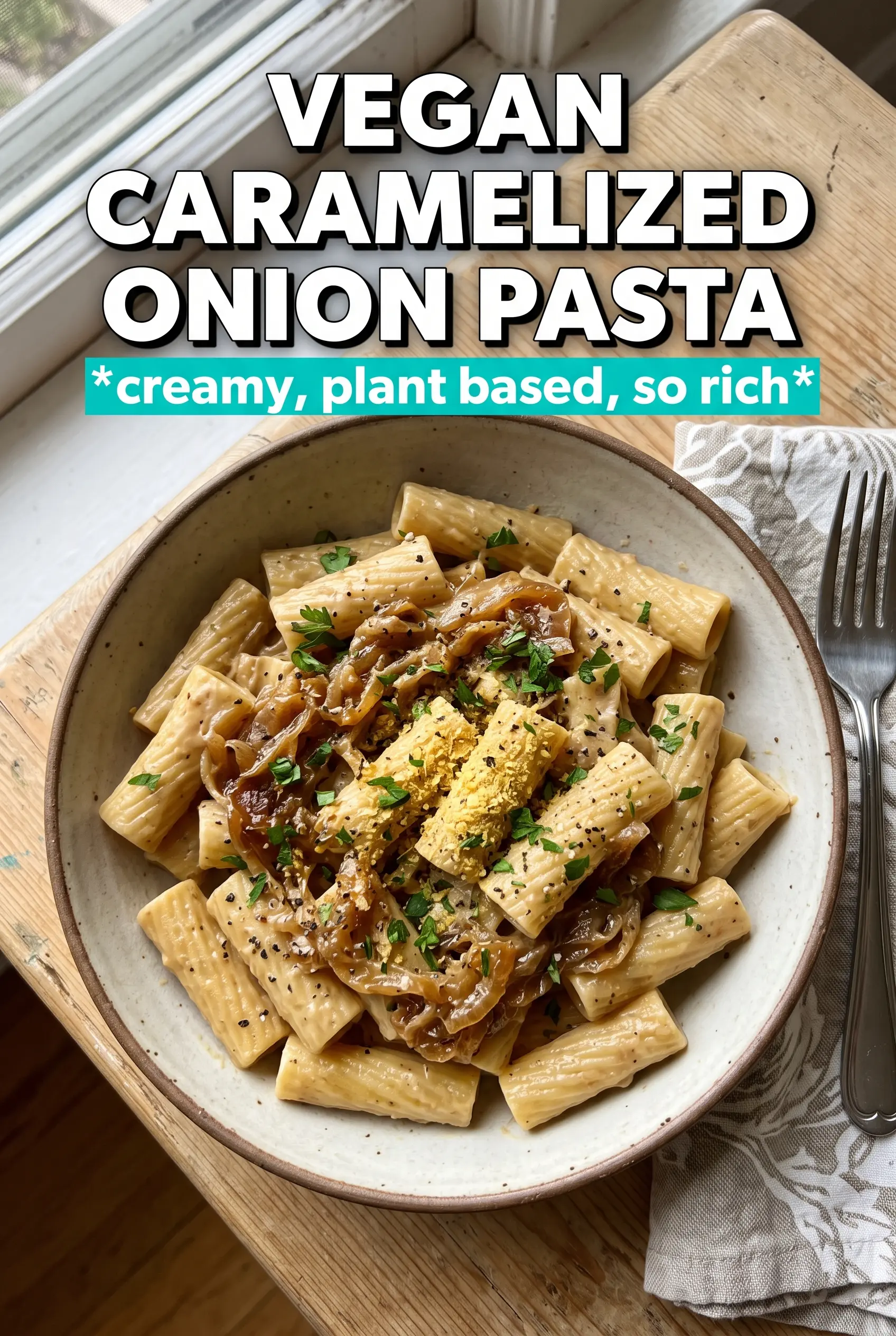
Vegan Caramelized Onion Pasta
Ingredients
Equipment
Method
- Heat olive oil and vegan butter in a Dutch oven over medium-low heat. Add sliced onions and cook 35-40 minutes, stirring every few minutes, until deeply caramelized and golden.
- Add minced garlic and fresh thyme to the onions and cook for 2 minutes. Stir just until fragrant and softened.
- Pour in the dry white wine to deglaze the pan. Cook for 2 minutes, scraping up any browned bits.
- Stir in balsamic vinegar and red pepper flakes. Cook briefly to combine flavors, then keep warm while you cook the pasta.
- Cook the rigatoni or spaghetti until al dente. Reserve 1 cup pasta cooking water before draining.
- Toss drained pasta with the caramelized onions, nutritional yeast, and reserved pasta water until creamy. Add more pasta water a splash at a time only if needed for a silky coating.
- Season with salt and pepper to taste, then top with fresh parsley. Finish with extra nutritional yeast if you like an extra cheesy topping.