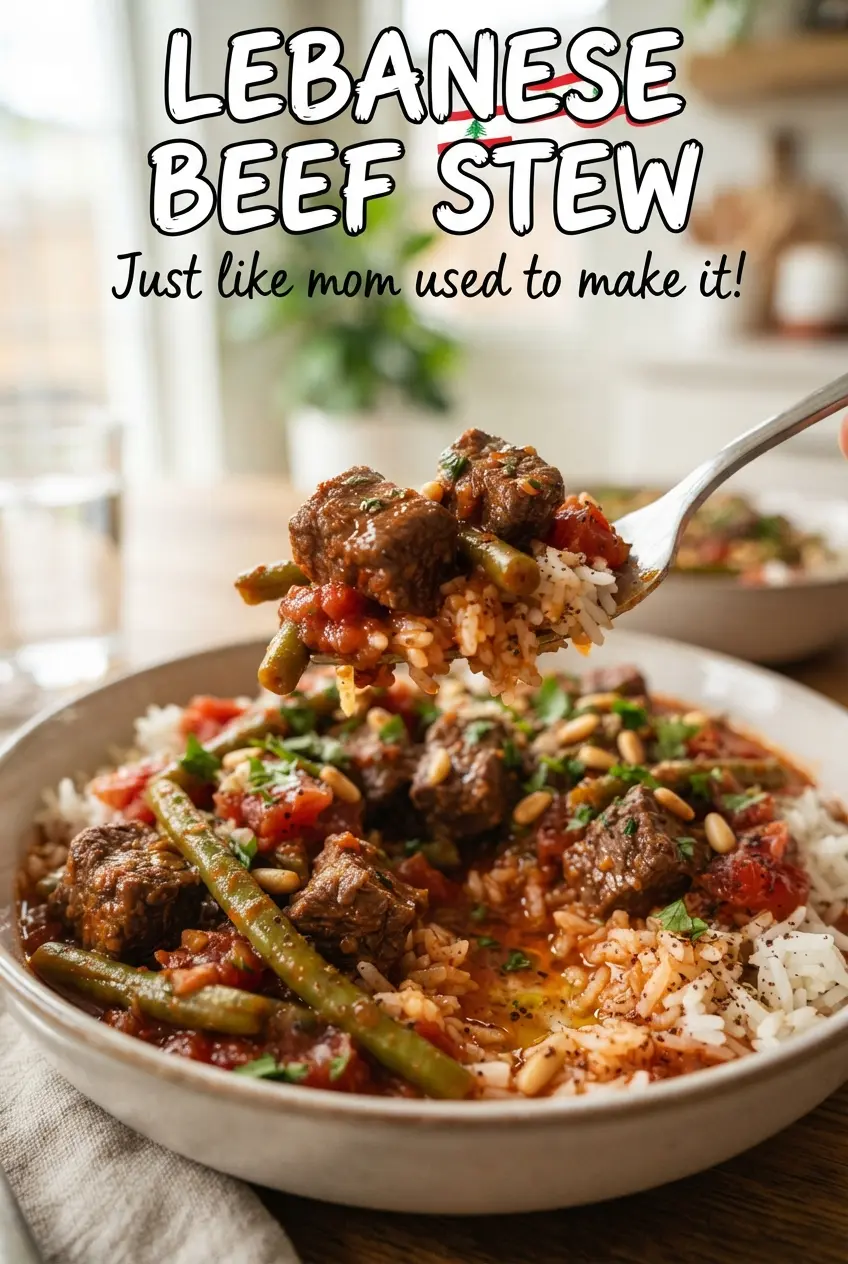
Deep, tomato-rich beef stew gets its backbone from Lebanese seven spice and a long, gentle simmer that turns tough chuck into spoon-tender pieces. The green beans keep their shape and add a fresh, savory edge that balances the slow-cooked sauce, while toasted pine nuts finish each bowl with a little crunch. Served over vermicelli rice, it lands somewhere between comforting and elegant, the kind of meal that tastes even better than it smells coming off the stove.
What makes this version work is the layering. The beef is browned after being seasoned, so the spices bloom in the oil instead of disappearing into the pot. Tomato paste cooks long enough to lose its raw edge before the crushed tomatoes and broth go in, which gives the sauce a deeper, rounder flavor. The green beans go in near the end so they stay intact instead of melting into the stew.
Below, I’ve included the timing cues that matter most, plus the small details that keep the stew from tasting flat or muddy. If you’ve ever had a beef stew where the sauce felt thin or the vegetables went soft too soon, this method fixes both.
The beef turned fork-tender and the sauce thickened beautifully without needing flour. I loved how the cinnamon and seven spice stayed warm instead of overpowering everything, and the green beans still had a little bite.
Save this Lebanese beef stew for the night you want tender chuck, green beans, and seven-spice tomato broth over vermicelli rice.
The Reason the Beef Stays Tender Instead of Going Dry
Chuck is the right cut here because it has enough fat and connective tissue to handle a long simmer without falling apart too early. The mistake most people make is trying to rush it with too much heat, which tightens the meat and makes the sauce taste sharper than it should. A low simmer gives the beef time to relax and the sauce time to thicken naturally.
The other thing that matters is the order. Browning first builds the savory base, then the onion softens in the same pot, and the tomato paste cooks long enough to darken slightly. That short minute with the paste matters more than it looks like it should; it removes the raw, metallic edge that can make tomato stews taste flat.
- Beef chuck — This cut stays juicy through a long simmer and gives you a stew with body. Leaner stew meat works in a pinch, but it dries out faster and won’t get as silky.
- Lebanese seven spice — This is where the stew gets its signature warmth. If you can’t find a blend, use the cinnamon in the recipe and add a pinch each of allspice, black pepper, and ground cloves.
- Tomato paste — Cook it for a full minute with the onion and garlic so it darkens slightly. That step concentrates the flavor and keeps the sauce from tasting like canned tomatoes straight from the can.
- Crushed tomatoes — They give the stew its body and cling to the beef better than diced tomatoes. If you use whole peeled tomatoes, crush them by hand before they go in so the sauce doesn’t stay too chunky.
Building the Pot in the Right Order

- Green beans — Add them near the end so they stay bright and intact. Frozen green beans work too, but don’t thaw them first; they’ll go straight into the simmer and may soften a little faster.
- Water or beef broth — Broth gives the stew a deeper background, but water still works because the beef, spices, and tomatoes carry the flavor. If your broth is salty, hold back a little on the initial seasoning.
- Cilantro and pine nuts — Stir the cilantro in at the end so it stays fresh and grassy. Toast the pine nuts until pale gold; once they go deep brown, they turn bitter fast.
How the Stew Comes Together Without Losing Its Texture
Season and brown the beef
Coat the beef with salt, seven spice, and cinnamon before it hits the pan so the seasoning clings to the meat instead of floating in the sauce later. Brown it in olive oil in batches if needed; if the pot is crowded, the beef steams and you lose that savory crust. You’re looking for dark golden spots on the outside, not a full cook-through.
Build the aromatic base
Cook the onion until it softens and looks glossy, about 5 minutes, then add the garlic and tomato paste. Let the paste cook for a full minute, stirring it through the fat so it darkens a shade. If it sticks a little, that’s fine; you want concentration, not scorching.
Simmer until the beef gives way
After the tomatoes and liquid go in, bring the pot just to a simmer, then lower the heat. The liquid should move in small lazy bubbles, not a rolling boil. Covering the pot keeps the moisture in and helps the beef turn tender without drying the top layer out. If the simmer is too hard, the meat tightens before it has time to soften.
Finish with the green beans and herbs
Add the green beans during the last 25 to 30 minutes so they stay tender but still have shape. When the beef is fork-tender and the beans are cooked through, stir in the cilantro right before serving. Top with toasted pine nuts at the table so they stay crunchy instead of softening in the steam.
How to Adjust the Pot for Your Pantry and Your Table
Make it dairy-free and naturally gluten-free
The stew itself is already dairy-free, and it’s gluten-free as long as you serve it with rice instead of bread or pasta. Vermicelli rice usually contains wheat noodles, so if you need a gluten-free plate, serve the stew over plain rice or rice pilaf made without vermicelli.
Swap the green beans for another vegetable
Okra, zucchini, or even chunks of carrot can work here, but each one changes the feel of the dish. Okra thickens the sauce a little, zucchini softens faster, and carrots need a longer simmer, so add them earlier if you want them fully tender.
Use lamb instead of beef
Lamb shoulder gives the stew a deeper, richer flavor that pairs beautifully with the cinnamon and seven spice. Keep the simmer gentle, because lamb can taste greasy if it boils hard for too long.
Stretch it for a bigger crowd
This stew scales up well, but use a wide pot so the beef can still brown instead of steaming. If you double it, add a little extra simmering time and taste the sauce at the end; larger batches often need a pinch more salt to wake up the tomatoes.
Storage and Reheating
- Refrigerator: Store for up to 4 days. The flavor gets even better on day two, and the sauce may thicken as it chills.
- Freezer: Freezes well for up to 3 months. Cool completely, portion into containers, and leave a little space at the top for expansion.
- Reheating: Warm gently on the stove over low heat with a splash of water or broth if needed. Don’t boil it hard, or the beef can tighten and the green beans can turn dull and soft.
Answers to the Questions Worth Asking
Lebanese Beef Stew
Ingredients
Equipment
Method
- Season the beef cubes with salt, Lebanese seven spice, and ground cinnamon, then brown them in the olive oil until well browned.
- Heat the mixture in a Dutch oven over medium-high heat, keeping the beef in a single layer as much as possible, then transfer to a plate while you sauté the aromatics.
- Cook the diced onion in the Dutch oven for 5 minutes, stirring until softened.
- Add the minced garlic and tomato paste and cook for 1 minute, stirring to toast and darken slightly.
- Stir in the crushed tomatoes and water (or beef broth), then bring the sauce to a simmer.
- Return the browned beef to the pot, cover, and simmer for 1 1/2 hours, until the beef is tender.
- Add the green beans and simmer for 25-30 minutes, until tender but still bright green.
- Stir in the chopped cilantro, top with toasted pine nuts, and serve hot over vermicelli rice.