Deep, spoon-coating keto beef stew gets its comfort-food feel from slow-braised chuck, a dark savory broth, and vegetables that hold their shape instead of turning to mush. The radishes pick up the stew’s flavor and lose their raw bite, the mushrooms bring extra depth, and the celery keeps everything tasting fresh against the rich gravy. It lands in that sweet spot where the bowl feels hearty enough for a cold night, but it still stays low in carbs without tasting like a compromise.
The trick is building enough browning on the beef before the broth goes in. Those crusty browned bits are what turn a plain pot of meat and vegetables into something with real backbone. The other part that matters is timing: radishes, mushrooms, and celery go in later so they soften without disappearing. Xanthan gum finishes the stew with body at the end, where it can thicken the liquid without needing flour.
Below, I walk through the pieces that matter most, from getting the beef properly seared to using xanthan gum without clumps. I’ve also included a few smart swaps and storage notes, because this stew is even better the next day.
The beef got that deep browned flavor I never get in my slow cooker version, and the radishes held up beautifully instead of turning watery. The gravy thickened just enough to cling to the spoon.
Save this keto beef stew for the nights when you want a thick, hearty bowl with radishes standing in for potatoes.
The Browning Stage Is What Gives This Stew Its Depth
Beef stew can taste flat when the meat goes straight into liquid, because simmering alone doesn’t build the kind of savory edge that makes each spoonful taste finished. Browning the chuck in batches changes that. You want a dark crust on the outside and a dry enough pan that the meat sears instead of steaming; if the pot looks crowded, stop and split it into more batches.
The onion and tomato paste go into the same pot after the beef comes out, and that is where a lot of the flavor gets concentrated. Tomato paste needs a full minute in the hot fat to lose its raw taste and deepen in color. If the bottom of the pot has dark brown bits, that’s good. Those dissolve into the broth and give the stew its backbone.
What Each Low-Carb Vegetable Is Doing Here
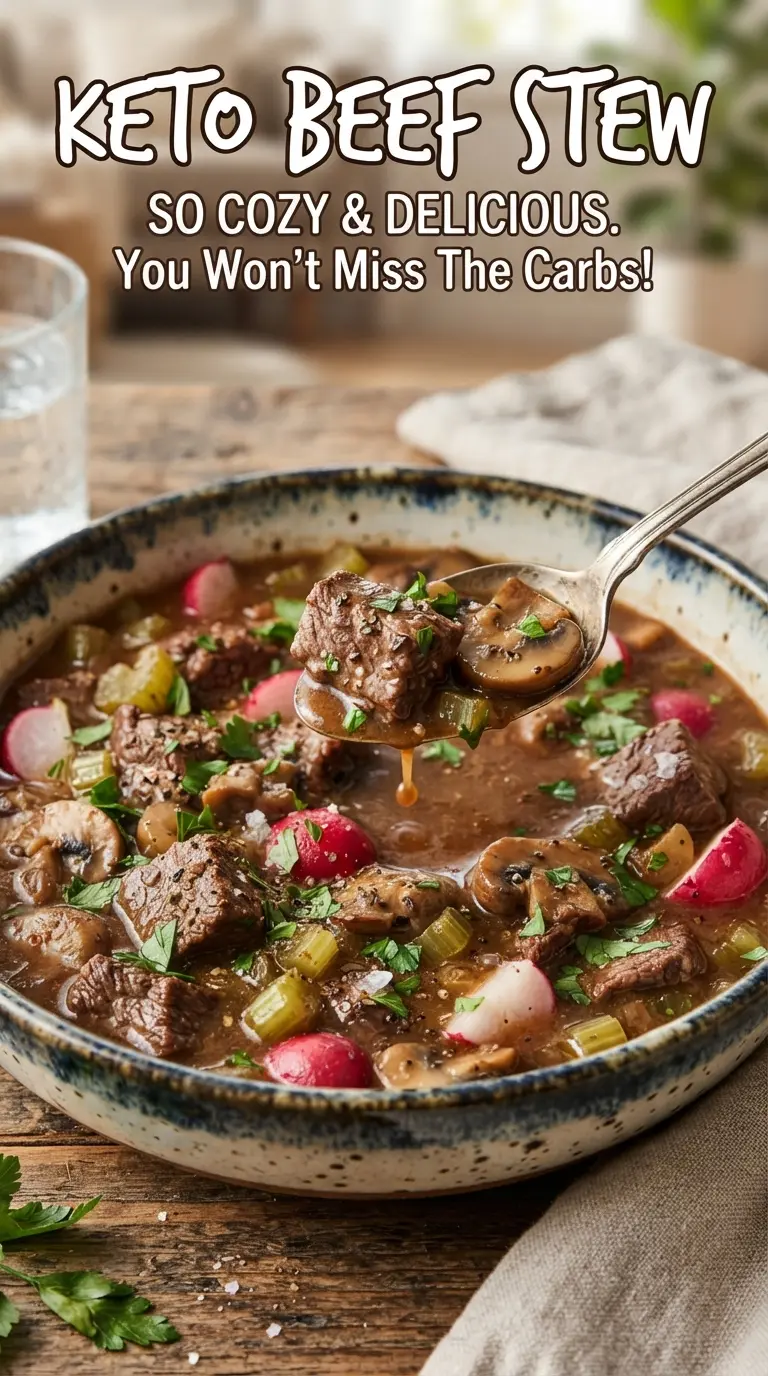
- Beef chuck — This cut has enough collagen to turn tender during the long simmer. Lean stew meat can work in a pinch, but it won’t give you the same silky, rich texture.
- Radishes — These stand in for potatoes better than most vegetables because they stay structured and pick up the broth without falling apart. Halve them so they cook through in the final simmer, not before.
- Cremini mushrooms — They add an earthy, meaty note that helps the stew taste fuller without needing more beef. White mushrooms work, but cremini give you a deeper broth.
- Worcestershire sauce — A tablespoon brings salt, acid, and quiet complexity. It’s a small amount, but it makes the whole pot taste more rounded.
- Xanthan gum — This thickens the broth without flour or cornstarch. Whisk it in slowly at the end; dumping it in all at once can make little gummy clumps.
Building the Stew Without Breaking the Texture
Season and Sear the Beef
Pat the beef dry, season it well, and sear it in hot avocado oil in batches. The cubes should sizzle hard when they hit the pan, and each side should pick up a deep brown crust before you move them. If they release gray liquid, the pan is crowded or not hot enough. Pull the browned beef out and keep going until all sides have some color; this step is where the stew gets its roasted flavor.
Cook Down the Aromatics
Add the onion to the same pot and cook it until it softens and picks up a little color from the fond on the bottom. Stir in the garlic and tomato paste for about a minute, just until the paste darkens slightly and smells sweeter. If the garlic starts to brown hard, the heat is too high and it can turn bitter. At this point, the bottom of the pot should smell deep and savory, not sharp.
Slow Simmer, Then Add the Vegetables
Pour in the broth and Worcestershire sauce, then add thyme, bay leaf, and the browned beef. Cover and simmer gently for about 1 1/2 hours. Keep the heat low enough that the liquid only moves lazily; a hard boil makes chuck tighten up instead of relaxing into tenderness. Add the radishes, mushrooms, and celery once the beef is already close to tender, then simmer until the radishes give easily to a fork and the celery is soft but not limp.
Thicken and Finish Cleanly
Sprinkle in the xanthan gum while whisking or stirring constantly so it disperses evenly. Give it a couple of minutes to thicken, because xanthan works fast but needs a minute to fully hydrate. If the stew gets thicker than you want, a splash of broth loosens it back up. Remove the bay leaf and finish with parsley for a fresh note right before serving.
How to Adapt This Without Losing the Hearty Feel
Dairy-Free and Gluten-Free as Written
This stew already skips dairy and flour, so there’s nothing special to change for those diets. The xanthan gum does the thickening work that flour usually would, which keeps the gravy rich without adding carbs. Just check the Worcestershire sauce label if you need the recipe to stay gluten-free, since some brands include malt vinegar or other gluten ingredients.
Swap in Turnips Instead of Radishes
Turnips give a closer potato-like bite than radishes, with a little more earthiness and less peppery sharpness. Cut them into similar-sized pieces so they cook at the same pace, and expect them to taste a touch sweeter after simmering. They’re the best backup if you don’t love how radishes behave in stew.
Use a Slow Cooker for the Long Simmer
You can brown the beef and cook the onion, garlic, and tomato paste on the stove first, then move everything to the slow cooker. That extra stovetop step matters because it builds the flavor the slow cooker won’t create on its own. Add the radishes, mushrooms, and celery during the last 45 minutes so they don’t turn bland and soft.
Storage and Reheating
- Refrigerator: Store in an airtight container for up to 4 days. The stew thickens as it chills, and the flavor gets deeper by the next day.
- Freezer: This freezes well for up to 3 months. Cool it completely first, then freeze in portions so the vegetables don’t break down more than necessary when thawed.
- Reheating: Warm it gently on the stovetop over low heat, stirring often and adding a splash of broth if needed. Don’t boil it hard, or the beef can tighten and the radishes can turn too soft.
Answers to the Questions Worth Asking
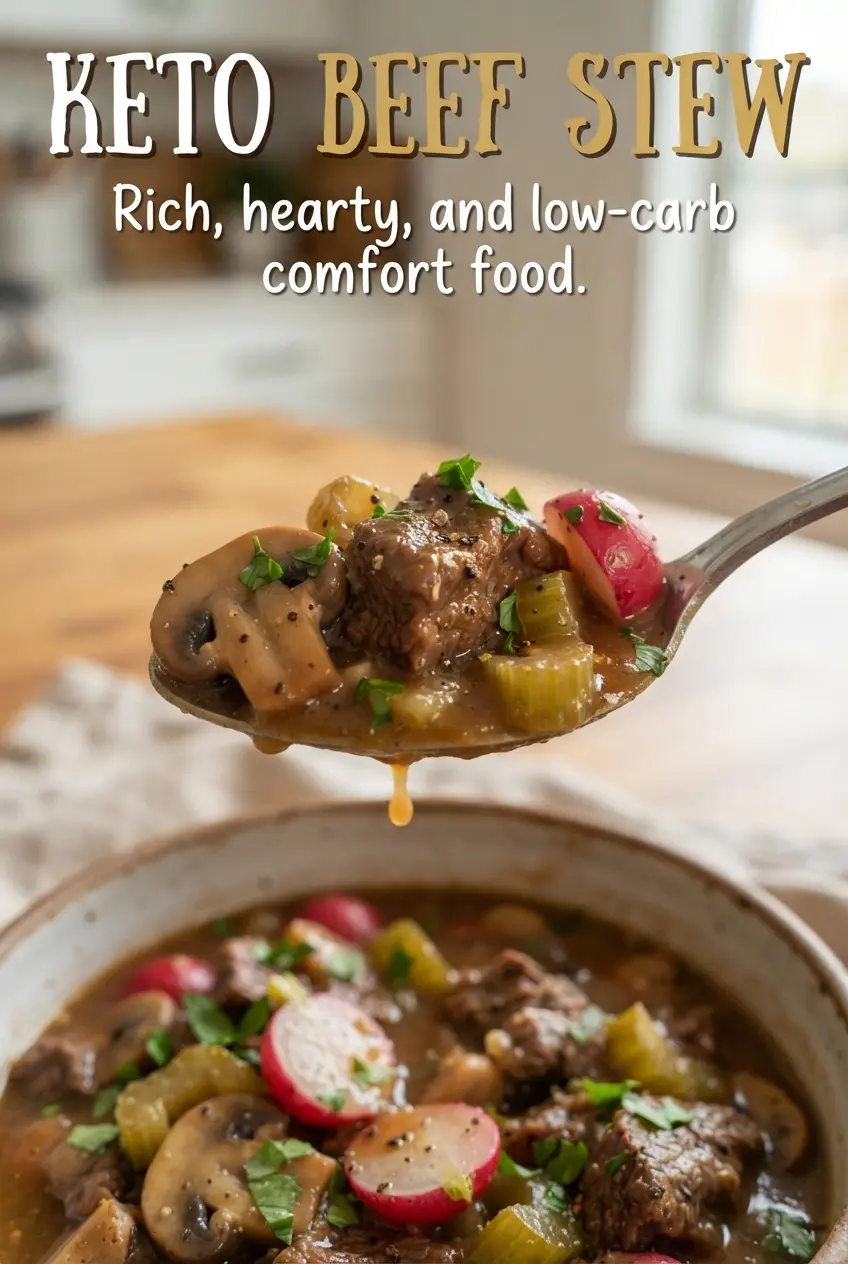
Keto Beef Stew
Ingredients
Equipment
Method
- Season the beef chuck cubes with salt and black pepper. Heat the avocado oil in a Dutch oven over high heat and brown the beef in batches, cooking until each batch is browned with a deep sear (no need to cook through).
- Reduce heat to medium and cook the diced onion for 3 minutes, stirring until softened. Add the minced garlic and tomato paste and cook for 1 minute, until fragrant and slightly darkened.
- Add the beef broth, Worcestershire sauce, dried thyme, bay leaf, and the browned beef back to the pot. Bring to a gentle simmer, then cover and simmer for 1 1/2 hours, until the beef is tender (steam should stay consistent under the lid).
- Add the halved radishes, quartered cremini mushrooms, and sliced celery to the pot. Simmer covered for 30-40 minutes, until the beef and radishes are tender and the vegetables have softened.
- While whisking, sprinkle in the xanthan gum to prevent clumps. Simmer for 2 minutes to thicken, watching for the gravy to turn glossy and coat the back of a spoon.
- Remove the bay leaf and discard it. Top the stew with chopped fresh parsley and serve hot.