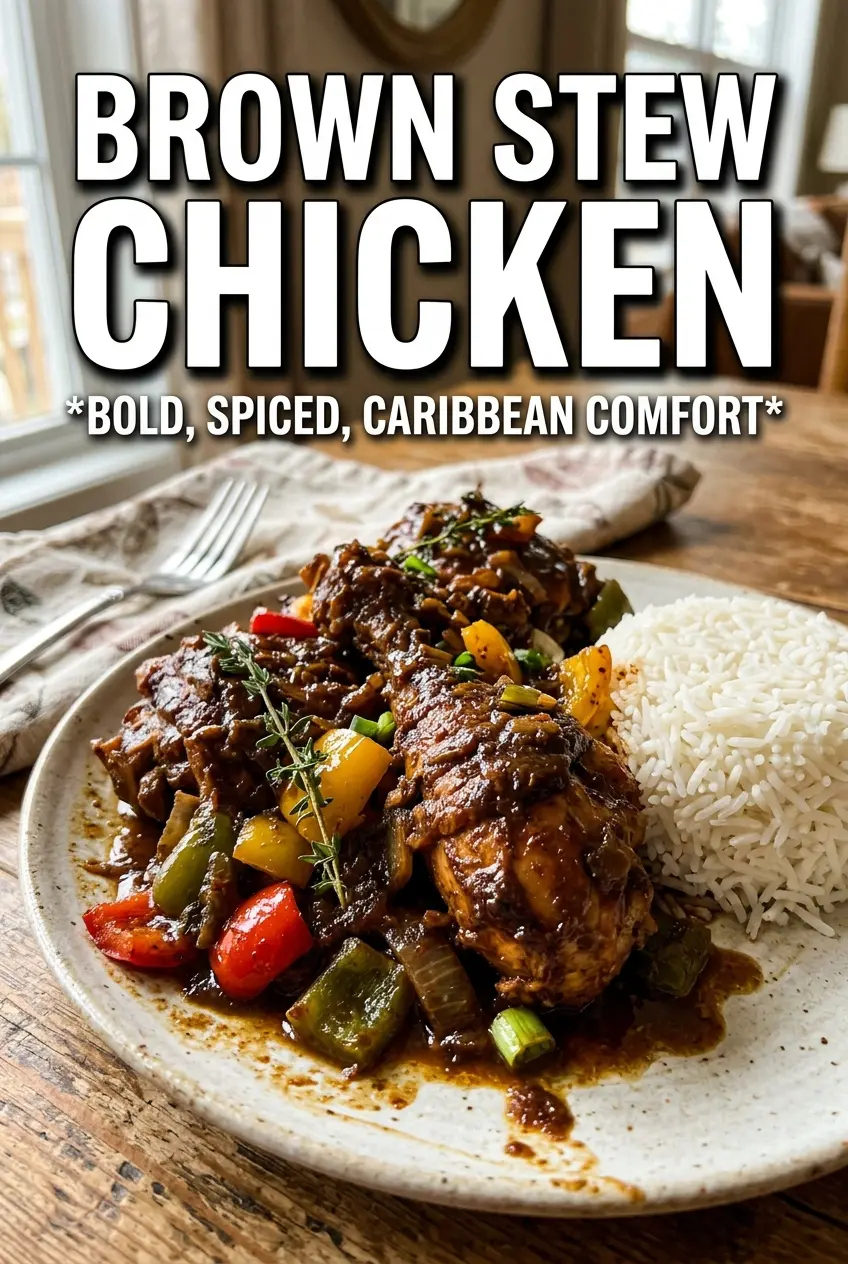
Brown stew chicken lands with deep mahogany gravy, tender chicken that pulls cleanly from the bone, and peppers that soften into the sauce without disappearing. What makes it worth repeating is the balance: savory browned edges, aromatic thyme, a little sweetness from the caramel, and just enough heat to keep every bite awake. Served over rice, it eats like a full meal in one bowl.
The flavor starts before anything hits the pan. Marinating the chicken with browning sauce, dried thyme, garlic powder, onion powder, and seasoning gives the meat time to take on that Jamaican backbone, and the caramelized sugar in the pan adds the dark color and slight bitterness that keeps the gravy from tasting flat. If you rush either of those parts, the dish still works, but it won’t taste layered the way brown stew chicken should.
Below you’ll find the timing that keeps the sugar from burning, the reason I brown the chicken before simmering, and a few smart swaps if you need to adjust the heat or make the dish ahead.
The gravy came out deep and glossy, and the chicken was fall-apart tender after the simmer. I kept the scotch bonnet out and it still had that classic Jamaican flavor we were after.
Save this brown stew chicken for the nights when you want deep Jamaican gravy, tender thighs, and rice that soaks up every bit of the sauce.
The Caramel Step That Gives Brown Stew Chicken Its Color
The darkest mistake people make with brown stew chicken is trying to get the color only from the chicken. The gravy gets its signature look from the caramelized sugar and the browning sauce in the marinade, not from overcooking the meat. That means the pan has to be hot enough to turn the sugar golden and dark enough to deepen the sauce, but not so hot that it burns into bitterness before the chicken goes in.
Once the sugar reaches a rich amber color, you need to move quickly. The chicken should hit the pan while the caramel is still fluid, then you brown it just long enough to coat the outside and build more flavor. If the sugar turns too dark before the chicken goes in, start over; a scorched caramel will take the whole pot with it.
What Each Ingredient Is Actually Doing in the Pot
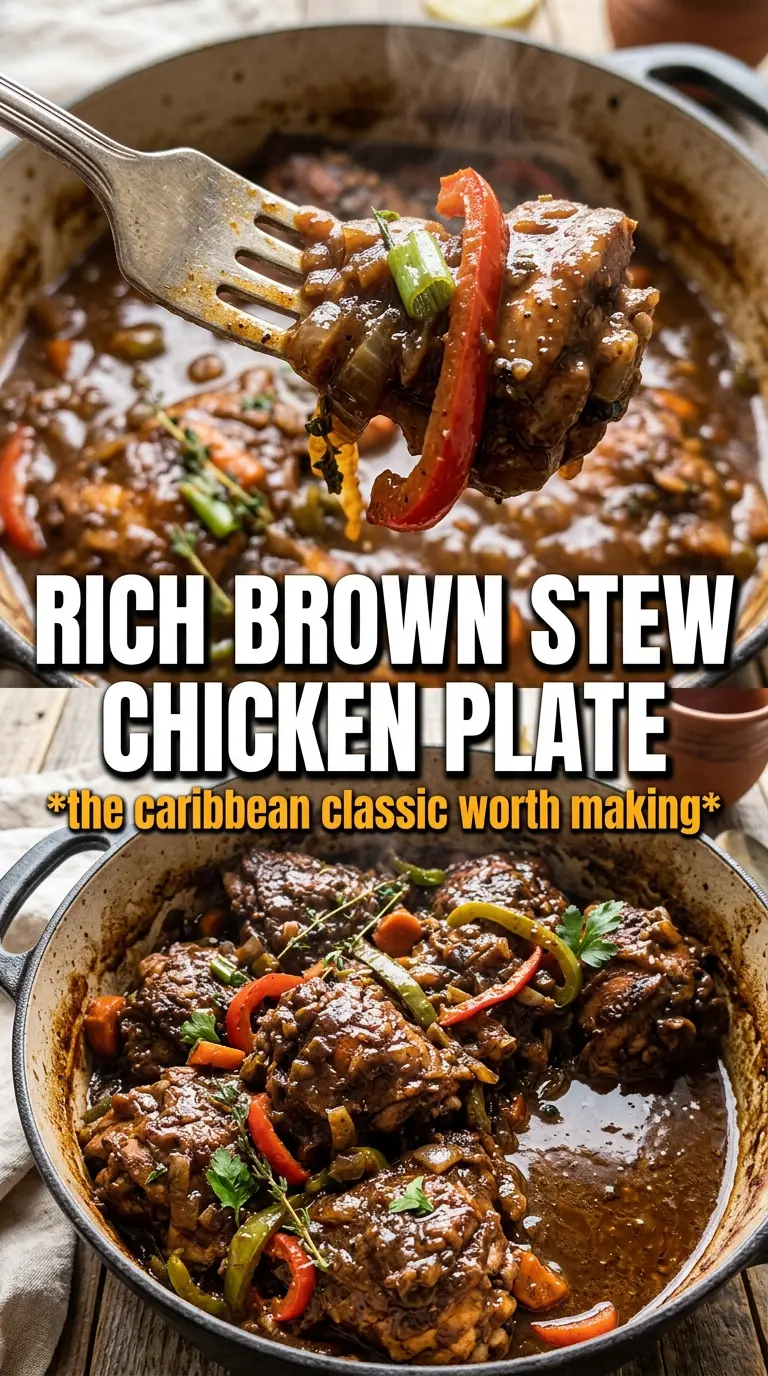
- Bone-in chicken thighs and drumsticks — These stay juicier than boneless pieces and give the gravy more body as they simmer. Thighs are the best choice if you want meat that turns tender without drying out; drumsticks add a little extra flavor and make the pot feel more traditional.
- Browning sauce — This is doing more than coloring the chicken. It adds that deep, cooked flavor that makes the stew taste like it simmered longer than it did, and there isn’t a substitute that matches it exactly.
- Caramelized sugar — This is the backbone of the gravy’s color and a little of its edge. Use just enough to turn golden brown; if you let it go too far, the sauce turns harsh instead of rich.
- Scotch bonnet or habanero — The pepper should perfume the pot, not take over unless you want it to. Mince it finely if you want heat in every bite, or leave it out entirely and the stew still tastes right.
- Thyme, onions, scallions, and garlic — This is the aromatic base that makes the sauce taste rounded instead of one-note. Fresh thyme matters most here; dried thyme works in the marinade, but the garnish at the end gives the dish a brighter finish.
- Chicken broth — Use a broth you actually like the taste of, because it becomes the gravy. Low-sodium is the safer choice so the stew can reduce without turning salty.
From Searing to Simmering Without Losing the Gravy
Let the chicken marinate long enough to matter
Mix the chicken with the browning sauce, seasoning, garlic powder, onion powder, thyme, salt, and pepper, then let it sit for at least 2 hours. Overnight gives you a deeper, more even flavor and helps the meat hold onto moisture during the simmer. If the chicken looks damp and darkened by the marinade, that’s exactly what you want.
Build the caramel carefully
Heat the oil, add the sugar, and watch it closely as it melts into a golden-brown caramel. It should smell nutty and toasty, not burnt. The second it looks deep amber, add the chicken, because the window between perfect caramel and bitter caramel is short.
Brown the chicken before the liquid goes in
Turn the chicken in the caramel oil until the outside is deeply golden on all sides, then remove it. This step doesn’t cook the chicken through; it builds flavor and gives the stew a richer color. If the pan starts looking dry, the marinade on the chicken will darken quickly, so keep the pieces moving.
Soften the vegetables in the same pan
Add the onion, bell peppers, garlic, green onions, and scotch bonnet to the same skillet. The vegetables should pick up the browned bits left behind and turn glossy after a few minutes. Don’t cook them until mushy — they should still have enough shape to stand up in the finished gravy.
Simmer until the meat slips from the bone
Return the chicken, pour in the broth, and bring everything to a boil before lowering it to a steady simmer. Cover the pot and cook until the chicken is fall-apart tender and the sauce has thickened enough to coat a spoon, about 35 to 40 minutes. If the gravy looks thin at the end, uncover the pot for a few minutes and let it reduce rather than cranking up the heat.
How to Adjust Brown Stew Chicken for Heat, Time, or Leftovers
Make it mild without losing the Jamaican backbone
Leave out the scotch bonnet or habanero and keep the thyme, browning sauce, and caramel step exactly the same. You still get the deep savory gravy and the classic color, just without the heat blooming at the back of your throat.
Use boneless thighs when you need a shorter cook
Boneless thighs work if you want this on the table faster, but they won’t flavor the gravy quite as deeply as bone-in pieces. Cut the simmer a little shorter and watch the sauce closely, because boneless chicken dries out faster once it starts to turn tender.
Make it gluten-free with no real tradeoff
This recipe is naturally close to gluten-free, but you need to check the browning sauce and all-purpose seasoning labels. Some brands sneak in wheat-based ingredients, and swapping to certified gluten-free versions keeps the gravy just as dark and flavorful.
Store it for better flavor the next day
Brown stew chicken holds up well in the fridge, and the gravy often tastes even better after a night in the cold. Reheat it gently on the stove with a splash of broth so the sauce loosens back up instead of clinging to the pan.
Storage and Reheating
- Refrigerator: Store in an airtight container for up to 4 days. The gravy thickens as it chills, which is normal.
- Freezer: It freezes well for up to 2 months. Cool it completely first, then freeze with some of the sauce so the chicken doesn’t dry out.
- Reheating: Warm it slowly on the stovetop over low heat with a splash of broth. High heat can tighten the chicken and make the sauce break.
Answers to the Questions Worth Asking
Brown Stew Chicken
Ingredients
Equipment
Method
- Combine browning sauce, all-purpose seasoning, garlic powder, onion powder, dried thyme, salt and pepper with the chicken pieces, coating evenly. Marinate for at least 2 hours or overnight in the refrigerator.
- Heat vegetable oil in a large skillet or Dutch oven over medium-high heat, then add sugar and let it caramelize until golden brown. Keep an eye on it so it turns amber without burning.
- Add the marinated chicken pieces to the caramel oil and brown until deeply golden on all sides, then remove to a plate. Leave the caramelized bits in the pot for flavor.
- Sauté onion, green bell pepper, red bell pepper, garlic, green onions, and scotch bonnet or habanero for 4 minutes. Stir until the vegetables soften and the garlic is fragrant.
- Return the browned chicken to the pot, then pour in chicken broth and bring everything to a boil. Scrape up any browned bits from the bottom.
- Reduce heat to low, cover, and simmer for 35-40 minutes until the chicken is fall-apart tender and the gravy is thick. Uncover near the end if you need to thicken further.
- Serve the brown stew chicken with fresh thyme for garnish. Pair with rice and spoon the mahogany gravy over the chicken.