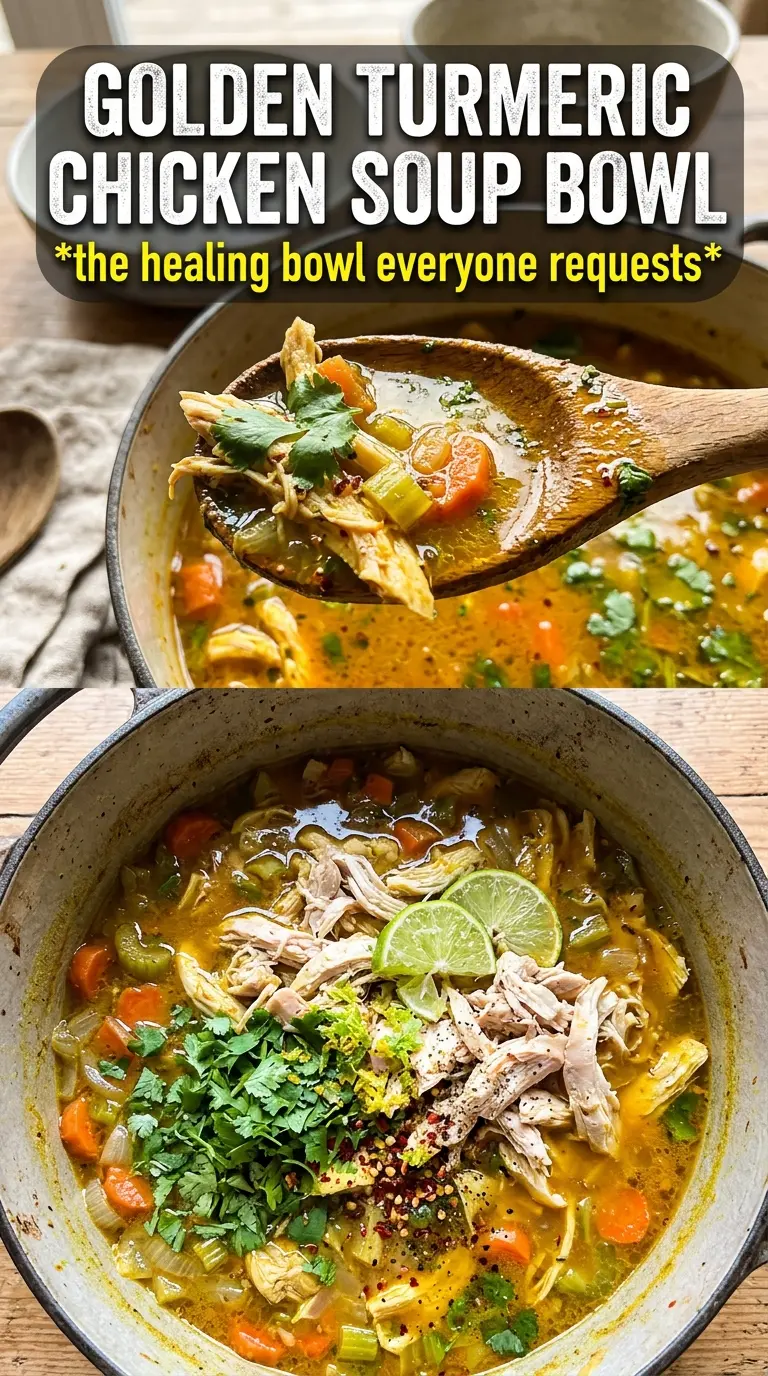
Golden broth, tender shredded chicken, and a bright finish of lemon make this turmeric chicken soup the kind of bowl that feels restorative without tasting bland. The broth stays vivid and savory, the vegetables keep their shape, and the noodles soak up just enough of the seasoned liquid to turn each spoonful into something comforting and filling. The turmeric doesn’t sit alone here; it gets backed up by ginger, black pepper, garlic, and a little cinnamon, which gives the soup depth instead of that flat, dusty note you sometimes get in lighter chicken soups.
What makes this version work is timing. The chicken simmers gently in the broth until it’s just cooked through, then gets shredded and returned to the pot so it stays juicy. The lemon juice, apple cider vinegar, and honey go in at the end, where they sharpen the flavor without cooking off. Black pepper matters here too, because it helps support the turmeric’s curcumin and keeps the soup tasting warm and balanced rather than one-note.
Below, I’ve included the part that matters most if you want the broth to stay clear and flavorful, plus a few swaps for noodles, dairy-free serving ideas, and what to do if you want to make it ahead.
The broth turned this gorgeous golden color and the chicken stayed tender even after shredding it back into the soup. I loved the little hit of lemon at the end — it kept the turmeric from tasting heavy.
Save this turmeric chicken soup for the nights when you want a golden broth, tender noodles, and a bright lemon finish in one pot.
The Reason Turmeric Soup Stays Bright Instead of Muddy
The biggest mistake with turmeric chicken soup is letting it boil hard once the spices are in. Turmeric and ginger taste cleaner when they’re gently simmered, and the broth keeps its color better when the heat stays low enough that the vegetables can soften without breaking apart. A rolling boil can make the carrots mushy, cloud the broth, and give the soup a dull finish instead of that clear golden look you want.
Black pepper does more than add heat. It sharpens the turmeric and keeps the soup from tasting flat, which matters because this recipe leans on broth and aromatics rather than cream for richness. The lemon and vinegar at the end are there for the same reason: they wake everything up after the chicken and noodles have done their work.
- Chicken breast — Lean chicken breast stays tender if you pull it as soon as it’s cooked through. Thighs work too, but they’ll give you a richer, slightly fattier broth.
- Bone broth — Use a good broth here because it carries the whole soup. Store-bought is fine if it tastes clean and savory; if it’s heavily salted, hold back on extra salt until the end.
- Fresh ginger and garlic — Fresh is worth it. Ground ginger won’t give the same sharp, bright edge, and minced garlic softens into the broth in a way powdered garlic never quite does.
- Egg noodles or rice noodles — Egg noodles make the soup more classic and hearty. Rice noodles keep it gluten-free, but they need a gentler hand so they don’t overcook and turn soft.
What Each Ingredient Is Actually Doing in This Recipe
- Primary ingredient (the star) — Quality matters most. Choose the best you can find.
- Cooking medium (oil, butter, or broth) — This carries flavors and prevents dryness.
- Seasonings (salt, pepper, spices, herbs) — Layer flavors so nothing overpowers. Build depth gradually.
- Aromatics (garlic, onion, herbs) — Cook with fat to bloom flavors. Become the foundation.
- Supporting ingredients — Complement the main ingredient without overpowering it.
- Sauce or liquid (if applicable) — Brings flavors together. Balance richness with acid.
- Acid (lemon, vinegar, wine, or other) — Brightens and prevents flat-tasting results.
- Final finish (garnish, glaze, or sauce) — Prevents one-dimensional taste and adds visual appeal.
Building the Broth Without Overcooking the Chicken
Starting with the Aromatics
Put the broth, chicken, carrots, celery, onion, garlic, ginger, turmeric, black pepper, thyme, cinnamon, and cayenne into the pot together and bring it to a gentle simmer. You want small bubbles around the edge, not a hard boil. That lower heat gives the chicken time to cook evenly and lets the spices infuse the broth without turning harsh. If the surface is churning aggressively, the chicken will tighten up before the center is done.
Shredding at the Right Moment
Pull the chicken when it’s opaque and reaches 165°F in the thickest part, then shred it while it’s still warm enough to fall apart cleanly. If you wait too long, it cools and becomes harder to shred into nice pieces. Return it to the pot right away so it can soak up the broth and stay juicy instead of drying out on the cutting board.
Cooking the Noodles Without Losing the Broth
Add the noodles only after the chicken goes back in. They should cook in the soup just until tender, which is usually 6 to 8 minutes, depending on the brand. If they sit too long, they keep absorbing liquid and can turn the broth starchy and thick. If you plan on leftovers, undercook them slightly or cook the noodles separately so the soup stays brothy the next day.
Finishing with Acid and Sweetness
Stir in the lemon juice, honey, and apple cider vinegar at the end, then taste before adding salt. This is the part that pulls the whole pot together. The acid brightens the turmeric and ginger, while the honey rounds off the sharp edges so the soup tastes balanced instead of sour. If it tastes flat, it usually needs a little more salt, not more turmeric.
How to Adjust This Soup Without Losing the Good Part
Make It Gluten-Free With Rice Noodles
Rice noodles slide neatly into this soup and keep it gluten-free without changing the flavor. Add them near the end and watch closely, because they go from tender to too soft fast. If you want leftovers, store the noodles separately so they don’t soak up all the broth overnight.
Use Chicken Thighs for a Richer Bowl
Boneless skinless thighs give you a deeper, more forgiving result if you want a slightly richer soup. They stay juicy even if the simmer runs a little long, though the broth will taste a touch fuller and less lean than with breast meat. The rest of the method stays the same.
Skip the Noodles and Keep It Lower-Carb
If you want a lower-carb bowl, leave out the noodles and add extra carrots or a handful of spinach at the end. You still get the same turmeric-ginger broth and shredded chicken, just with a lighter finish and less starch in the pot. Spinach should go in right before serving so it stays bright green.
Storage and Reheating
- Refrigerator: Store in an airtight container for up to 4 days. The noodles will keep soaking up broth, so expect the soup to thicken a bit.
- Freezer: Freeze the soup without the noodles for the best texture. Noodles can turn soft and bloated after thawing, so add fresh noodles when you reheat if you can.
- Reheating: Warm gently on the stove over medium-low heat until steaming. If it looks too thick, add a splash of broth or water. A hard boil will make the chicken stringy and push the noodles past their best texture.
Answers to the Questions Worth Asking

Anti-Inflammatory Turmeric Chicken Soup
Ingredients
Equipment
Method
- In a Dutch oven, add chicken breast, chicken bone broth, carrots, celery, onion, garlic, fresh ginger, turmeric, black pepper, dried thyme, cinnamon, and cayenne. Bring to a gentle simmer over medium-high, then reduce to low and simmer for 20-25 minutes, until the chicken is cooked through and vegetables begin to soften with a fragrant golden aroma.
- Remove the chicken from the pot and shred it, then return the shredded chicken to the Dutch oven. Stir until everything looks evenly combined, with visible shredded chicken strands suspended in the broth.
- Add egg noodles or rice noodles to the pot and simmer for 6-8 minutes, stirring occasionally so the noodles cook evenly. Cook until tender, with noodles fully softened but not mushy.
- Stir in lemon juice, honey, and apple cider vinegar, then season with salt to taste. The soup should look bright and cohesive, and a light golden sheen should coat the surface; serve with extra lemon and fresh parsley.