Jalapeño peach jam lands in that sweet spot where ripe fruit, bright heat, and a glossy set all show up in the same spoonful. The peaches stay front and center, but the jalapeño keeps the jam from tasting flat or candy-sweet. On toast it’s sharp and fruity. On a cheese board, it cuts through rich cheese. On grilled chicken or pork, it brings enough sweetness to glaze without turning sticky-heavy.
The part that makes this version work is the balance between fruit texture, acid, and pectin. Crushing the peaches just a little gives the jam body without turning it into puree, and the lemon juice keeps the flavor lively while helping the pectin do its job. The jalapeños go in early enough to soften and blend, but not so long that they disappear completely; you still get those little green flecks that tell you what’s inside.
Below, I’ve included the details that matter most: how hot to cook the jam for a clean set, how to control the heat level, and what to do if you want to can it or keep it in the fridge instead.
The jam set up beautifully and the jalapeño stayed bright instead of muddy. I used the seeds from two peppers and it had the perfect sweet heat on cream cheese.
Save this jalapeño peach jam for toast, cheese boards, and glaze nights when you want sweet heat in one jar.
The Set Happens Fast — and That’s Where Most Jam Goes Wrong
Jam fails in two common ways: it either never thickens, or it cooks too long and turns sticky and dull. With this recipe, the rolling boil after the sugar goes in is the moment that matters. You want a boil that stays aggressive even when you stir. If the boil drops to a lazy simmer, the pectin doesn’t activate cleanly and the jam can stay loose.
The other trap is overcooking after the sugar is added. One minute at a full rolling boil is enough here because the pectin is already in the pot and the fruit has been partially broken down. Go longer and you drive off too much moisture, which gives you a jam that sets dense in the jar and can taste more like candy than fruit.
- Full rolling boil: This is the boil that keeps bubbling hard even while you stir. A quiet boil won’t give you the set you want.
- Lemon juice: It brightens the peaches and helps the pectin work. Bottled juice will work in a pinch, but fresh tastes cleaner.
- Pectin: Use the powdered package listed. Different pectins behave differently, so swapping types changes the set and the boil time.
- Jalapeños: Seeds in gives you more heat; seeds out gives you a softer, fruitier jam. Both work, but the heat level shifts faster than people expect, so taste a tiny bit of the minced pepper before adding all of it.
What Each Ingredient Is Actually Doing in This Jam
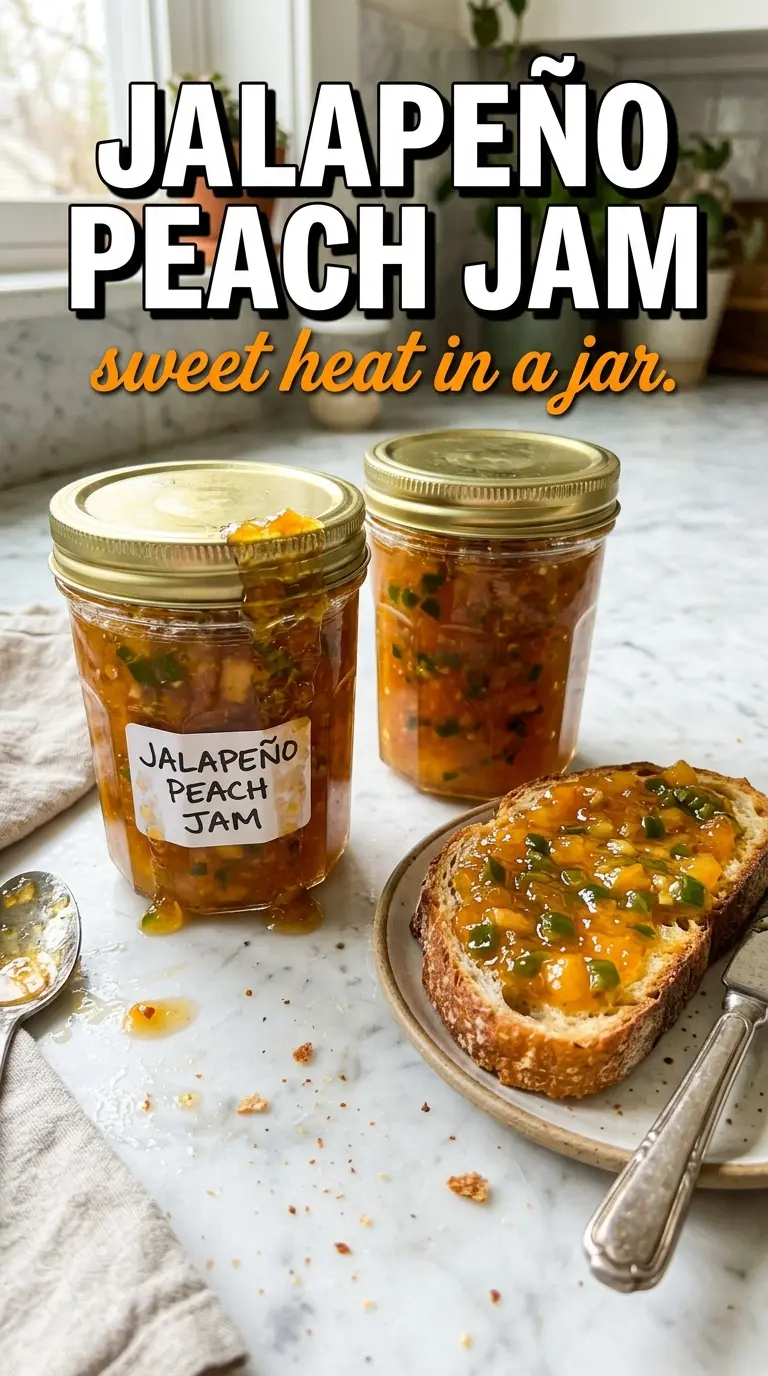
The peaches are the body of the jam, so ripe fruit matters here. Under-ripe peaches give you less perfume and a firmer, flatter finish. You want fruit that yields a little when pressed and smells sweet at the stem end. If your peaches are soft but not perfect, they still work well once cooked down.
The jalapeños bring more than heat. They add a green, fresh edge that keeps the jam from tasting one-note. Mince them finely so they distribute evenly instead of floating in clumps. If you want a milder jar, remove the seeds and inner ribs. If you want a real kick, leave some seeds in, but don’t overdo it on the first batch unless you already know your heat tolerance.
The sugar does more than sweeten. It helps the jam set and gives the finished texture that glossy, spoonable shine. Cutting it too far changes both the flavor and the structure, which is why this kind of preserved jam is not a good place to improvise heavily. The pectin is the insurance policy. It keeps the jam from needing a long cook, which protects the peach flavor and the bright color.
From Crushed Fruit to Jarred Jam: The Part That Needs Your Attention
Softening the Peaches and Jalapeños
Start with the peaches and jalapeños in a large saucepan over medium heat. As they warm, crush them lightly with a potato masher so you get a mix of small chunks and some puree. That texture is what makes the jam feel homemade instead of syrupy. Don’t mash it smooth; a little fruit texture gives the set something to hold onto.
Bringing in the Pectin
Stir in the lemon juice and pectin until you can’t see any dry spots. The mixture should look evenly combined before it ever boils. If the pectin clumps now, those bits don’t dissolve well later and you can end up with uneven gel pockets. Keep the heat moderate so the fruit doesn’t scorch on the bottom while you’re stirring.
The Sugar Boil
Once the mixture reaches a full boil, add all the sugar at once and stir until it dissolves. Bring it back to a rolling boil that cannot be stirred down, then cook for exactly one minute while stirring constantly. The jam should look slightly thicker and more glossy by the end, with bubbles that are tight and active. If you stop too soon, it stays loose; if you go too long, the texture tightens up too much as it cools.
Jarring and Processing
Ladle the jam into sterilized half-pint jars while it’s still hot, leaving 1/4-inch headspace. Wipe the rims clean before sealing so the lids can grab properly. If you’re water-bath canning it, process for 10 minutes. If you’re skipping the canner, refrigerate it and use it within 3 weeks. The jam will thicken more as it cools, so don’t judge the final set while it’s still steaming in the pot.
How to Adjust the Heat, the Yield, and the Shelf Life
Mild Jalapeño Peach Jam
Remove the seeds and inner ribs from all the jalapeños. You still get the green pepper flavor, but the heat stays in the background and the peaches take the lead. This version works well if you’re planning to serve it on biscuits or with soft cheese.
Hotter Sweet Heat Jam
Leave the seeds in and use the full 4 jalapeños. That gives the jam a sharper finish that stands up better on grilled meats and sharp cheddar. The heat blooms more after it cools, so taste cautiously while it’s hot.
No Water-Bath Option
If you’re not processing the jars, let the jam cool, lid it, and refrigerate it right away. The texture stays excellent, but the shelf life drops to about 3 weeks. That’s the best route when you want a small batch for quick use.
Storage and Reheating
- Refrigerator: Store sealed jars for up to 3 weeks if you skip the boiling water bath. The jam stays glossy and spreadable, though it may firm up a little more after chilling.
- Freezer: Jam freezes well in freezer-safe containers if you leave headspace. Thaw overnight in the refrigerator and stir before using.
- Reheating: Most of the time you don’t need to reheat it. If it thickens more than you want after chilling, let the jar sit at room temperature for 15 to 20 minutes or warm a small amount gently over low heat. High heat can loosen the set and dull the fruit flavor.
Answers to the Questions Worth Asking
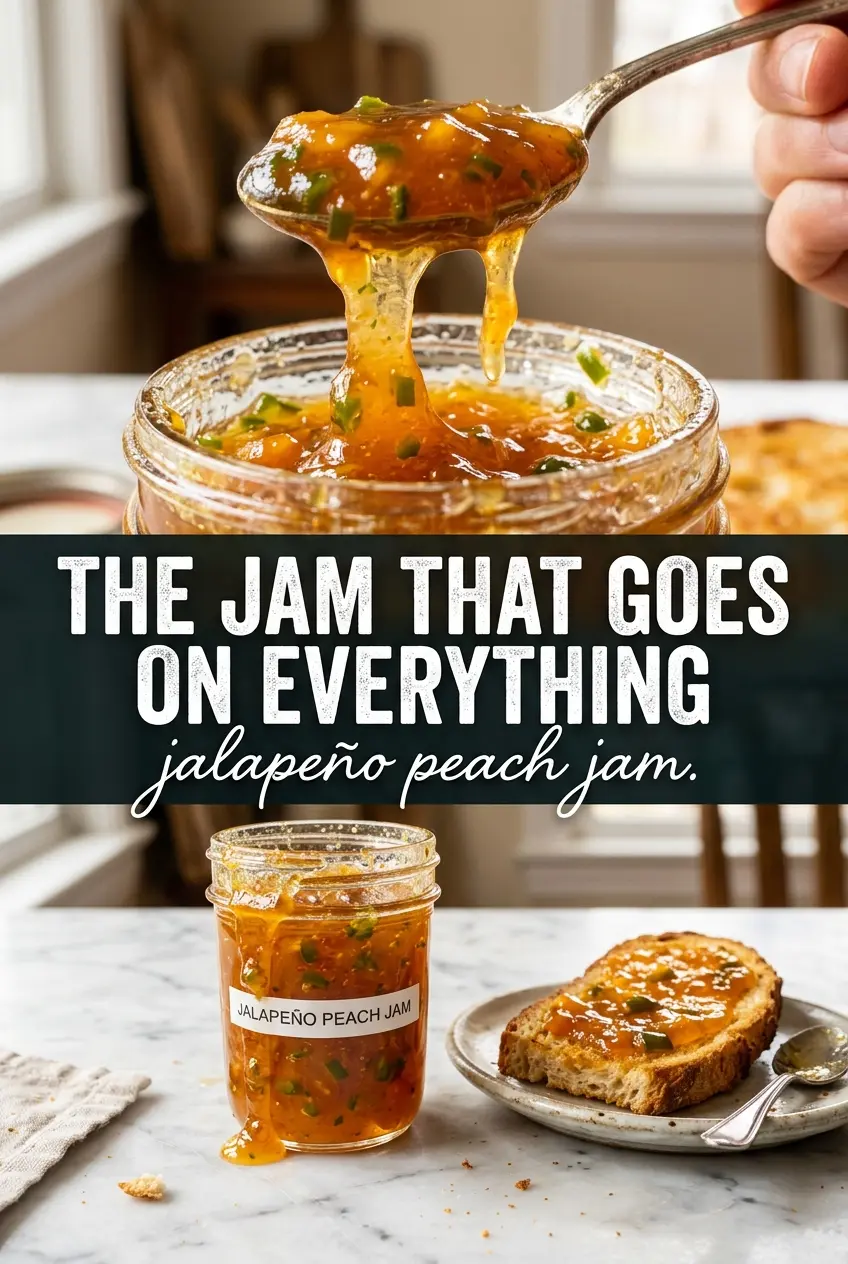
Jalapeño Peach Jam
Ingredients
Equipment
Method
- Combine the diced peaches and minced jalapeños in a large saucepan over medium heat and crush slightly with a potato masher, until the mixture looks juicy and partially broken down (glowing golden-orange potential starts forming).
- Stir in the lemon juice and powdered pectin until fully incorporated and no dry pockets remain, watching the mixture turn slightly thicker and more cohesive.
- Bring the mixture to a full rolling boil over high heat, then add all the sugar at once while the boil continues.
- Return to a full rolling boil that cannot be stirred down and cook for exactly 1 minute, stirring constantly; the jam should look glossy and slightly darker as it thickens.
- Ladle the hot jam into sterilized half-pint jars, leaving 1/4-inch headspace and keeping the surface glossy as it settles.
- Wipe jar rims clean, then seal with lids and rings, pressing to ensure a tight fit.
- Process jars in a boiling water bath for 10 minutes, or skip canning and refrigerate for up to 3 weeks without processing.