Spezzatino settles into the pot with the kind of deep, slow-cooked comfort that makes a bowl feel complete on its own. The beef turns fork-tender, the potatoes soak up the red wine tomato broth, and the peas keep the whole thing from tasting heavy. It’s hearty without being muddy, and the sauce ends up thick enough to cling to bread without needing extra flour or cream.
What makes this version work is the layering. The beef gets browned in batches so it builds a proper base instead of steaming, then the wine goes in while the pan is still hot enough to lift every browned bit from the bottom. That’s where the stew gets its depth. The potatoes are added later so they hold their shape, and the peas go in at the end so they stay sweet and bright instead of turning dull and soft.
Below, you’ll find the little details that keep the sauce balanced and the beef tender, plus a few useful ways to adapt the pot if you need a swap or want to make it ahead.
The beef came out fall-apart tender and the sauce was thick enough to coat the potatoes without turning soupy. I loved that the peas stayed bright at the end instead of getting mushy.
Save this Spezzatino recipe for the kind of beef stew that turns red wine, rosemary, and potatoes into one pot of real comfort.
The Reason the Beef Stays Tender Instead of Tightening Up
The long simmer matters, but the order matters just as much. Browning the beef in batches gives you a darker, richer base, and it also keeps the pot temperature from dropping so far that the meat starts steaming in its own juices. Once that happens, you lose the browned edges that give the stew its depth.
The other place people run into trouble is the wine. It needs to cook down before the tomatoes and broth go in, or the finished stew can taste sharp and thin. Reducing it by half concentrates the flavor and lifts the browned bits from the pot, which is where the sauce gets its backbone.
What Each Ingredient Is Actually Doing in This Stew
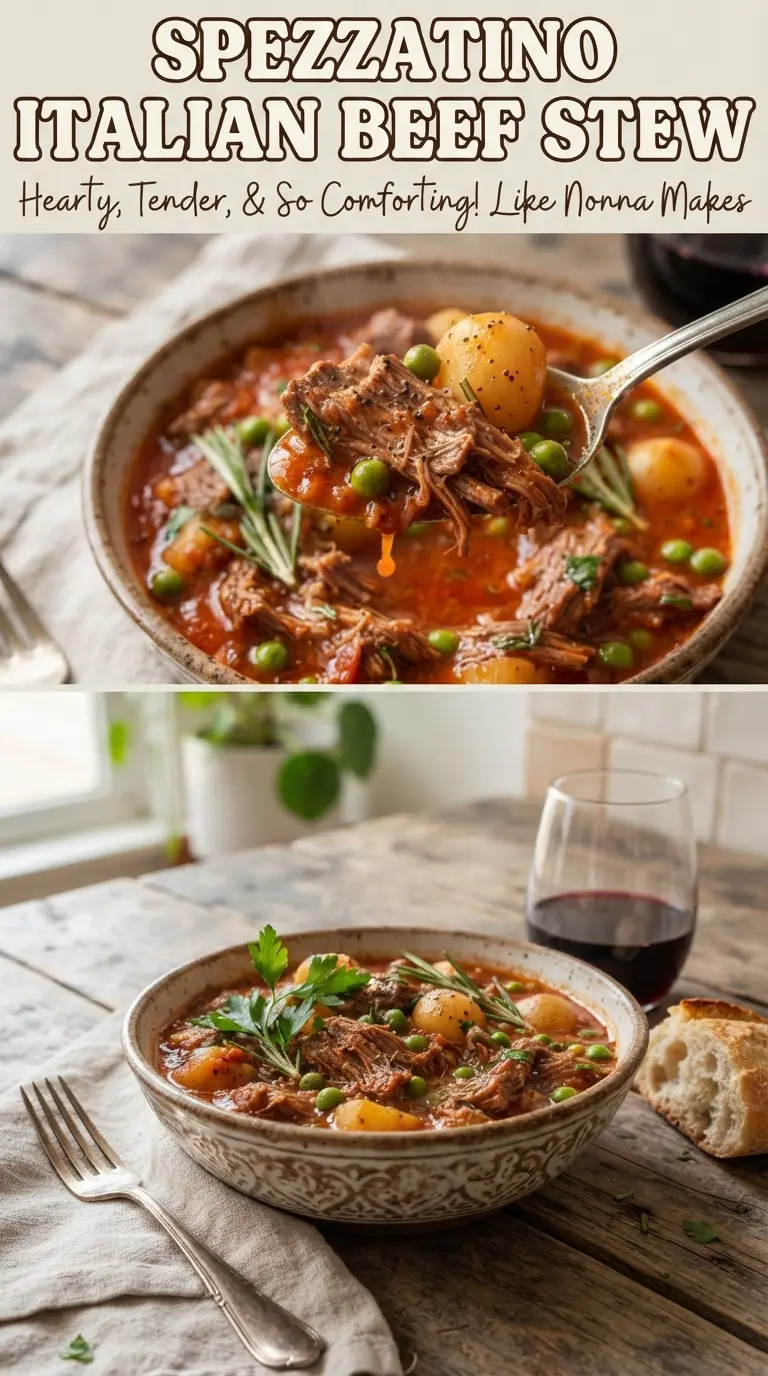
- Beef chuck — This is the cut that turns silky after a long simmer. Leaner beef will dry out before the stew gets properly tender, so chuck is the one ingredient I wouldn’t swap lightly.
- Dry red wine — Use something drinkable, not fancy. It adds acidity and depth, and the pot needs that brightness to balance the tomatoes and beef.
- Crushed tomatoes — They give the stew body without making it chunky or overly thick. If you use diced tomatoes, the broth stays looser and the sauce won’t cling the same way.
- Potatoes — Waxy or all-purpose potatoes hold together best here. Russets will break down more and give you a softer, thicker stew, which can work if that’s what you want.
- Fresh rosemary and bay leaves — These are doing the quiet work in the background. Dried rosemary can stand in, but use less because it gets louder as it simmers.
Building the Pot in the Right Order
Browning the Beef First
Season the beef, dust it with flour, and brown it in batches in hot olive oil. The flour helps the surface take on a deeper color and gives the broth a little body later, but too much at once will clump in the pan and turn gummy. Leave space between the pieces so they sear instead of steam. If the pan starts crowding, the meat turns gray and the stew loses that roasted flavor.
Softening the Aromatics
Cook the onion, carrot, and celery until they go soft and slightly sweet, about 8 minutes. You’re looking for the onions to turn translucent and the carrots to lose their raw edge, not for the vegetables to brown hard. Add the garlic only at the end for a minute, because it burns fast and turns bitter long before the rest of the base is ready.
Reducing the Wine and Starting the Braise
Pour in the red wine and scrape the bottom of the pot while it simmers. Let it reduce by half before adding the tomatoes and broth; if it smells sharp and boozy, it hasn’t cooked down enough yet. That reduction is what keeps the finished stew from tasting flat. Once the liquid goes in, add the rosemary, bay leaves, and beef, then cover and let it simmer gently until the meat starts to soften.
Adding the Potatoes and Finishing with Peas
Stir in the potatoes only after the beef has already had its long simmer. If they go in too early, they’ll break apart and cloud the broth before the meat is done. After about 40 minutes, they should be tender at the edges but still holding their shape. The peas go in for the last 5 minutes, just long enough to warm through and stay bright green.
How to Adapt Spezzatino When You Need a Different Path
Dairy-Free, Naturally
This stew is already dairy-free, so there’s nothing to work around. That makes it a good choice when you want something rich without cream or butter getting in the way of the broth.
Make It Thicker and More Rustic
Mash a few potato cubes against the side of the pot near the end of cooking. That gives the broth a more rustic body without adding extra flour or changing the flavor. It’s the easiest way to get a stew-like sauce that clings to bread.
Swap the Wine If You Need To
If you don’t cook with wine, use extra beef broth plus 1 tablespoon red wine vinegar or a squeeze of lemon at the end. You’ll lose some of the depth that the wine brings, but the acid keeps the stew from tasting heavy.
Storage and Reheating
- Refrigerator: Store for up to 4 days. The flavor gets even deeper the next day, and the sauce thickens as it sits.
- Freezer: Freezes well for up to 3 months. Cool it completely, portion it into airtight containers, and thaw overnight in the fridge before reheating.
- Reheating: Warm it gently on the stove over low heat with a splash of broth or water if needed. Don’t boil it hard, or the potatoes can start breaking apart and the beef can tighten up.
Answers to the Questions Worth Asking
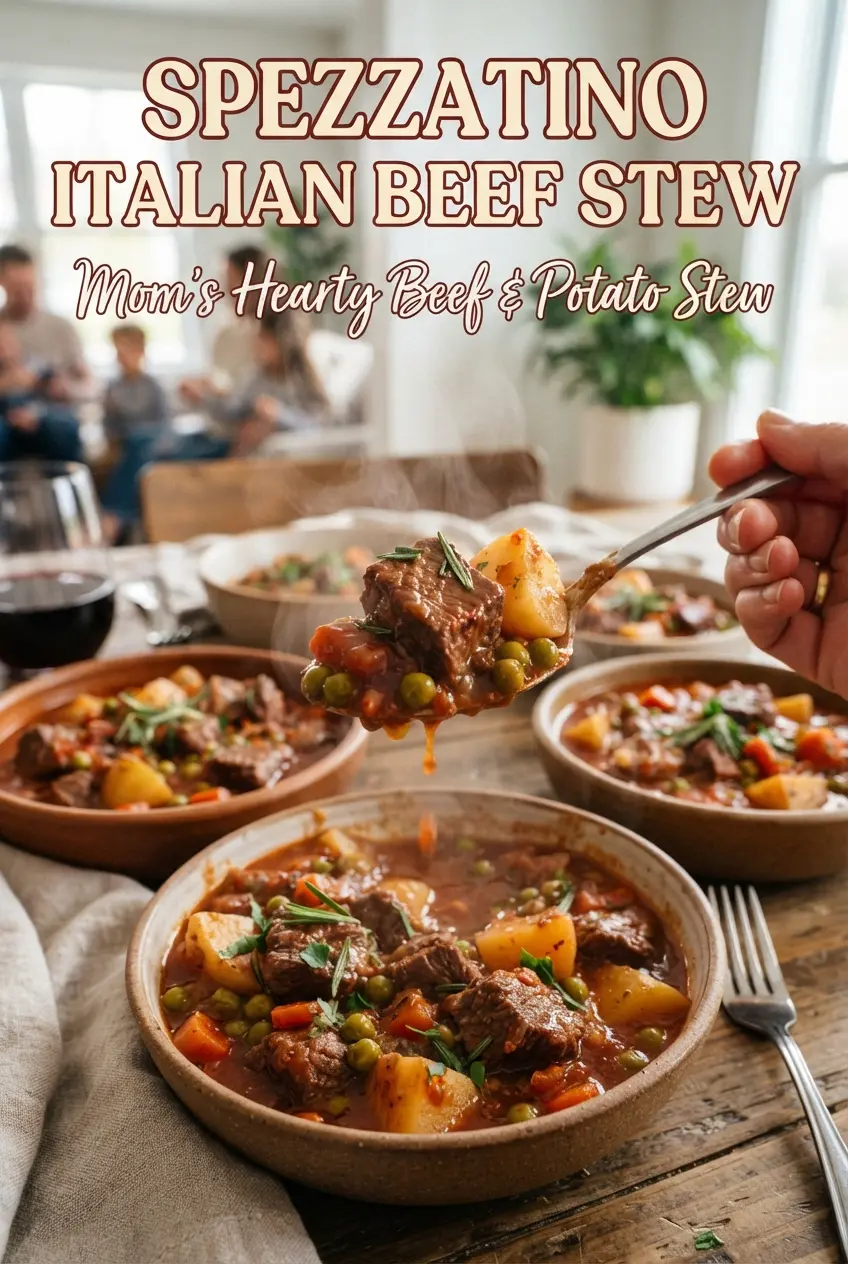
Italian Beef Stew (Spezzatino)
Ingredients
Equipment
Method
- Season the beef chuck with salt and black pepper, then dust with all-purpose flour. Brown the beef in batches in olive oil over medium-high heat until well browned, turning as needed.
- Keep the browned beef on the side while you brown the next batch. Avoid crowding so the meat sears instead of steams.
- In the same Dutch oven, cook the onion, carrot, and celery for 8 minutes over medium heat until soft. Add the garlic and cook for 1 minute, stirring so it doesn’t brown.
- Pour in the dry red wine and simmer until reduced by half, scraping the bottom of the pot to release browned bits. Continue simmering until you have a more concentrated wine layer.
- Add the crushed tomatoes, beef broth, fresh rosemary, bay leaves, and the browned beef. Cover and simmer for 1 1/2 hours, keeping a steady gentle bubble.
- Check occasionally and stir to prevent sticking on the bottom. The beef should be noticeably tender as the liquid thickens.
- Add the cubed potatoes and simmer for 40 minutes until tender. Stir gently so the potatoes cook evenly and don’t break apart.
- Stir in the frozen peas and simmer for the last 5 minutes until heated through. Keep the stew at a gentle simmer so the peas stay bright.
- Remove the fresh rosemary and bay leaves from the stew. Serve hot with crusty Italian bread.