Kokkinisto turns a plain cut of beef into something deep, rich, and spoon-tender, with a tomato sauce that tastes slow-cooked in the best way. The beef holds onto its shape while the sauce tightens around it, and the cinnamon and allspice give the whole pot that unmistakable Greek warmth without turning it sweet or heavy.
What makes this version work is the layering. The beef gets a hard sear first, the tomato paste cooks long enough to lose its raw edge, and the wine loosens the browned bits before the tomatoes go in. That order matters. It builds a sauce with body instead of one that tastes flat or watery, and it keeps the stew from tasting like beef floating in tomato soup.
Below you’ll find the small decisions that make a big difference here, from handling the spices to knowing exactly when the beef is done. There’s also a note on serving it over orzo or potatoes, because the right base changes how the sauce lands on the plate.
The sauce turned glossy and thick after the full simmer, and the beef was fork-tender without falling apart. I served it over orzo with feta and my husband went back for seconds before I even sat down.
Kokkinisto Greek Beef Stew with cinnamon-spiced tomato sauce is one to keep for when you want a slow-simmered dinner that tastes even better the next day.
The Sear and Simmer Balance That Keeps Kokkinisto Rich, Not Flat
The biggest mistake with a stew like this is rushing past the browning step. Beef chuck needs time in the pan to develop actual color, not just turn gray on the surface, because that browned crust is what gives the sauce depth once the liquid goes in. If you crowd the pot, the meat steams and the whole dish tastes thinner.
The simmer matters just as much. Kokkinisto should move from a lively simmer to a gentle, steady bubble, with the lid on so the beef softens without the sauce reducing too fast. If the liquid boils hard, the meat tightens and the tomatoes can turn harsh instead of mellowing into a round, rich sauce.
What the Cinnamon, Wine, and Tomato Paste Are Doing Here
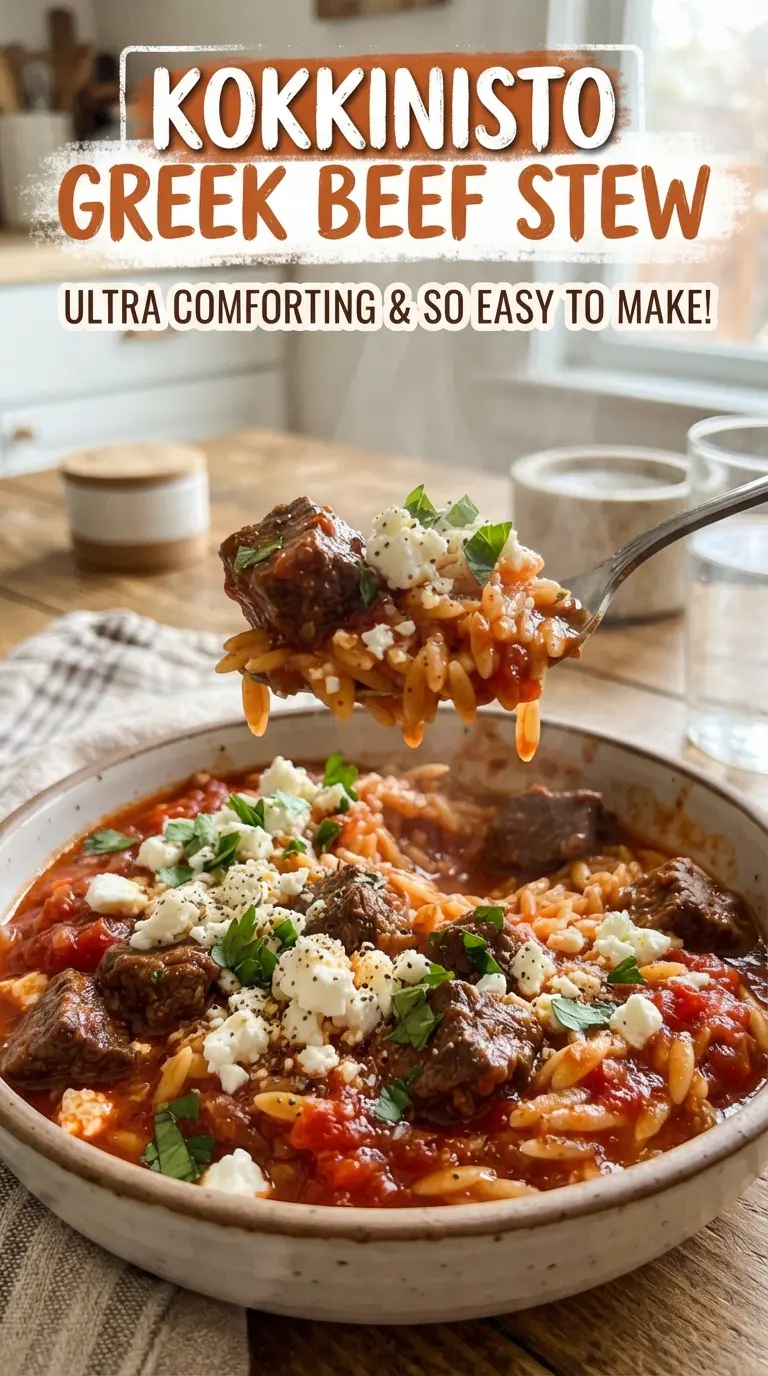
- Beef chuck — This is the cut that pays off after a long simmer. It has enough connective tissue to become silky and tender, and leaner beef won’t give you the same texture. Cut it into larger chunks so it holds together through the full cook.
- Tomato paste — This is where the sauce starts tasting concentrated instead of just tomatoey. Cooking it for a minute with the onions takes away the raw edge and deepens the color. Don’t skip that brief cook or the finished stew can taste sharp.
- Dry red wine — The wine lifts the browned bits from the pan and adds a quiet acidity that keeps the sauce from feeling heavy. Use something you’d actually drink, but it doesn’t need to be expensive. If you want to skip alcohol, use extra water plus a small splash of red wine vinegar at the end for brightness.
- Cinnamon stick, allspice, and bay leaves — These are the Greek signature here. Whole spices give a layered warmth without grit, and they’re easy to remove before serving. Ground cinnamon can work in a pinch, but the flavor is less clean and more likely to dominate.
- Crushed tomatoes — Choose a good-quality can because the sauce is built around them. If your tomatoes taste bright and balanced out of the can, the stew will taste balanced at the end. If they’re overly acidic, the teaspoon of sugar smooths that out without making the dish sweet.
Building the Pot So the Sauce Thickens on Its Own
Brown the Beef in Real Batches
Heat the olive oil until it shimmers, then add the beef in a single layer with space between the pieces. Let each side sit until it releases with a deep brown crust, then move it out and continue in batches. If the meat sticks badly at first, it usually just needs another minute; tearing it away too soon steals the color that gives the stew its base.
Cook the Onion Base Until It Turns Sweet
Once the beef is out, add the onions to the same pot and let them soften in the beef drippings and oil. They should go translucent and slightly golden at the edges, not browned hard. Stir in the garlic and tomato paste for just a minute so the garlic perfumes the pot and the paste loses its raw, tinny taste.
Scrape, Simmer, and Let the Pot Work
Pour in the wine and scrape the bottom while it bubbles for a couple of minutes. Those stuck-on brown bits dissolve into the sauce and carry the sear through the whole dish. Add the tomatoes, water, spices, sugar, and beef, then cover and keep the heat low enough that the surface only trembles. The stew is ready when the beef pulls apart with a fork and the sauce clings to the meat instead of pooling around it.
How to Adapt Kokkinisto for Different Tables and Leftovers
Serve It Over Orzo for the Classic Finish
Orzo catches the sauce in every spoonful and makes the stew feel complete without needing anything else. Cook it separately so it stays light and doesn’t drink up all the sauce in the pot. If you want a heartier plate, spoon the stew over potatoes instead; they hold the sauce a little differently and make the dish more rustic.
Make It Dairy-Free Without Losing the Stew
The stew itself is naturally dairy-free. Skip the feta garnish and finish with parsley, a drizzle of good olive oil, or a squeeze of lemon if you want more brightness. That keeps the flavor clean and still gives the bowl enough lift at the end.
Swap the Wine If You Don’t Cook With Alcohol
Use an equal amount of beef broth or water, then add 1 to 2 teaspoons of red wine vinegar at the end to replace some of the lift the wine would have brought. You won’t get the same depth, but the stew still lands in the right place if you keep the long simmer and don’t skip the tomato paste step.
Storage and Reheating
- Refrigerator: Keep in an airtight container for up to 4 days. The sauce thickens as it chills, and the flavor gets deeper by the next day.
- Freezer: Freezes well for up to 3 months. Cool it completely first, then freeze in portions so the beef and sauce thaw evenly.
- Reheating: Reheat gently on the stove over low heat with a splash of water if needed. High heat can make the beef tighten and can scorch the tomato sauce before the center is hot.
Answers to the Questions Worth Asking
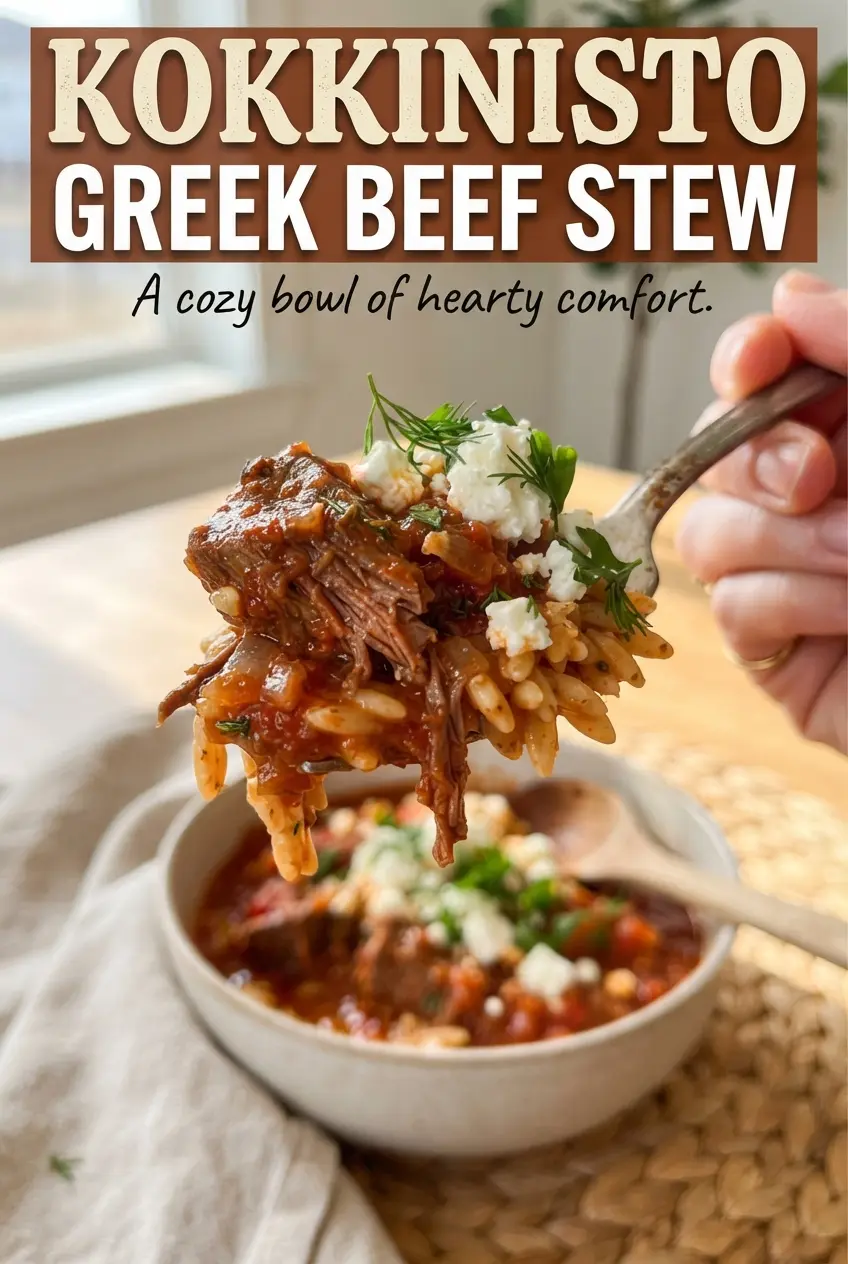
Kokkinisto Greek Beef Stew
Ingredients
Equipment
Method
- Season the beef chuck cubes with salt and black pepper. Brown them in batches in the olive oil in a Dutch oven until well browned, then set aside.
- After all beef is browned, keep the pot’s browned bits in the bottom. Return the beef to the pot when you start building the sauce.
- Cook the onions for 6 minutes until soft in the same Dutch oven. Add the garlic and tomato paste and cook for 1 minute.
- Pour in the dry red wine and simmer for 2 minutes, scraping the bottom to loosen browned bits.
- Add the crushed tomatoes, water, cinnamon stick, allspice berries, bay leaves, sugar, and the beef to the pot. Cover and simmer at a steady low simmer for 1 1/2-2 hours until the beef is very tender and the sauce is thick.
- Remove the whole spices (cinnamon stick, allspice berries, and bay leaves) from the stew. Serve the stew over cooked orzo or potatoes with feta and parsley on top.