Hungarian goulash rewards patience with beef that turns spoon-tender in a paprika-rich broth that tastes deeper than the ingredient list suggests. The onions melt into the pot, the sweet paprika gives the stew its brick-red color, and the long simmer pulls everything together into something hearty without becoming heavy. It’s the kind of meal that fills the kitchen with the smell of dinner long before it hits the table.
The key is treating the paprika like the fragile spice it is. It goes in off the heat, after the onions are softened, so it blooms in the fat instead of turning bitter. That one move keeps the flavor round and sweet. Browning the beef lightly in the seasoned onion base, then simmering it low and slow, gives you a broth that tastes balanced and the kind of tender chunks that hold their shape.
Below you’ll find the timing that keeps the vegetables from collapsing, the ingredient swaps that still respect the dish, and a few fixes for the most common goulash mistakes. If you’ve ever had a flat or muddy version, this one should feel like a correction.
The paprika flavor came through clean and the beef got fall-apart tender without the potatoes turning mushy. I followed the off-heat step for the spices and the broth stayed rich instead of bitter.
Save this paprika-rich Hungarian goulash for the night you want tender beef, sweet peppers, and a slow-simmered broth that tastes like it took all day.
The Paprika Can't Go In Over Heat If You Want Clean Flavor
Sweet Hungarian paprika burns fast, and once it does, the stew tastes dusty and sharp instead of round and savory. That's why the onions get fully softened first, then the pot comes off the burner before the paprika and caraway go in. The fat coats the spice and wakes it up without scorching it.
The other place this dish goes wrong is at the simmer. A hard boil tightens the beef and muddies the broth. Keep it at a low bubble, with just the occasional lazy burp breaking the surface, and the meat will relax into tenderness instead of seizing up.
What the Onion Base, Paprika, and Broth Are Doing Here

- Beef chuck — This is the cut that pays off after the long simmer. It has enough connective tissue to turn silky and tender without falling apart into shreds. Lean stew meat cooks drier and less flavorful here.
- Sweet Hungarian paprika — This is the backbone of the dish, so use fresh paprika if yours has been sitting in the cabinet for years. The sweet kind gives the stew its color and warmth without heat. Smoked paprika changes the profile and can make it taste more like a different dish.
- Onions — They don't just add flavor; they thicken the broth as they cook down. Dice them fine and give them the full 10 minutes so they turn golden and soft instead of staying sharp.
- Lard or oil — Lard gives the most traditional depth, but vegetable oil works fine if that's what you have. The important part is enough fat to bloom the paprika off the heat and help the onions soften properly.
- Potatoes and carrots — They go in later so they hold their shape. Add them too early and they disappear into the stew before the beef is done.
Building the Stew in the Right Order
Softening the Onions Until They Turn Sweet
Start with the onions in the fat and cook them slowly until they're golden and soft, not browned and crisp at the edges. You want them to collapse into the base of the stew, because that's what gives goulash its body. If the heat is too high, they color too fast and never get sweet enough, which leaves the finished broth thin.
Blooming the Paprika Off the Heat
Pull the pot off the burner before adding the paprika and caraway. Stir constantly for a few seconds so the spices hit the hot fat, not direct flame, and turn fragrant instead of bitter. This is the move that separates a rich goulash from one that tastes burnt on the back end.
Simmering the Beef Until It Gives Way
Once the beef is coated and the broth goes in, bring the pot back to a gentle simmer and cover it. The goal is steady, low heat that softens the chuck without boiling it ragged. If the liquid is raging, the meat tightens and the broth gets cloudy, so keep the heat just high enough to maintain a calm bubble.
Adding the Vegetables at the End of the Long Cook
Potatoes and carrots need less time than the beef, which is why they go in after the first hour. They should finish tender but still hold their shape. If they're added too soon, they break down and take the stew from hearty to heavy.
Make It With Pork Shoulder Instead of Beef
Pork shoulder works if you want a softer, slightly sweeter stew, but it won't taste as deep as beef chuck. Keep the same simmer time and treat it the same way, watching for the meat to turn tender rather than relying on the clock alone.
Make It Dairy-Free Without Losing the Finish
The stew itself is already dairy-free, so just skip the sour cream garnish or use an unsweetened dairy-free version. You'll still get the same paprika-rich broth and tender vegetables, just with a cleaner finish on top.
Thicken It Slightly for a Heavier Bowl
For a thicker stew, simmer uncovered for the last 15 to 20 minutes so some of the broth reduces. Don't add flour unless you want a heavier, gravy-like texture, because the onions and potatoes already give the broth enough body for a traditional goulash.
Use Sweet Potato Only if You Want a Different Dish
Sweet potatoes will cook through, but they bring a sweeter flavor and softer texture that pulls the dish away from classic Hungarian goulash. If you use them, cut them larger and add them near the end so they don't dissolve.
Storage and Reheating
- Refrigerator: Keeps for 4 days in a covered container. The broth thickens as it chills, and the flavors deepen overnight.
- Freezer: Freezes well for up to 3 months. Cool it completely first, then pack it in airtight containers with a little headspace. Potatoes soften a bit after freezing, but the stew still holds up.
- Reheating: Warm it gently on the stove over medium-low heat until hot all the way through. Don't boil it hard or the beef can toughen and the potatoes can break apart.
Answers to the Questions Worth Asking
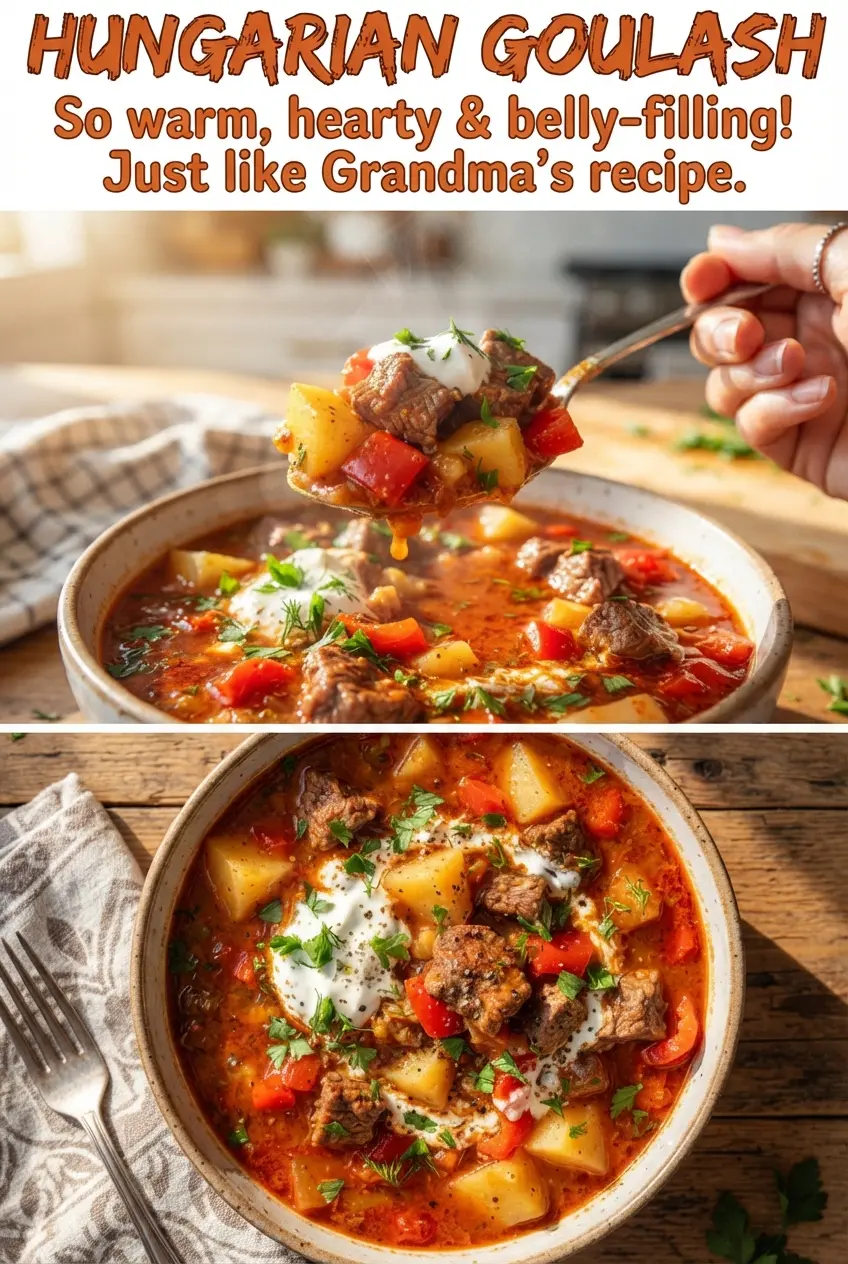
Hungarian Goulash
Ingredients
Equipment
Method
- Heat lard or vegetable oil in a Dutch oven and cook the diced onions for 10 minutes until golden, stirring occasionally. Keep the heat at medium so the onions soften and take on color without scorching.
- Add the minced garlic and cook for 1 minute, stirring constantly, until fragrant. The mixture should look glossy and just lightly golden.
- Remove the pot from the heat and stir in the sweet Hungarian paprika and caraway seeds so the paprika doesn't burn. The spices should smell toasted but not darkened.
- Add the beef chuck cubes and stir to coat them in the paprika-onion mixture. Return to medium heat and cook for 5 minutes, until the outside is browned.
- Stir in the tomato paste, diced red bell pepper, diced green bell pepper, beef broth, salt, black pepper, and bay leaf. Scrape up any browned bits on the bottom for extra flavor.
- Cover and simmer for 1 hour over gentle heat. Look for steady bubbling and a sauce that thickens and turns deep red.
- Add the cubed potatoes and sliced carrots, then cover again and simmer for 45 minutes until the beef and potatoes are tender. You should be able to easily pierce potatoes with a fork.
- Remove the bay leaf before serving. Taste the goulash and adjust seasoning if needed.
- Serve the Hungarian goulash hot with sour cream on top. The sour cream should soften the paprika bite and create a creamy contrast.