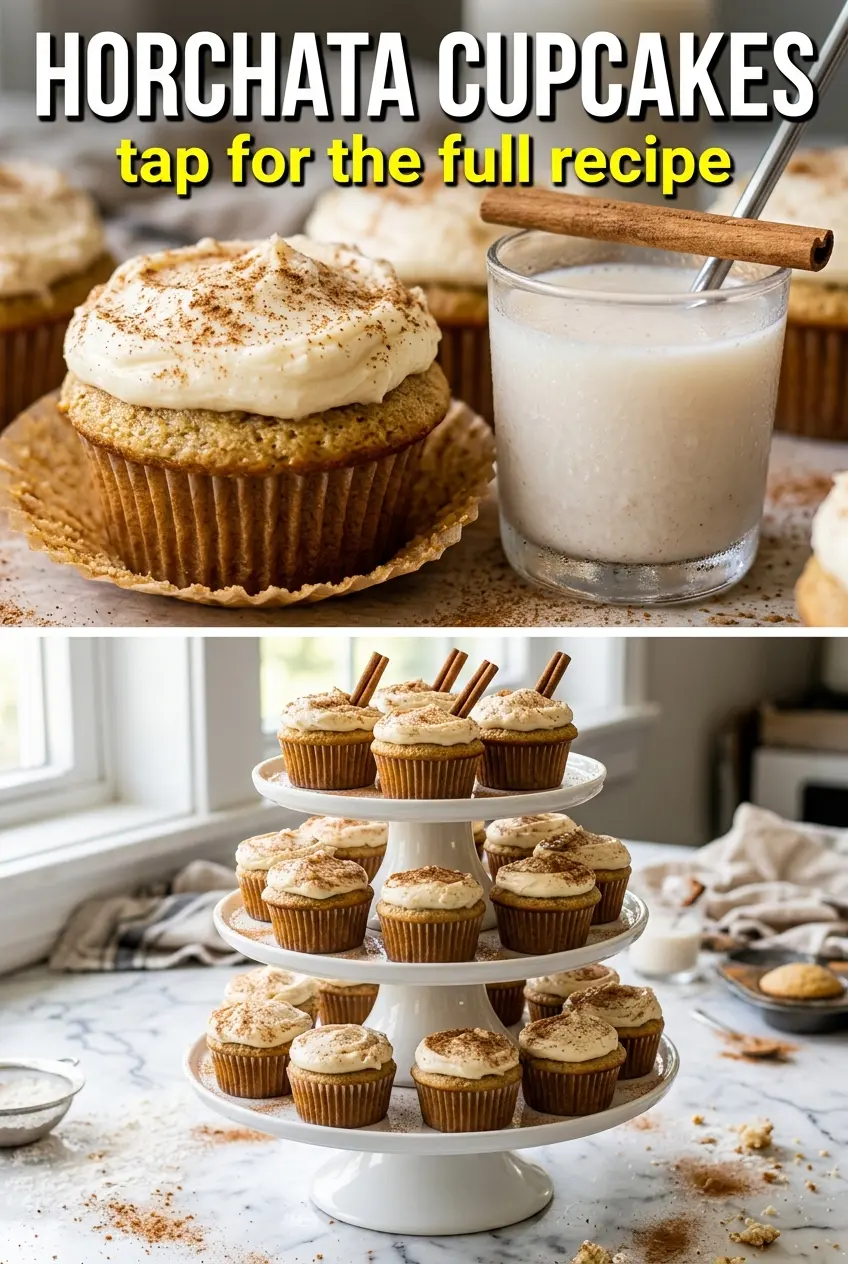
Cinnamon-scented cupcakes with a soft, tender crumb and a tangy horchata cream cheese buttercream land right in the middle of cozy and festive. The cake itself tastes like the best part of horchata, with warm spice, vanilla, and a hint of almond, while the frosting brings that cool, creamy finish that keeps each bite from feeling heavy. The cinnamon sugar rim and white chocolate drizzle turn them into a cupcake that looks as good as it tastes without asking for fussy decorating work.
What makes these work is balance. Horchata brings both moisture and flavor, but the batter still needs enough structure to hold up to the cream cheese frosting, so the flour is mixed just until combined and the cupcakes stay soft instead of dense. The almond extract is subtle, not dominant, but it gives the cupcakes that familiar horchata note that plain vanilla alone can’t quite deliver. A little clove goes a long way here, so the spice reads warm rather than sharp.
Below you’ll find the parts that matter most: how to keep the cupcakes fluffy, how to get the frosting smooth instead of loose, and how to finish them so the cinnamon sugar actually sticks.
The cupcakes came out super soft and the horchata flavor was there without being too sweet. I loved that the frosting held its shape and the cinnamon sugar on the rim stayed crisp instead of melting right away.
Keep these horchata cupcakes in your back pocket for a dessert that brings cinnamon, cream cheese frosting, and a little white chocolate flair together beautifully.
The Secret to Keeping Horchata Flavor Soft Instead of Muddy
Horchata cupcakes can go sideways when the spice gets overloaded or the crumb turns heavy from too much liquid. The trick is to treat horchata like a flavoring and a moisture source, not a substitute for every wet ingredient in the bowl. That keeps the cupcake tasting like horchata without losing the light, cakey texture people want from a cupcake.
The other thing that matters here is restraint with the cloves and almond extract. Clove gets bitter fast if you use too much, and almond can take over if it isn’t backed up by vanilla. Together, though, they give the batter that familiar rice-and-cinnamon drink character that makes these cupcakes taste deliberate instead of just spiced.
What Each Ingredient Is Actually Doing in These Cupcakes
- All-purpose flour — This gives the cupcakes enough structure to hold a soft frosting without sinking. Cake flour will make them a touch finer, but all-purpose keeps the crumb sturdy enough for the creamy topping.
- Horchata — This is the flavor anchor and part of the moisture in both the cake and the frosting. If your horchata is very sweet, use it as-is and keep the powdered sugar in check so the frosting doesn’t go cloying.
- Mexican vanilla extract — This brings warmth and depth that regular vanilla can miss. If you only have standard vanilla, use it, but don’t skip it; the cupcakes need that rounded sweet note to support the cinnamon.
- Almond extract — Just a small amount makes the batter taste more like horchata. Too much will push the cupcakes into marzipan territory, so measure carefully.
- Cream cheese — This is what makes the frosting tangy enough to cut through the sweetness. Use full-fat cream cheese and let it soften fully or the frosting will stay lumpy no matter how long you beat it.
- Cinnamon sugar — This finishes the cupcakes with texture and a little sparkle. Dip the frosted tops while the frosting is still tacky so the rim sticks cleanly.
The Mixing Order That Keeps the Crumb Tender
Whisk the dry ingredients first
Whisk the flour, baking powder, salt, cinnamon, and cloves together until the spices disappear evenly into the flour. That keeps a bite from hitting a pocket of clove, which can make one cupcake taste harsh while the rest are fine. If the cinnamon isn’t fully distributed now, it will streak through the batter later instead of blending into the crumb.
Cream the butter and sugar until it looks pale
Beat the softened butter and sugar until the mixture turns light in color and looks fluffy at the edges of the bowl. That step traps air, which is part of what gives the cupcakes lift without making them dry. If the butter is too cold, the mixture stays dense and the cupcakes bake up tight.
Alternate the flour and horchata
Add the flour mixture in batches, alternating with the horchata and beginning and ending with flour. That pattern keeps the batter from breaking or curdling and prevents overmixing, which is the fastest route to a rubbery cupcake. Stop as soon as the last streaks of flour disappear; a few tiny lumps are fine.
Frost only after the cupcakes are completely cool
Beat the cream cheese and butter until smooth before adding the powdered sugar, then add the horchata at the end. If the cupcakes are even slightly warm, the frosting softens and slides off instead of holding a neat swirl. Once piped, dip the tops in cinnamon sugar right away, then drizzle with melted white chocolate after the coating has set enough to grip.
How to Adapt These Horchata Cupcakes for Different Kitchens
Dairy-Free Version
Use a dairy-free butter substitute in both the cupcakes and frosting, and swap in a plant-based cream cheese that actually firms up when chilled. The texture will be a little softer and the frosting a little less tangy, but the horchata flavor still comes through. Skip the white chocolate drizzle unless you have a dairy-free version that melts smoothly.
Gluten-Free Swap
A good 1:1 gluten-free baking blend works here if it includes xanthan gum. The cupcakes will be a little more delicate, so let them cool fully in the pan before moving them. That’s the difference between a cupcake that holds together and one that crumbles as soon as you lift it.
Less Sweet, More Tangy Frosting
Cut the powdered sugar back by 1/2 cup if you want the frosting to lean more cream-cheese-forward. It won’t pipe as high, but it tastes less candy-sweet and lets the cinnamon sugar rim stand out more clearly. If it gets too loose, chill it for 15 minutes before frosting.
Storage and Reheating
- Refrigerator: Store in an airtight container for up to 4 days. The frosting stays best chilled, though the cake will soften a bit as it sits.
- Freezer: Freeze unfrosted cupcakes for up to 2 months. Wrap them well and thaw at room temperature before frosting; cream cheese frosting doesn’t freeze as neatly on decorated cupcakes.
- Reheating: These are best served at cool room temperature, not warmed. If they’ve been refrigerated, let them sit out for 20 to 30 minutes so the frosting loses its chill and the cupcake texture turns tender again.
Answers to the Questions Worth Asking
Horchata Cupcakes with Horchata Cream Cheese Buttercream
Ingredients
Equipment
Method
- Preheat the oven to 350°F and line a muffin tin with cupcake liners; set aside for easy filling.
- Whisk all-purpose flour, baking powder, salt, cinnamon, and ground cloves together until evenly speckled.
- Beat butter and granulated sugar until light and fluffy, about 2–3 minutes, then add eggs one at a time.
- Alternate adding the flour mixture and horchata to the batter, beginning and ending with flour, and stir just until combined so the batter stays thick.
- Stir in Mexican vanilla extract and almond extract until smooth and fragrant.
- Divide batter evenly among liners, about 3/4 full each, so the cupcakes bake with even domes.
- Bake at 350°F for 18–20 minutes until a toothpick comes out clean and the tops spring back lightly.
- Cool the cupcakes completely, about 30 minutes, before frosting so the frosting doesn’t melt.
- Beat cream cheese and butter until smooth, scraping the bowl as needed for a lump-free base.
- Gradually add powdered sugar and beat until thick and cohesive.
- Beat in horchata until light and fluffy with a pipeable consistency.
- Pipe frosting onto the cooled cupcakes to form a tall peak using even pressure.
- Dip the cupcake tops into cinnamon sugar for the rim, then let any excess fall back into the dish.
- Drizzle white chocolate over the frosted cupcakes in thin lines for a glossy finish.