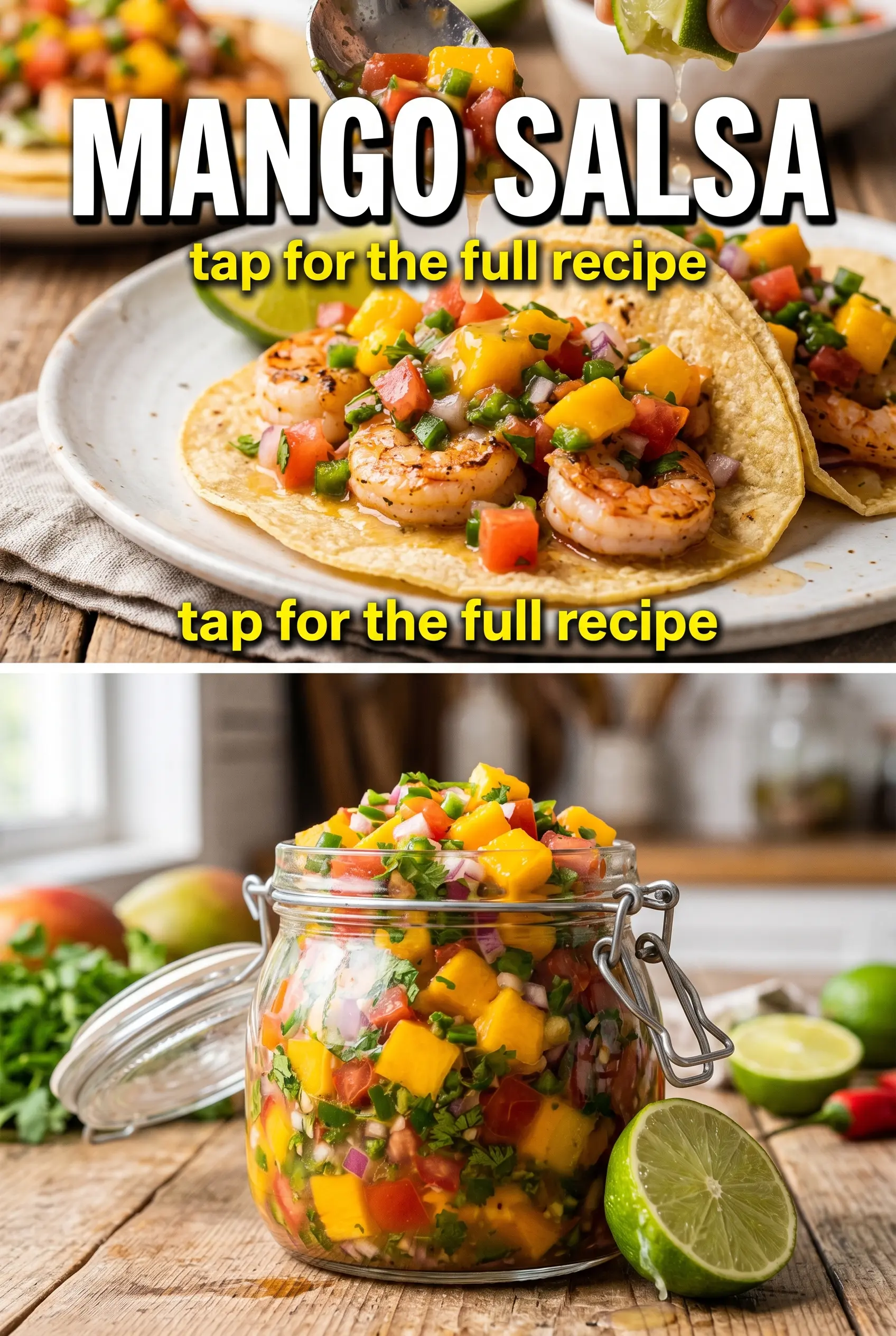
Bright, juicy mango salsa lands with that rare combination of sweet, sharp, and just enough heat to keep you going back for another spoonful. The mango stays in clean little cubes, the red onion gives it bite, and the lime pulls everything into focus without turning it watery. It’s the kind of condiment that wakes up plain grilled chicken, chips, fish tacos, or a bowl of rice without any extra effort.
What makes this version work is restraint. The mango gets diced small enough to scoop easily, but not so small that it turns mushy when you stir in the lime and salt. A short rest in the fridge matters here, because the onion softens, the jalapeño spreads its heat, and the juices from the fruit and lime turn into a light, glossy dressing at the bottom of the bowl.
Below, you’ll find the little details that keep the salsa fresh instead of sloppy, plus a few smart swaps if your mangoes are extra sweet, your jalapeño is fierce, or you need a milder version for a crowd.
I let it sit the full 30 minutes and the lime pulled out just enough juice to make it glossy without getting soupy. The mango stayed in little cubes, and it was even better spooned over grilled shrimp the next day.
Sweet mango salsa with lime and jalapeño is the one I keep making for chips, tacos, and grilled fish.
The Reason Mango Salsa Gets Watery Before It Gets Better
The biggest mistake with mango salsa is chopping everything too far ahead and expecting it to stay crisp and separate. Mango gives off juice fast, and once salt hits the bowl, the fruit starts to soften and the onion begins to mellow. That’s good, as long as you give it a short rest and stop there before it turns into fruit salad in a puddle.
Another place people go wrong is overmixing. Mango is tender, especially when it’s ripe, so rough stirring breaks the cubes and makes the salsa look tired before it ever reaches the table. Stir just until everything is coated, then let the refrigerator do the rest.
What Each Ingredient Is Doing in This Bowl
- Ripe mangoes — The mango needs to be ripe for sweetness, but still firm enough to hold its shape. If it gives slightly at the stem and smells fragrant, it’s ready. Overripe mango turns soft fast and won’t give you those clean little cubes that make this salsa scoopable.
- Red onion — This is the sharp, savory edge that keeps the salsa from tasting flat. Finely dicing it matters because big pieces can dominate every bite. If you want a milder onion note, rinse the diced onion under cold water and drain it well before mixing.
- Jalapeño — This adds heat and a little green bitterness. Removing the seeds and ribs tones it down without losing the pepper flavor. If you want more fire, leave some seeds in; if you want it gentle, use half a jalapeño and taste after the rest.
- Fresh cilantro — Cilantro gives the salsa its fresh, herbal finish. Dried cilantro won’t work here because the recipe relies on that bright, just-cut flavor. If cilantro tastes soapy to you, use chopped flat-leaf parsley instead, but expect a different, less citrusy result.
- Fresh lime juice — Bottled lime juice tastes blunt and flat compared with fresh. The real job of the lime is to sharpen the mango and help the salt spread through the bowl. Two tablespoons is enough to wake it up without flooding the fruit.
How to Build Mango Salsa Without Crushing the Fruit
Cut the mango into bite-size pieces
Dice the mango into small, even cubes so each spoonful gets a little sweet fruit, onion, and jalapeño together. Uneven chunks make the salsa awkward to scoop and lead to mushy spots next to firm ones. If the mango is slippery, cut it on a stable board and stop as soon as you hit the skin.
Mix the vegetables and herbs first
Combine the mango, red onion, jalapeño, and cilantro in a medium bowl before adding the lime and salt. That gives you a chance to see the color balance and gauge the jalapeño distribution before the juices start moving. If you add the lime too early and stir hard, the mango softens faster than you want.
Season lightly, then let it rest
Add the lime juice, salt, and black pepper, then fold everything together gently. The bowl should look glossy, not wet, and the mango should still hold its edges. Refrigerate it for at least 30 minutes so the flavors can settle together; that rest is where the salsa turns from chopped fruit into something balanced.
Taste again before serving
Give it one last stir after chilling, then taste a spoonful. Cold salsa needs a little more salt or lime sometimes because chilling dulls flavor slightly. If the bowl tastes flat, add a pinch of salt first before reaching for more lime.
Three Ways to Adjust Mango Salsa for the Table in Front of You
Milder Salsa for Kids or Heat-Sensitive Guests
Use just a little jalapeño and remove every seed and rib. You’ll still get the fresh pepper flavor without the burn, and the mango stays in charge. If you want it even gentler, swap the jalapeño for a few small pieces of finely diced cucumber for crunch instead of heat.
More Heat Without Losing the Sweetness
Leave some jalapeño seeds in, or swap in a serrano if you want the salsa to bite back a little harder. Keep the mango ripe and sweet so the heat has something to balance against. If you go too far with the pepper, add another spoonful of diced mango instead of more lime.
Paleo, Vegan, and Naturally Gluten-Free
This recipe already fits all three, so the main job is serving it with something that matches. It works with grilled fish, chicken, shrimp, roasted sweet potatoes, or straight from the bowl with chips. If you’re pairing it with a richer main dish, keep the salsa bright and minimally salted so it cuts through the fat.
Storage and Reheating
- Refrigerator: Store in an airtight container for up to 2 days. The mango will soften a bit and the bowl will get juicier as it sits.
- Freezer: Don’t freeze it. The mango turns mushy and watery after thawing, and the fresh onion and cilantro lose their snap.
- Reheating: No reheating needed. Serve it cold or cool, and stir before serving so the juices don’t stay pooled at the bottom.
Answers to the Questions Worth Asking
Mango Salsa
Ingredients
Method
- Combine diced mango, red onion, minced jalapeño, and chopped cilantro in a medium bowl.
- Add fresh lime juice, salt, and black pepper, then stir gently to combine and keep mango chunks intact.
- Let the salsa rest at refrigerator temperature (40°F/4°C) for at least 30 minutes to allow flavors to meld.
- Stir again before serving and taste to adjust seasonings if needed.
- Store in an airtight container in the refrigerator for up to two days.