Honey garlic kielbasa with veggies hits the table with caramelized edges, glossy glaze, and the kind of savory-sweet bite that keeps people picking at the pan after dinner is over. The sausage browns in the oven while the vegetables soften and pick up just enough char to taste roasted, not steamed. It’s a straightforward sheet pan dinner, but the payoff tastes bigger than the effort.
The trick here is balance and spacing. Honey gives the glaze its shine, but Dijon and soy sauce keep it from turning flat or cloying. Garlic burns fast at high heat, so it needs the honey and oil around it instead of sitting dry on the pan. A single layer matters too; if the pan is crowded, the vegetables release steam and you lose those browned edges that make this dish worth making.
Below, I’ll walk through the small decisions that keep the sauce glossy instead of sticky, plus a few swaps that still hold up when you need to work with what’s in the fridge.
The sauce coated everything evenly and the kielbasa got those sticky browned edges I was hoping for. I tossed it halfway through like you said and the veggies still kept a little bite instead of turning mushy.
Like this honey garlic kielbasa? Save it to Pinterest for an easy sheet pan dinner with sticky glaze and roasted vegetables.
The Pan Needs Room or the Veggies Steam
Sheet pan dinners only work when the ingredients have space to roast. If the kielbasa and vegetables are piled on top of each other, the moisture trapped between them turns the pan into a steamer, and that means soft zucchini, pale peppers, and sausage that never gets those browned edges. The goal is caramelization, not just heating everything through.
This recipe handles that by using a large baking sheet and a light hand with the sauce. The honey garlic mixture should coat the ingredients, not pool underneath them. Tossing once halfway through helps expose new surfaces to the heat, but don’t overdo it or you’ll knock off the glaze before it can set. When it’s done, the sausage should look lacquered and the vegetables should have browned spots where they touched the pan.
What Each Ingredient Is Actually Doing in This Dish
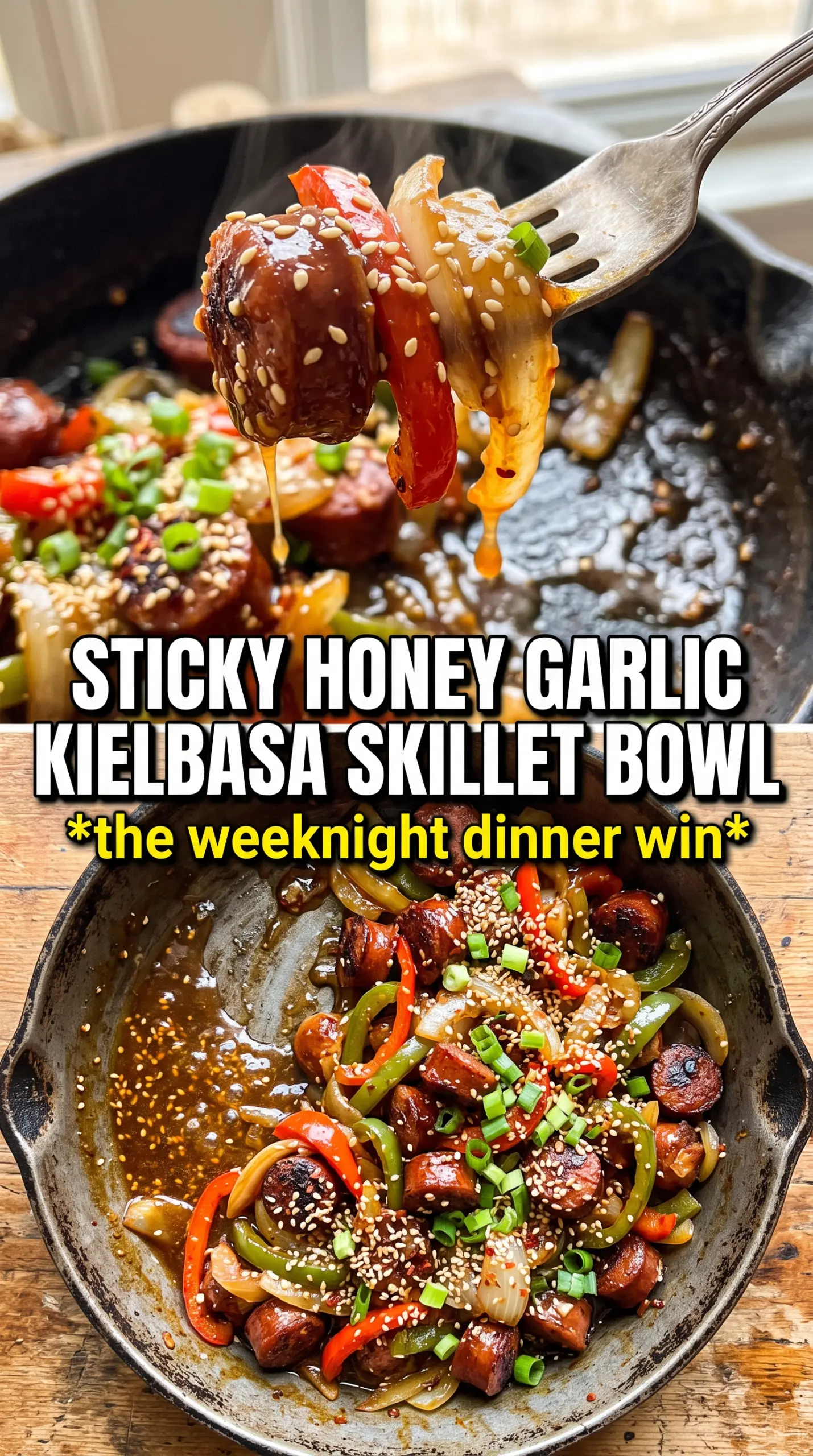
- Kielbasa — This brings the salty, smoky backbone. Pre-cooked kielbasa is ideal because it browns fast and holds its shape; fresh sausage would need longer than the vegetables and throw off the timing. Slice it into even rounds so every piece gets a little sear.
- Honey — This is the glaze and the browning agent. It helps the sauce cling to everything and gives the edges that sticky finish, but too much without acid or soy sauce can taste heavy, so the Dijon and soy are doing important balancing work here.
- Dijon mustard — Dijon keeps the sauce from tasting one-note. It adds sharpness and helps the glaze emulsify with the oil, which means a smoother coating on the sausage and vegetables. Yellow mustard won’t give the same depth.
- Broccoli, peppers, zucchini, and red onion — This mix gives you contrast: sturdy broccoli, sweet peppers, soft zucchini, and onions that turn jammy at the edges. If you swap vegetables, keep the cut sizes similar so nothing burns before the rest catches up.
- Garlic — Fresh minced garlic matters here. Jarred garlic can taste flat in a short roast, and garlic powder won’t give the same sharp punch in the glaze. It needs to be coated in the sauce so it doesn’t scorch on the hot pan.
- Red pepper flakes — This doesn’t make the dish spicy-hot so much as it keeps the honey from taking over. If you want a gentler version, cut the flakes in half rather than removing them completely.
Building the Glaze and Roasting It Hot
Whisk the sauce until it looks unified
Start by whisking the honey, garlic, soy sauce, Dijon, olive oil, and red pepper flakes until the mixture looks glossy and loose. Honey wants to sink and separate, so don’t rush this part. If the garlic clumps up, keep whisking until it’s distributed evenly; that’s what keeps the flavor from landing in one or two overly strong bites.
Coat everything, then spread it out
Toss the kielbasa and vegetables with the sauce until every piece has a light sheen. A bowl works better than trying to mix directly on the pan because you get more even coverage without tearing up the zucchini. Spread everything into one layer on the baking sheet, with the sausage touching the pan where it can brown and the vegetables not stacked on top of each other.
Roast until the edges darken
Slide the pan into a 400°F oven and roast for 20 to 25 minutes, tossing halfway through. You’re looking for browned sausage edges, broccoli with crisp-tender florets, and peppers that have collapsed slightly but still hold shape. If the pan looks wet at the halfway point, keep roasting; the moisture needs time to cook off before the glaze can caramelize.
Finish while it’s still hot
Scatter sesame seeds and sliced green onions over the pan right before serving. The heat wakes up the sesame flavor and the green onions stay fresh and sharp instead of turning limp. Serve it immediately, while the glaze is still shiny and the vegetables still have a little texture.
How to Adjust This Without Losing the Character of the Dish
Dairy-Free and Naturally Gluten-Free
This recipe already works as written if you use a gluten-free soy sauce or tamari. There’s no dairy in the base recipe, so you don’t need to change anything there. The main thing to watch is the kielbasa label, since some brands use fillers or seasoning blends that include gluten.
Swap the Vegetables Based on What You Have
Cauliflower, Brussels sprouts, and snap peas all work well here, but they roast on different timelines. Use denser vegetables if you want more browning and softer sweetness, or quick-cooking vegetables if you want a lighter finish. Just keep the pan from getting crowded so the swap doesn’t turn the dish soggy.
Make It Spicier or Milder
For more heat, add an extra pinch of red pepper flakes or a little hot sauce to the glaze. For a softer version, cut the flakes in half and keep the Dijon in place so the sauce still has depth. Removing both the mustard and the heat leaves the glaze one-dimensional.
Storage and Reheating
- Refrigerator: Store leftovers in an airtight container for up to 4 days. The vegetables soften a bit, but the flavor holds up well.
- Freezer: You can freeze it, but the zucchini and peppers will be softer after thawing. If you want to freeze it, cool completely first and pack in a freezer-safe container for up to 2 months.
- Reheating: Reheat in a 375°F oven or in a skillet over medium heat until hot. The biggest mistake is microwaving it too long, which turns the vegetables limp and makes the glaze separate.
Questions I Get Asked About This Recipe
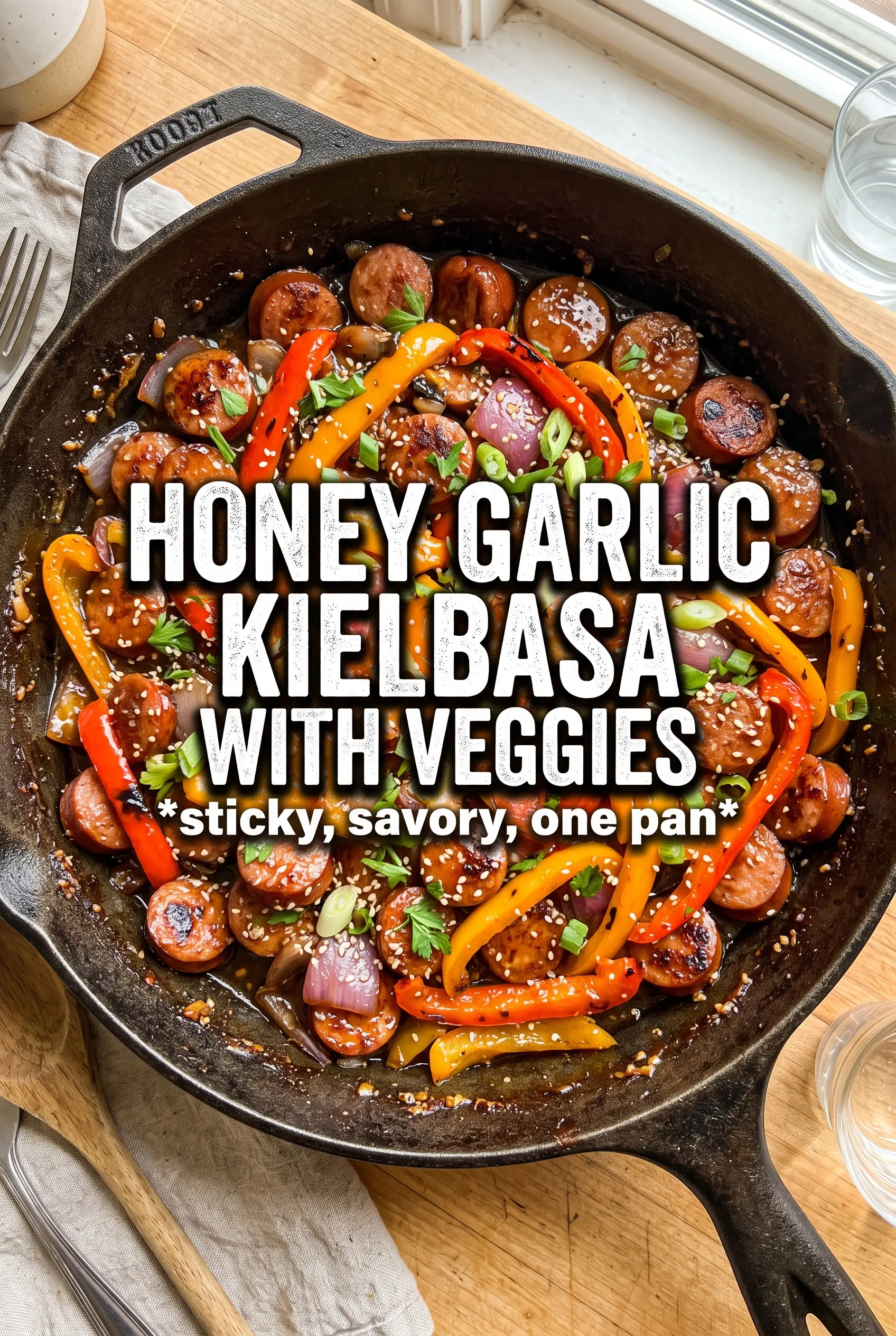
Honey Garlic Kielbasa With Veggies
Ingredients
Equipment
Method
- Preheat oven to 400°F and line a large baking sheet with parchment or foil.
- Whisk honey, minced garlic, soy sauce, Dijon mustard, olive oil, and red pepper flakes until the sauce looks smooth.
- Toss kielbasa rounds, broccoli florets, red bell pepper, green bell pepper, zucchini, and red onion with the honey garlic sauce until evenly coated.
- Spread the mixture on the baking sheet in a single layer so the vegetables roast instead of steam.
- Roast for 20-25 minutes, tossing halfway, until vegetables are caramelized and kielbasa is golden.
- Scatter sesame seeds and green onions over the hot sheet pan and serve immediately.