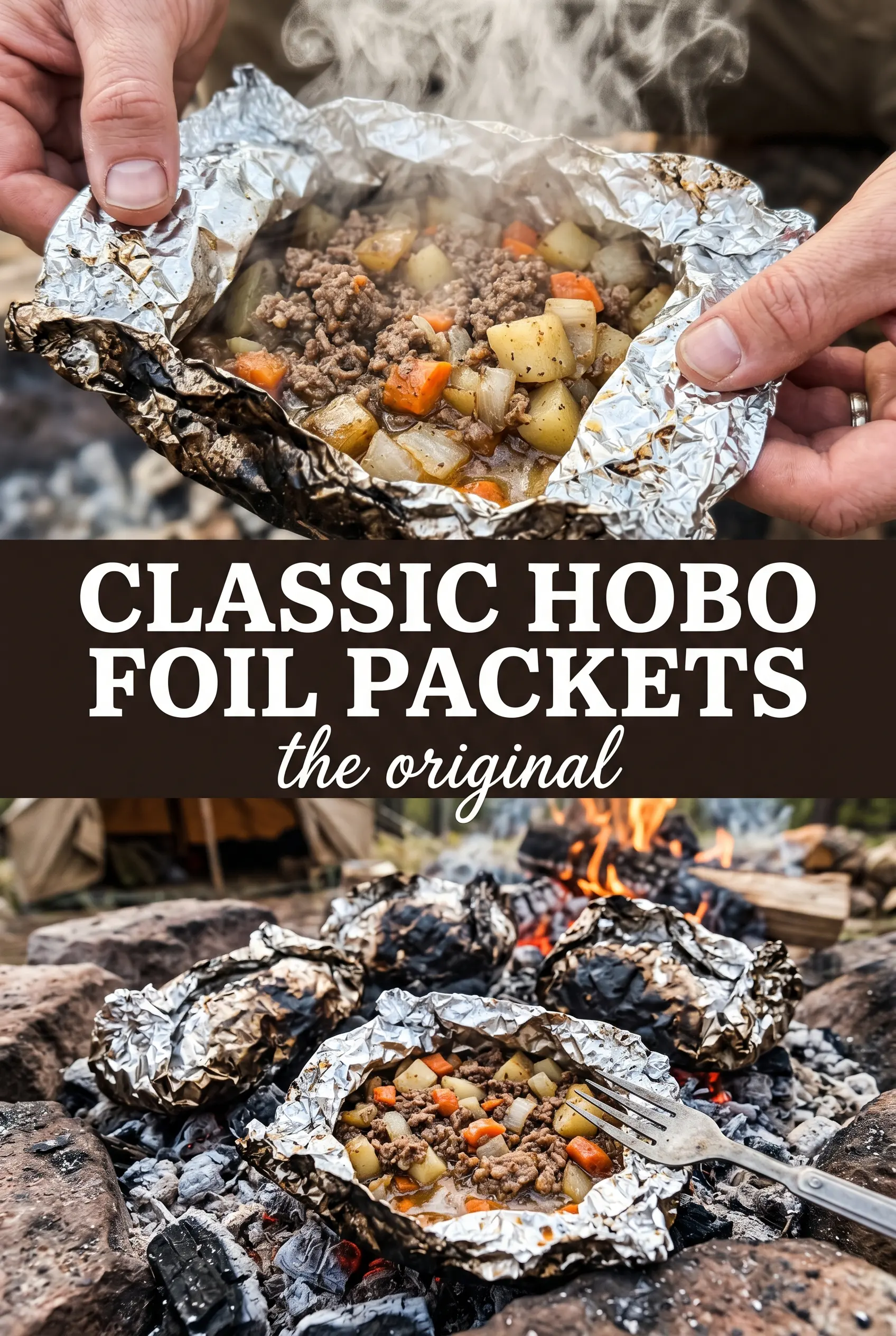
Hobo foil packets come off the fire with the kind of payoff that makes people hover near the grill until the first one is opened. The vegetables turn tender and buttery, the meat picks up all the steam and seasoning from the packet, and every serving feels like its own little dinner made just for the person holding it. It’s the sort of meal that works hard without asking for much back.
What makes this version dependable is the layering. Potatoes and carrots sit closest to the heat so they have time to soften, while the onion and green beans cook in the steam above them instead of drying out. A tablespoon of butter in each packet keeps everything from tasting flat, and heavy-duty foil matters here because thin foil tears the moment the vegetables start giving off moisture and the packet gets flipped.
Below, I’ve included the one detail that keeps these from turning out undercooked in the center, plus a few easy swaps if you want to use what’s already in the fridge. Once you’ve made them this way, the method sticks.
The potatoes were tender all the way through and the butter kept the beef and vegetables from drying out. I’ve made foil dinners before, but this was the first time everything finished at the same time.
Hobo foil packets are perfect for campfire nights when you want tender potatoes, buttery vegetables, and juicy meat in one easy packet.
The One Thing That Keeps the Potatoes from Staying Hard
The biggest mistake with foil packets is packing everything in raw and assuming the heat will even things out by the end. Potatoes need a head start. When they’re sliced thin and placed at the bottom of the packet, they get the most direct heat and enough time to soften before the meat finishes cooking.
That’s why the order matters here. The beef or stew meat sits on top so its juices drip downward, seasoning the vegetables instead of trapping them under a heavy layer that blocks heat. If your potatoes are still firm after 30 minutes, they were cut too thick or the packets were sealed too loosely and lost too much steam.
What Each Ingredient Is Actually Doing in These Packets
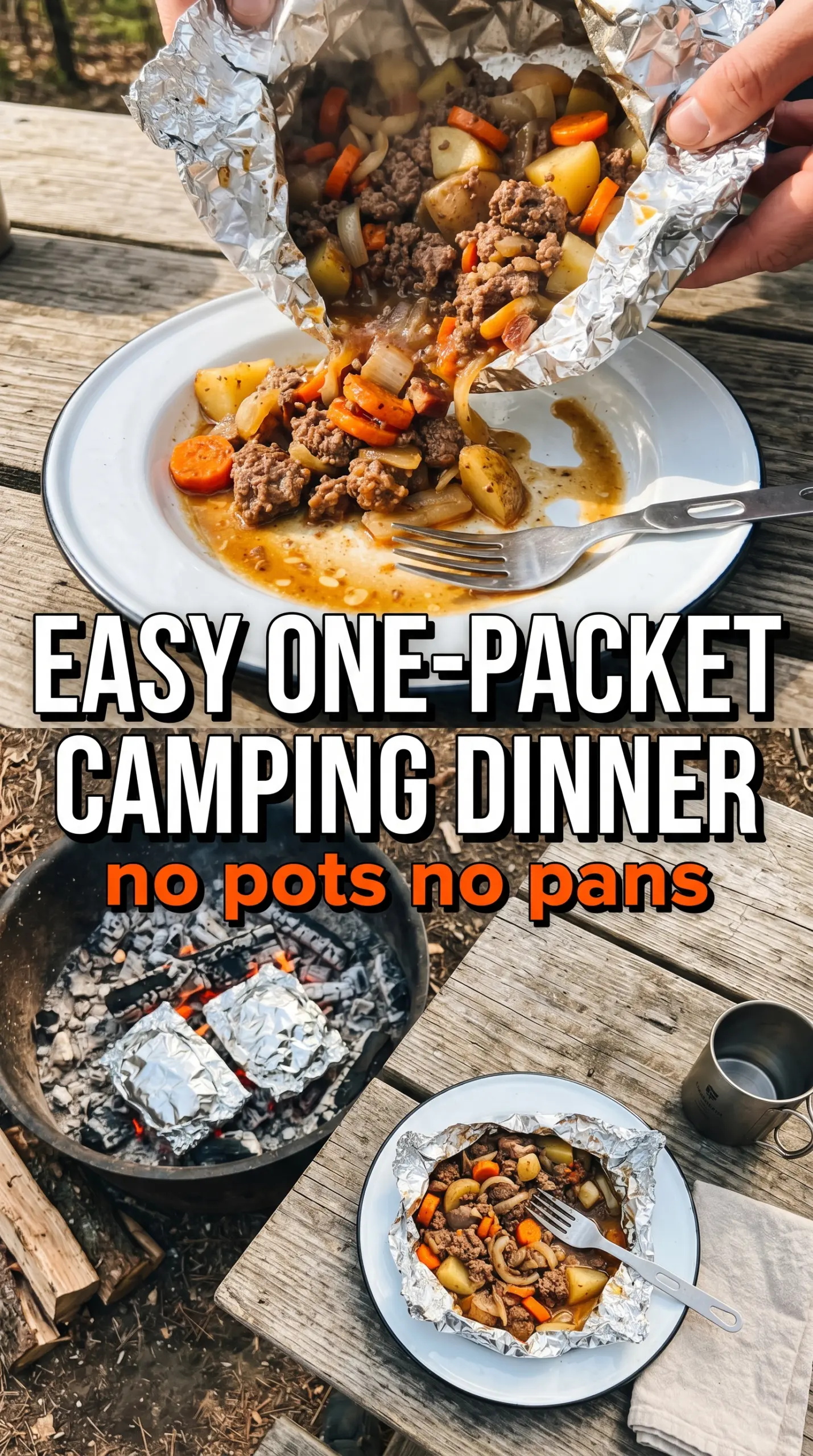
- Potatoes — These are the backbone of the packet, and they need to be sliced evenly so they finish at the same time. Waxy or all-purpose potatoes hold their shape best; very starchy potatoes can break down faster and turn soft around the edges.
- Ground beef or stew meat — Ground beef gives you a faster, more familiar foil dinner and stays tender in the steam. Stew meat works too, but it needs the full cook time and benefits from being cut into smaller, even portions so it doesn’t stay chewy.
- Carrots and onions — Carrots add sweetness and need the same thin slice as the potatoes so they soften fully. Onion melts into the packet and seasons everything underneath it, which is why it belongs in the middle of the stack instead of on top where it can dry out.
- Green beans — Canned green beans are convenient here because they’re already partially cooked and won’t toughen up while the rest of the packet finishes. Drain them well so the packet doesn’t turn watery.
- Butter — This is the difference between a packet that tastes seasoned and one that tastes complete. It carries the garlic powder, keeps the vegetables glossy, and helps everything steam instead of dry roast inside the foil.
- Heavy-duty foil — Regular foil can work in a pinch, but heavy-duty foil is the safer choice for flipping over a fire or grill grate. It holds the seal, which is what keeps the steam inside where the potatoes need it most.
Building the Packet So the Meat and Vegetables Finish Together
Layer the Vegetables First
Lay out each sheet of foil and pile the potatoes first, then carrots, onions, and green beans. Keep the pile centered so you have enough foil around the edges to fold tightly without tearing. If the vegetables spread too wide, the packet won’t seal cleanly and the steam escapes before the potatoes finish.
Season and Add the Butter
Place the meat on top, then season with salt, pepper, and garlic powder before topping each packet with a tablespoon of butter. The butter belongs on the meat so it melts down through the vegetables as the packet cooks. If you add it underneath, it pools on the foil instead of coating the food.
Seal Tightly, Then Cook Over Medium Heat
Fold the foil into a tight packet with no open seams, then place it on a campfire grate or grill over medium heat. Flip halfway through so the bottom doesn’t scorch before the potatoes finish softening. If your fire is running hot, move the packets to a cooler edge; high heat burns the outside of the foil long before the center is done.
Rest Before Opening
Let the packets sit for 5 minutes after cooking before opening them. That short rest lets the steam settle so you don’t lose half the juices the second you tear into the foil. Open carefully and away from your face because the steam comes out fast.
How to Adapt These Foil Packets for Different Kitchens
Ground beef for the fastest cook
Use ground beef when you want the packet to finish in the shorter end of the time range. Form it into patties so it cooks as one piece and keeps the juices in the packet instead of crumbling into the vegetables.
Stew meat for a heartier, slower version
Stew meat gives you a more rustic texture and a deeper beefy bite, but it needs the full cook time and evenly sized pieces. If the cubes are large, the vegetables will finish before the meat softens.
Dairy-free packets
Swap the butter for olive oil or a dairy-free butter alternative. You’ll lose a little of the classic campfire richness, but the packets still steam well and the vegetables stay glossy instead of drying out.
Vegetable swaps that hold up on the fire
Mushrooms, bell peppers, or zucchini can stand in for the green beans if that’s what you have. Keep the sturdier vegetables on the bottom and add quick-cooking ones near the top so nothing turns mushy before the meat is done.
Storage and Reheating
- Refrigerator: Store leftovers in an airtight container for up to 3 days. The potatoes soften a bit more after chilling, but the flavor stays good.
- Freezer: Freeze only if you used stew meat; potatoes change texture after freezing and thawing, so the result is softer. Wrap tightly and freeze for up to 2 months.
- Reheating: Reheat covered in a 325°F oven until hot or warm gently in a skillet with a splash of water. Don’t blast them in the microwave on high or the potatoes can get mealy before the center heats through.
Answers to the Questions Worth Asking
Hobo Foil Packets
Ingredients
Equipment
Method
- If using ground beef, form it into 4 patties; if using stew meat, divide it into 4 portions. Set them aside so each packet can be topped evenly.
- On each foil sheet, layer the vegetables in this order: potatoes, carrots, onions, then green beans. Press lightly so the ingredients sit flat in the center (visual cue: a compact mound on the foil).
- Place the meat on top of the vegetables. Aim for centered coverage so steam can circulate underneath and around the meat (visual cue: meat sits on the veg stack).
- Season with salt, pepper, and garlic powder, then top with 1 tablespoon butter per packet. Keep the seasoning evenly distributed (visual cue: visible specks across the top).
- Fold the foil into sealed packets, crimping edges tightly to prevent leaks. Check that seams are closed on all sides (visual cue: fully sealed, no gaps).
- Place packets on a campfire grate over medium heat for 25 minutes until steaming is strong. Flip halfway through cooking (about 12–15 minutes) for even heating (visual cue: steam begins to billow when you lift a corner carefully).
- Continue cooking for an additional 5 to 10 minutes until the potatoes are tender. Keep the packets at medium heat without burning the foil (visual cue: potatoes yield when tested).
- Let the packets cool for 5 minutes before carefully opening. This helps the juices settle so the contents stay hot and cohesive (visual cue: steam reduces slightly inside the packet).
- Serve immediately after opening, spooning out meat and vegetables together. Keep packets upright while opening to avoid spills (visual cue: meat, potatoes, and vegetables steaming).