Hobo dinner foil packets come out with the kind of simple, satisfying finish that makes them worth keeping around: tender potatoes, sweet carrots, soft onions, and juicy beef all steamed together in one sealed packet. The butter melts through everything as it cooks, so each bite tastes seasoned without needing a long ingredient list or much cleanup.
The trick is in the layering and the heat. Thin potato slices cook through at the same pace as the carrots, and the beef goes on top so its drippings can baste the vegetables below. Heavy-duty foil matters here because regular foil tears too easily once the packet starts to soften and you flip it over the fire.
Below, I’ll show you how to keep the vegetables from turning hard in the center, what to do if you’re cooking over a campfire instead of a grill, and the small adjustment that makes these packets work just as well in the oven when camping isn’t in the plan.
The potatoes were tender all the way through and the beef stayed juicy. I loved that the butter and seasoning soaked into the carrots and onions instead of everything tasting separate.
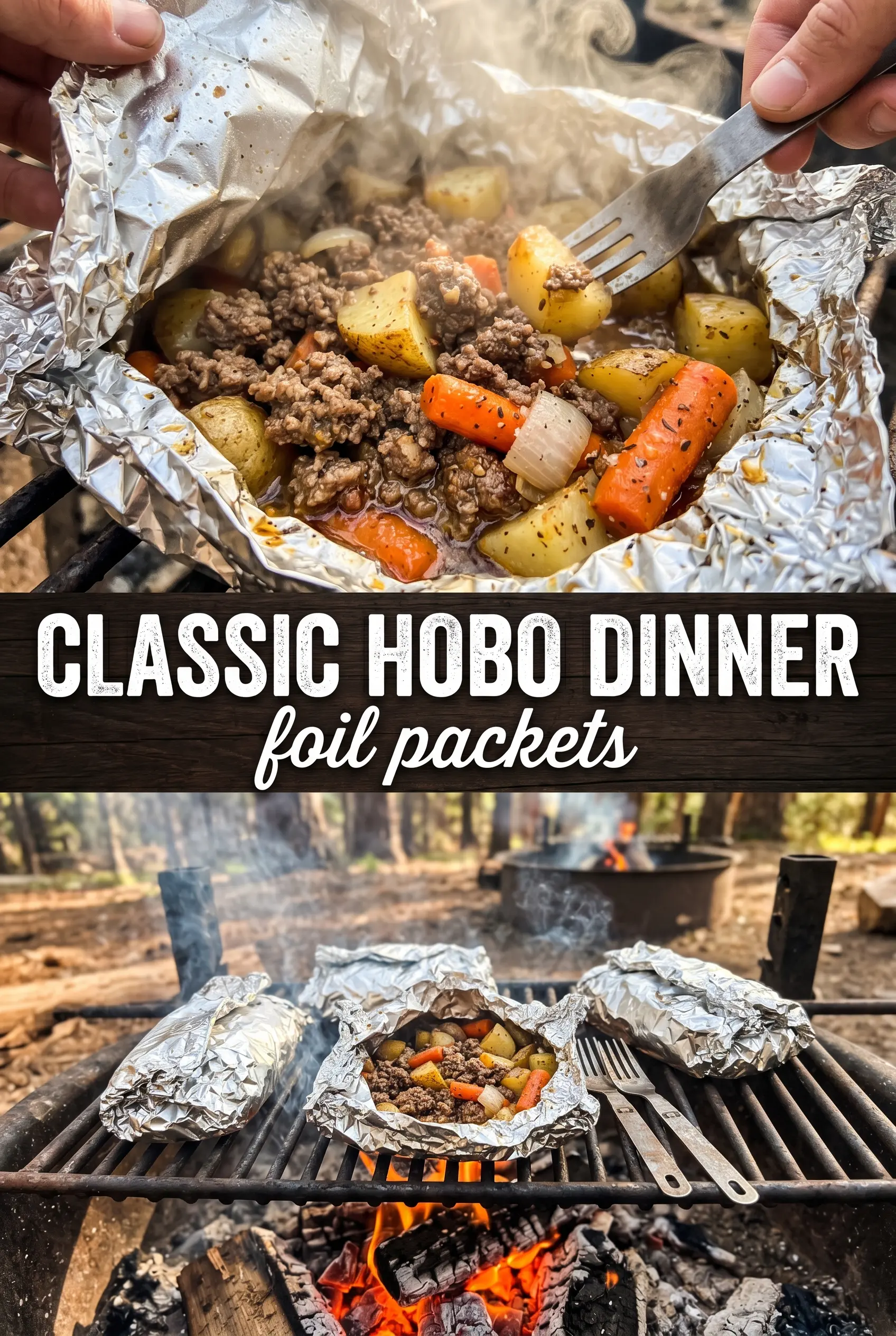
Hobo Dinner Foil Packets are the kind of campfire meal that keeps the beef juicy and the vegetables buttery-tender with almost no cleanup.
Why the Vegetables Need to Go Under the Beef
This recipe looks simple, but the order of the ingredients matters. If the beef sits on the bottom, it can stick to the foil and leave the potatoes undercooked. With the vegetables tucked underneath, the butter and meat juices drip down and help them soften while the packet traps enough steam to cook everything evenly.
The other thing that trips people up is thickness. Potatoes sliced too thick will still be hard when the beef is done, especially over an uneven campfire. Aim for slices about 1/4 inch thick so the vegetables finish in the same window as the meat.
- Thin potato slices — These are what keep the timing balanced. Thick chunks need much longer and turn this into a packet full of undercooked vegetables.
- Heavy-duty foil — Regular foil can split when you flip the packets. If that happens, the steam leaks out and the potatoes dry instead of tenderizing.
- Butter — It does more than add richness. It carries the seasoning and helps the onions and carrots soften without tasting flat.
What Each Ingredient Is Actually Doing in These Packets
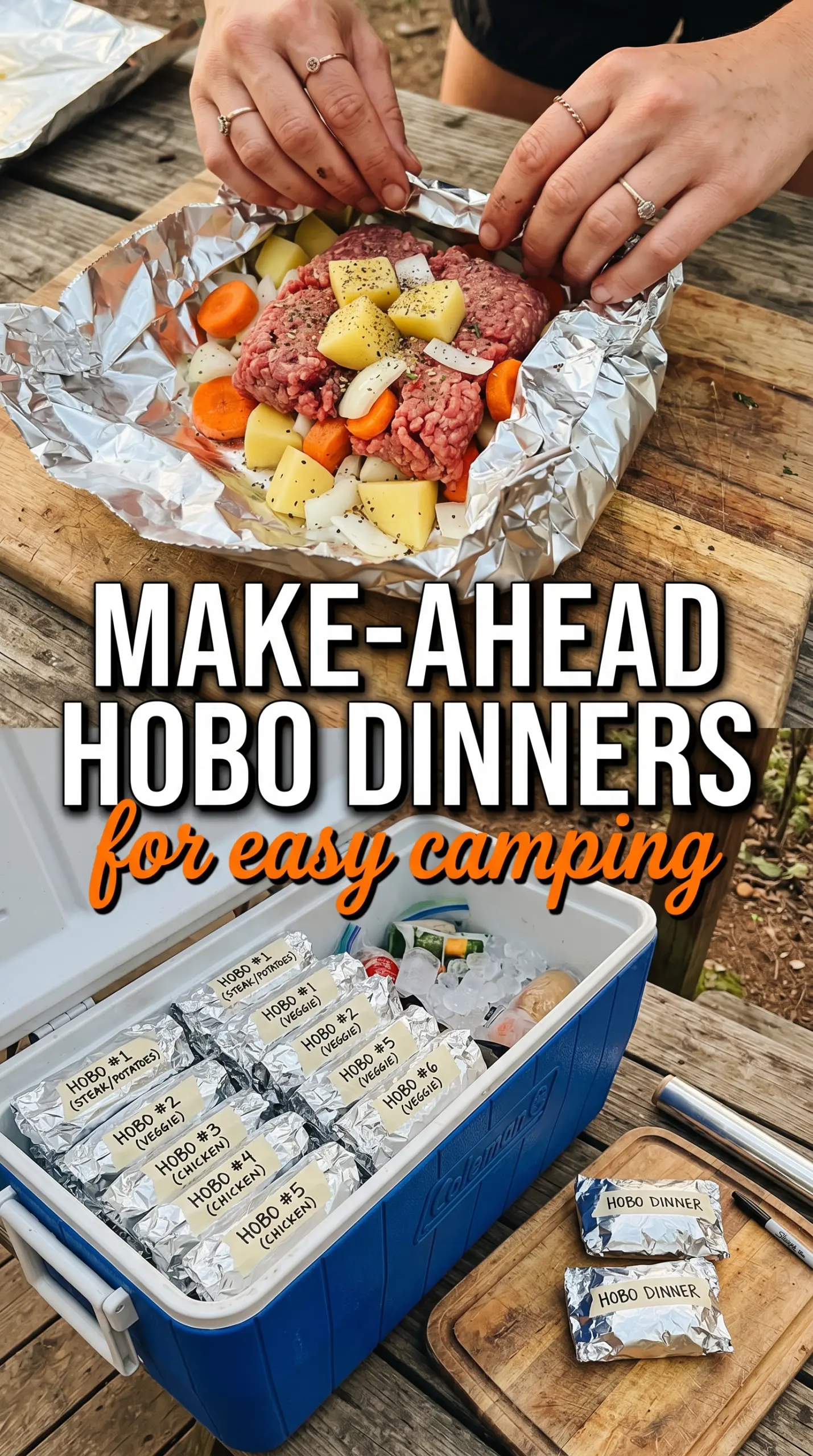
- Ground beef — Use an 85/15 or similar blend if you can. It gives you enough fat to keep the packet moist without turning greasy. Leaner beef works, but you’ll want the butter on top to keep it from tasting dry.
- Potatoes — Russets or Yukon Golds both work. Russets break down a little more and turn fluffy; Yukon Golds stay a bit creamier. Slice them evenly so the packet cooks at the same rate all the way through.
- Carrots and onion — These are the flavor backbone. The carrots bring sweetness and the onion softens into the butter and beef drippings. Cut them to a similar thickness so neither one ends up sharper or firmer than the other.
- Garlic powder — It seasons the whole packet without needing fresh garlic, which can scorch over a hot fire. If you want a stronger garlic note, add a little extra at the end instead of loading it up before cooking.
- Butter — Don’t skip it. It keeps the vegetables glossy and helps the seasoning move through the whole packet. If you need a dairy-free version, a plant-based butter stick is the closest swap.
How to Seal and Cook the Packets So Nothing Leaks Out
Building the Stack
Lay each sheet of foil flat and build the packets in the center so you have enough room to fold them closed. Start with the potatoes, carrots, and onions, then set the beef patty on top so it can cook while its juices run downward. Season before sealing, because once the packets are closed there’s no way to adjust the seasoning evenly.
Crimping for Steam
Bring the long sides of the foil together first, then fold them over several times to make a tight seam. Fold in the ends next, leaving a little pocket of air inside so steam can circulate. If the packet is packed flat against the food with no room to breathe, the vegetables cook unevenly and the foil is more likely to tear when you flip it.
Cooking Over the Fire
Set the packets over medium heat, not roaring flames. A steady bed of coals or a gentle campfire grate cooks the vegetables through before the outside scorches. Flip halfway through so both sides get steady heat, and watch for a little puff of steam when you open one to check doneness. If the potatoes are still firm, close the packet back up and give it another 5 to 10 minutes.
The Final Rest
Let the packets sit for about 5 minutes before opening them all the way. That short rest keeps the steam from blasting out the second you peel back the foil and gives the beef a chance to settle. Open slowly, because the steam trapped inside is hot enough to burn your hands and face in a hurry.
Three Ways to Adjust Hobo Dinner Foil Packets Without Losing What Makes Them Work
Oven-Baked Version for Rainy Nights
Bake the sealed packets at 400°F on a sheet pan for about 35 to 40 minutes. The oven gives you steadier heat than a campfire, so the potatoes usually cook more evenly. If your slices are thick, add a few extra minutes rather than cranking the heat, which only dries out the beef.
Dairy-Free Packet
Swap the butter for a dairy-free butter stick or a drizzle of olive oil. You’ll lose a little of the rich, classic campfire taste, but the packet still stays moist and cooks the same way. Olive oil is better if you want a lighter finish; plant butter gives you the closest match to the original.
Add Cheese at the End
For a richer finish, open the packet at the end and scatter shredded cheddar over the hot beef and vegetables. Close it again for 1 minute and the cheese will melt without getting greasy. Adding it before cooking can make the foil cling to the cheese and create a mess when you open the packet.
Storage and Reheating
- Refrigerator: Store leftovers in an airtight container for up to 3 days. The potatoes soften a bit more as they sit, but the flavor holds up well.
- Freezer: These freeze, but the potato texture gets softer after thawing. Freeze in portions once fully cooled, then thaw in the fridge before reheating.
- Reheating: Warm in a covered skillet over low heat or in the oven at 350°F until heated through. Don’t use high heat, or the beef can dry out before the potatoes heat to the center.
Answers to the Questions Worth Asking
Hobo Dinner Foil Packets
Ingredients
Equipment
Method
- Divide the ground beef into 4 portions and shape each into thin patties.
- For each foil sheet, layer sliced potatoes, carrots, and onions, then place a beef patty on top.
- Season each packet with salt, pepper, and garlic powder, then add 1 tablespoon butter on top of the beef.
- Fold foil into sealed packets and crimp the edges tightly to prevent steam from escaping.
- Place packets on a campfire grate over medium heat for 25-30 minutes, flipping halfway through so they cook evenly.
- Carefully open the packets and check that the beef is cooked through and the vegetables are tender, watching for steam.
- Let the packets cool for 5 minutes before serving directly from the packets.