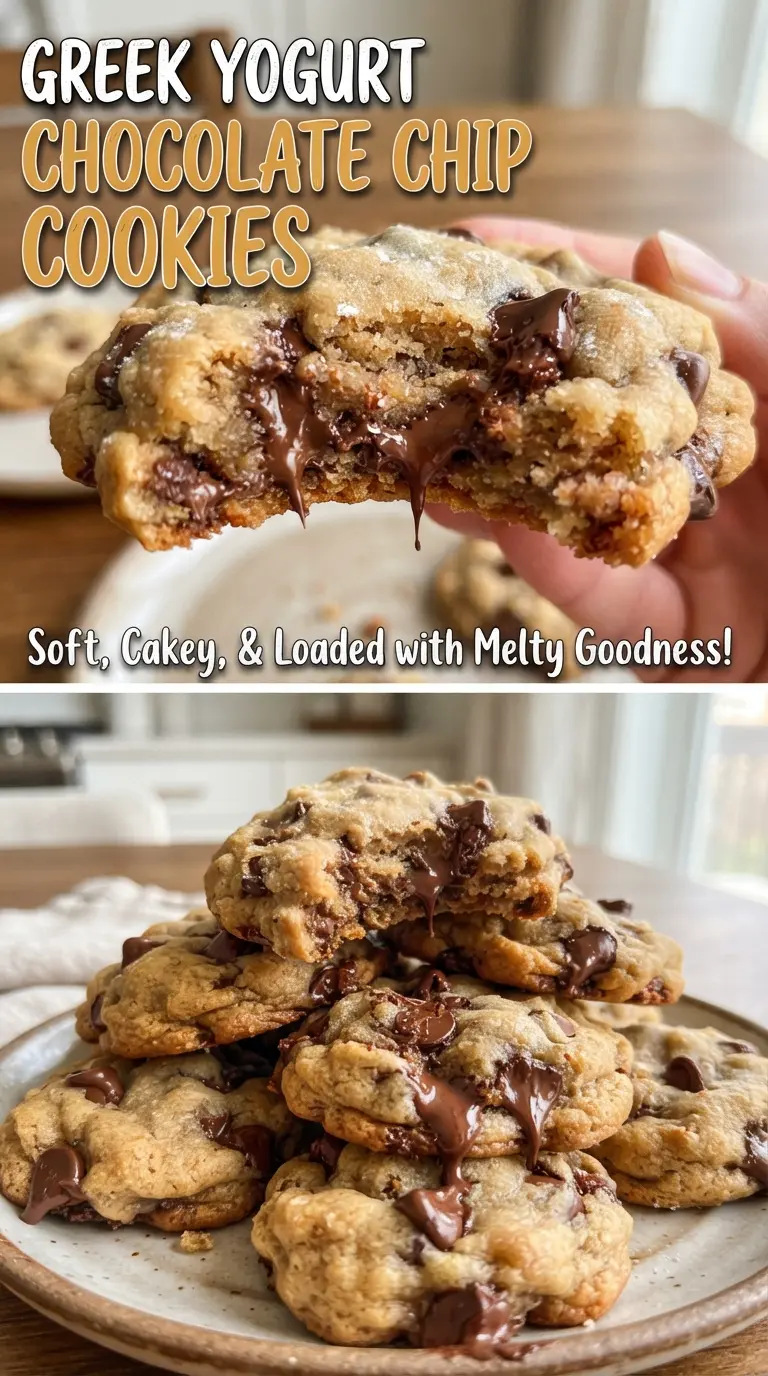
Soft, cakey chocolate chip cookies with crisp-edged bottoms and puddles of melted chocolate have a way of disappearing fast, and this version earns that reaction without leaning on extra butter or a long chill time. The Greek yogurt keeps the crumb tender and gives the cookies a little lift, so they bake up thick instead of spreading into thin, flat rounds.
The balance matters here: brown sugar adds chew and a deeper caramel note, while a smaller amount of granulated sugar keeps the edges from getting heavy. The dough comes together in one bowl once the butter and sugars are fluffy, and the yogurt is folded in with the egg so it doesn’t turn the mixture grainy. That little bit of acid from the yogurt also works with the baking soda to help the cookies rise and stay soft for days.
Below, I’ve included the small details that matter most, including the best way to scoop the dough and what to watch for in the oven so the centers stay tender instead of dry.
The cookies came out thick and soft with those little golden edges I was hoping for. I loved that the yogurt kept them cakey without making them taste tangy, and the chocolate chips stayed melted for a long time.
Love these soft Greek yogurt chocolate chip cookies? Save them to Pinterest for the days when you want thick, tender cookies with minimal fuss.
The Yogurt Keeps the Cookies Thick Instead of Spreading Thin
Most chocolate chip cookies spread because the dough is too warm, too wet, or missing enough structure to hold its shape. Here, the Greek yogurt adds moisture and tenderness without turning the dough loose enough to collapse in the oven. The batter should look soft and scoopable, not runny. If it looks shiny and slack after mixing, the butter was probably too warm or the flour was under-measured.
The other thing working in your favor is the baking soda. It reacts with the yogurt’s acidity and gives the cookies a little upward push, which is why they bake into thicker mounds with soft centers. Pull them when the edges are just turning golden and the centers still look slightly underdone. They finish on the hot pan, and that carryover heat is what keeps them from drying out.
What the Greek Yogurt Is Doing That Butter Alone Can’t
- Plain Greek yogurt — This is the ingredient that gives the cookies their soft, cakey middle. Full-fat Greek yogurt works best because it brings body as well as moisture. Regular yogurt can work in a pinch, but it’s looser, so the dough may spread a little more.
- Brown sugar — Brown sugar keeps the cookies chewy and adds a deeper, almost caramel note that balances the tang from the yogurt. Don’t swap it all for white sugar unless you want a lighter, crisper cookie.
- Butter — Softened butter beats with the sugar into a fluffy base that traps air. Melted butter changes the whole texture and pushes these toward dense and flatter cookies, which isn’t what this dough is built for.
- Semi-sweet chocolate chips — Semi-sweet chips hold their shape enough to give you pockets of chocolate instead of a fully melted dough. If you want bigger chocolate streaks, chop a chocolate bar and use half bar, half chips.
Mixing the Dough Without Beating the Air Back Out
Build the Butter Base First
Beat the softened butter with both sugars until the mixture looks paler and a little fluffy. This step matters because it sets the cookie’s texture before any flour goes in. If the butter is too cold, the mixture stays grainy; if it’s greasy and glossy, it was too warm and the cookies may spread more.
Bring in the Yogurt Gently
Add the Greek yogurt, egg, and vanilla and mix only until combined. The dough may look slightly curdled for a moment, and that’s fine. Once the dry ingredients go in, everything comes together; overmixing here only makes the cookies tougher.
Stop Mixing as Soon as the Flour Disappears
Stir in the flour, baking soda, and salt just until no dry streaks remain, then fold in the chocolate chips. The dough should look thick and soft, almost like a heavy drop cookie batter. If you keep mixing after the flour is incorporated, the cookies bake up tight instead of tender.
Bake Until the Edges Set and the Centers Still Look Soft
Scoop the dough into 2-tablespoon portions and leave a little space between them. Bake until the edges are lightly golden and the centers still look a touch underbaked, then let them sit on the pan for 5 minutes. That rest time finishes the bake without turning the middle dry, which is the difference between a soft cookie and a chalky one.
How to Adapt These Cookies for Different Cravings and Different Pantries
Use full-fat Greek yogurt for the softest crumb
Full-fat yogurt gives the cookies the best balance of moisture and structure. Nonfat yogurt works, but the texture is a little less rich and the dough can feel looser. If you use plain regular yogurt instead of Greek, expect a flatter cookie and add a tablespoon or two of flour if the dough seems too soft.
Swap the chocolate chips for chunks or a mix of both
Chocolate chunks melt into wider puddles and give you more dramatic pockets of chocolate. Chips keep their shape better and distribute evenly through the dough. A half-and-half mix gives you the best of both: good coverage and a few larger melted spots.
Make them gluten-free with a 1:1 baking blend
A good 1:1 gluten-free flour blend can work here because the yogurt keeps the cookies tender. The texture will be a little softer and more delicate, so let them cool fully before moving them. Don’t use almond flour alone; it won’t give these cookies enough structure.
Add chopped walnuts for a bakery-style finish
A small handful of chopped walnuts adds crunch and a little bitterness that plays well with the sweet dough. Fold them in with the chips so they distribute evenly. The cookies will taste a bit more substantial and less sweet overall.
Storage and Reheating
- Refrigerator: Store in an airtight container for up to 5 days. The cookies stay soft, though the chocolate chips will firm up once chilled.
- Freezer: These freeze well either baked or as dough balls. Freeze the scooped dough on a tray, then move it to a bag; bake from frozen and add 1 to 2 minutes.
- Reheating: Warm baked cookies for 8 to 10 seconds in the microwave or a few minutes in a low oven. Too much heat dries out the crumb fast, so stop as soon as the chocolate softens.
Questions I Get Asked About This Recipe

Greek Yogurt Chocolate Chip Cookies
Ingredients
Equipment
Method
- Preheat the oven to 350F. Line baking sheets with parchment so the cookies release cleanly.
- Beat the softened unsalted butter, packed brown sugar, and granulated sugar until fluffy. This aerates the dough for a tender crumb.
- Beat in the plain Greek yogurt, large egg, and vanilla extract until smooth. The mixture should look evenly combined.
- Mix in the all-purpose flour, baking soda, and salt, then fold in the semi-sweet chocolate chips. Fold just until no dry flour remains.
- Scoop 2-tablespoon balls onto the lined baking sheets, spacing them apart. This helps them spread evenly.
- Bake for 10-12 minutes at 350F until lightly golden at the edges. The centers should still look slightly soft.
- Cool for 5 minutes on the sheet before transferring to a rack. This firms the cookies so they don’t break when moved.