These gingerbread white chocolate chip cookies bake up thick, chewy, and warmly spiced, with crackly sugar-coated tops that give way to a soft center. The white chocolate melts into little creamy pockets that calm the molasses and ginger just enough, so every bite lands somewhere between classic gingerbread and a bakery-style cookie.
The key is in the balance. Brown sugar and molasses keep the crumb moist and deep, while the chill time firms the dough so the cookies spread slowly instead of turning thin and crisp. Rolling the dough balls in granulated sugar before baking adds that sparkly finish and helps create the craggy tops that make these cookies look as good as they taste.
Below, I’ve included the small details that matter here: how to keep the spices bold without making the cookies bitter, why the dough benefits from a short rest, and a few useful swaps if you need to work around what’s in your pantry.
The dough chilled up perfectly and the cookies came out with those crackly tops and soft middles I was hoping for. The white chocolate kept the gingerbread from feeling too sharp, and they disappeared before they were fully cool.
Save these chewy gingerbread white chocolate chip cookies for the days when you want crackly tops, warm spice, and creamy white chocolate in every bite.
The Secret to Crackly Tops Without Dry Gingerbread Cookies
These cookies work because they’re built for both spread and structure. Molasses adds moisture and that deep gingerbread flavor, but it also makes the dough dense, so the baking soda and the short chill are doing real work here. The soda gives the cookies lift in the oven, while the chilled dough holds its shape long enough for the edges to set before the centers overbake.
The sugar coating matters more than it looks. It dries the outside just enough to help that craggy surface form as the cookies bake, and it gives you a light crunch against the soft middle. If your gingerbread cookies usually turn flat or muddy-tasting, the fix is usually in the balance of molasses, spice, and time in the fridge.
What the Butter, Molasses, and Spices Are Each Doing Here
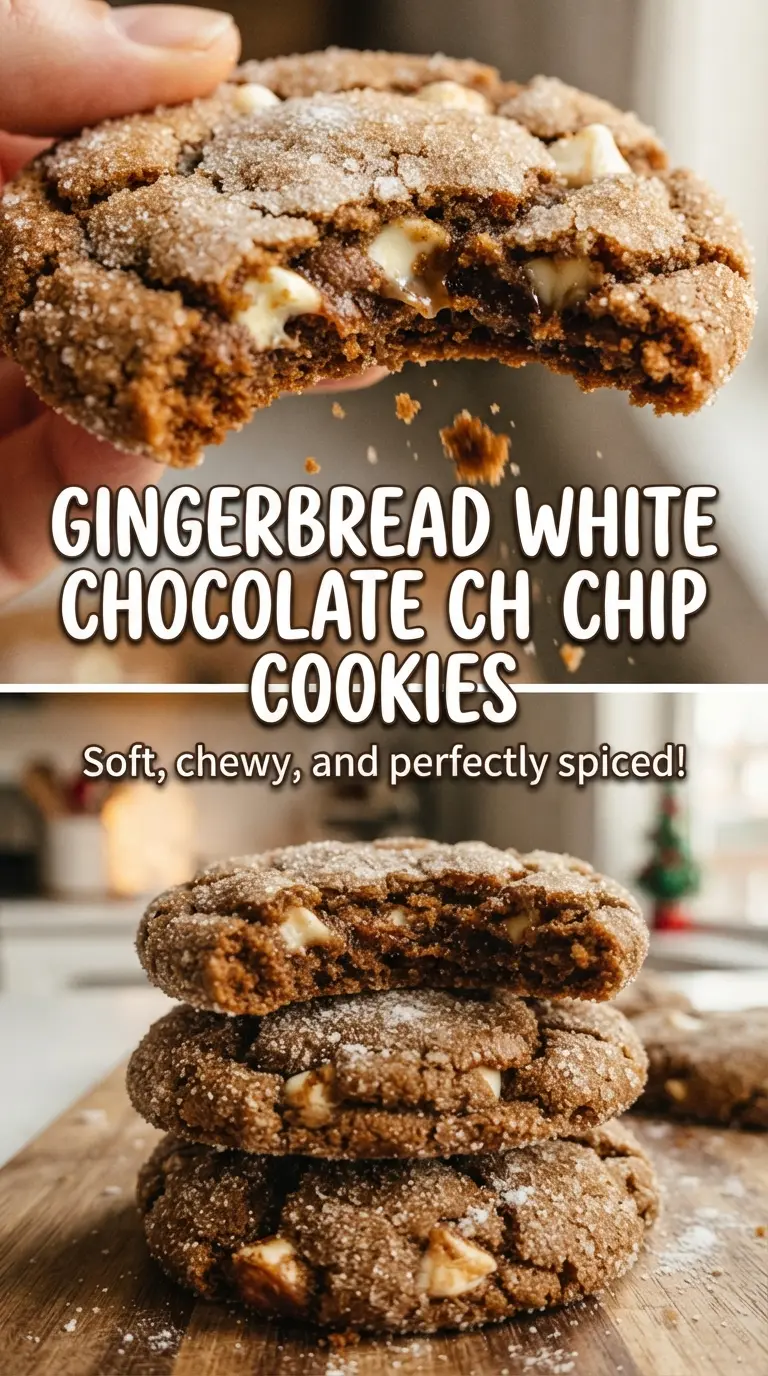
- Unsalted butter — Softened butter creams with the brown sugar to trap air, which gives the cookies a lighter chew instead of a dense, paste-like texture. Salted butter works in a pinch, but the flavor is less controlled, so reduce the added salt slightly.
- Molasses — This is the backbone of the gingerbread flavor and the reason the cookies stay chewy for days. Use unsulphured molasses if you can; blackstrap is sharper and more bitter, and it will push these cookies away from the warm, sweet balance they need.
- Brown sugar — It supports the molasses with extra moisture and caramel notes. Light or dark brown sugar both work, but dark brown sugar makes the spice taste deeper and the cookies a little more robust.
- White chocolate chips — These need to be folded in at the end so they stay in distinct pockets instead of melting into the dough. Chunks work too, but chips distribute more evenly and keep every cookie balanced.
- Spices — Ginger and cinnamon lead, while cloves and nutmeg should stay in the background. If you want a sharper cookie, add a little extra ginger; if you overdo the cloves, the cookies can turn medicinal fast.
Building the Dough So It Bakes Thick and Chewy
Cream the Butter Until It Looks Fluffy, Not Just Mixed
Beat the butter and brown sugar until the mixture looks pale and fluffy, with no greasy streaks left on the bowl. That step gives the cookies their soft lift, and it’s worth the extra minute. If you rush it, the dough bakes up heavier and the texture turns compact.
Add the Molasses After the Base Is Lightened
Once the butter mixture is airy, beat in the molasses, egg, and vanilla until the dough looks smooth and glossy. The molasses will darken everything immediately, so look for an even color rather than trying to whip it longer. If the mixture looks broken for a moment, keep going; it usually comes back together once the egg is fully incorporated.
Fold in the Dry Ingredients Just Until the Flour Disappears
Mix in the flour, baking soda, salt, and spices on low speed or by hand, stopping as soon as you stop seeing dry flour. Overmixing at this stage tightens the dough and makes the cookies tough instead of chewy. The dough should smell bold and warm before the chips even go in.
Chill Before Scooping and Rolling
Thirty minutes in the fridge is enough to firm the dough so it scoops cleanly and bakes thicker. If you skip this, the cookies spread too fast and the sugar coating melts instead of crackling. Roll the dough in granulated sugar right before baking so the coating stays dry and sparkly.
How to Adapt These Cookies Without Losing the Chewy Center
Make Them Dairy-Free
Use a plant-based butter that behaves like regular butter in baking, not a soft spread from a tub. The cookies will still be chewy and spiced, though the flavor will be a little less rich and the edges may brown a touch faster.
Use Dark Brown Sugar for a Deeper Gingerbread Note
Dark brown sugar gives the cookies a slightly more molasses-heavy taste and a softer, more caramel-like crumb. It’s a good swap if you want the spice to feel darker and less sweet.
Make Them Gluten-Free
A good 1:1 gluten-free baking flour blend usually works here, especially one with xanthan gum already included. The cookies may need an extra minute in the oven and will be a little more delicate when warm, but the chewy center still holds up.
Swap in Chopped White Chocolate Instead of Chips
Chopped white chocolate melts into softer puddles and gives you a more bakery-style look, while chips hold their shape a bit better. Use whichever texture you want most; the flavor stays the same, but chunks make the cookies feel a little more indulgent.
Storage and Reheating
- Refrigerator: Store in an airtight container for up to 5 days. They stay chewy, though the sugar coating softens a bit.
- Freezer: Freeze baked cookies for up to 2 months, or freeze scooped dough balls and bake from frozen with 1 to 2 extra minutes.
- Reheating: Warm a cookie for 8 to 10 seconds in the microwave to soften the white chocolate again. Don’t overheat them or the centers can turn dry and the chips can seize up.
Answers to the Questions Worth Asking
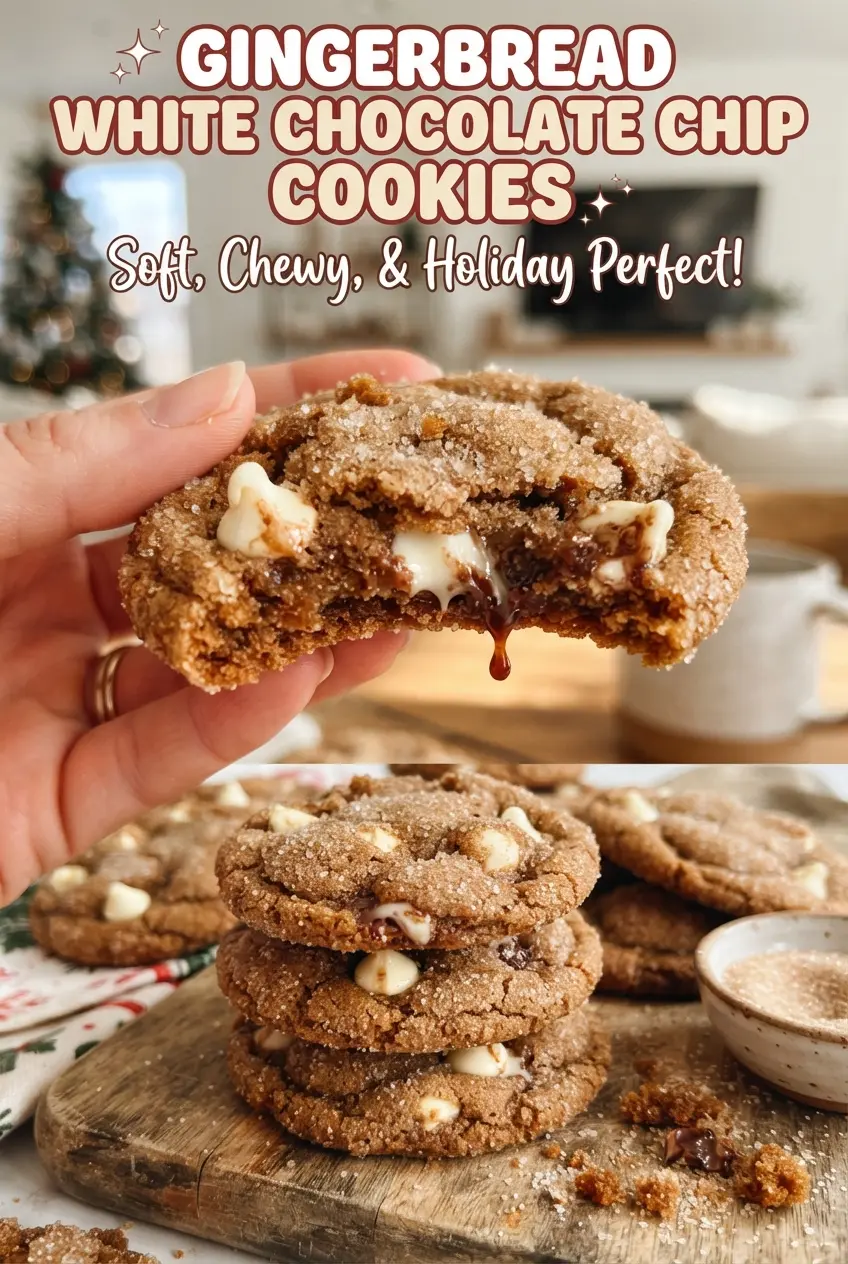
Gingerbread White Chocolate Chip Cookies
Ingredients
Equipment
Method
- Beat the softened unsalted butter and packed brown sugar until fluffy, 1-2 minutes, then beat in molasses, egg, and vanilla extract until smooth and glossy.
- Mix in all-purpose flour, baking soda, salt, ground ginger, ground cinnamon, ground cloves, and ground nutmeg just until no dry streaks remain, scraping the sides to keep the dough even.
- Fold in white chocolate chips, then chill the dough for 30 minutes so it thickens and bakes up chewy.
- Preheat the oven to 350°F, line baking sheets with parchment, and set up a small bowl of granulated sugar for rolling.
- Roll the dough into 2-tablespoon balls, roll each in granulated sugar, and place them 2 inches apart on the prepared baking sheets.
- Bake for 9-10 minutes at 350°F until the tops crackle and the edges are set, with centers that still look slightly soft.
- Cool the cookies for 5 minutes on the sheet, letting the crackly tops set before transferring.