Greek pasta salad hits the sweet spot between bright, briny, and filling. The pasta carries the dressing instead of getting buried by it, and the vegetables stay crisp enough to give every bite some snap. Feta and olives bring the salt, tomatoes bring the juice, and the lemon-oregano dressing ties it all together without turning heavy or soggy.
The part that makes this version work is the balance. Rinsing the pasta cools it fast and stops the cooking, which matters because warm pasta drinks up dressing unevenly and can make the cucumbers go limp before the salad even chills. I also like to hold back a little feta for the end so the top stays fresh and creamy instead of disappearing into the bowl.
Below, I’ve included the small details that keep this salad tasting clean after a few hours in the fridge, plus the swaps I actually use when I need to stretch it for a crowd or make it a little more substantial.
I loved how the dressing soaked into the pasta after chilling without making the cucumbers watery. The feta stayed chunky on top, and the lemon-oregano flavor was even better the next day.
Save this Greek pasta salad for potlucks and make-ahead lunches when you want crisp vegetables, briny olives, and lemony dressing in every bite.
The Chill Time That Keeps the Salad Bright Instead of Watery
Greek pasta salad sounds simple, but the part that trips people up is the timing. If you toss everything together and serve it right away, the dressing sits on the surface and the flavors taste sharp instead of blended. A short chill lets the pasta absorb some of the lemony dressing while the vegetables stay crisp enough to keep the salad lively.
The other thing worth watching is moisture. Tomatoes and cucumbers both give off liquid as they sit, so the goal isn’t to eliminate that, it’s to keep the salad balanced enough that the extra juices loosen the dressing instead of turning the bowl soupy. That starts with draining the pasta well and ends with serving after the salad has had time to settle.
What Each Ingredient Is Doing in the Bowl
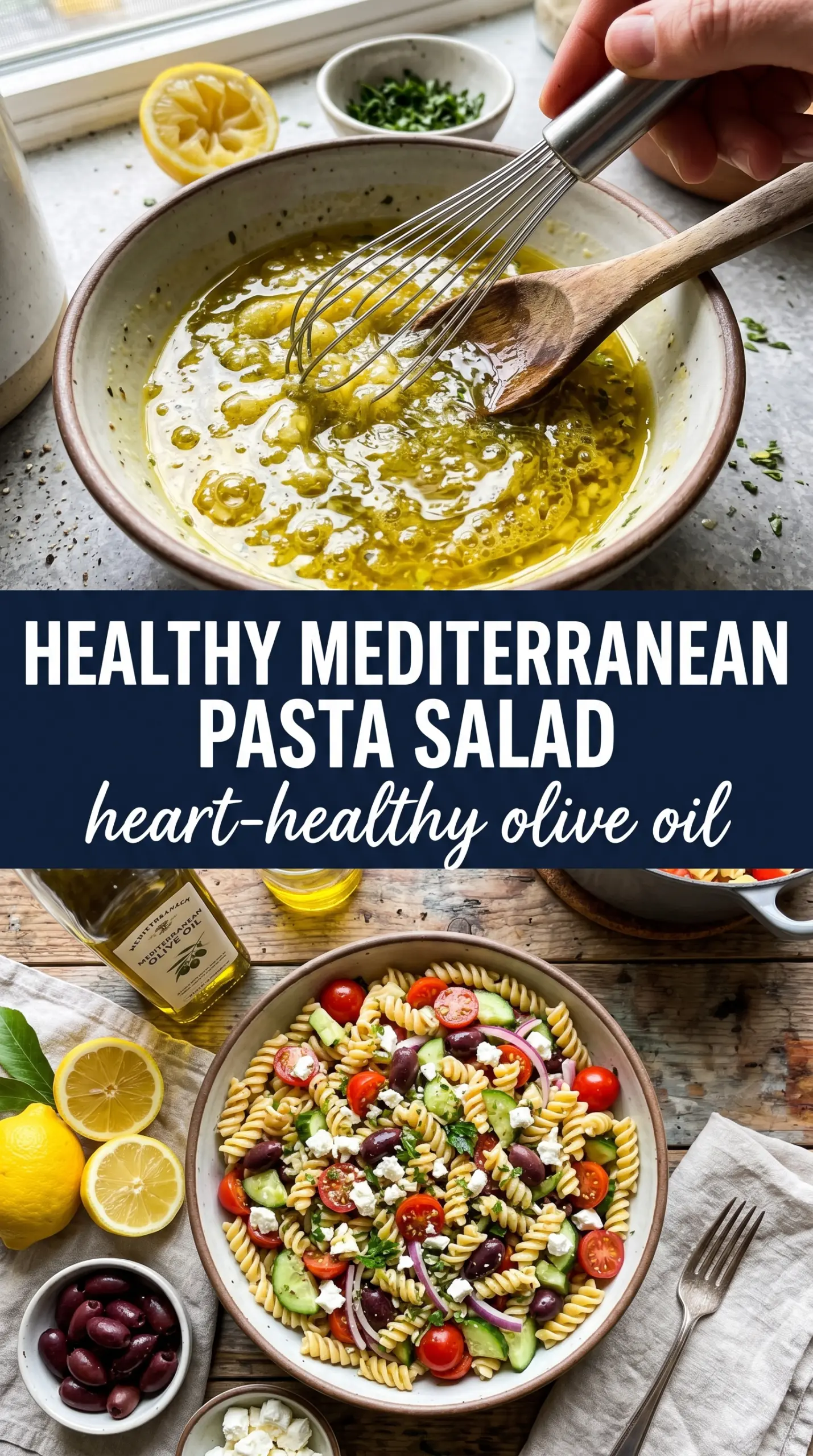
- Pasta — Penne or rotini both hold the dressing in ridges and curves, which is exactly what you want here. Long noodles won’t grab the lemon-oregano dressing as well, and the salad loses some of its structure. Cook it just until tender, then rinse it cold so it stops there.
- Feta — This is the salty, creamy anchor of the salad. Block feta crumbled by hand has better texture than pre-crumbled cheese, which can taste dusty and dry. If you need a substitute, use another tangy brined cheese, but expect a softer, less sharp finish.
- Olive oil, lemon juice, and red wine vinegar — This trio builds the dressing’s backbone. Lemon brings brightness, vinegar adds a little edge, and olive oil carries everything across the pasta. If your lemon is very juicy, use it measured rather than guessing so the dressing doesn’t overpower the cheese.
- Cucumber, tomatoes, onion, and olives — These are the Greek salad pieces that give the dish its crunch, sweetness, and brine. Seedless cucumber keeps the salad cleaner and less watery, and thin-sliced onion gives bite without taking over. Kalamatas matter here; regular black olives don’t bring the same salty, fruity depth.
Building the Salad So the Dressing Soaks In, Not Off
Cooking the Pasta to the Right Point
Boil the pasta until just tender, not mushy. It should still have a little firmness at the center because it will soften slightly as it chills with the dressing. Drain it well, then rinse under cold water until the steam is gone. If you skip the rinse, the pasta keeps cooking and the salad can turn gummy.
Whisking a Dressing That Stays Balanced
Whisk the olive oil, lemon juice, vinegar, garlic, oregano, salt, and pepper until the mixture looks glossy and unified. The garlic should be finely minced so it disperses instead of hitting someone with a raw bite in one forkful. If the dressing tastes too sharp, add a pinch more salt before adding more oil; salt rounds out the acid faster than fat does.
Combining Everything Without Crushing It
Toss the pasta with the vegetables and most of the feta in a large bowl, then pour the dressing over the top. Stir gently so the tomatoes don’t burst and the feta stays in pieces. The salad should look lightly coated, not drenched. If it seems a little dry at first, give it time in the fridge before adding more dressing.
Finishing After the Chill
Refrigerate the salad for at least two hours so the flavors settle together. Right before serving, top it with the remaining feta for a fresh, creamy finish. If the salad looks a little tight after chilling, a small drizzle of olive oil and a squeeze of lemon bring it back without watering it down.
How to Adjust This Greek Pasta Salad for Different Tables
Make it dairy-free
Leave out the feta and add a handful of chopped artichokes or a few extra olives for more savory depth. You lose the creamy-salty contrast, so the salad tastes brighter and a little leaner. A sprinkle of toasted sunflower seeds can give it some of the same bite.
Use gluten-free pasta without losing texture
Choose a sturdy gluten-free pasta shape and cook it just to the edge of tenderness. GF pasta can go soft fast after chilling, so rinse it well and dress it once it’s fully cool. Rotini usually holds up better than delicate shapes.
Turn it into a more filling main dish
Add grilled chicken, chickpeas, or chopped salami if you want more protein. Chickpeas keep the Mediterranean feel and soak up the dressing nicely, while chicken makes the salad work as lunch or dinner. Add extra dressing if you’re adding a lot of protein so the bowl doesn’t taste dry.
Storage and Reheating
- Refrigerator: Store covered for up to 4 days. The vegetables soften a little, but the flavor deepens as it sits.
- Freezer: I don’t recommend freezing this salad. The cucumber, tomatoes, and feta lose their texture and the dressing separates after thawing.
- Reheating: This salad is meant to be served cold or at cool room temperature. If it has been in the fridge, let it sit out for 15 to 20 minutes and stir in a small splash of lemon juice or olive oil if the pasta has tightened up.
Questions I Get Asked About This Recipe
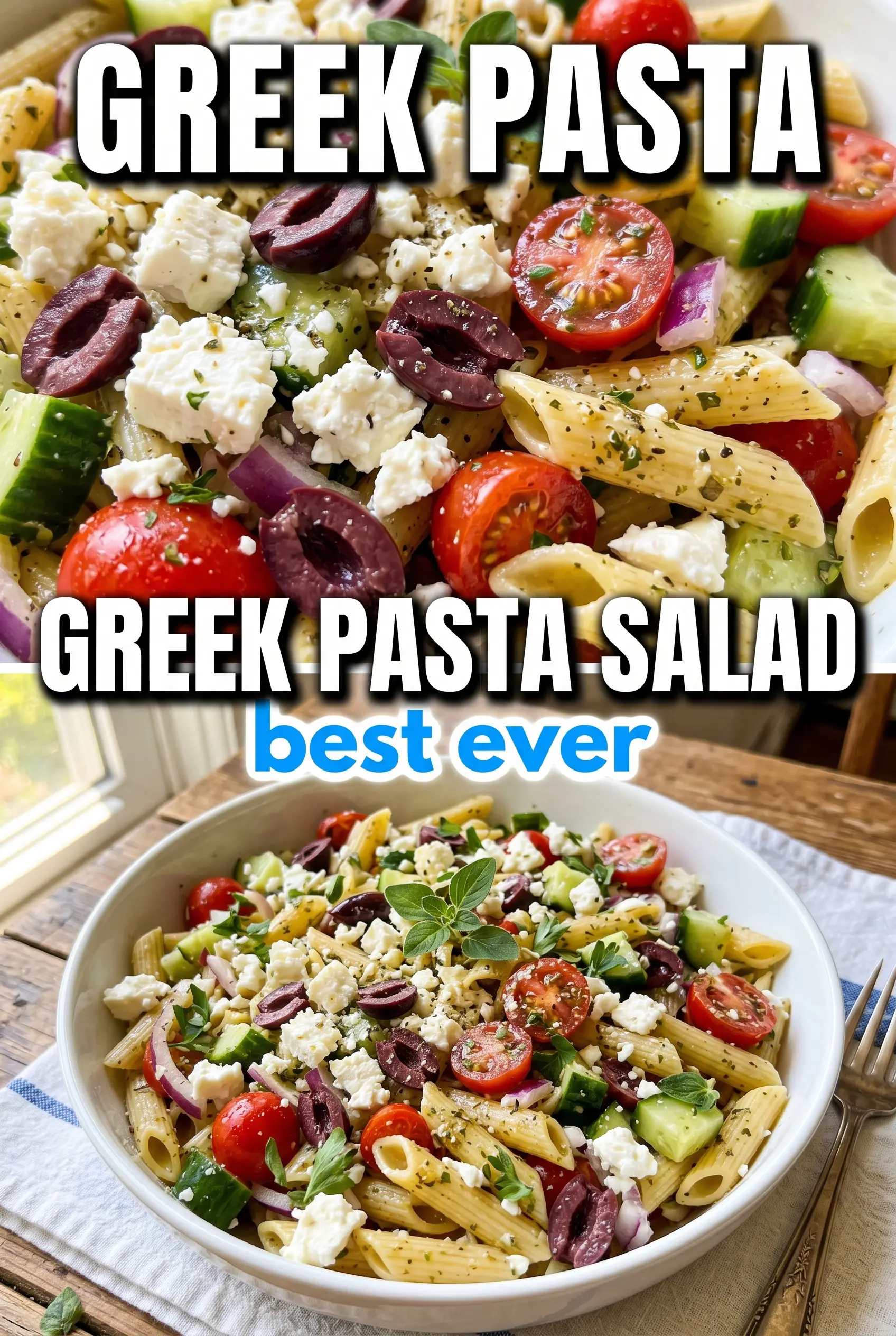
Greek Pasta Salad
Ingredients
Equipment
Method
- Bring a pot of water to a boil and cook penne or rotini pasta according to package directions, usually 8–10 minutes, until tender. Drain and rinse thoroughly with cold water, then spread on a sheet pan to cool for 5 minutes.
- Whisk olive oil, lemon juice, red wine vinegar, minced garlic, oregano, salt, and pepper until the mixture looks uniform and glossy.
- Combine cooled pasta, halved cherry tomatoes, diced cucumber, pitted-and-halved Kalamata olives, and thinly sliced red onion in a large bowl.
- Add most of the crumbled feta and gently toss so the cheese is distributed throughout the pasta.
- Pour the lemon-oregano dressing over the salad and toss gently until everything is evenly coated.
- Refrigerate for at least 2 hours so the pasta absorbs the dressing and the flavors meld.
- Top the pasta salad with the remaining feta just before serving for a fresh, salty bite.