Pasta salad only earns a permanent spot in the fridge when the dressing clings, the vegetables stay bright, and every bite tastes sharper after it chills. This Mediterranean version gets there by leaning on briny olives, tangy feta, and sun-dried tomatoes instead of burying the pasta under a heavy mayo dressing. The result is bold, clean, and sturdy enough to hold up at a potluck without turning soggy.
The trick is in the balance. Lemon juice and olive oil give the dressing enough lift to wake up the pasta, while a little garlic and oregano push it toward classic Mediterranean flavor without overwhelming the bowl. Rinsing the pasta after cooking matters here because you want it cooled quickly and free of excess surface starch so the dressing can coat it instead of turning gummy. The chill time is part of the recipe, not an afterthought; it gives the onion time to soften and the flavors time to settle in.
Below you’ll find the small details that keep this salad tasting fresh instead of flat, plus a few useful swaps if you need to work with what’s already in the pantry.
I usually worry about pasta salad getting heavy, but this stayed bright after chilling overnight. The lemon dressing soaked into the pasta just enough, and the feta and olives kept every bite from tasting bland.
Save this Mediterranean Pasta Salad for make-ahead lunches, cookouts, and the kind of side dish that tastes even better after chilling.
The Dressing Has to Coat, Not Soak
A pasta salad fails when the dressing disappears into the noodles and leaves everything else dry by the time you serve it. This version works because the pasta is cooled before the dressing goes on, which keeps the oil from sliding off hot noodles and pooling at the bottom of the bowl. The lemon also needs room to mellow during the chill time, so the salad tastes balanced instead of sharp and oily.
The other thing people miss is texture. Kalamata olives, artichokes, and sun-dried tomatoes bring concentrated flavor, so you don’t need a heavy hand with seasoning. If the salad tastes flat after chilling, it usually needs a pinch more salt rather than more lemon. Salt wakes up feta, tomatoes, and herbs all at once.
What Each Ingredient Is Actually Doing in This Bowl
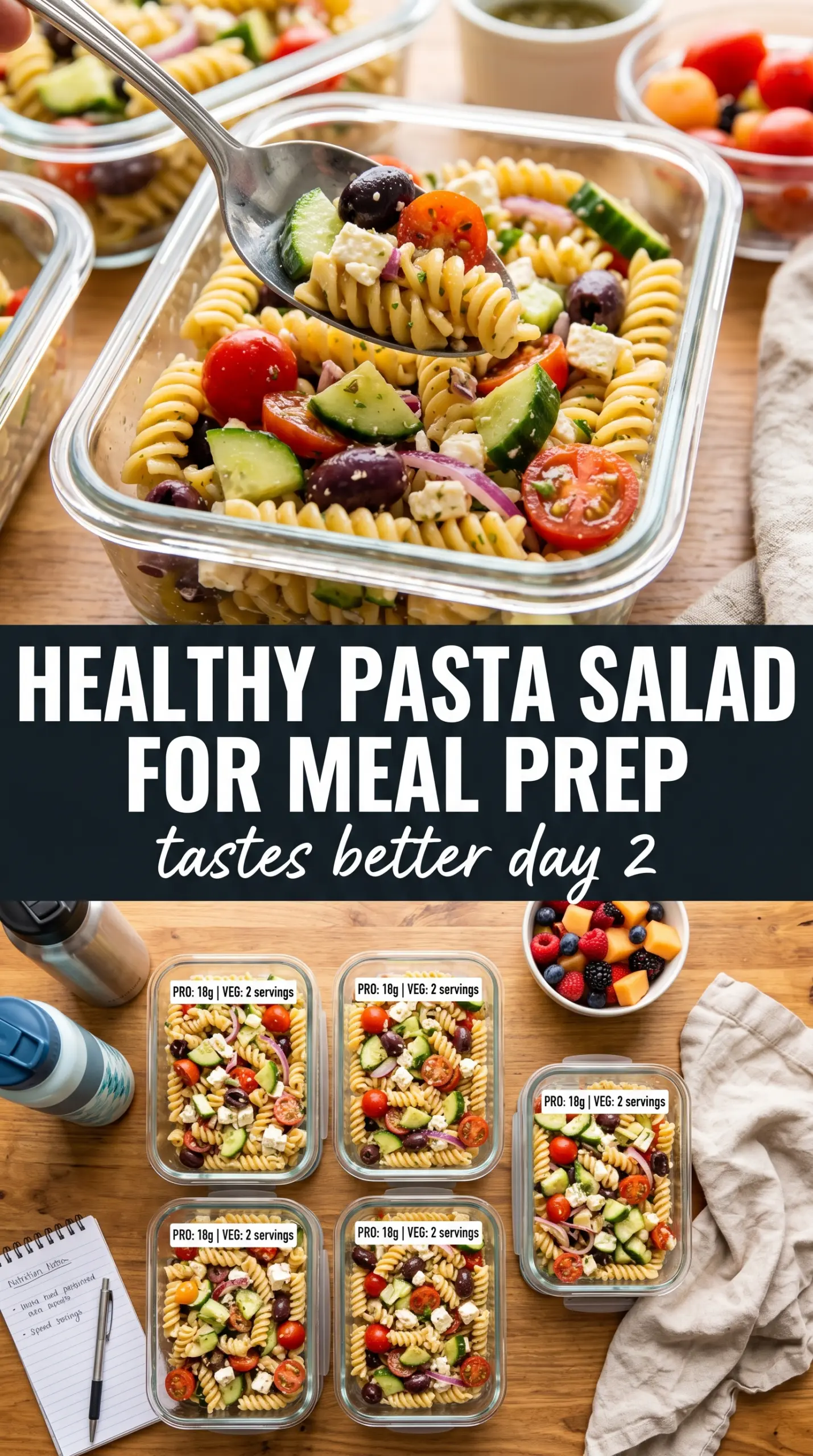
- Penne pasta — The shape matters because the ridges hold onto the dressing and the chopped vegetables. Short pasta also tosses more evenly than long noodles in a salad like this. Cook it just to al dente so it stays pleasant after chilling.
- Kalamata olives — These bring the briny backbone of the salad. Regular black olives can work in a pinch, but they taste softer and less distinct. If you use them, add a little extra oregano or a few more sun-dried tomatoes to replace some of that depth.
- Artichoke hearts and sun-dried tomatoes — This is where the salad gets its tangy, concentrated edge. Marinated artichokes add richness and a little bite, while sun-dried tomatoes deliver sweetness and chew. If you only have plain artichokes, drain them well and expect a cleaner, less seasoned flavor.
- Feta — Feta gives you salt and creaminess without making the bowl heavy. Buy a block if you can and crumble it yourself; pre-crumbled feta tends to be drier and less flavorful. For a dairy-free version, use a vegan feta that can handle acid and tossing.
- Lemon juice, olive oil, garlic, and oregano — These build the dressing. The olive oil rounds out the acid, garlic gives the salad lift, and oregano ties everything back to the Mediterranean ingredients in the bowl. Fresh lemon tastes brighter, but bottled works if that’s what you have, as long as it’s not dull or bitter.
- Fresh parsley — Add it at the end so the salad finishes fresh instead of muddy. Dried parsley won’t give the same lift, and it’s not worth substituting here.
How to Keep the Pasta Salad Bright After It Chills
Cooking the Pasta for Salad, Not Soup
Boil the pasta until it is just tender with a firm center, then drain it and rinse it under cold water right away. That rinse stops the cooking and strips off the starch that would otherwise make the dressing cling in a pasty way. If you skip the rinse, the salad can turn sticky as it sits, especially after the feta and olive oil are added.
Whisking the Dressing Until It Tastes Lifted
Combine the olive oil, lemon juice, garlic, oregano, salt, and pepper until the mixture looks emulsified, even if only briefly. The garlic should be finely minced so it disperses instead of landing in harsh little pockets. Taste the dressing before it goes on the salad; it should taste a little sharper than you want the final bowl to taste, because the pasta will absorb some of that edge during chilling.
Tossing Without Breaking the Feta
Add the pasta, vegetables, and feta to a large bowl, then pour the dressing over the top and toss gently. You want the ingredients coated, not mashed. Stir too aggressively and the feta smears into the dressing, which makes the salad look dull instead of speckled and fresh. Chill it for at least two hours so the onion softens and the dressing settles into the pasta.
Finishing Right Before Serving
Sprinkle the parsley over the top just before serving, not hours ahead. Herbs lose their clean flavor once they sit in acid and oil for too long. If the salad looks a little dry after chilling, drizzle in a splash of olive oil and a squeeze of lemon, then toss again.
Three Ways to Make It Fit What’s in the Kitchen
Gluten-Free Pasta Salad
Use a sturdy gluten-free short pasta and cook it just shy of done. Gluten-free pasta can soften quickly after chilling, so cool it promptly and toss it with the dressing only after it has drained well. The flavor stays the same, but the texture is best the day it’s made.
Dairy-Free Version
Swap the feta for a dairy-free feta-style cheese, or leave it out and add extra olives plus a little more salt. You’ll lose some creaminess, but the salad still has enough acid and brine to stay lively. Don’t use a soft vegan cheese that melts into the dressing.
Make It More Filling
Add chickpeas, grilled chicken, or chunks of salami if you want this to work as a main dish. Chickpeas keep the vegetarian feel and soak up the dressing nicely, while chicken makes the bowl lighter than deli meat. Add any protein after the salad is dressed so it stays intact.
Storage and Reheating
- Refrigerator: Store covered for up to 4 days. The pasta will absorb some dressing, so the salad may taste a little drier on day two.
- Freezer: This one doesn’t freeze well. The tomatoes, feta, and pasta all suffer in texture after thawing.
- Reheating: Don’t reheat it. Serve it cold or let it sit at room temperature for 15 to 20 minutes before serving, then toss with a small splash of olive oil or lemon juice if needed.
Answers to the Questions Worth Asking
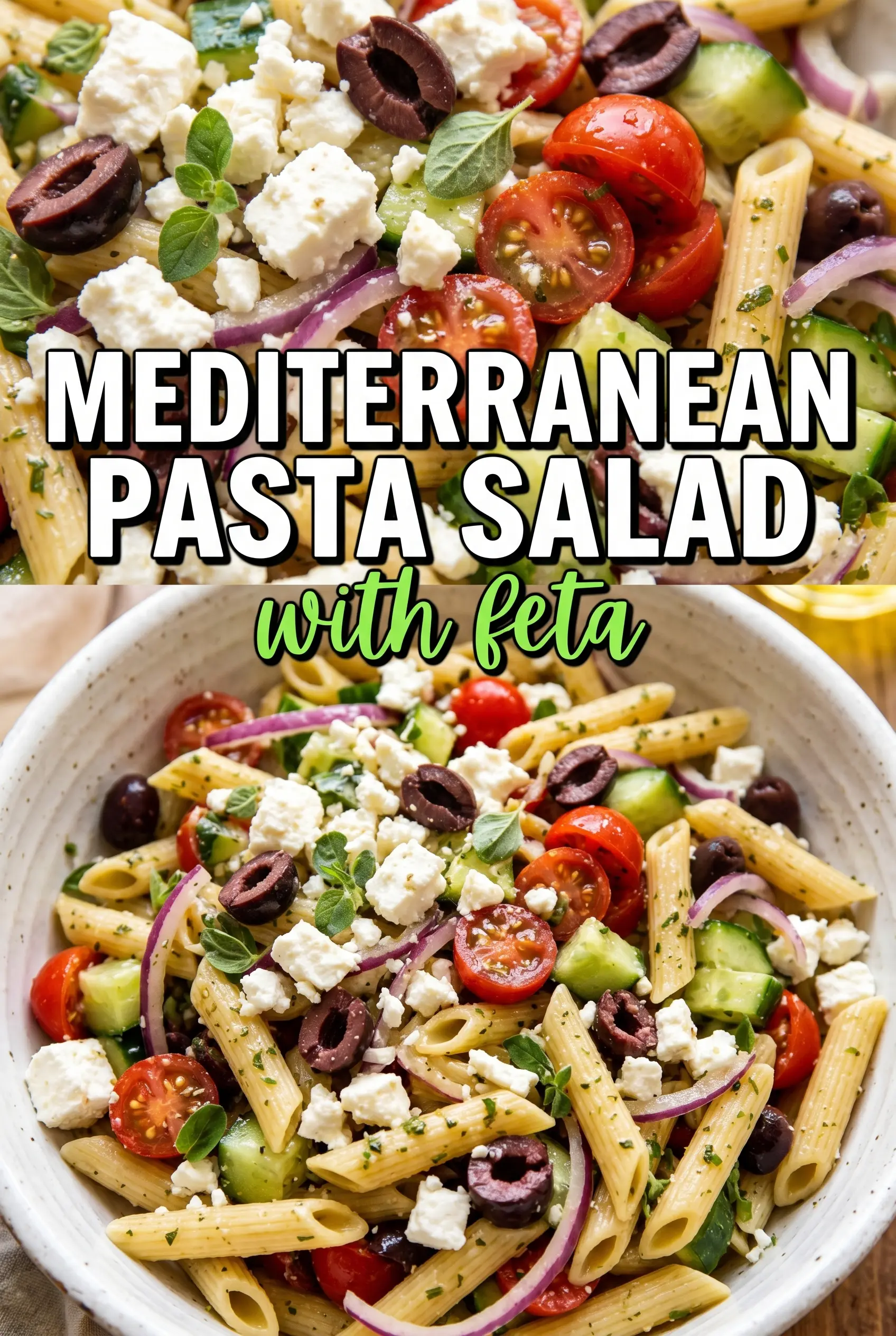
Mediterranean Pasta Salad
Ingredients
Equipment
Method
- Cook the penne pasta according to package directions, then drain and rinse with cold water.
- Spread the pasta on a sheet pan in an even layer so it cools quickly before mixing.
- Whisk together olive oil, lemon juice, garlic, oregano, salt, and pepper until the dressing looks well combined.
- Add pasta, olives, cherry tomatoes, artichoke hearts, sun-dried tomatoes, red onion, and feta to a large bowl.
- Pour the dressing over the salad and toss gently until everything is coated.
- Refrigerate for at least 2 hours to let the flavors meld.
- Garnish with fresh parsley before serving.